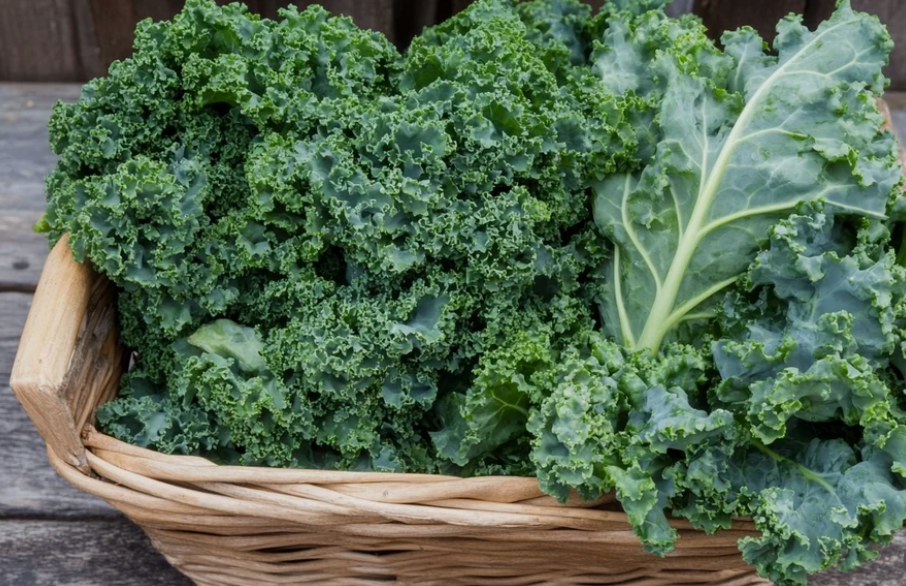
Kale is a leafy green in the cabbage family that never forms a head. It grows as a loose rosette of leaves on a central stalk, and those leaves can be curly, flat, frilly, bumpy, blue-green, deep purple or nearly black. It is closely related to cabbage, broccoli, cauliflower, Brussels sprouts and collards, which were all bred from the same wild cabbage.
Kale is one of the oldest forms of cultivated cabbage. The University of Arizona notes that it was first grown in the eastern Mediterranean and Asia Minor beginning around 2000 B.C. From there it spread across Europe, and it became a winter staple in Scotland, Germany, the Netherlands, Scandinavia and Russia.
Kale is a cool-season crop that grows best below about 75°F. It is extremely cold hardy, and its leaves turn sweeter after frost because the plant converts starches to sugars. Many varieties survive winter outdoors, and in mild regions kale can be picked from fall through spring.
Kale is rich in vitamins A, C and K, calcium and iron. It is grown in home gardens and on farms across North America, Europe, East Africa and Asia. The 35 varieties below include curly, flat-leaved, Tuscan, Siberian and ornamental types, and each description notes where the variety comes from or is grown.
Curly-Leaved Kales
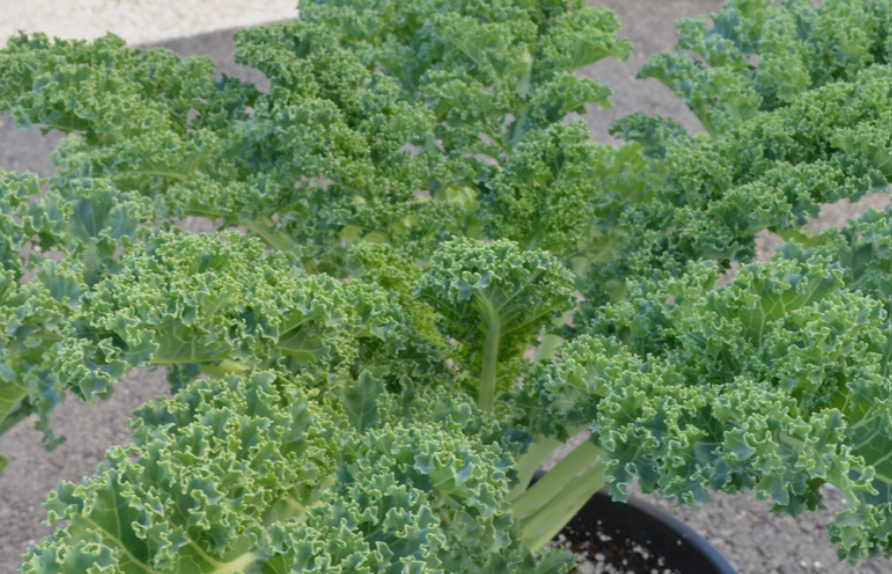
Dwarf Blue Curled Vates is the classic curly kale of American gardens. Its leaves are blue-green and finely ruffled. The plant is low and compact, about 12 to 18 inches tall. It spreads wider than it is tall. It is slow to bolt in spring. It is an open-pollinated variety.
Clemson University describes it as a very popular northern variety because of its cold hardiness, with blue-green, finely textured leaves on plants about 18 inches tall. It often survives winter outdoors without protection. Its tight curls hold up well in soups, stews and kale chips. It is widely sold as a reliable beginner’s kale. It was developed at the Virginia Truck Experiment Station, which gave it the name “Vates.” It is grown across North America and in cool regions worldwide.
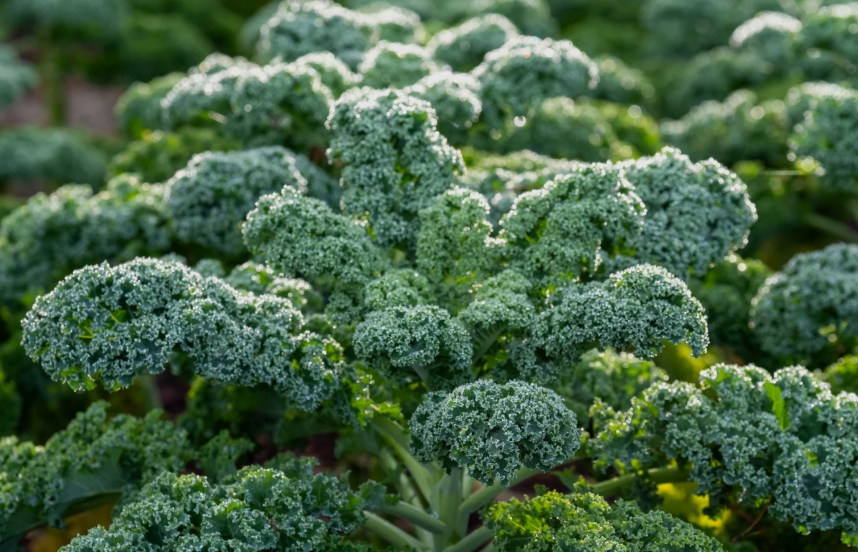
Winterbor is a curly kale of Dutch origin that American seed companies selected and sold for winter hardiness. It grows two to three feet tall and is typically ready to harvest about 60 to 75 days after transplanting. Its dense, dark green leaves become sweeter after frost, which is one of the main reasons gardeners grow it for late-season harvests.
As an open-pollinated variety, Winterbor lets gardeners save seed and keep the line true to type. It remains a standard choice for fall and winter harvests in temperate regions. Its sturdy structure also helps it stand upright through wind and snow, and its leaves are firm enough to braise, sauté, or add to soups.
3. Redbor Kale
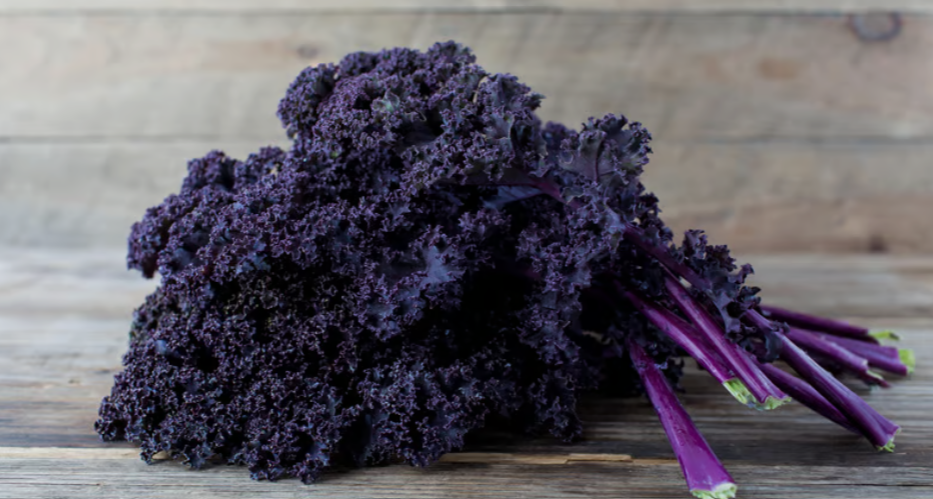
Redbor was developed in the United States as a curly kale with intense red-purple color and good cold tolerance. It typically reaches 12 to 24 inches tall and is ready to begin harvesting about 55 to 70 days after transplanting. The color deepens in cool weather, so planting it for a fall crop gives the strongest display.
Its leaves are edible and suited to salads when young and to cooking when mature. Redbor has helped establish colored kales as a popular category, and many gardeners now plant it in flower borders alongside traditional ornamentals. Its foliage is attractive enough to grow for beauty alone, but it is equally useful in the kitchen.
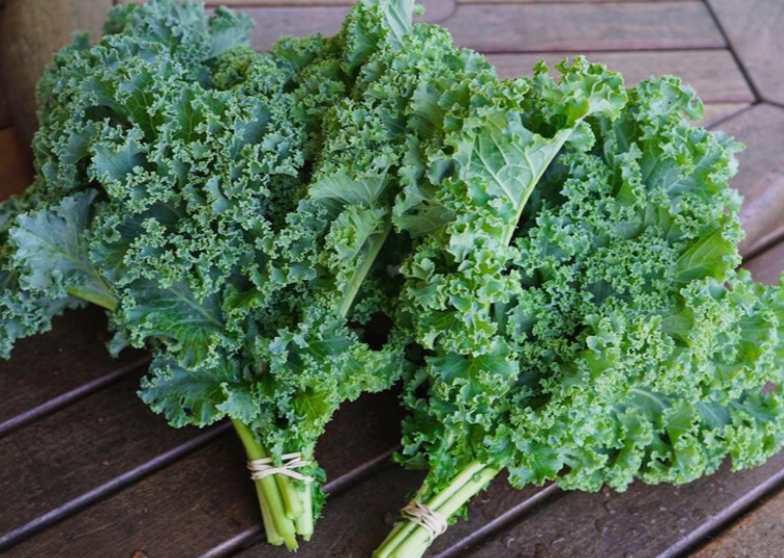
Blue Scotch Curled is a traditional curly kale with blue-green leaves and heavy curling. It descends from the Scotch curled group that spread through Northern Europe and was later grown widely in North America. It typically reaches 18 to 24 inches and is ready to harvest about 60 to 70 days after transplanting.
The variety’s strong frost tolerance made it a dependable winter crop for farmers and home gardeners. Its dense, textured leaves give it a classic appearance in the garden. Seed savers often maintain it as part of heritage collections, since it represents an older style of curly kale.
5. Dwarf Green Curled Scotch
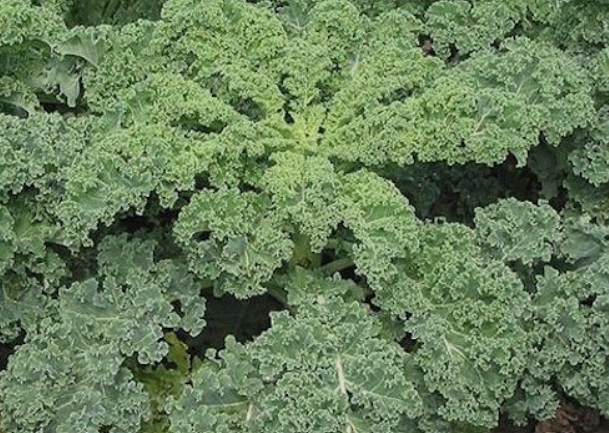
Dwarf Green Curled Scotch is a dwarf strain from the older Scotch curled group, which originated in Northern Europe. It produces compact plants of about 12 to 18 inches, with bright green, finely curled leaves. Plants are typically ready to harvest about 55 to 65 days after transplanting.
The dwarf habit makes it well suited to raised beds and containers, where full-size kale would crowd other plants. It is often sold as a heirloom for gardeners who want traditional winter kale in a small footprint. Its tidy form also looks attractive in mixed vegetable beds.
6. Vates Scotch Curled
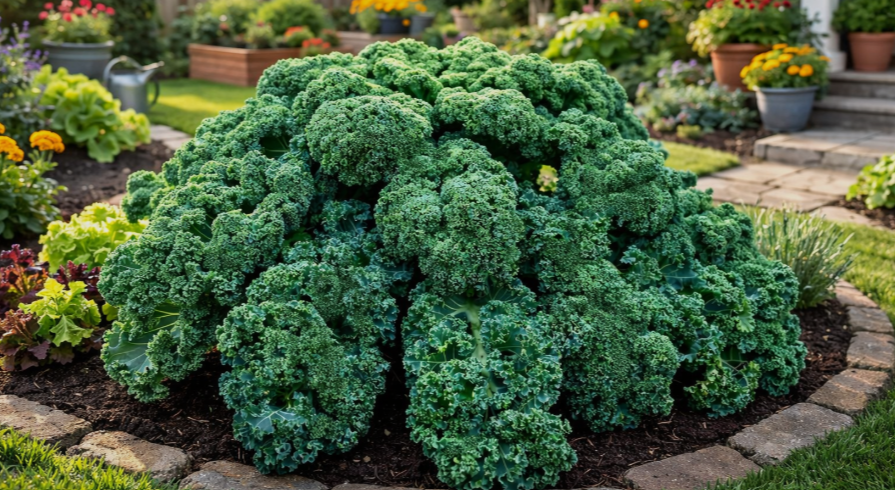
Vates Scotch Curled is an American heirloom from the Vates line, valued for hardiness and tight curls. Plants grow two to three feet tall and are typically ready to harvest about 60 to 75 days after transplanting. Market gardeners grew it widely in the early twentieth century, when reliable winter greens were in demand.
Its long history makes it a useful reference point for the curly kale category. Seed savers still maintain it, and gardeners interested in heritage varieties often grow it to compare with newer hybrids. Its tall, productive plants give a steady harvest through the cold season.
7. Dwarf Siberian
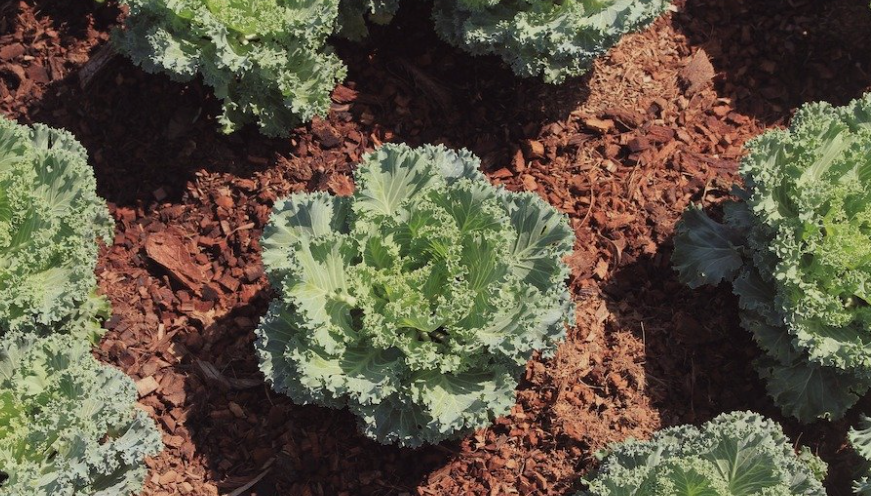
Dwarf Siberian is a compact, cold-hardy curly kale derived from Siberian and Russian kale lines, though its exact breeding history is less well documented. It typically reaches 12 to 18 inches and is ready to harvest about 55 to 65 days after transplanting. Its gray-green leaves and strong frost tolerance make it useful for short seasons and northern gardens.
The plant’s small size and hardiness suit gardeners who need dependable winter greens without much space. It tends to remain productive when temperatures drop well below freezing. Gardeners who value cold tolerance above all else often consider it a good option, though they should confirm its origin with the seed supplier.
8. Darkibor Kale
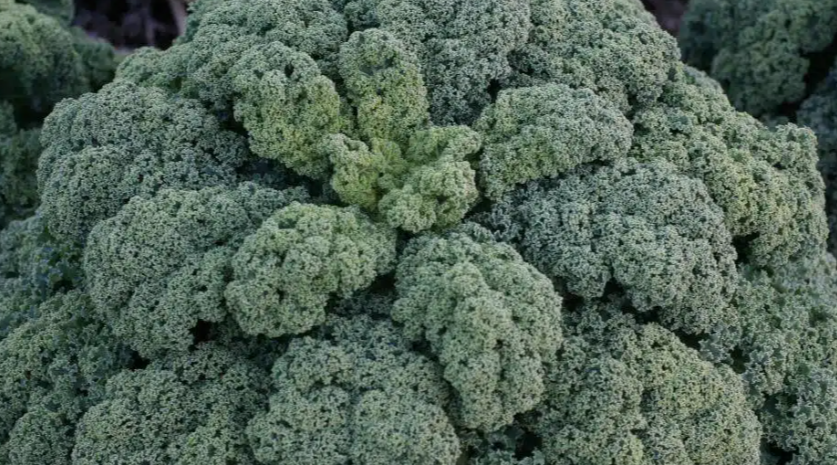
Darkibor is a hybrid curly kale that breeders in the Netherlands are said to have developed for dark green color and strong frost tolerance. The Dutch have a long tradition of cold-hardy brassica breeding, and this variety reflects it. It typically reaches 18 to 24 inches and is ready to harvest about 60 to 70 days after transplanting, though these figures should be confirmed with the breeder.
Darkibor is valued by commercial and home growers who want uniform, dependable winter production. Its leaves hold their deep color well in cold weather. Because it is a hybrid, seed saved from it will not grow true to type, so gardeners need to buy fresh seed each season.
9. Starbor Kale
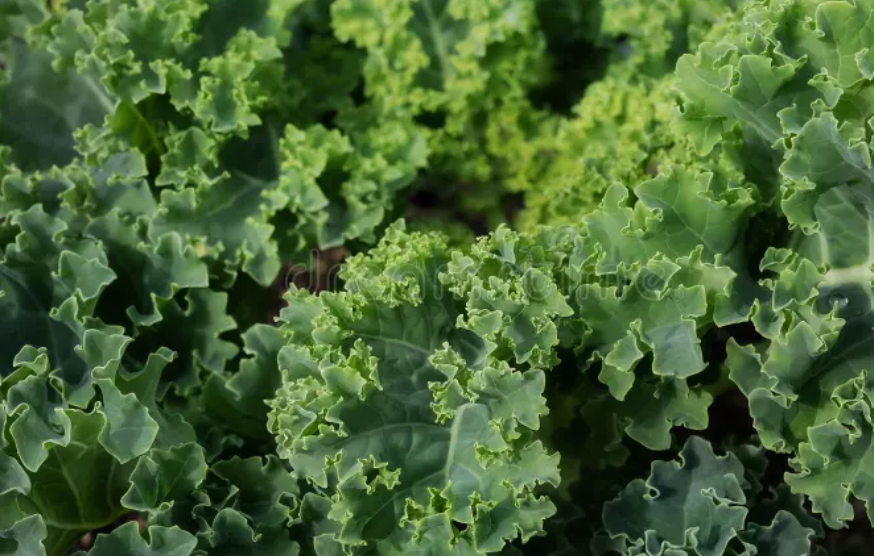
Starbor is a hybrid curly kale with uniform, dark green curled leaves, and it is generally described as a European development. It was bred for cold hardiness and high yields in cool-season plantings. Plants typically reach 18 to 24 inches and are ready to harvest about 60 to 70 days after transplanting, though the breeder and exact origin should be verified before publication.
Its uniform growth suits growers who want consistent harvests and easy picking. Exact breeding details are less publicly documented than those of older open-pollinated varieties. Growers usually choose it for reliable production and steady performance rather than for its history.
10. Premier Kale
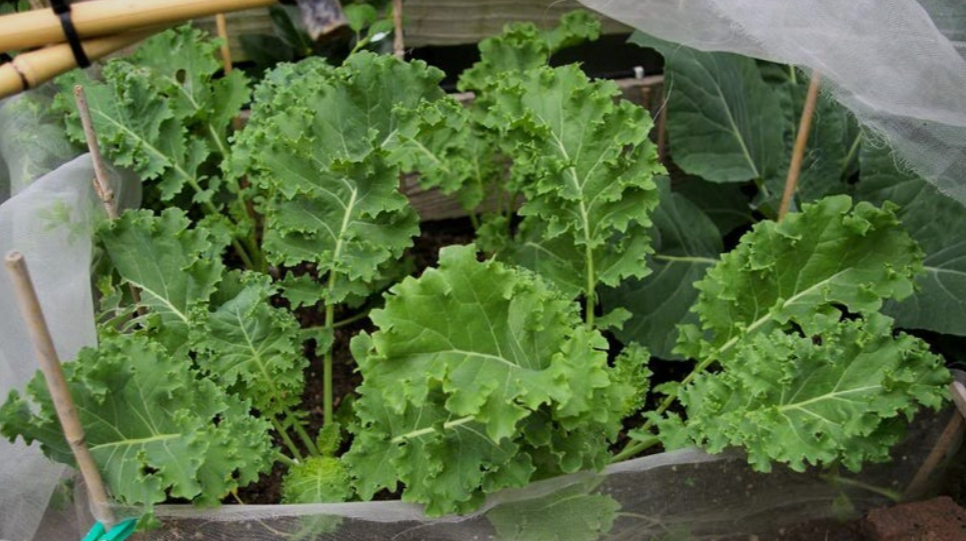
Premier is a curly kale developed for reliable yields and good cold tolerance, with tender, finely curled leaves. It typically reaches 18 to 24 inches and is ready to harvest about 60 to 70 days after transplanting. Its precise breeding origin is not as well recorded as the older Scotch and Vates types, so the seed source should be checked.
It is a common fall and winter choice for home and market gardens. Its tender leaves suit both fresh eating and cooking, which makes it versatile in the kitchen. Gardeners who want a dependable, productive curly kale without a long heritage story often grow it.
Lacinato (Dinosaur) Kales
11. Lacinato Kale
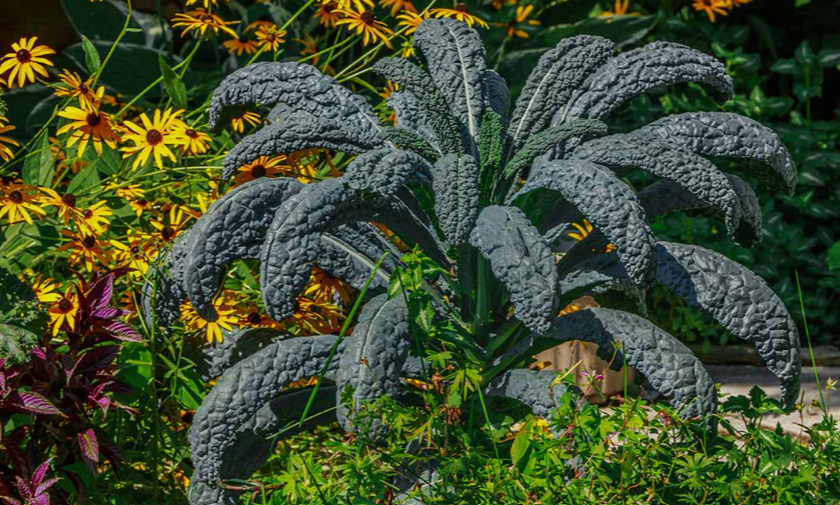
Lacinato, also called dinosaur kale or cavolo nero, comes from Italy, where it has been grown for centuries, especially in Tuscany. Its long, narrow, deeply savoyed leaves are dark blue-green with a bumpy texture. Plants typically reach two to three feet and are ready to harvest about 60 to 70 days after transplanting.
The leaves are tender enough for raw salads when young and hold their shape well in soups and braises. Lacinato is one of the most widely grown kales in both Italian and American cooking. Its sturdy texture makes it a reliable choice for long-cooked dishes.
12. Toscano
Toscano is closely related to Lacinato and is named for its Tuscan origin. It has long, bumpy leaves rich in flavor, and plants typically reach two to three feet and are ready to harvest about 60 to 70 days after transplanting. Its strong texture and deep color make it a popular choice in Italian-style dishes.
Seed catalogs often list Toscano alongside Lacinato, and the two are frequently treated as the same group. Gardeners who want the classic Italian look usually grow either name. The leaves suit soups, braises, and sautéed side dishes.
13. Rainbow Lacinato
Rainbow Lacinato is a selection from the Lacinato group, developed in the United States, with leaves in purple, red, and green. Plants typically reach 18 to 30 inches and are ready to harvest about 60 to 70 days after transplanting. Its mix of colors makes it a lively addition to both vegetable beds and flower borders.
It keeps the texture and flavor of classic Lacinato while adding visual variety to the garden. The colors are most intense in cool weather. Gardeners often choose it when they want edible color without giving up the familiar Lacinato taste.
14. Black Magic Kale
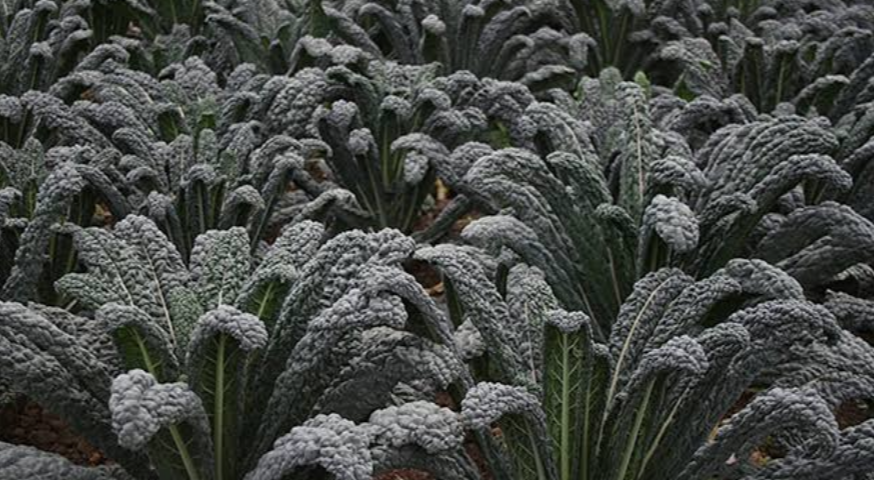
Black Magic is a hybrid Lacinato-type kale with very dark, almost black-green leaves. It was bred for deep color and a compact, productive habit, though its breeder and place of development should be verified before publication. Plants typically reach 18 to 24 inches and are ready to harvest about 60 to 70 days after transplanting.
The dark foliage gives it a dramatic presence in mixed beds and makes a strong visual contrast with lighter greens. The leaves are well suited to braising, where their color and texture hold up. As a hybrid, seed saved from it will not reliably reproduce the parent plant.
15. Red Ursa
Red Ursa is a hybrid kale bred in the United States with deep red-purple, Lacinato-style leaves. It combines the texture of Lacinato with the coloring of red kales. Plants typically reach 18 to 24 inches and are ready to harvest about 55 to 70 days after transplanting, and the breeder listing should be checked for the exact timing.
It is grown as both an edible crop and an ornamental. Its color is strongest in cool weather, and the leaves are suited to salads and sautéing. Gardeners often grow it for its striking appearance as much as for the harvest.
16. Ragged Jack
Ragged Jack is a traditional kale with deeply divided, tattered-looking leaves. Its origin is less clearly documented, but it has been grown in Britain and North America as a heritage type. Plants typically reach 18 to 24 inches and are ready to harvest about 60 to 75 days after transplanting.
The distinctive leaf shape gives the plant an unusual look among other kales. It is typically used in cooking, where its leaves hold up well to long simmering. Heritage growers often keep it for its historical character as much as for its flavor.
Russian and Flat-Leaved Kales
17. Red Russian
Red Russian kale is a flat-leaved type with purple stems and gray-green leaves with serrated edges. It descends from Siberian and Russian kale lines that were grown in Eastern Europe and later introduced to North America. Plants are ready for baby leaves about 40 to 55 days after planting and for full leaves about 55 to 65 days.
Its tender leaves and mild flavor make it a favorite for salads, and its distinct leaf edges set it apart from curly varieties. It is also very cold tolerant and produces well in short seasons. Many gardeners grow it for the combination of flavor and hardiness.
18. White Russian
White Russian kale is a flat-leaved type with pale green leaves and white stems. It belongs to the Russian kale group and was valued in Russia and Eastern Europe for its hardiness. Plants are ready for baby leaves about 40 to 55 days after planting and for full leaves about 55 to 65 days.
Its mild, sweet flavor suits raw dishes, and its lighter coloring gives it a softer look in the garden. It is often grown alongside Red Russian for variety in salads and mixed greens. The two make a practical pairing for both beauty and harvest.
19. Improved Siberian
Improved Siberian is a selection from the Siberian kale line, with gray-green, flat leaves that are highly cold tolerant. Siberian kale was originally grown in Russia and reached Western gardens through European seed trade. Plants are typically ready to harvest about 50 to 60 days after transplanting.
It remains a reliable cold-season crop, and its hardiness has kept it useful for gardeners in harsh climates. Its leaves are mild and suited to both cooking and raw use. Gardeners who need dependable winter greens often choose it for steady performance.
20. Hanover Salad
Hanover Salad is an old flat-leaved kale associated with German growers and later with North American gardens. Its tender, smooth leaves are grown mainly for fresh eating, and plants are typically ready to harvest about 50 to 60 days after transplanting. Details of its exact development are not well recorded, so the seed source should be consulted.
The variety reflects the long tradition of kale use in German-speaking regions, where simple raw and lightly cooked preparations were common. It has long been valued for salads because of its mild taste and tender texture. Growers who enjoy heritage greens often seek it out for these qualities.
21. Pentland Brig
Pentland Brig is a Scottish-bred kale with flat, tender leaves and a mild flavor. It was developed in the twentieth century and named after the Pentland Brig area of Scotland, though the exact breeding history should be verified. Plants are typically ready to harvest about 55 to 65 days after transplanting.
It is grown for cooking and salads and is valued for its cold tolerance. Its smooth leaves make it appealing for fresh use. It is less common today than the curly types, but enthusiasts of regional and heritage varieties still grow it for its local character.
22. Scarlet
Scarlet kale is a flat-leaved, red-tinged type grown for its color and tender leaves. Its origin is less well documented, and it is generally treated as a modern colored selection. Plants are ready for baby leaves about 45 to 60 days after planting and reach about 12 to 18 inches tall.
The bright red coloring makes it attractive in salads and mixed plantings, where it adds visual interest as well as flavor. It is frequently grown as an ornamental edible. Its tender texture suits fresh use better than long cooking.
Heritage and Regional Kales
23. Walking Stick Kale (Jersey Kale)
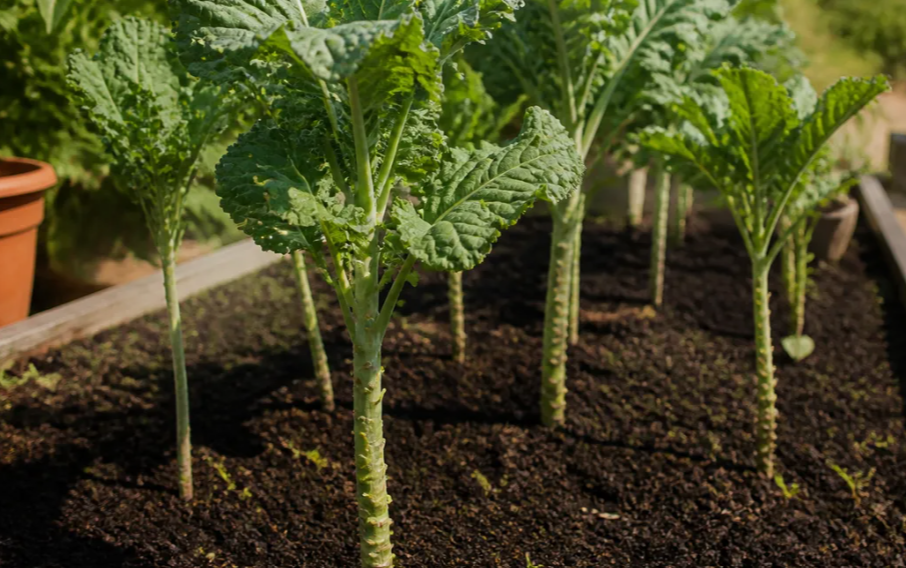
Walking Stick kale, also called Jersey kale, comes from the Channel Islands, particularly Jersey. It is a tall, perennial type that can develop a woody stem and reach three to six feet. The first harvest usually comes about 90 days after planting, and the leaves can be picked over many months.
Its leaves were traditionally harvested over several seasons, which made it a valuable food plant for households with limited land. The plant’s tall habit makes it unusual among common garden kales. Gardeners who want a long-lived kale often find it an interesting choice.
24. Tree Kale
Tree kale, also called Jersey tree kale, is a tall, woody-stemmed type associated with the Channel Islands and, in older records, the Canary Islands. It can reach several feet and was historically grown as a perennial food source. The first harvest usually comes about 90 days after planting, with leaves produced over multiple seasons.
Its sturdy stems give it a shrub-like presence in the garden, and it produces leaves for many seasons when cared for well. Its size and perennial habit set it apart from annual garden kales. Growers interested in perennial food plants often consider it for that reason.
25. Hungry Gap Kale
Hungry Gap is a traditional British kale grown to provide greens during the late winter and early spring “hungry gap,” when other vegetables were scarce. It is cold hardy and produces tender leaves in lean seasons. Plants are typically ready to harvest about 60 to 75 days after transplanting.
Its name reflects its role in traditional British vegetable gardens, where it filled a seasonal gap that other crops could not. It remains a respected heritage type for overwintering. Gardeners who keep older food traditions alive often grow it for its history.
26. Tronchuda
Tronchuda is a Portuguese cabbage-type green, sometimes described as a kale, with broad, thick, white-ribbed leaves. It has been grown in Portugal and Spain for centuries and is a traditional ingredient in regional soups. Plants are typically ready to harvest about 70 to 90 days after transplanting.
Its thick leaves and mild flavor make it distinct from curly and flat kales, and it is often treated as a cabbage relative rather than a typical kale. Cooks who value its texture use it in soups and stews, where the white ribs hold their shape well. Its large leaves are a distinctive part of Iberian cooking.
27. Chinese Kale (Gai Lan)
Chinese kale, also called gai lan or Chinese broccoli, comes from southern China, where it has been cultivated for centuries. Its thick stems, glossy leaves, and small flowers make it a staple of Cantonese cooking. Plants are typically ready to harvest about 50 to 60 days from seed.
The stems are often blanched or stir-fried, and the leaves are cooked with garlic or oyster sauce. It is a valuable vegetable in Asian markets and home gardens, and its bold, savory flavor pairs well with simple seasonings. Gardeners who want a fast-maturing green for the kitchen often grow it.
28. Nagoya Kale
Nagoya is a Japanese ornamental kale developed for color and form. Its frilled, rosette-shaped leaves are grown mainly for decoration in cool seasons, and it is typically displayed for eight to twelve weeks from transplant. Plants reach about 12 to 18 inches.
The leaves can be eaten, though they are usually grown for their appearance. It is a popular winter accent in Japanese and Western gardens, and its colors often intensify as temperatures fall. It brings a soft, sculptural look to winter beds.
29. Chidori Kale
Chidori is a Japanese ornamental kale with feathery, deeply cut leaves in shades of white, pink, and purple. It was developed in Japan as part of a broader program of colored ornamental brassicas. It is typically displayed for eight to twelve weeks from transplant and reaches about 12 to 18 inches.
It is grown mainly for its decorative value. Its leaves are edible but tend to be tough, so it is most often used in arrangements and borders. Its light, airy appearance contrasts well with heavier foliage plants.
30. Peacock Kale
Peacock kale is an ornamental type with ruffled, deeply frilled leaves in pink, white, and purple tones. It is part of the Japanese ornamental kale tradition and was widely adopted by Western gardeners. It is typically displayed for eight to twelve weeks from transplant.
Its color intensifies in cold weather, making it a strong winter display plant. It is generally grown for appearance rather than kitchen use. Many gardeners use it in containers and winter beds, where its full, layered rosette makes a striking focal point.
31. Pink Peacock Kale
Pink Peacock is a color selection from the ornamental kale group, with pink and white leaves and a frilled, rosette form. It is valued for its bright color in the cool season. It is typically displayed for eight to twelve weeks from transplant, and its origin should be verified with seed sources.
It is grown primarily in containers and beds for visual interest. Like other ornamental kales, it is edible but mostly used for decoration. Its color is often most vivid after a few cold nights.
Ornamental and Colored Kales
32. White Peacock Kale
White Peacock is a variant of the ornamental kale group with creamy white and pale green leaves. Its ruffled shape creates a soft, textured look in winter beds. It is typically displayed for eight to twelve weeks from transplant, and its exact origin should be confirmed with seed suppliers.
The variety is grown mostly for its pale coloring and structure. It belongs to the same Japanese-derived ornamental tradition as Peacock and Chidori. Gardeners who want a quieter winter display often choose it, and its pale tones contrast well with darker foliage plants.
33. Crane Kale
Crane kale is an ornamental selection with feathered, wavy leaves in white and pink tones. It was developed in Japan and adopted by Western seed companies as a decorative winter plant, though its specific breeding history should be checked. It is typically displayed for eight to twelve weeks from transplant.
Its airy form suits mixed borders and containers. The leaves are edible but are usually grown for display. Its soft texture makes it a pleasant contrast to bolder plants.
34. Kamome Kale
Kamome is a Japanese ornamental kale with cut, frilled leaves in pink and white. It belongs to the same family of decorative brassicas as Peacock and Chidori, and it is valued for its bright color in cool weather. It is typically displayed for eight to twelve weeks from transplant, and its origin should be verified with seed sources.
The variety is usually used in cold-season bedding displays. Its striking leaf shape makes it stand out in mixed plantings. Gardeners often pair it with other cool-season flowers for a colorful winter bed.
35. Rainbow Kale
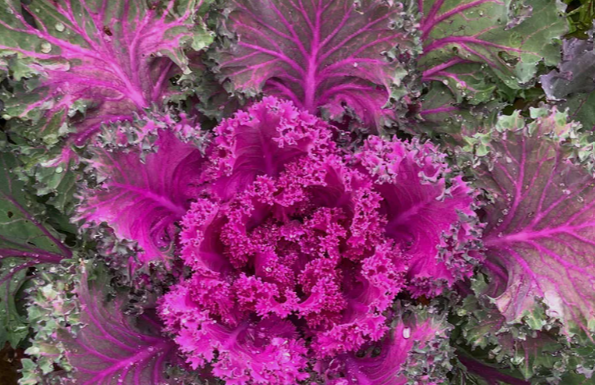
Rainbow kale is a general name for mixed-color kale selections, usually including purple, red, green, and white leaves. It reflects the modern trend of breeding kales for color as well as flavor. Plants are typically ready to harvest about 50 to 70 days after transplanting, depending on the mix.
Mixed-color plantings are popular for home gardens and visual displays, and mixed packets let gardeners enjoy several colors in a single planting. The variety is edible and is commonly used in salads and cooking. Its range of colors makes it a good choice for families who want kale that looks as good as it tastes.
Sources:
- University of Arizona: Growing Kale
- Clemson University: Kale Is a Headless Cabbage
- North Carolina State University: Kale Group
- University of Kentucky: Kale
- University of Connecticut: Hail Kale
- NC State Extension, Pender County: Growing Kale From Seed
- Fedco Seeds: Kale
- Seed Ambassadors: Brassica napus