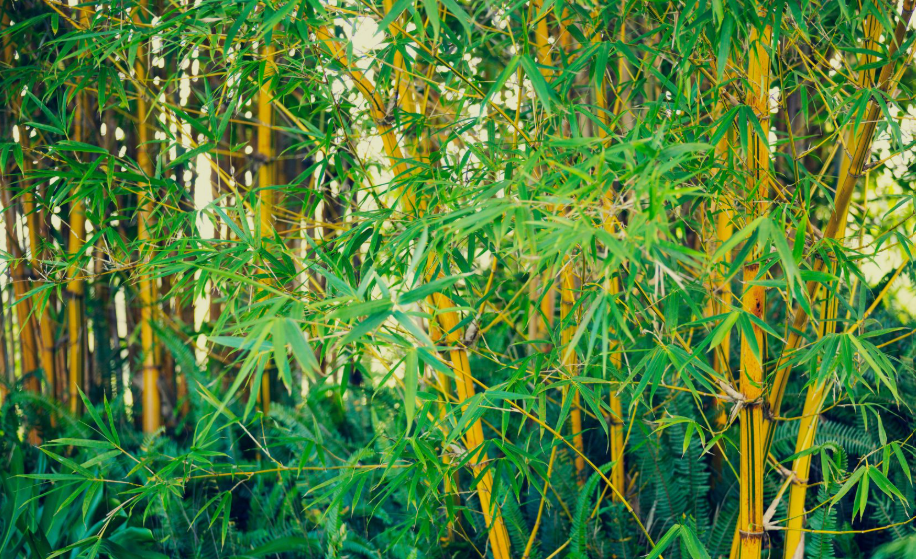
Bamboo is a giant, woody member of the grass family. The University of Florida counts about 1,400 bamboo species in 115 genera worldwide. They range from ankle-high groundcovers to tropical giants taller than a 10-story building.
Bamboo is famous for its speed. It is often called the fastest-growing woody plant, and some large species can add several feet of height in a single day during their spring growth spurt. A new stem, called a culm, reaches its full height in one season and then spends the following years hardening and branching.
Every bamboo spreads by underground stems called rhizomes, and gardeners divide them into two groups. Running bamboos send out long rhizomes that can invade neighboring land, while clumping bamboos form tight clusters that expand slowly. Many bamboos also flower only at long intervals, sometimes decades apart, and some die after flowering.
Bamboo grows naturally on every continent except Europe and Antarctica, with the greatest diversity in eastern and southern Asia and in Central and South America. It is used for building, furniture, paper, cloth, food and garden screens. The 48 bamboos below include running, clumping and native types, and each entry notes where the plant comes from.
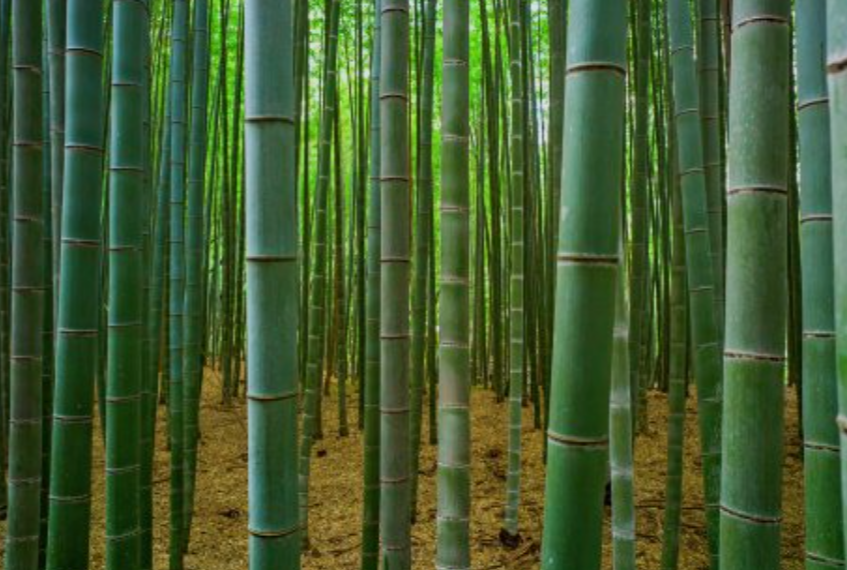
Running Bamboos
1. Moso Bamboo
Moso bamboo is the most important timber bamboo in the world. Its culms can reach 60 to 90 feet tall and 6 to 7 inches across. They are covered in fine hairs when young. Its leaves are small and feathery. The culms arch gracefully at the top. It is a running bamboo with very vigorous rhizomes.
It supplies much of the bamboo used for flooring, furniture and textiles. Its spring shoots are a popular vegetable in Asia. Groves can be harvested year after year without replanting. It needs a long, warm growing season to reach full size. It is considered a high invasion risk in Florida. It is native to China.
2. Golden Bamboo
Golden bamboo is one of the most widely planted bamboos. Its culms turn yellow-green to golden in sun. The lower sections often have short, swollen segments. It grows 15 to 30 feet tall. Its culms are about 1 to 2 inches thick. It is a running bamboo.
It was introduced to the United States in the 1880s. It is now invasive in many parts of the Southeast. Its compressed lower segments are used for walking sticks and fishing poles. It forms dense thickets that crowd out native plants. It is also called fishpole bamboo. It is native to southeastern China.
3. Black Bamboo
Black bamboo is prized for its dark culms. Its culms emerge green and turn black over two to three years. It grows 15 to 25 feet tall in most gardens. Its leaves are bright green and contrast with the dark stems. It is a running bamboo. It spreads moderately fast.
It is one of the most popular ornamental bamboos. Its culms are used in furniture and crafts. It grows best in sun, which deepens the black color. It tolerates winter lows near 0°F. It is often grown in large containers. It is native to China.
4. Henon Bamboo
Henon bamboo is the green-stemmed form of black bamboo. Its culms are gray-green and slightly powdery. It grows 30 to 50 feet tall in good conditions. Its leaves are fine and give it a soft, billowy look. It is a running bamboo. It is one of the more cold-hardy large bamboos.
Botanists treat it as the wild form of the species that includes black bamboo. It is used for timber and garden screens. Its culms are strong and straight. It tolerates winter lows near 0°F. It spreads steadily. It is native to China.
5. Yellow Groove Bamboo
Yellow groove bamboo is a hardy running bamboo. Its culms are green with a yellow groove running up one side. The lower culms often grow in a zigzag pattern. It grows 15 to 30 feet tall. Its culms are about 1.5 inches thick. It spreads aggressively.
It is one of the most cold-hardy running bamboos. It tolerates winter lows near -10°F. It forms dense groves and windbreaks. Its young shoots are edible. Its zigzag culms make it popular with collectors. It is native to eastern China.
6. Spectabilis Bamboo
Spectabilis is a striking form of yellow groove bamboo. Its culms are bright yellow. A green groove runs up one side, reversing the colors of yellow groove bamboo. New culms often blush red in sun. It grows 15 to 25 feet tall. It is a running bamboo.
It is one of the most ornamental hardy bamboos. Its zigzag lower culms add interest. It tolerates winter lows near -10°F. It spreads aggressively and needs containment. It makes a colorful screen. It is a selection of a species native to eastern China.
7. Japanese Timber Bamboo
Japanese timber bamboo is a large running bamboo with thick-walled culms. Its culms are straight, dark green and up to 6 inches across. It can reach 50 to 70 feet tall. Its leaves are large for a running bamboo. It forms extensive groves. It is also called madake.
It is the classic bamboo of Japanese craft. Its culms are used for flutes, fences, baskets and building. In the 1960s and 1970s it flowered across much of the world at once. Many groves died afterward and slowly regrew. It tolerates winter lows near 0°F. It is native to China and has been grown in Japan for centuries.
8. Castillon Bamboo
Castillon bamboo is a colorful form of Japanese timber bamboo. Its culms are golden yellow. A green groove runs up one side. Some leaves have thin cream stripes. It grows 30 to 50 feet tall. It is a running bamboo.
It is one of the most ornamental large bamboos. Its culms glow in sunlight. It needs room to spread. It tolerates winter lows near 0°F. It is popular in botanical gardens. It is a selection of a species long cultivated in Japan.
9. Vivax Bamboo
Vivax bamboo is a fast-growing timber bamboo. Its culms are thin-walled and grow 4 to 5 inches thick. They can reach 40 to 70 feet tall. Its leaves are long and drooping. It is a running bamboo. It is one of the fastest-establishing large bamboos.
The University of Connecticut notes that running bamboos in this genus spread by long underground rhizomes and can encroach onto neighboring properties without barriers. Connecticut passed a law in 2013 regulating their planting and sale. Vivax tolerates winter lows near -5°F. Its thin walls make its culms prone to splitting in heavy snow. A golden-striped form is popular. It is native to eastern China.
10. Nude Sheath Bamboo
Nude sheath bamboo is one of the hardiest running bamboos. Its culms are dark green with whitish bands below the nodes. They often age to purple-black. It grows 15 to 30 feet tall. Its leaves are small. It is a running bamboo.
It tolerates winter lows between -10°F and -20°F. Its young shoots are among the best-tasting bamboo shoots. Its culms grow very straight. It suits cold-climate screens. It spreads steadily. It is native to eastern China.
11. Sweetshoot Bamboo
Sweetshoot bamboo is grown mainly for food. Its culms are green and grow 20 to 40 feet tall. Its shoots are thick and sweet. They can be eaten with little preparation. It is a running bamboo. It spreads vigorously.
It is one of the most popular bamboos for edible shoots. The shoots emerge in spring. They are harvested before they grow taller than a foot or so. It needs warm summers and good water. It tolerates winter lows near 0°F. It is native to eastern China.
12. Tortoiseshell Bamboo
Tortoiseshell bamboo is an unusual form of moso bamboo. Its lower culms grow in a zigzag pattern of short, swollen, tilted segments. The pattern looks like the shell of a tortoise. The upper culms grow normally. It grows 20 to 40 feet tall. It is a running bamboo.
It is one of the most prized collector bamboos. Its odd shape appears only on some culms. It is slow and difficult to establish. Its culms are used for decorative crafts. It is rare and expensive. It is a form of moso bamboo native to China.
13. Robert Young Bamboo
Robert Young bamboo is a golden running bamboo. Its culms emerge green and turn bright yellow. Many have thin green stripes. It grows 30 to 50 feet tall in good conditions. Its leaves are bright green. It is a running bamboo.
It is one of the most colorful timber bamboos. Its culms are strong and used for building. It needs space and full sun for its best color. It tolerates winter lows near 0°F. It spreads aggressively. It is a selection of a species native to China.
14. Arrow Bamboo
Arrow bamboo is a dense, medium-sized running bamboo. Its culms are straight and about half an inch thick. Its leaves are large, long and glossy. It grows 10 to 15 feet tall. The leaves cover the culms almost to the ground. It is a running bamboo.
Its straight culms were used to make arrows in Japan. It tolerates shade, salt spray and wind. It makes a thick, leafy screen. It tolerates winter lows near 0°F. It grows well in containers. It is native to Japan and Korea.
15. Kuma Bamboo Grass
Kuma bamboo grass is a low, broad-leaved bamboo. Its leaves are large, oval and bright green. In winter their edges dry to a papery white. The effect looks like a variegated plant. It grows 2 to 4 feet tall. It is a running bamboo.
It is used as a groundcover in shade. It spreads quickly to fill large areas. It tolerates winter lows near -10°F. It is popular in Japanese-style gardens. It needs moist soil. It is native to Japan.
16. Kuril Bamboo
Kuril bamboo is one of the hardiest bamboos in the world. Its culms grow 6 to 12 feet tall. Its leaves are broad and bright green. It forms dense thickets. It is a running bamboo. In the wild it covers mountainsides under deep snow.
It tolerates winter lows near -20°F. Snow bends its culms flat, and they spring back in spring. Its shoots are eaten in northern Japan. It needs moist soil and some shade. It spreads aggressively. It is native to northern Japan, Sakhalin and the Kuril Islands.
17. Dwarf Whitestripe Bamboo
Dwarf whitestripe bamboo is a low, variegated bamboo. Its leaves are green striped with creamy white. Its culms are thin and short. It grows 1 to 3 feet tall. It forms a dense mat. It is a running bamboo.
It is used as a groundcover and in containers. It brightens shady areas. It can be mowed each spring for fresh growth. It tolerates winter lows near 0°F. It spreads steadily. It is native to Japan.
18. Dwarf Greenstripe Bamboo
Dwarf greenstripe bamboo is a low bamboo with yellow leaves. Its leaves are bright yellow striped with green. Its culms are thin and purplish. It grows 2 to 4 feet tall. Its color is strongest in spring. It is a running bamboo.
It is one of the most colorful dwarf bamboos. It is used in borders, containers and as a groundcover. Cutting it back in late winter produces bright new leaves. It tolerates winter lows near 0°F. It spreads more slowly than many dwarf bamboos. It is native to Japan.
19. Square Bamboo
Square bamboo has culms with four flat sides. Its culms are dark green and rough to the touch. They are noticeably square in cross-section. Its nodes carry small spiny roots. It grows 15 to 25 feet tall. It is a running bamboo.
Unlike most bamboos, it sends up its new shoots in fall. Its culms are used for decorative crafts. It prefers shade and moist soil. It tolerates winter lows near 10°F. It spreads steadily. It is native to southeastern China and Taiwan.
20. Chinese Walking Stick Bamboo
Chinese walking stick bamboo is famous for its swollen nodes. Each node bulges into a thick, disc-like ring. The rings look like stacked saucers. Its culms are thin and green. It grows 10 to 20 feet tall. It is a running bamboo.
Its culms have long been made into walking sticks. It was rare in Western gardens until recent decades. It prefers shade and moist soil. It tolerates winter lows near 10°F. It spreads aggressively. It is native to the mountains of southwestern China.
21. Temple Bamboo
Temple bamboo is a tall, upright running bamboo. Its culms grow straight and close together. They reach 20 to 35 feet tall. Its leaves are large and glossy. It has short branches that give it a narrow shape. It spreads only moderately.
Its narrow, column-like form suits tall screens. It is often planted near temples in Japan. It tolerates salt spray and wind. It tolerates winter lows near 0°F. Its culms often turn reddish in sun. It is native to Japan.
22. Marbled Bamboo
Marbled bamboo is a small running bamboo with patterned sheaths. Its culm sheaths are mottled pink, cream and brown. Its culms are thin and green, turning purple with age. It grows 4 to 8 feet tall. Its leaves are narrow. It is a running bamboo.
It sends up shoots in fall. It suits shady woodland gardens. It is often grown in containers. It tolerates winter lows near 0°F. It spreads moderately. It is native to Japan.
23. Bissetii Bamboo
Bissetii is a dense, hardy running bamboo. Its culms are dark green and about 1 inch thick. It grows 12 to 20 feet tall. Its leaves are dark and plentiful. It keeps its leaves well through winter. It forms a thick wall.
It is one of the best bamboos for cold-climate screens. It tolerates winter lows near -10°F to -20°F. It stays green when other bamboos look tattered in winter. It spreads aggressively. It needs a barrier in small gardens. It is native to western China.
24. Red Margin Bamboo
Red margin bamboo is a fast-growing running bamboo. Its culms are thin, straight and green. Its new culm sheaths have red edges. It grows 15 to 25 feet tall. Its culms grow closely together. It spreads quickly.
It is one of the best bamboos for tall, narrow hedges. It establishes faster than most screening bamboos. It tolerates winter lows near -5°F. It is used for garden stakes. It needs containment. It is native to southern China.
Native North American Bamboos
25. River Cane
River cane is the largest bamboo native to the United States. Its culms grow up to 20 feet tall and about an inch thick. Its leaves are long and narrow. It forms dense stands called canebrakes. It is a running bamboo. It grows along rivers and in moist bottomlands.
Duke University notes that it rarely flowers, by some accounts only every 40 years or so. Canebrakes once covered millions of acres in the Southeast. Native peoples used its culms for baskets, arrows, blowguns and building. Its stands provide cover for wildlife. It is being restored along streams for erosion control. It is native to the eastern and southeastern United States, from Texas to New York.
26. Switch Cane
Switch cane is a smaller native bamboo. Its culms grow about 3 to 6 feet tall. Its leaves are narrow. It forms dense stands in wet, open areas. It is a running bamboo. Its culm sheaths stay on the stems.
It tolerates soggy soil better than river cane. It flowers more often than river cane, sometimes after fire. Its leaves feed the caterpillars of several native butterflies. It is often confused with river cane. It forms thickets used by wildlife. It is native to the coastal plain of the southeastern United States.
27. Hill Cane
Hill cane is the smallest native bamboo of the United States. Its culms grow about 2 to 5 feet tall. They are thin and slightly tapering. Its leaves often drop in winter. It is a running bamboo. It grows on drier slopes than its relatives.
It was described as a separate species only in 2006. It grows in the southern Appalachian Mountains. It often forms patches on rocky, wooded slopes. It is the most cold-tolerant of the three native bamboos. It is rarely grown in gardens. It is native to the southern Appalachians of North Carolina, Tennessee, Georgia and Alabama.
Hardy Clumping Bamboos
28. Umbrella Bamboo
Umbrella bamboo is a graceful, cold-hardy clumping bamboo. Its culms are thin, green and arching. Its leaves are small and bright green. The arching culms give it an umbrella shape. It grows 8 to 12 feet tall. It does not spread far.
The University of Arizona notes that the clumping bamboos of this group come from the Himalayan region and can tolerate -25°F. Umbrella bamboo is one of the best bamboos for cold gardens. It prefers some afternoon shade. It flowered and died across much of the world in the 1990s. Seedlings from that flowering now fill nurseries. It is native to the mountains of central China.
29. Fountain Bamboo
Fountain bamboo is a hardy clumping bamboo with dark stems. Its culms are thin and purple-black. Its leaves are small and dark green. The culms grow upright and arch at the top. It grows 10 to 15 feet tall. It forms a tight clump.
It tolerates winter lows near -20°F. It needs shade and cool summers. It suffers in hot, humid climates. It makes an excellent narrow screen. It is well suited to containers. It is native to western China.
30. Rufa Bamboo
Rufa is the most adaptable hardy clumping bamboo. Its culms are thin and green. Its leaves are small and bright green. It forms a dense, rounded clump. It grows 6 to 10 feet tall. It does not spread far.
It tolerates both cold and summer heat better than most of its relatives. It tolerates winter lows near -15°F. It handles sun better than umbrella bamboo. Giant pandas feed on it in the wild. It is often sold as green panda bamboo. It is native to Gansu and Sichuan in western China.
31. Scabrida Bamboo
Scabrida is a colorful hardy clumping bamboo. Its new culm sheaths are bright orange. Its culms age from blue-green to purple. Its leaves are narrow and fine. It grows 10 to 15 feet tall. It forms a narrow, upright clump.
It tolerates winter lows near -10°F. Its orange sheaths make it one of the most ornamental hardy bamboos. It prefers part shade. It suits tall screens and containers. It needs regular water. It is native to the mountains of western China.
Tropical Clumping Bamboos
32. Graceful Bamboo
Graceful bamboo is the most popular landscape bamboo in Florida. Its culms are slender and grow straight up. Its leaves are small and dark green. It grows up to about 25 feet tall. It forms a tight, upright clump. It does not spread.
The University of Florida describes it as a favorite for residential properties because of its relatively short height and upright growth. It makes an excellent privacy screen. It tolerates brief frosts. It needs regular water. It is easy to divide. It is a form of a species native to southern China.
33. Weaver’s Bamboo
Weaver’s bamboo is a tall, upright clumping bamboo. Its culms are straight and thin-walled. They reach 30 to 45 feet tall. New culms are covered in a bluish powder. Its leaves are narrow. It forms a dense clump.
Its long, flexible culms are split for weaving baskets and mats. It is one of the best bamboos for tall screens. It tolerates winter lows near 15°F. It does not spread. It needs full sun and regular water. It is native to southern China.
34. Giant Timber Bamboo
Giant timber bamboo is a large clumping bamboo. Its culms are thick, straight and dark green. They grow 3 to 4 inches thick. They reach 40 to 55 feet tall. It forms a dense clump. It does not spread far.
The University of Florida notes that it has the largest culms of the common landscape bamboos. It is one of the hardiest giant clumping bamboos. It tolerates winter lows near 20°F. It is used for construction, windbreaks and shade. It grows quickly in warm climates. It is native to southern China and Taiwan.
35. Fernleaf Bamboo
Fernleaf bamboo is a fine-textured clumping bamboo. Its leaves are tiny and arranged in two rows. They look like the fronds of a fern. Its culms are thin and arching. It grows 10 to 20 feet tall. It forms a dense clump.
It makes a soft, feathery hedge. It is often sold by nurseries in Florida. It tolerates light frost. It does well in containers. It needs regular water. It is a form of hedge bamboo, native to southern China.
36. Alphonse Karr Bamboo
Alphonse Karr is a colorful clumping bamboo. Its culms are bright yellow. They are striped with green. New culms often blush pink in sun. It grows 15 to 30 feet tall. It forms a tight clump.
It is named after a 19th-century French writer. It is one of the most popular ornamental clumping bamboos. It makes a colorful screen. It tolerates winter lows near 15°F. It needs full sun for its best color. It is a form of hedge bamboo, native to southern China.
37. Golden Goddess Bamboo
Golden Goddess is a compact clumping bamboo. Its culms are thin and golden yellow. Its leaves are small and bright green. The culms arch gracefully. It grows 6 to 10 feet tall. It forms a dense clump.
It is one of the best bamboos for small gardens and containers. It makes a low screen or hedge. It tolerates light frost. It needs regular water. It does not spread. It is a form of hedge bamboo, native to southern China.
38. Seabreeze Bamboo
Seabreeze is a dense clumping bamboo for hedges. Its culms are green and grow close together. Its leaves are dense and dark. It grows 20 to 30 feet tall. It forms a tight wall of foliage. It does not spread far.
It is one of the most popular bamboos for privacy hedges in Florida. It tolerates salt spray and wind. It has been reported to tolerate temperatures near 20°F. It grows quickly. It responds well to trimming. It is native to southern China.
39. Buddha Belly Bamboo
Buddha belly bamboo is famous for its swollen culms. When grown in tight conditions, its culm segments swell into round, belly-like shapes. In good soil it grows normally. Its culms are green. It grows 10 to 50 feet tall depending on conditions. It is a clumping bamboo.
The University of Florida lists it among popular varieties available from local bamboo nurseries. Its swollen culms appear most when the plant is stressed in a container. It is popular as a bonsai and potted plant. It tolerates light frost. It needs regular water. It is native to southern China.
40. Common Bamboo
Common bamboo is the most widely planted tropical bamboo. Its culms are green, thick and up to 60 feet tall. Its culms grow in loose, open clumps. Its leaves are large. It is a clumping bamboo. It grows very quickly.
It is planted throughout the tropics for building, fences and erosion control. Cut culms root easily, which has helped it spread. It is naturalized across tropical Africa, Asia and the Americas. Its exact origin is uncertain. It cannot tolerate hard frost. It is believed to have originated in tropical Asia.
41. Painted Bamboo
Painted bamboo is a striking form of common bamboo. Its culms are bright yellow. They are striped with green, like brushstrokes. It grows 30 to 50 feet tall. Its culms are thick. It forms a loose clump.
It is one of the most colorful large bamboos. It is planted as a specimen in tropical gardens. It cannot tolerate frost. It needs full sun and regular water. It is also called tiger bamboo. It is a form of common bamboo grown throughout the tropics.
42. Blue Bamboo
Blue bamboo is a clumping bamboo with powdery culms. New culms are coated in a thick, chalky blue-white powder. The powder fades with age. Its leaves are blue-green. It grows 20 to 30 feet tall. It forms an upright clump.
It is one of the most unusual-colored bamboos. Its culms are used for weaving. It tolerates winter lows near 20°F. It needs full sun. The University of Florida pictures it among popular clumping types. It is native to southern China.
43. Thorny Bamboo
Thorny bamboo is a large, spiny clumping bamboo. Its branches carry sharp, curved thorns. Its culms are thick, green and up to 80 feet tall. It forms dense, tangled clumps. Its leaves are long and narrow. It grows very quickly.
It is used as a living fence because animals cannot get through it. Its culms are used for building and paper. It flowers at long intervals and then dies. It needs tropical heat. It is not suited to small gardens. It is native to India, Sri Lanka and Southeast Asia.
44. Giant Bamboo
Giant bamboo is one of the largest bamboos in the world. Its culms can reach about 100 feet tall. They can be up to 12 inches across. Its leaves are large. It forms massive clumps. It grows only in warm tropical climates.
A single clump can contain more than 200 culms. Its culms are used for building and containers. Its young shoots are edible. It cannot tolerate frost. It is planted in botanical gardens around the world. It is native to Myanmar, Thailand and southwestern China.
45. Rough Giant Bamboo
Rough giant bamboo is a large tropical clumping bamboo. Its culms grow 50 to 80 feet tall. They are thick and covered in rough hairs when young. Its leaves are large. It forms dense clumps. It grows quickly.
It is one of the best bamboos for edible shoots. It is also used for building and furniture. It needs tropical heat and plenty of water. It is considered a moderate invasion risk in Florida. It is widely grown in Southeast Asia. It is native to Southeast Asia, including Thailand, Malaysia and Indonesia.
46. Mexican Weeping Bamboo
Mexican weeping bamboo is a graceful, fine-leaved bamboo. Its leaves are very narrow and drooping. They give the plant a soft, weeping look. Its culms are thin and solid. It grows 10 to 20 feet tall. It forms a loose clump.
It is popular in dry gardens in the American Southwest. It tolerates drought better than most bamboos. It tolerates winter lows near 20°F. It suits containers and courtyards. Its fine foliage moves in the slightest breeze. It is native to Mexico.
47. Guadua Bamboo
Guadua is the great building bamboo of South America. Its culms grow 60 to 100 feet tall. They are thick-walled and very strong. Its branches carry thorns. Its leaves are long and narrow. It forms large, open groves.
Its culms are used for houses, bridges and furniture. It is sometimes called vegetable steel because of its strength. It is one of the most important bamboos in Colombia and Ecuador. It needs tropical heat and plenty of rain. It is planted along rivers for erosion control. It is native to Colombia, Ecuador and Venezuela.
48. Thai Monastery Bamboo
Thai monastery bamboo is a tall, narrow clumping bamboo. Its culms grow very straight and close together. They reach 25 to 35 feet tall. Its leaves are small and fine. It forms a slender, column-like clump. It spreads very little.
It is often planted around Buddhist temples in Thailand. Its narrow form suits small gardens and courtyards. It tolerates heat and drought well. It cannot tolerate hard frost. It is popular in Florida and Hawaii. It is native to Thailand and Myanmar.
Sources:
- University of Florida: Growing Bamboo fact sheet
- University of Connecticut: Bamboo
- Duke University: Giant Cane
- University of Arizona: Growing Bamboo
- University of Tennessee: Bamboo
- UBC Botanical Garden: Bamboo collection
- University of Florida: Clumping Bamboo
- University of Florida: Dendrocalamus giganteus assessment
- Wikipedia: List of bamboo species