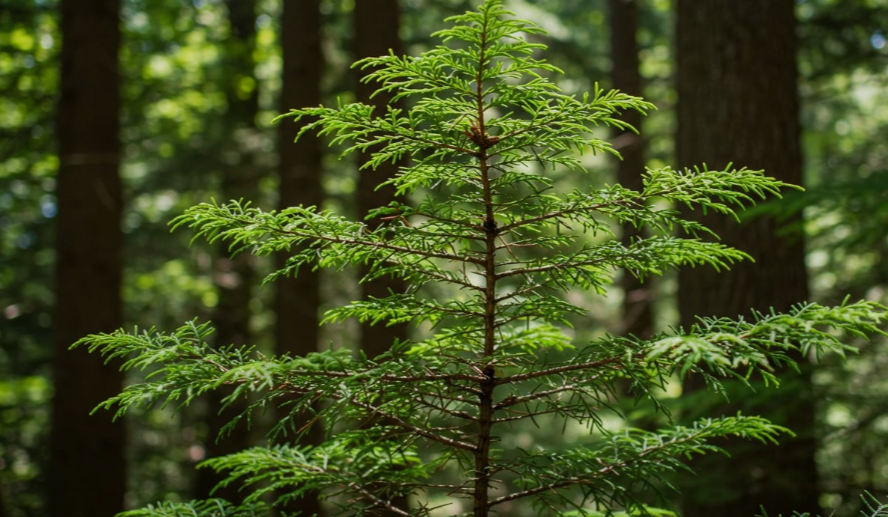
Western redcedar is the giant of the Pacific Northwest rainforest, a towering evergreen with drooping, fern-like branches and a trunk that flares wide at the base. It grows from southeast Alaska to northern California and inland to the Rocky Mountains of Idaho and Montana. In the damp, shady valleys of the coast, old trees can reach more than 200 feet tall.
The tree is so important to Indigenous peoples of the Northwest Coast that it is often called the “tree of life.” Its soft, straight-grained wood became canoes, longhouses, and totem poles, while its stringy bark was woven into clothing, baskets, and rope. Few plants anywhere have supported a culture so completely.
Despite its name, western redcedar is not a true cedar. It belongs to the cypress family and is a close relative of the arborvitae shrubs planted in yards across the country. The name is written as one word to signal that difference.
Today the tree holds a special place in both nature and industry. Its rot-resistant wood is prized for shingles, siding, and decks, and British Columbia has named it the provincial tree. In recent years, though, drought and heat have caused worrying dieback across its range.
1. It Is Not a True Cedar
True cedars are native to the Mediterranean and Himalayan regions. Western redcedar belongs to a different group in the cypress family. Its closest relatives are the arborvitae trees and shrubs.
The spelling “redcedar” as one word shows that it isn’t a true cedar. The tree got its name because its fragrant wood resembles real cedar. It has also been called giant arborvitae, canoe cedar, and shinglewood.
2. It Is Known as the Tree of Life
Northwest Coast peoples have long called western redcedar the “tree of life.” Nearly every part of the tree was put to use. It provided shelter, transportation, clothing, tools, and medicine.
The name “arborvitae” also means “tree of life” in Latin. One Native American word for the tree means “dry underneath,” since its dense branches shed rain. People could take shelter beneath it during storms.
3. Its Wood Built Canoes and Longhouses
The tree’s soft, straight-grained wood is easy to split and carve. Coastal peoples hollowed out single trunks to make large ocean-going canoes. That’s why one of its common names is “canoe cedar.”
Planks split from living or fallen trees were used to build longhouses. Carvers also used the wood for totem poles, masks, and bentwood boxes. Many of these traditions are still practiced today.
4. Its Bark Was Woven Into Clothing
The inner bark of western redcedar is long, fibrous, and flexible. It was stripped in strips from living trees without killing them. The bark was then pounded and woven.
People made capes, hats, skirts, mats, baskets, and rope from it. Trees with old bark-stripping scars are called culturally modified trees. Some of these scars are hundreds of years old.
5. Its Leaves Have White “Bowtie” Markings
Western redcedar has tiny, scale-like leaves instead of needles. The leaves are up to about 1/8 inch long and grow in flat, lacy sprays. They are glossy yellowish-green to dark green on top.
The undersides have white markings that often look like small bowties or butterflies. Leaves grow in opposite pairs at right angles to each other. This creates the braided look of each spray.
6. Its Foliage Smells Like Pineapple
Crush a spray of western redcedar foliage and you’ll notice a strong scent. Many people say it smells like ripe pineapple. Others compare it to pear drop candy.
This fruity smell helps tell it apart from similar trees. The wood has its own spicy, cedar-like aroma. That scent is one reason the wood is used for closets and chests.
7. Its Tiny Cones Look Like Rosebuds
Western redcedar cones are small, only about half an inch long. They point upward on the branches and have 8 to 12 thin, overlapping scales. When open, they look like little wooden rosebuds.
Each cone holds about 8 to 14 tiny winged seeds. The upright cones help tell it apart from Port Orford cedar and yellow cedar. Pine siskins prefer its seeds over those of Douglas fir and western hemlock.
8. It Can Grow Over 200 Feet Tall
Western redcedar can reach 210 to 230 feet tall. Its trunk can measure 10 to 23 feet across. The base often flares out into wide buttresses.
Its branches droop and then curve upward at the tips, like a “J.” The bark is reddish-brown, fibrous, and peels in long strips. Old trees often have multiple tops or dead spikes called candelabras.
9. The Largest One Grows on Vancouver Island
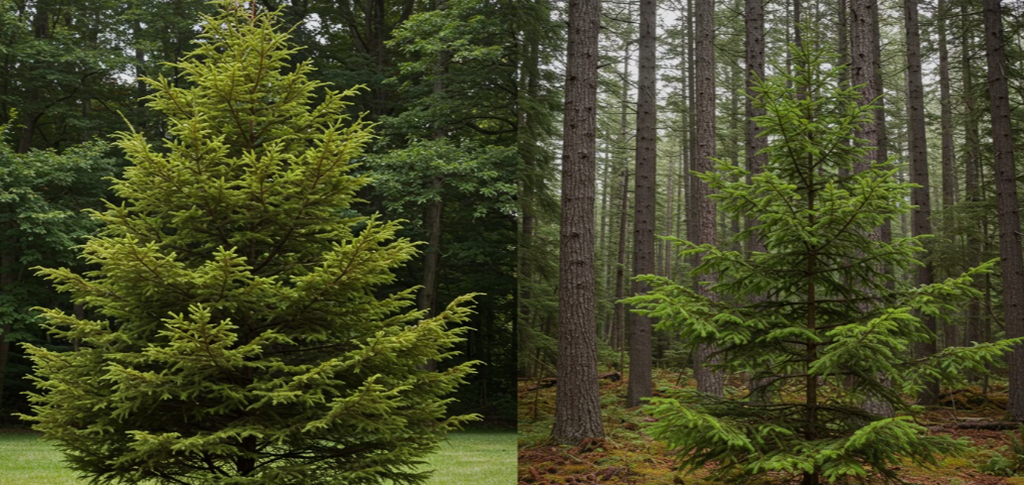
The Cheewhat Giant in Pacific Rim National Park Reserve is the largest known western redcedar in the world. It stands about 182 feet tall and 20 feet wide. Its trunk holds roughly 450 cubic meters of wood.
It is also the largest known tree of any kind in Canada. Tree hunters identified it in 1988. It took the world record after the Quinault Lake Cedar in Washington died in 2016.
10. It Can Live Over 1,000 Years
Western redcedar is one of the longest-lived trees in the Pacific Northwest. Some trees have lived well over 1,000 years. The oldest giants grow in protected coastal valleys.
Its natural resistance to rot helps it survive for centuries. Even when the center rots out, the hollow tree can keep growing. These hollows provide homes for many animals.
11. It Is British Columbia’s Provincial Tree
British Columbia named western redcedar its provincial tree in 1988. The choice honored both its economic value and its importance to First Nations. It was the same year the Cheewhat Giant was identified.
The tree remains a major part of British Columbia’s forest industry. Its wood is exported around the world. It is also planted widely in Britain and Ireland for timber and hedges.
12. Its Range Stretches From Alaska to California
Western redcedar grows from the southeast Alaska panhandle to the Mendocino coast of northern California. Inland, it reaches the Rocky Mountains of Idaho, Montana, and Alberta. It is common in mixed forests with Douglas fir and western hemlock.
The tree grows from sea level to about 3,000 feet in the north. In the south, it can grow up to 7,000 feet. It thrives along streams, in swamps, and on damp slopes.
13. It Thrives in Deep Shade
Western redcedar is one of the most shade-tolerant trees in the Pacific Northwest. Its seedlings can grow under a dense forest canopy. That makes it a climax species, able to replace other trees over time.
Seedlings often sprout on rotting logs, which hold moisture. The tree can also root from low branches that touch the ground. In stable forests, this type of regrowth is common.
14. Its Wood Fights Off Rot Naturally
The heartwood contains natural chemicals called thujaplicins. These compounds act as fungicides that stop decay. They make western redcedar one of the most durable woods in the world.
That’s why it is the top choice for roof shingles and shakes. It is also used for siding, decks, fences, and outdoor furniture. Its fine dust, however, can cause asthma in woodworkers.
15. Elk and Deer Depend on It in Winter
Western redcedar foliage is a major winter food for elk and deer in the northern Rocky Mountains. Along the coast, deer browse it all year. Young trees are often heavily nibbled.
Old trees offer shelter to many animals. Bears, raccoons, and skunks nest inside hollow trunks. Birds and bats also roost in its cavities and loose bark.
16. Drought Is Causing Worrying Dieback
Since the mid-2010s, many western redcedars have shown dead tops, thinning crowns, and browning leaves. Researchers have linked this dieback to hotter, drier summers. Repeated drought years seem to be the main cause.
A Washington State University team took about 30,000 tree-ring samples from 280 trees at 11 sites. Their study called the tree a possible “canary in the forest.” Because it is so sensitive to drought, its decline may signal wider forest stress.
Sources
- Utah State University Extension, “Redcedar, Western” (Tree Browser)
- Washington State University Magazine, “High and Dry for a NW Icon”
- University College Cork, “Western Red Cedar” (Tree Explorers)
- Oregon Department of Forestry, “Western Redcedar, Tree of Life”
- USDA Natural Resources Conservation Service, “Western Red Cedar” (Plant Guide)
- USDA Forest Service, “Western Redcedar Dieback” (Fact Sheet)