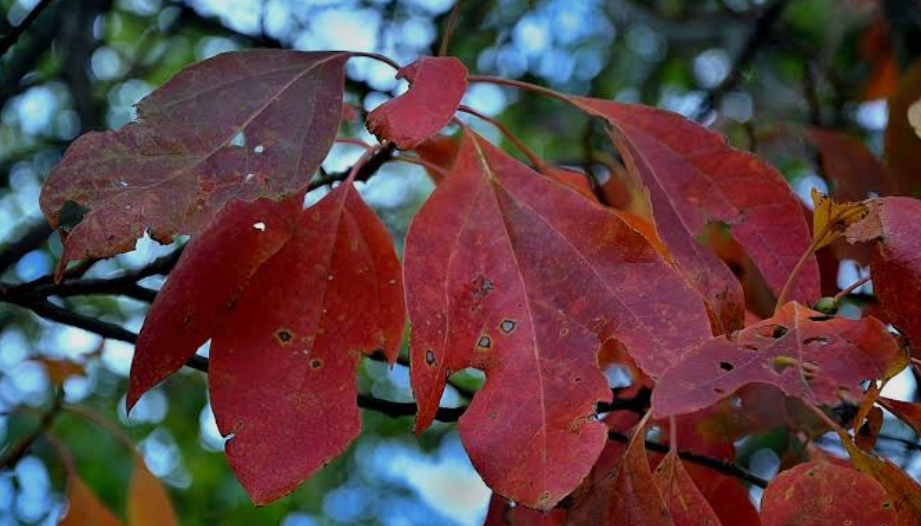
Sassafras trees are among the most recognizable native trees in eastern North America, and they can be identified by smell as well as by sight. Snap a twig or scratch a root and you get a spicy, sweet scent that many people link right away with old-fashioned root beer. That fragrance has shaped the tree’s story for more than 400 years.
Long before the scent ended up in soda fountains, it drew European explorers across the Atlantic. In the early 1600s, sassafras bark was one of the first goods shipped from the American colonies, and it was prized as a cure-all in English and French markets. Few native trees have had that much effect on the economy of a young continent.
The tree is just as interesting in the wild. It grows three different leaf shapes on the same branch, needs separate male and female trees to make fruit, and spreads underground into thickets that can cover an abandoned pasture within a few decades. Its leaves feed some of the largest butterflies in North America, and its berries feed dozens of songbird species.
Sassafras also keeps turning up in the kitchen, the woodshop, and the federal rulebook. Dried leaves still thicken gumbo across Louisiana, while the oil from the roots has been barred from commercial food since 1960. What follows covers the botany, history, wildlife value, and practical uses of this aromatic native.
1. Sassafras Grows Three Different Leaf Shapes on One Tree
Sassafras leaves come in three shapes that often grow on the same branch: plain ovals, two-lobed “mittens,” and three-lobed leaves. The mitten leaves can point left or right. Most leaves are 4 to 6 inches long and 2 to 4 inches wide.
Young trees and vigorous shoots usually carry the most lobed leaves. This mix makes sassafras one of the easiest trees for beginners to identify. A crushed leaf gives off a citrus-and-spice scent that confirms the ID.
2. It Belongs to the Same Family as Avocado and Cinnamon
Sassafras is a member of the laurel family, along with avocado, cinnamon, camphor, and bay laurel. Like its relatives, it stores aromatic oils in its leaves, bark, and wood. It is one of only a few laurel-family trees native to the eastern United States.
That family tie leaves it exposed to laurel wilt, a fungal disease spread by a non-native beetle. The disease has killed huge numbers of redbay trees across the Southeast since the early 2000s. Sassafras is also susceptible, and forest health specialists are keeping a close eye on it.
3. Its Native Range Covers Most of the Eastern United States
Sassafras grows naturally from southern Maine and southern Ontario west to Iowa, and south to central Florida and eastern Texas. It thrives on dry ridges, rocky slopes, forest edges, and old fields. The tree is hardy across USDA zones 5 through 9.
Trees in the Deep South can grow into sizable canopy trees. Farther north, in New England and upstate New York, sassafras usually stays much smaller. English sassafras hunters who sailed to Maine in 1603 found almost none there.
4. Male and Female Flowers Grow on Separate Trees
Sassafras is dioecious, meaning a single tree produces either male or female flowers, never both. Only female trees bear fruit. A lone sassafras in a yard won’t make berries unless a tree of the opposite sex grows nearby.
Male flowers tend to be fuller and showier than female ones. Outside of bloom season, the two sexes look identical. An entire grove is often one sex, since the whole thicket may have sprouted from a single parent’s roots.
5. Yellow Flowers Bloom Before the Leaves Appear
Sassafras is one of the first trees to bloom in eastern woodlands, flowering from March into April. Clusters of small yellow flowers open on bare branches before any leaves emerge. The blooms are lightly fragrant.
This early bloom gives native bees a valuable food source as they come out of winter. The flowers fill the gap between late winter and the main spring bloom. They fade quickly once the leaves come in.
6. Its Blue Berries Sit on Bright Red Stalks
Female trees produce glossy, dark blue fruits about half an inch long. Each berry sits in a bright red, cup-like stalk. They ripen in late summer to early autumn.
The fatty berries are an important fuel for migrating songbirds such as thrushes, vireos, and catbirds. Birds spread the seeds far from the parent tree. The red stalks often stay on the branches after the fruit is eaten.
7. Sassafras Spreads Underground to Form Thickets
Sassafras sends up new shoots, called suckers, from its spreading roots. Over time, one tree can become a colony of dozens of connected stems. The tallest tree usually stands near the center of the thicket.
This habit made sassafras one of the first trees to reclaim abandoned farm fields across the East. It also resprouts strongly after fire or cutting. Homeowners who want a single trunk need to prune out suckers regularly.
8. Most Sassafras Trees Stay Small to Medium-Sized
Sassafras typically reaches 30 to 60 feet tall with a spread of 25 to 40 feet. Young trees are pyramidal, while older trees develop rounded crowns with layered branches. It tolerates sand, loam, and clay soils and handles drought well once established.
The tree has a long taproot that makes it hard to transplant past the sapling stage. Nurseries usually sell it as small container plants for this reason. Planting young trees where they will grow gives the best results.
9. The World’s Largest Sassafras Stands in Kentucky
The largest known sassafras in the world grows along South Frederica Street in Owensboro, Kentucky. When last measured in 2016, it had a trunk circumference of 283 inches and stood 62 feet tall. Local estimates put its age at 250 to 300 years.
The tree has held a spot on the national champion registry since 1954. It survived a street-widening project in 1957 thanks to its owner’s efforts. A state historical marker was placed beside it in 1968.
10. Fall Color Ranges From Gold to Deep Purple
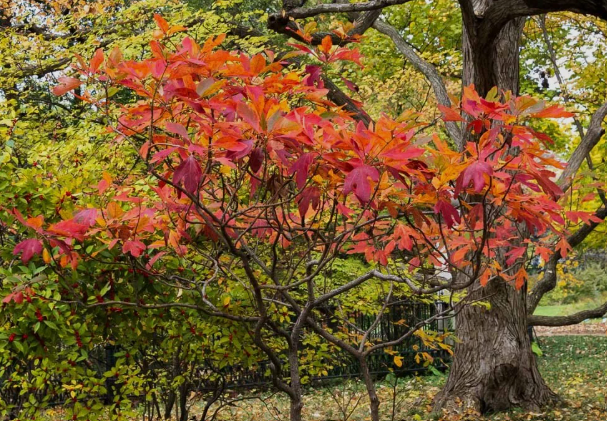
Sassafras leaves turn yellow, orange, pink, scarlet, and purple in autumn, often all on one tree. Trees in full sun and in the northern part of the range show the brightest colors. Cool nights and sunny days deepen the reds.
Because sassafras grows in colonies, whole hillsides and fence lines can change color at once. It makes a good native alternative to burning bush. The leaves usually drop by early November.
11. Every Part of the Tree Is Aromatic
The leaves smell lemony, the twigs smell sweet and fruity, and the roots smell strongly of root beer. Even freshly cut wood carries the fragrance. Old folk names include “cinnamon wood” and “smelling stick.”
The main compound behind the scent is safrole, which makes up about 80 percent of the oil from the root bark. Small amounts of safrole also occur in nutmeg and black pepper. Sassafras oil was once widely used in perfumes and soaps.
12. Sassafras Was One of Colonial America’s First Major Exports
In the early 1600s, European doctors promoted sassafras as a miracle cure, and demand soared. In 1603, ships backed by Sir Walter Raleigh sailed to present-day Maine on the Great Sassafras Hunts. Along with tobacco, sassafras became a primary export of the Jamestown colony.
Colonists learned to use the plant from Native American peoples, who had long treated fevers and joint pain with it. Heavy harvesting stripped many stands along the coast. By the 1700s, the tree’s medical reputation and price had both collapsed.
13. It Gave Root Beer Its Original Flavor
For more than 200 years, sassafras root bark was the defining flavor of American root beer. Families brewed their own versions with molasses and other roots and herbs. Sassafras tea was also a popular spring tonic in Appalachia and the Ozarks.
In 1960, the FDA banned safrole and sassafras oil as food additives after studies linked high doses to liver tumors in rats. Root beer makers switched to artificial flavoring or safrole-free extract. Critics argue the doses in those studies were far beyond anything a person would drink.
14. Dried Leaves Become Filé Powder for Gumbo
Dried, ground sassafras leaves make filé powder, a seasoning and thickener in Creole and Cajun gumbo. The Choctaw people introduced it to French settlers on the Gulf Coast. It has an earthy, slightly citrusy flavor.
The leaves contain mucilage, which thickens liquids but turns stringy if boiled. That is why cooks stir filé in after the pot comes off the heat. Tests have found almost no safrole in the leaves, so filé was never banned.
15. It Feeds Some of North America’s Largest Butterflies
Sassafras is a key host plant for the spicebush swallowtail, a butterfly with a wingspan of up to 4.8 inches. Its caterpillars fold the leaves into shelters and sport eye-like spots to scare off birds. The eastern tiger swallowtail and promethea moth also feed on sassafras.
The tree supports wildlife in other ways too. Its thickets give nesting cover to birds and shelter to small mammals. Deer browse the twigs, and rabbits nibble young shoots in winter.
16. Sassafras Wood Is Light, Stable, and Decay-Resistant
Sassafras lumber weighs about 32 pounds per cubic foot at 12 percent moisture. The heartwood ranges from orange to dark brown, and the coarse grain looks like oak or ash. Some boards show small cinnamon-red burls found in no other species.
Once dried, the wood shrinks very little and resists decay. Early settlers used it for split rails, fence posts, and small boats. Today it is mostly used for paneling, millwork, and small craft projects.
Sources
- University of Florida IFAS Extension, “Sassafras albidum: Sassafras” (Fact Sheet ST584)
- Purdue University Extension, “Sassafras” (Hardwood Lumber and Veneer Series, FNR-289)
- Mississippi State University Extension, “Tree of the Month: Sassafras”
- NC State Extension, “Sassafras albidum” (Extension Gardener Plant Toolbox)
- University of Kentucky, Kentucky Woodlands Magazine, “You Bet Your Sweet Sassafras”
- McGill University Office for Science and Society, “The Root in Root Beer Is Sassafras”