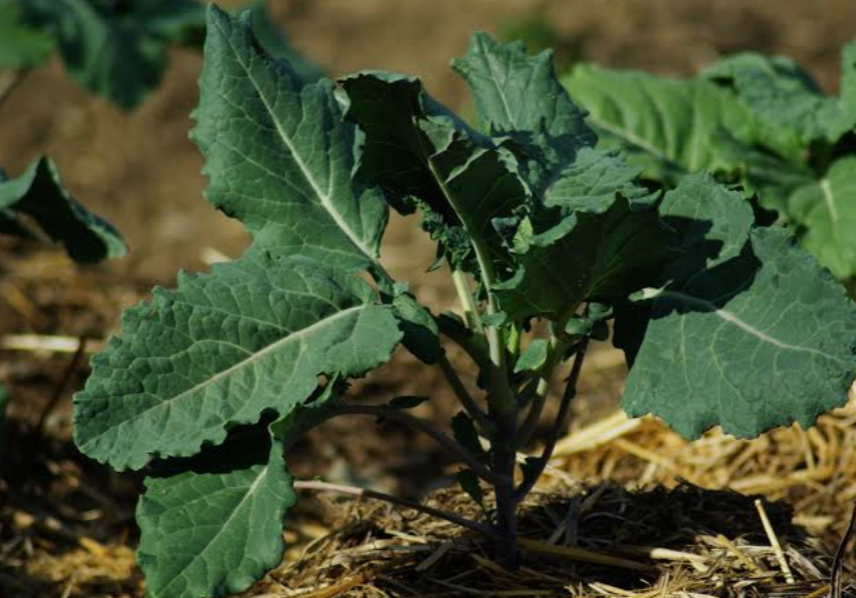
Walking Stick kale, also called Jersey kale, Jersey cabbage, or tree cabbage, is a towering, long-lived brassica from the Channel Islands. Its thick, woody stalks once grew so tall that the plant was used as a living fence and as a source of walking sticks. Though it is grown more as a novelty today, its leaves are edible and it is an unusual addition to a kitchen or heritage garden.
Walking Stick kale is more of a cabbage-type plant than a typical curly or flat kale. It is classified as Brassica oleracea in the Acephala (kale) group, and the Latin name longata refers to its long, tall stem. Its height and tree-like habit set it apart from the compact kales most gardeners grow.
This guide covers where the plant came from, what makes it unusual, how to grow it, how long it takes to harvest, how to save seed, and how to use the leaves.
Origin and Development
Walking Stick kale comes from the Channel Islands, particularly Jersey, where it was grown for centuries. Historians describe it as a plant that was used as livestock fodder and for making walking sticks, with the long stalks dried, varnished, and turned into canes. The plant was known locally by names such as giant cabbage, long jacks, and cow cabbage, and it appears in an 1836 illustration in The Farmer’s Magazine.
In the nineteenth century, the plant was so common on Jersey that large groves of it stood across farmland, and visitors often bought walking sticks as souvenirs. Its exact origin is not well documented, and the plant has been described as having been cultivated for over 200 years in the islands. It is now rarely grown on the islands themselves, but it survives in seed collections and in gardens around the world.
Also Read: Different Types of Kales to Grow At Home
What Makes It Distinct
Walking Stick kale grows as a tall, tree-like plant with a central stalk and a crown of large leaves. In its native range it could reach as much as 20 feet, though seed suppliers say that garden plants usually grow about 6 to 12 feet. The stalk becomes woody with age, and the lower leaves fall away as the plant grows, leaving a crown of foliage at the top.
The leaves are large, broad, and typically green, and they are edible when young and tender. Because the plant is so tall, it is more of a novelty than a space-efficient crop, and it needs room and sturdy support as it matures.
Growing Conditions
Walking Stick kale grows best in mild, frost-free or nearly frost-free climates, where it can keep growing over several seasons. In the Channel Islands, plants were sown in late summer and kept growing through the mild winter. In cooler regions, it is usually grown as an annual or biennial, and it needs a longer season to reach its full height.
It prefers full sun and fertile, well-drained soil that is rich in organic matter. Like other brassicas, it benefits from compost worked into the bed before planting and a nitrogen-rich side dressing during the season. Give each plant plenty of room, since its size means it can crowd out smaller crops.
Planting and Care
Start seeds indoors or sow them directly in the garden, and set out seedlings when they are about four to six weeks old. Space plants generously, because a single plant can spread widely as it matures. Keep the soil evenly moist during establishment, and water at the base of the plant rather than over the leaves.
Watch for cabbage white butterflies, whose caterpillars feed on brassica leaves. Check the undersides of leaves regularly, and squash the eggs or remove caterpillars by hand. Lower leaves should be picked regularly to encourage straight growth of the central stem, which is what gives the plant its walking stick form.
Days to Harvest
Harvesting begins once the plant is established and leaves are large enough to eat, though seed suppliers do not give a consistent days-to-harvest figure for this variety. Because the plant is grown over a long period, leaves can be picked repeatedly across many months rather than as a single harvest. The first leaves are typically ready within a few months of planting, and the plant continues producing in its second and later seasons if it is kept alive.
Harvest the lower and outer leaves first, and leave the upper leaves and central growth intact so the plant continues to grow upward. Pick in the morning when the leaves are crisp, and avoid removing too many leaves at once, since the plant needs enough foliage to keep growing.
Choosing Seed
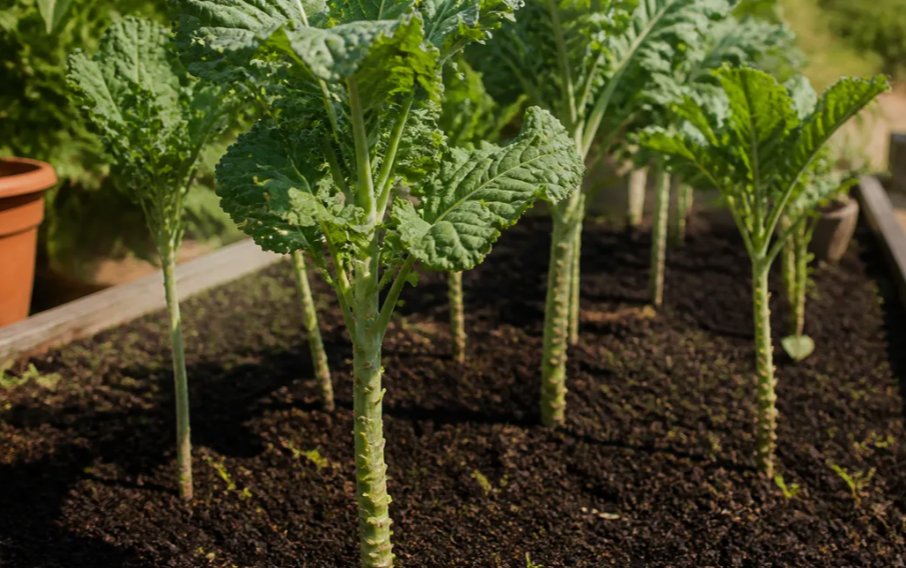
Walking Stick kale seed is sold by several heirloom and specialty seed companies, usually under names such as Walking Stick Kale, Jersey Cabbage, or Tree Cabbage. Packets are typically small, with about 100 seeds per pack, and availability varies from year to year. Because the variety is a novelty, stock may be limited, so check the listing before ordering.
If you want to save seed, note that the plant must be overwintered and then allowed to flower the following year. Seed suppliers recommend isolating plants from other brassicas to keep the seed true to type, and some growers protect plants by caging them or by using separate growing times.
Culinary Uses
The young leaves of Walking Stick kale can be eaten in salads, though the mature leaves are usually sturdier and better suited to cooking. Historically, the leaves were used both for animal fodder and for human food on the islands. Cook the leaves by sautéing, steaming, or adding them to soups and stews.
The stems of the plant are not usually eaten, since they become woody. The leaves are most tender when harvested young, and removing the tough central rib before cooking makes them easier to chew. Store harvested leaves in a sealed bag in the refrigerator, where they keep for about a week, and blanch and freeze them for longer storage.
Frequently Asked Questions
Where does Walking Stick kale come from?
It comes from the Channel Islands, especially Jersey, where it was grown for fodder and walking sticks.
How tall does Walking Stick kale grow?
It can reach around 20 feet in its native range, though garden plants usually grow about 6 to 12 feet.
Is it a kale or a cabbage?
It is classified as a kale-type plant in the Acephala group of Brassica oleracea, but it is often called a cabbage in older records. Both names are used in seed catalogs.
Can I eat the leaves?
Yes. Young leaves are tender enough for salads, and mature leaves are best cooked.
Why is it called Walking Stick kale?
Its long stalks were dried, varnished, and turned into canes, which were sold to visitors on Jersey.
Can it grow in cold climates?
It grows best in mild, frost-free conditions. In cooler regions it is usually grown as an annual or biennial.