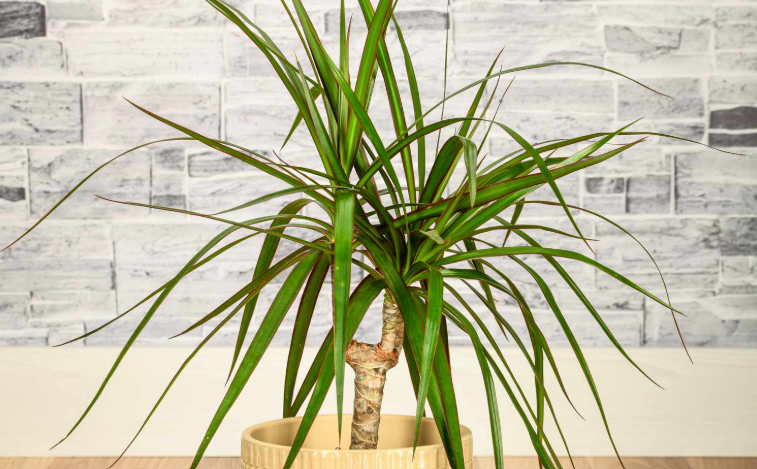
The palm tree is one of the most evocative silhouettes in the plant world. That distinctive profile — a tall, unbranched trunk topped with a crown of long, arching fronds — instantly conjures images of tropical beaches, warm climates, and exotic landscapes. It is a form so visually powerful that it has become one of the defining symbols of warmth and abundance across cultures worldwide.
Yet the palm aesthetic is not exclusive to true palms. Dozens of plants from entirely unrelated families produce the same essential visual language — the single upright stem, the dramatic crown of large, spreading leaves, the bold architectural presence that makes palms such commanding garden specimens. Some achieve this through rosettes of long, sword-like leaves. Others develop genuinely trunk-like structures over time. A few are ancient survivors from entirely different evolutionary lineages that arrived at the same form millions of years ago.
The Arecaceae family — true palms — contains approximately 2,600 species and is one of the most economically important plant families on Earth, providing food, oil, fiber, and building materials for billions of people. However, many of the plants in this collection belong to families with no close relationship to palms whatsoever, including the agave family, the grass family, the lily family, and even the ancient cycad lineage, which predates flowering plants entirely.
Growing true palms can be challenging in temperate climates, where cold winters, heavy soils, and limited summer heat place strict limitations on which species can thrive. The plants in this collection offer a remarkable alternative — many are considerably hardier than true palms, faster-growing, easier to maintain, and just as visually dramatic. Whether you are creating a tropical garden in a cool climate or simply drawn to the bold, sculptural quality of the palm silhouette, these thirty plants deliver the look with impressive conviction.
Also Read: Flowers That Look Like Stars :(Star-Shaped Flowers)
Dragon Tree (Dracaena draco)
Dragon Tree is one of the most convincingly palm-like of all non-palm plants, developing over decades a stout, branching trunk topped with dense rosettes of long, sword-like, blue-green leaves that create an unmistakable tropical canopy. It is native to the Canary Islands and can live for an extraordinary length of time — the famous Dragon Tree of Icod de los Vinos in Tenerife is estimated to be between 650 and 1,500 years old. The tree bleeds a deep red resin known as dragon’s blood when cut, which has been used in varnishes, medicines, and dyes since ancient times.
Cabbage Tree (Cordyline australis)
New Zealand Cabbage Tree is one of the most widely planted palm substitutes in temperate gardens, developing a sturdy, fibrous trunk over time and a spectacular crown of long, strap-like, arching leaves in shades of green, burgundy, and bronze. It grows 20 to 40 feet tall in its native New Zealand, where it is a culturally significant plant for the Māori people, who used its leaves for weaving and its root for food. It is remarkably cold-hardy for such a tropical-looking plant, tolerating temperatures down to about 14°F (-10°C) in sheltered positions.
Tree Fern (Dicksonia antarctica)
Soft Tree Fern develops a genuine trunk — composed of densely packed old root and stem tissue — that can grow 15 to 20 feet tall, topped with a spectacular crown of large, finely divided, arching fronds that create one of the most convincing palm-like silhouettes of any non-palm plant. It is native to the temperate rainforests of southeastern Australia and is among the most ancient of all large plants in cultivation, belonging to a lineage that has remained essentially unchanged for over 200 million years. Established trunks have survived being stored dry for months and successfully rehydrated back to health.
Also Read: Types of Begonia Plants
Yucca (Yucca elephantipes)
Spineless Yucca develops a stout, woody trunk over time that bears a strong resemblance to a small palm, topped with a rosette of long, strap-like, bright green leaves on a plant that can eventually reach 25 to 30 feet in ideal conditions. It is native to Mexico and Central America and is one of the most widely grown architectural houseplants and garden specimens worldwide in warm-temperate to tropical climates. Older specimens develop multiple branching heads, increasing the palm-like impression considerably.
Cycas (Cycas revoluta)
Sago Palm is not a palm at all but a cycad — one of the most ancient plant lineages on Earth, with relatives dating back over 300 million years to before the age of dinosaurs. It develops a stout, rough-textured trunk topped with a crown of stiff, dark green, feathery fronds that is almost indistinguishable from a small feather palm at a casual glance. It grows extremely slowly, adding just one new ring of fronds per year, and a specimen with a 12-inch trunk may be over 50 years old.
Agave (Agave americana)
Century Plant produces an enormous rosette of thick, fleshy, blue-grey leaves up to 6 feet long with sharp terminal spines, creating a bold, tropical silhouette that is frequently mistaken for a young palm. When it finally flowers — typically after 10 to 30 years, despite the misleading name “century plant” — it sends up a towering flower spike reaching 20 to 30 feet tall that dominates any garden for several months before the plant dies. It is native to Mexico and the southwestern United States and is exceptionally drought-tolerant.
Banana (Musa basjoo)
Japanese Hardy Banana is the most cold-tolerant of all banana species, developing tall, lush, pseudo-stems of tightly rolled leaf bases reaching 10 to 14 feet topped with enormous, paddle-shaped leaves up to 6 feet long that create one of the most convincingly tropical, palm-like silhouettes available to temperate gardeners. Unlike true palms, it is technically an enormous herbaceous perennial — the “trunk” is not woody tissue but compacted leaf bases. It can regenerate from its protected underground rhizome even after the tops are cut down by frost.
Bismarckia (Bismarckia nobilis)
While Bismarckia is technically a true palm, it is so frequently confused with and grouped alongside palm-like plants due to its unusual appearance that it deserves mention — its massive, silvery-blue fan fronds are unlike any other palm, giving it a distinctly otherworldly, sculptural presence unlike the typical feather-palm silhouette. It can grow 60 to 80 feet tall and produces individual fronds up to 10 feet across in its native Madagascar. Its extraordinary silvery-blue coloring is unmatched by any other large-leaved plant.
Also Read: Red Ornamental Grasses For Landscaping
Phormium (Phormium tenax)
New Zealand Flax produces dramatic, upright fans of long, sword-like leaves in shades of green, burgundy, bronze, and variegated combinations that can reach 8 to 10 feet in height, creating a bold, architectural silhouette strongly reminiscent of a young cabbage palm or yucca. It is native to New Zealand and the Chatham Islands, where it was one of the most economically important plants for the Māori people, providing strong fibers for weaving baskets, mats, and clothing. There are hundreds of named garden cultivars offering a remarkable range of leaf colors and sizes.
Strelitzia (Strelitzia nicolai)
Giant Bird of Paradise develops genuine trunk-like stems over time, reaching 20 to 30 feet tall and producing enormous, banana-like leaves up to 6 feet long that create a spectacular tropical palm substitute for warm-climate gardens. It is native to the coastal forests of eastern South Africa and produces dramatic white and dark blue Bird of Paradise flowers as a bonus to its architectural foliage. A mature clump with multiple stems creates one of the most convincing tropical palm-grove effects of any non-palm planting.
Dasylirion (Dasylirion wheeleri)
Desert Spoon develops a dense, spherical rosette of hundreds of long, narrow, blue-grey leaves with toothed margins on a slowly developing trunk, creating a compact but powerfully architectural palm-like silhouette. It is native to the Chihuahuan Desert of Mexico and the southwestern United States and is extraordinarily drought and heat-tolerant. When it finally flowers — on a spike reaching 12 to 15 feet tall — the event is spectacular, attracting hummingbirds and orioles to feed on the nectar-rich blooms.
Ensete (Ensete ventricosum)
Ethiopian Banana, also known as False Banana, produces some of the largest leaves of any plant in temperate cultivation — up to 15 feet long and 3 feet wide — on robust pseudo-stems reaching 15 to 20 feet tall that are among the most convincingly palm-like of any non-palm plant. It is native to the highlands of Ethiopia, where the stem pith and underground corm are an important food source for millions of people — making it one of Africa’s most significant but least-known food crops. In temperate gardens, it is grown as a dramatic annual or overwintered specimen.
Nolina (Nolina recurvata)
Ponytail Palm, despite its misleading common name, is not a palm at all but a member of the agave family, developing a swollen, bottle-like base and a slender trunk topped with a cascading mass of long, narrow, curling leaves that closely resemble a palm’s crown. The swollen base stores water, allowing it to survive extended periods of drought with remarkable ease. It grows extremely slowly but can live for hundreds of years, with old specimens in Mexico reaching 15 to 20 feet tall.
Also Read: Best Soil Erosion Control Plants
Tetrapanax (Tetrapanax papyrifer)
Rice Paper Plant produces enormous, deeply lobed leaves up to 3 feet across on stout stems reaching 10 to 15 feet tall, creating one of the most dramatic tropical-looking silhouettes available to temperate gardeners. It spreads by underground suckers to form multi-stemmed clumps that increasingly resemble a small palm grove over time. The pith of its stems was traditionally used in China to make rice paper — the thin, white paper used in Chinese watercolor painting and lantern-making — for over 1,000 years.
Chusan Palm (Trachycarpus fortunei)
Chinese Windmill Palm is technically a true palm but is so frequently grown as a hardy palm substitute in climates where most palms cannot survive that it warrants inclusion — it is one of the hardiest palms in existence, tolerating temperatures as low as 5°F (-15°C) and thriving in the cool, wet conditions of Britain, Ireland, and the Pacific Northwest. It grows 20 to 40 feet tall with a distinctive shaggy, fiber-covered trunk and fan-shaped fronds. It is native to the mountain forests of central China, where it grows at elevations up to 7,900 feet.
Furcraea (Furcraea foetida)
Giant Cabuya develops a large rosette of long, fleshy, sword-shaped leaves up to 8 feet long on a short, thick stem, creating a bold, tropical silhouette closely resembling a large agave or young cabbage palm. When it flowers — after many years — it sends up a towering spike reaching 20 to 25 feet tall bearing thousands of pendant, greenish-white flowers and remarkable numbers of plantlets that drop from the spike and root where they fall. It is native to the Caribbean and northern South America and is naturalized across many tropical regions worldwide.
Cycas (Cycas panzhihuaensis)
Panzhihua Cycad is one of the cold-hardiest of all cycad species, tolerating temperatures down to about 5°F (-15°C), making it accessible to gardeners in warmer temperate zones who cannot grow most other palm-like plants. It develops a stout, textured trunk over many decades, topped with a crown of stiff, dark green, feathery fronds that is nearly indistinguishable from a small feather palm at a distance. The cycad family as a whole is one of the most endangered plant groups on Earth, with the majority of the approximately 350 species classified as threatened with extinction.
Beschorneria (Beschorneria yuccoides)
Mexican Lily develops a large rosette of soft, grey-green, strap-like leaves up to 3 feet long that creates a yucca-to-palm-like silhouette of considerable elegance. When it flowers, it sends up a dramatically arching, coral-red flowering stem reaching 5 to 6 feet tall bearing pendant, green and red tubular flowers that are among the most exotic-looking of any hardy garden plant. It is native to central Mexico and is far more cold-hardy than its tropical appearance suggests, tolerating temperatures down to about 14°F (-10°C).
Also Read: Succulents that Grow Tall
Mahonia (Mahonia japonica)
Japanese Mahonia develops an upright, architectural form with stiff, pinnate, holly-like leaves arranged in whorls at the top of slowly elongating stems, creating a silhouette that is frequently compared to a small, understated palm from a distance. It grows 6 to 10 feet tall and produces cascading spires of fragrant, soft yellow flowers in winter, followed by blue-black berries attractive to birds. It is one of the most shade-tolerant of all architectural plants producing a palm-like impression.
Echium (Echium pininana)
Giant Viper’s Bugloss develops a large rosette of soft, silvery-grey leaves in its first year before sending up in its second year a single, towering flower spike reaching 10 to 13 feet tall — one of the tallest flower spikes of any plant in temperate cultivation — densely packed with thousands of small blue-purple flowers. The single spike emerging from a low rosette has an unmistakable palm-like quality, particularly when the rosette leaves are visible at the base. It is native to La Palma in the Canary Islands and is a biennial that self-seeds freely in sheltered gardens.
Setaria (Setaria palmifolia)
Palm Grass is a tropical ornamental grass with remarkably broad, pleated, palm-like leaf blades up to 3 feet long and 3 inches wide on plants reaching 4 to 6 feet tall, creating one of the most convincingly palm-like foliar effects of any grass. The pleated, ribbed texture of the leaves is strikingly similar to the fronds of a young feather palm, and the overall plant creates a lush, tropical groundcover or specimen effect in shaded garden positions. It is native to tropical Asia and the Pacific Islands and thrives in warm, humid conditions.
Astelia (Astelia chathamica)
Silver Spear develops a large, fountain-like clump of long, silvery-grey, sword-shaped leaves up to 5 feet long with a distinctive metallic sheen that creates one of the most striking palm-substitute silhouettes for temperate gardens. It is native to the Chatham Islands of New Zealand, where it grows in coastal and lowland habitats, and is remarkably tolerant of salt, wind, and cold for such a tropical-looking plant. The silver coloring of its leaves is caused by tiny, reflective scale-like cells on the leaf surface.
Melianthus (Melianthus major)
Honey Bush produces some of the most dramatically architectural foliage of any garden shrub, with enormous, blue-grey, pinnate leaves up to 18 inches long arranged in an alternating pattern along upright stems reaching 6 to 10 feet tall. The overall plant creates a convincingly tropical, palm-like impression from a distance, particularly when the lower leaves have fallen to leave a bare, leaf-scarred stem beneath the crown. Its tubular, deep red-brown flowers produce copious nectar that earned it its common name — and its foliage has a distinctive, unpleasant odor when brushed.
Also Read: Succulents that Survive Harsh Winters
Pseudopanax (Pseudopanax crassifolius)
Lancewood is a remarkable New Zealand tree with one of the most dramatic juvenile forms of any plant — young trees produce an extraordinary cluster of long, narrow, downward-pointing leaves up to 3 feet long and barely an inch wide that create a striking, grass-skirt-like palm silhouette unique in the temperate plant world. As the tree matures, the leaf form changes completely to shorter, broader leaves. The juvenile stage can persist for 15 to 20 years, during which the unusual narrow-leaved crown is one of the most conversation-provoking sights in any garden.
Rhapis (Rhapis excelsa)
Lady Palm, while technically a true palm, is grown almost exclusively as an indoor and courtyard plant in temperate regions where it mimics the look of larger palms in miniature, developing multiple slender, bamboo-like canes topped with deep green, fan-shaped fronds divided into finger-like segments. It grows just 4 to 8 feet tall — exceptionally modest for a palm — and is one of the most shade-tolerant of all palms, thriving in low-light indoor conditions. It has been cultivated in Japan for centuries, where named variegated varieties are still highly prized collectors’ items.
Musa (Musa sikkimensis)
Darjeeling Banana is one of the cold-hardiest banana species available to gardeners, tolerating temperatures down to about 14°F (-10°C) with root protection, and producing lush, tropical pseudo-stems 8 to 12 feet tall topped with large, paddle-shaped leaves that create an authentic palm-grove atmosphere in temperate gardens. It is native to the foothills of the eastern Himalayas at elevations up to 6,000 feet, which explains its remarkable cold tolerance. The leaves have an attractive reddish midrib that adds color to its already dramatic tropical foliage.
Lomatia (Lomatia ferruginea)
Fuinque is a slow-growing Chilean and Argentinian shrub or small tree that develops deeply divided, fern-like leaves arranged along stiff branches in a pattern that creates a convincingly tropical, palm-like impression from a distance. It grows 15 to 30 feet tall in its native Chilean and Argentinian rainforest habitat and produces small, rusty-red and yellow flowers. One closely related species — Lomatia tasmanica — is one of the rarest plants on Earth, with the entire wild population consisting of a single clone estimated to be over 43,000 years old.
Cordyline (Cordyline indivisa)
Mountain Cabbage Tree is the most dramatic and boldly architectural of all Cordyline species, developing a stout, unbranched trunk topped with a large, symmetrical crown of very broad, blue-green leaves up to 6 feet long with red and orange midribs — a silhouette so convincingly palm-like that even experienced gardeners regularly mistake it for a true palm. It is native to the mountain forests of New Zealand at elevations above 2,000 feet and is more cold-tolerant than its tropical appearance suggests. It grows more slowly than the common Cordyline australis but is considerably more dramatic at maturity.
Brahea (Brahea armata)
Mexican Blue Palm, while technically a true palm, is so frequently grouped with architectural non-palm plants due to its extraordinary visual character that it deserves mention — its massive, silver-blue fan fronds are among the most beautiful and dramatic of any palm or palm-like plant in cultivation. It grows 20 to 40 feet tall and is native to the dry canyons and desert slopes of Baja California, where it is exceptionally drought-adapted. The silvery-blue color of its fronds intensifies in bright sunlight, creating a shimmering, metallic effect unmatched by any other large-leaved plant.
Also Read: Best Shrubs that Grow Well In Shade
Heliconia (Heliconia latispatha)
Lobster Claw develops tall, banana-like pseudo-stems of tightly rolled leaf bases reaching 6 to 15 feet topped with large, paddle-shaped leaves that create a lush, tropical silhouette virtually identical to a banana or young feather palm. The flamboyant, waxy bracts in shades of red, orange, and yellow that emerge from the foliage crown provide some of the most vivid and exotic-looking flowers of any tropical plant. It is native to the rainforests of Central and South America and is one of the most widely planted ornamental tropical plants in warm-climate gardens worldwide.
Trachycarpus (Trachycarpus wagnerianus)
Miniature Chusan Palm is a smaller, more compact version of the Chinese Windmill Palm with stiffer, more wind-resistant fan fronds that are particularly well-suited to exposed, coastal, and windy garden positions where larger palms would suffer frond damage. It grows 15 to 25 feet tall and is equally cold-hardy to its larger relative, tolerating temperatures well below freezing in sheltered positions. Its compact, well-structured fronds and neat habit make it one of the most garden-worthy of all palm and palm-like plants for temperate climates.
Also Read: Flowers That Look Like Sunflowers