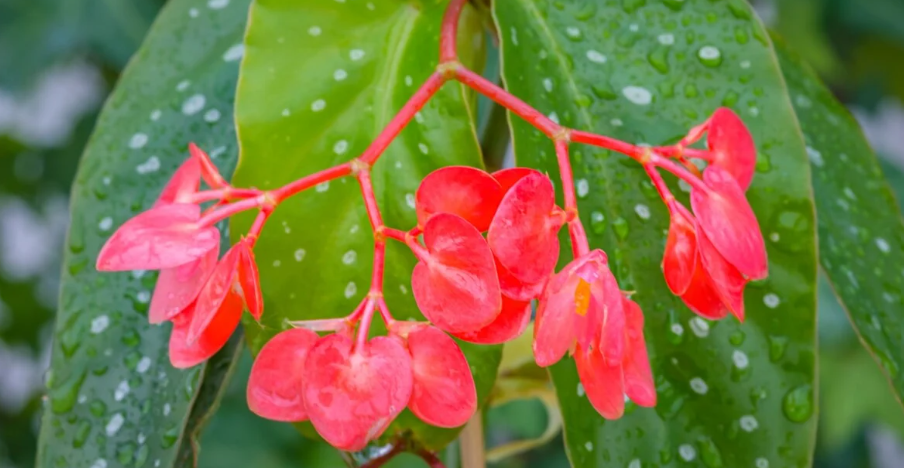
Begonias are among the most diverse, adaptable, and widely grown flowering plants in the world. From the compact wax begonias that edge millions of summer bedding schemes to the enormous, paddle-leaved rex begonias prized by collectors, from the pendulous tuberous varieties trailing from hanging baskets to the towering cane begonias reaching six feet or more in a single season — the begonia genus encompasses a breadth of plant form, flower color, and growing character that is genuinely extraordinary.
The numbers alone are staggering. With over 2,000 known wild species and an estimated 15,000 to 20,000 registered hybrid cultivars, Begonia is one of the largest plant genera in the world. The American Begonia Society — founded in 1932 and still one of the most active plant societies in North America — has registered thousands of cultivars over its 90-year history, and new introductions continue to appear at a rate that makes the begonia world one of the most dynamic and continuously evolving in all of horticulture. Globally, begonia retail sales exceed $1 billion annually, making it one of the top ten most commercially important ornamental plant genera worldwide.
Begonias are native to moist tropical and subtropical regions across every continent except Australia and Antarctica — a natural distribution that spans tropical Africa, Asia, Central and South America, and the islands of the Pacific. This vast native range is reflected in the extraordinary diversity of the genus — the different species occupying habitats as varied as tropical cloud forest floors, exposed rocky hillsides, riverbanks, and the bases of ancient trees, with each habitat having shaped distinct adaptations in growth habit, leaf form, flower character, and cultural requirements.
For the gardener, begonias offer a solution to almost every planting challenge. They are among the finest and most floriferous plants for shaded gardens. They provide summer-long color in containers and window boxes with minimal maintenance. The foliage of the finest rex and rhizomatous types is among the most ornamentally complex and visually extraordinary available from any commonly grown garden plant. And their adaptability to indoor growing makes them among the most rewarding of all houseplants for growers who appreciate flowering plants with genuinely exceptional character.

Varieties of Begonia Flowers
1. Wax Begonia
Wax begonias are the most widely grown begonias in the world and among the most commonly planted summer bedding plants of any genus — compact, free-flowering, remarkably heat-tolerant plants that produce masses of small flowers in white, pink, and red from late spring through the first frosts of autumn with a reliability that few other bedding plants can match.
The glossy, waxed appearance of the leaves — which gives the plants their common name — is actually an adaptation to conserve moisture, and this same adaptation contributes to their exceptional tolerance of heat and dry conditions. Both green-leaved and bronze-leaved forms are widely available, with the bronze-leaved varieties producing a particularly effective contrast to their bright flowers.
Wax begonias account for an estimated 25 to 30 percent of all begonia sales globally — a commercial dominance that reflects their unparalleled combination of reliability, heat tolerance, shade adaptability, and minimal maintenance requirements.
2. Tuberous Begonia
Tuberous begonias produce some of the largest and most elaborately formed flowers of any begonia — the massive, multi-petalled blooms in vivid shades of red, orange, yellow, pink, white, and bicolor reaching four to six inches across on the finest cultivars, rivaling roses and camellias for sheer flower opulence.
They are cool-season bloomers that perform best in the mild temperatures and indirect light of coastal and maritime climates — notoriously the flowers of British and Pacific Northwest summer gardens, where the cool, moist conditions produce their most extravagant and sustained displays. They grow from tubers that are lifted and stored through winter in cold climates.
The National Collection of Tuberous Begonias maintained at Blackpool’s Stanley Park in England — featuring over 3,000 plants in more than 200 varieties — is considered one of the finest begonia displays in the world and attracts visitors specifically to witness the summer flowering season.
3. Rex Begonia
Rex begonias are the great foliage show plants of the begonia world — grown not for their modest, insignificant flowers but for the extraordinary complexity, color, and patterning of their large, asymmetric leaves, which rank among the most ornamentally spectacular foliage of any commonly cultivated plant.
The leaf patterning of rex begonias encompasses virtually every possible combination of silver, green, burgundy, pink, red, bronze, purple, and near-black — in spirals, swirls, spots, bands, and zones of color that give individual varieties an almost artificial, designed quality that is difficult to believe was achieved through natural hybridization.
Rex begonias were first developed following the discovery of the wild Begonia rex species in the Himalayan foothills of India in the 1850s, and the hybridization program that followed produced an explosion of foliage variety that has been continuously expanding for over 160 years.
4. Cane Begonia
Cane begonias are large, upright-growing plants with bamboo-like jointed stems — the canes — that can reach five to eight feet in height under favorable conditions, producing clusters of elegant, pendant flowers and attractive, often silver-spotted, large leaves throughout the growing season.
The most famous cane begonia — the angel wing begonia — produces distinctive, asymmetric, wing-shaped leaves that are typically deep green with silvery spotting on the upper surface and red beneath, alongside pendant clusters of coral-pink to red flowers that hang gracefully from the tall stems.
They are among the most impressive and large-scale of all begonia types for container cultivation in frost-free climates or in indoor situations where their height makes them genuinely impressive specimen plants.
5. Angel Wing Begonia
Angel wing begonias are a specific group within the cane begonias, named for the distinctive wing-like shape of their asymmetric leaves. They are among the most popular and widely grown of the tall begonia types — combining attractive, silver-spotted foliage with generous, pendant flower clusters in shades of pink, red, coral, and white.
The pendant flower clusters hang gracefully from the stems in loose, drooping bunches that are produced almost continuously in appropriate conditions — making angel wing begonias among the most free-flowering of all the larger begonia types. The silver spotting on the leaves adds further ornamental interest beyond the flower display.
They were extremely popular as Victorian parlor plants and remain widely grown as houseplants and conservatory plants, their combination of attractive foliage, abundant flowers, and manageable container habit making them perennial favorites among begonia enthusiasts.
6. Dragon Wing Begonia
Dragon Wing begonias are one of the most successful and widely planted bedding begonia introductions of recent decades — a large-flowered, heat-tolerant, continuously blooming hybrid that produces masses of pendant, wing-shaped leaves and graceful, drooping flower clusters of vivid red or bright pink from late spring through first frost.
Unlike tuberous begonias, Dragon Wing thrives in summer heat rather than preferring cool conditions — making it one of the most practical large-flowered begonias for warm-climate summer planting. The large, glossy, deeply veined leaves are attractive in their own right, and the plant grows vigorously to twelve to eighteen inches.
It has become one of the top-selling begonia varieties in the United States since its introduction in the late 1990s, and its combination of large size, heat tolerance, and continuous flowering has made it a staple of both professional and amateur summer planting schemes.
7. Rhizomatous Begonia
Rhizomatous begonias are a large and diverse group characterized by their horizontal, creeping rhizomes that spread along the soil surface, rooting as they grow and producing a gradually expanding colony of large, attractively patterned leaves from which modest but pleasant flower stalks arise in winter and spring.
The leaves of rhizomatous begonias are among the most varied and ornamentally interesting of any begonia group — ranging from small, star-shaped varieties to enormous, plate-sized leaves with complex surface textures, colors, and markings. Many have velvety, hairy, or deeply textured leaf surfaces that add tactile interest to their visual appeal.
The winter and spring flowering season of most rhizomatous types — when they produce their tall, airy flower spikes above the impressive foliage — fills an important seasonal gap that summer-flowering begonia types cannot address.
Also Read: Best Ornamental Grasses for Containers & Pots
8. Semperflorens Begonia
Semperflorens begonias — the name meaning “always flowering” in Latin — are the original wax begonias bred specifically for continuous, season-long flowering. The modern complex hybrids sold in garden centers as bedding wax begonias are largely derived from semperflorens breeding, and the group’s commitment to continuous flower production is reflected in the extended and productive flowering season that makes them so valuable in summer planting.
They are among the most adaptable of all begonias — tolerating more sun, more heat, and drier conditions than most other types while maintaining their prolific flowering performance. The combination of glossy foliage, compact habit, and non-stop flowers makes them one of the most reliably useful seasonal flowering plants available.
Their tolerance of both sun and shade — unusual in the begonia family — extends their landscape usefulness to a wider range of exposure conditions than most other begonias can address.
9. Hanging Basket Begonia
Hanging basket begonias — the pendulous, trailing varieties of tuberous begonia developed specifically for container and basket cultivation — produce cascading stems of large, fully double flowers in vivid and pastel shades that trail gracefully from baskets and container edges to create some of the most spectacular summer hanging basket displays available from any annual or tender plant.
The fully double flowers of the finest varieties have a lush, almost unreal quality — each bloom a perfectly formed, multi-petalled sphere of vivid color that seems too elaborate to have occurred naturally. They prefer cool, moist conditions and indirect light.
They are the definitive hanging basket plants for maritime and cool coastal climates where their preference for cool temperatures and indirect light matches growing conditions perfectly — producing displays in Scottish, Welsh, and Pacific Northwest gardens that warm-climate gardeners cannot replicate.
10. Lorraine Begonia
The Lorraine begonia — also known as the Christmas begonia — is a cool-season flowering hybrid developed in France in the late 19th century that produces masses of small, delicate flowers in pink to white from autumn through winter, filling a seasonal gap when almost no other begonia is in flower.
It was developed by the French nurseryman Victor Lemoine — one of the most influential plant breeders of the 19th century — through a cross between two African begonia species, and its introduction caused a sensation in European horticulture at the time. The plant remains popular as a winter-flowering houseplant and gift plant.
The timing of its winter flowering — typically from November through January — makes it one of the most seasonally distinctive of all begonias and one of the few that provides genuine ornamental value through the darkest months of the year.
11. Begonia Grandis (Hardy Begonia)
The hardy begonia is the only begonia species reliably cold-hardy enough to overwinter outdoors in temperate climates — a Chinese native that survives ground-freezing winters in USDA Zone 6 and warmer, dying back to underground bulbils that resprout reliably each spring to produce fresh colonies of attractive foliage and delicate pink flowers.
It grows to two to three feet with large, asymmetric, mid-green leaves that have red undersides — visible and ornamental when the wind lifts the leaves — and produces pendant clusters of soft pink flowers from midsummer through autumn. It spreads gently by small bulbils dropped near the parent plant.
The cold hardiness of Begonia grandis represents a unique and valuable quality in the begonia world — allowing temperate gardeners without frost-free storage to enjoy a permanent, returning begonia planting that requires essentially no winter management.
12. Boliviensis Begonia
The Boliviensis begonias — derived from a species native to the Andes of Bolivia and Argentina — have produced some of the most heat-tolerant and free-flowering of all the pendulous begonias, with narrow, tubular flowers in vivid orange, red, and pink that are particularly attractive to hummingbirds and that perform well in the warm summer conditions that challenge standard tuberous begonias.
The narrow, tubular flower form is quite distinct from the broad, open flowers of most tuberous begonias — more elegant and refined in individual flower scale but produced in such abundance as to create a collectively impressive, cascading display. They tolerate more heat than standard tuberous types.
The Proven Winners variety Belleconia and similar Boliviensis-derived introductions have become some of the fastest-growing begonia categories in the North American market since their introduction, filling the gap between the heat-tolerant wax begonias and the cool-season tuberous types.
13. Metallic Leaf Begonia
Metallic leaf begonias are a group of rhizomatous and rex hybrids selected specifically for the extraordinary, iridescent, metallic sheen of their leaf surfaces — leaves that appear to be made from hammered silver, bronze, or copper rather than from living plant tissue, the metallic quality being produced by microscopic surface structures that reflect and refract light.
The metallic effect is most pronounced in indirect, soft light where the reflective leaf surface catches and redistributes available light with a glittering, luminous quality. In low-light conditions these begonias provide genuine sparkle and brightness that few other shade plants can offer.
Several varieties achieve a particularly intense silver metallic effect — looking, in the right light, almost like leaves made from hammered aluminium foil — a quality that has made metallic leaf begonias among the most sought-after and photographed ornamental foliage plants in the specialist begonia world.
14. Begonia ‘Nonstop’
The Nonstop series is one of the most commercially successful begonia introductions of the past 50 years — a tuberous begonia series bred specifically to overcome the cool-temperature dependency of standard tuberous begonias and produce large, double flowers continuously through the warm summer months in a compact, upright habit.
The flowers are large and fully double in vivid shades of orange, red, yellow, pink, white, and bicolor — produced from late spring through autumn without the resting periods that limit the flowering of standard tuberous types. The compact, fifteen to twenty-inch habit makes them suitable for containers and border planting.
The Nonstop series has been consistently one of the top-selling tuberous begonia lines globally since its introduction, with millions of tubers and seed-raised plants sold annually across Europe and North America.
15. Fuchsioides Begonia
Begonia fuchsioides is a distinctive cane-like species from Venezuela and Colombia whose small, rounded, glossy leaves and pendant clusters of small, fuchsia-like flowers in vivid red to pink create one of the most delicate and refined flowering effects of any begonia — each pendulous flower cluster composed of dozens of tiny, perfectly formed, jewel-like blooms.
The plant’s natural, graceful, arching habit — combined with the abundance of small, pendant flowers and the fine-textured, small-leaved foliage — gives it a quality of restrained elegance quite different from the bold, large-leaved, large-flowered types that dominate mainstream begonia horticulture.
It flowers repeatedly through the year in appropriate conditions, making it one of the most continuously productive of all the species begonias for indoor and container cultivation in cool, bright positions.
16. Maculata Begonia (Polka Dot Begonia)
The polka dot begonia is one of the most visually distinctive and fashionably popular begonias of recent years — a cane type with large, asymmetric, wing-shaped leaves that are a rich, deep olive-green on the upper surface, dramatically spotted with vivid silver-white dots of irregular size, and a deep, rich crimson-red on the undersides.
The combination of bold silver spotting on the upper surface and the vivid red undersides — visible when the leaves are backlit or when viewed from below — creates a foliage effect of extraordinary color complexity from a single leaf. The pendant clusters of pale pink flowers add a further seasonal dimension.
Social media interest in begonia maculata — particularly on Instagram and Pinterest where its dramatic silver-spotted leaves photograph exceptionally well — has driven demand to extraordinary levels, with the variety becoming one of the most sought-after houseplants globally from around 2018 onwards.
17. Escargot Begonia
Escargot — French for snail — is a rex begonia hybrid with one of the most immediately dramatic and conversation-stopping leaf forms of any plant in cultivation. Each leaf spirals from the center in a tight coil that unrolls to reveal a dramatically patterned, silver and green leaf surface — the spiral base giving the plant its snail-shell common name.
The spiral leaf base is overlaid with silver and green zoning that radiates outward from the center in concentric bands, creating a pattern of extraordinary, almost architectural precision. Each leaf is a natural work of art, and a well-grown Escargot plant produces dozens of these remarkable leaves simultaneously.
It is consistently one of the most photographed and shared begonia varieties on social media platforms and is one of the top-selling rex begonia varieties in specialist nurseries globally.
18. Iron Cross Begonia
The iron cross begonia — Begonia masoniana — is named for the distinctive, cross-shaped, dark brown to reddish-brown mark at the center of each vivid, bright green leaf — a marking of extraordinary precision and regularity that gives the plant one of the most immediately recognizable and distinctive foliage patterns of any commonly grown ornamental plant.
The leaves are large, roughly textured with surface pustules, and a vivid, fresh green — the dark cross marking standing out with clarity and impact against the bright leaf surface. The plant grows to twelve to eighteen inches with a compact, rhizomatous habit.
It was introduced to Western horticulture from southern China in 1952 by the English plantsman Maurice Mason — whose name it carries as the species designation — and caused an immediate sensation due to the extraordinary precision of the cross-shaped leaf marking.
19. Strawberry Begonia
Despite its common name, the strawberry begonia is not a true begonia but a saxifrage family member — Saxifraga stolonifera — that closely resembles a begonia in leaf character and is universally grouped with begonias in popular horticulture. Its rounded, silver-veined, hairy leaves and the long, strawberry-like runners it produces have given it both its common names.
The leaves are attractively marked with silver and grey-green above and flushed with red beneath, and the plant produces slender, delicate sprays of white flowers in spring. It is extremely cold-hardy by begonia standards — tolerating temperatures well below freezing — and is one of the most genuinely winter-hardy “begonia-like” plants available.
It is a traditional Japanese garden plant — known as yukinoshita, meaning “beneath the snow” — where it has been cultivated for centuries as a ground cover in shaded, moist garden situations.
20. Shrub Begonia
Shrub begonias are a diverse and somewhat loosely defined group of begonias characterized by their multi-branched, bushy growth habit — producing multiple stems that branch freely to create dense, shrub-like plants of one to several feet in height, depending on species and variety.
Many shrub begonias are among the most free-flowering of all begonia types — producing masses of small to medium flowers over extended periods that can span most of the year in appropriate conditions. The diversity within the group is enormous, encompassing species from tropical Africa, Asia, and the Americas.
They are valued in warm-climate gardens as permanently planted flowering shrubs — a use that exploits their multi-stemmed, bushy habit and extended flowering season in frost-free conditions where they develop into genuinely impressive, large-scale landscape plants.
21. Trailing Scandent Begonia
Trailing scandent begonias are climbing and scrambling types that use their flexible stems to clamber over supports or trail from containers — producing an effect quite different from both the upright cane types and the compact bedding types, their cascading or climbing habit adding a dynamic, directional quality to their ornamental contribution.
Several species in this group produce remarkably beautiful and unusual flowers — small but exquisitely formed — alongside attractively textured or patterned foliage of considerable ornamental interest. The climbing habit makes them useful for covering trellises and supports in warm-climate gardens.
They represent one of the less commonly grown but most botanically interesting groups within the begonia family, their natural habit reflecting adaptations to forest edge and understory climbing niches that differ significantly from the ground-level habitats of most other begonia types.
22. Begonia ‘Big Red Green Leaf’
Big Red Green Leaf is a vigorous, large-flowered wax begonia that pushes the boundaries of what is expected from the semperflorens group — producing significantly larger flowers than standard wax begonias in a vivid, clear red, held above lush, glossy, dark green foliage that provides excellent contrast to the bright blooms.
The large flower size — approaching twice the diameter of standard wax begonia flowers — combined with the vigor and heat tolerance typical of the semperflorens group makes this variety one of the most impactful and productive bedding begonias available for large-scale summer planting schemes.
It is part of the Big series of begonias developed specifically to offer larger flower sizes and improved heat tolerance compared to earlier semperflorens selections — a series that has become one of the most commercially successful bedding begonia lines of the 21st century.
23. Solenia Begonia
Solenia begonias are a tuberous hybrid series developed specifically to extend the heat tolerance of the tuberous begonia group — producing large, double to semi-double flowers in vivid colors from late spring through summer in conditions significantly warmer than standard tuberous types can tolerate.
The flowers are large and well-formed — not quite achieving the extraordinary opulence of the finest tuberous exhibition varieties but considerably more heat-tolerant and practically useful for summer gardeners in warmer climates where standard tuberous begonias perform poorly.
The Solenia series has been widely adopted in European and North American commercial bedding plant production as a premium summer bedding option, positioned between the smaller wax begonias and the more demanding standard tuberous types in both performance and price.
Also Read: Types of Elephant Ear Plants
24. Fibrous Rooted Begonia
Fibrous-rooted begonias — which include the wax begonias, cane begonias, and shrub begonias — are distinguished from tuberous and rhizomatous types by their permanent, fibrous root systems that do not form specialized storage organs. This root type allows many fibrous-rooted species to grow as permanent perennials in frost-free climates.
The diversity within the fibrous-rooted group is enormous — encompassing compact bedding plants, tall cane types, and large shrubby species that collectively represent the broadest range of plant forms within the begonia family. Many fibrous-rooted begonias are among the most free-flowering and easy-growing members of the genus.
As permanent perennial landscape plants in frost-free USDA Zones 10 and 11, some fibrous-rooted begonias develop into impressive, multi-stemmed landscape specimens of three to five feet — a scale and permanence that the more familiar annual-treated begonias of temperate gardens never achieve.
25. Hiemalis Begonia
Hiemalis begonias — also known as Rieger begonias after the German nurseryman Ottomar Rieger who developed them in the 1950s — are cool-season flowering hybrids that produce large, double to semi-double flowers in vivid colors from autumn through winter, making them the finest and most spectacular cool-season flowering begonias available.
The flowers are large and richly colored — red, orange, yellow, pink, and white — and produced in great abundance on compact, bushy plants of twelve to fifteen inches. They prefer the cool temperatures of autumn and winter, performing best in conditions of 50 to 65°F (10 to 18°C).
They are widely sold as gift plants through the autumn and winter months and are among the most commercially important flowering begonias in European and Japanese indoor plant markets, where their bold flowers provide vivid color during the season when indoor flowering plants are most needed.
26. Cocktail Series Begonia
The Cocktail series is one of the most popular and widely planted wax begonia series for commercial and amateur bedding use — a group of compact, free-flowering, bronze-leaved varieties in a range of flower colors including red, white, pink, and bicolor that combine excellent heat tolerance with consistent, season-long performance.
The bronze to copper-tinted foliage of the Cocktail series provides an additional layer of ornamental interest beyond the flowers — the warm-toned leaves complementing both the flower colors and the overall planting scheme in ways that green-leaved varieties cannot achieve. The compact, eight to ten inch habit is ideal for formal bedding schemes.
The series is named after cocktail drinks — with individual varieties bearing names like Vodka (red flowers), Whisky (white flowers), and Brandy (pink flowers) — a marketing approach that has contributed to the series’ broad public recognition and consistent commercial success.
27. Begonia ‘Illumination’
The Illumination series represents the finest achievement of the trailing tuberous begonia type — a group of pendulous, large-flowered varieties producing a continuous cascade of fully double flowers in vivid and pastel colors throughout the cool summer months that is among the most spectacular container plant displays available from any genus.
The flowers are large and fully double — each bloom a densely petalled sphere of vivid color — and produced in such abundance that established plants in full flower appear to be entirely clothed in bloom from top to trailing stem tip. They are the premier hanging basket begonias for cool, maritime climates.
Individual Illumination plants in full flower have been documented producing over 200 individual blooms simultaneously on well-established, well-fed specimens — one of the highest flower-per-plant counts of any commonly grown container plant type.
28. Begonia Scharffii (Elephant Ear Begonia)
Begonia scharffii is a large, hairy-leaved species begonia from Brazil that combines impressive scale with unusual ornamental character — producing large, dark, olive-green leaves covered in fine red hairs that give the leaf surface a distinctive, reddish-brown velvet sheen, and pendant clusters of soft, pink-white flowers throughout much of the year.
The large, hairy leaves — reaching twelve to fifteen inches in length on vigorous established plants — have a prehistoric, almost animal-quality texture that distinguishes this species from the smoother-leaved begonias that dominate commercial horticulture. It grows to four to five feet with a shrubby, multi-stemmed habit.
It is one of the most impressive of all the large species begonias for container cultivation and conservatory growing, its combination of impressive leaf size, unusual texture, and persistent flowering making it a distinctive and highly valued specimen plant for begonia enthusiasts.
29. Begonia Rex ‘Escargot’
While Escargot was introduced in the rex begonia section, the broader rex hybrid group deserves detailed coverage of its most important and commercially significant varieties. Among these, the Jurassic series represents some of the most dramatic recent rex begonia introductions — plants whose deeply textured, enormously large leaves in extraordinary color combinations push the limits of what rex begonia breeding can achieve.
Jurassic rex varieties produce leaves reaching twelve to eighteen inches across — among the largest of any rex type — in color combinations including silver and green, deep burgundy and silver, and complex multi-toned patterns that cover virtually the entire range of natural pigment combinations achievable in the genus.
Rex begonias as a group require conditions of moderate humidity, indirect light, and careful watering — root rot from overwatering is the most common cause of failure. Mastering their cultural requirements rewards the grower with foliage of unrivalled ornamental complexity.
30. Begonia ‘Bonfire’
Bonfire is a Boliviensis-type hybrid that produces a spectacular, cascading display of numerous, narrow, tubular flowers in vivid, fiery orange from late spring through autumn — one of the most heat-tolerant and free-flowering of the tuberous-derived begonias available for summer container and hanging basket use in warm climates.
The narrow, tubular flowers are an intense, clear, vivid orange — one of the purest and most saturated orange flower colors available from any begonia — and they are produced in such profusion that the cascading stems are almost continuously in flower through the warm months. The hummingbird-attracting flower form adds wildlife value.
It was one of the early Boliviensis hybrids to achieve widespread commercial success and helped establish the category as one of the most important growth areas in begonia horticulture in the early 21st century.
31. Begonia ‘Dragon Wing Red’
Dragon Wing Red is the red-flowered form of the Dragon Wing hybrid — one of the most successful and widely planted large-flowered, heat-tolerant begonia introductions of recent decades, producing large, pendant clusters of vivid red flowers on vigorous, large-growing plants from spring through autumn.
The vivid red flower clusters are produced in generous, pendant bunches on plants reaching twelve to fifteen inches in height and spread, and the large, glossy, deeply veined, wing-shaped leaves provide an attractive foliage backdrop to the vivid flower display. Heat tolerance is exceptional by begonia standards.
Dragon Wing Red has been one of the top-five best-selling begonia varieties in the United States annually since the early 2000s — a commercial consistency that reflects its exceptional combination of flower impact, heat tolerance, and growing adaptability.
32. Begonia Luxurians (Palm Leaf Begonia)
Begonia luxurians — the palm leaf begonia — is one of the most distinctive and architecturally unusual species in the entire genus, producing large, deeply divided leaves composed of multiple elongated, palm-like leaflets arranged in a hand-shaped pattern that creates a tropical, palm-like foliage effect quite unlike any other begonia.
The palm-like leaves reach two to three feet across on vigorous established plants, and the shrubby, multi-stemmed plant can reach six to eight feet in warm, sheltered conditions — making it one of the tallest and most architecturally impressive of all species begonias for container and conservatory cultivation.
Small, white flowers are produced in large, branching clusters in appropriate conditions and have a mild but pleasant fragrance — unusual in the begonia family — adding a further sensory dimension to this extraordinarily distinctive plant.
33. Begonia Grandis ‘Alba’
Alba is the white-flowered form of the hardy begonia — Begonia grandis — producing the same cold-hardy, ground-freezing winter tolerance as the standard pink-flowered species but with pure white flowers of considerable delicacy that create a softer, more luminous effect in the shaded woodland garden situations where this species performs best.
The white flowers are produced in pendant clusters from midsummer through autumn on plants reaching two to three feet, and the large, asymmetric leaves with red undersides provide attractive foliage interest throughout the growing season. It spreads gently by bulbils, forming gradually expanding colonies.
It is particularly effective in the dappled shade beneath deciduous trees where its late-season white flowers provide color after the spring and early summer flowering of woodland perennials has finished — a seasonal contribution of considerable value in the established shade garden.
34. Begonia ‘Torch’
Torch is a vigorous, large-growing wax begonia hybrid that produces particularly vivid, flame-colored pink to salmon-orange flowers of considerable size and intensity — a color range that fills the warm intermediate zone between red and pink that few standard wax begonia varieties effectively address.
The warm, salmon-orange flower color is unusually vivid and intense for the semperflorens group, and the large plant size — reaching twelve to fifteen inches, significantly larger than standard wax begonias — provides a more impactful and substantial presence in summer planting schemes. Heat tolerance is good.
It is a popular choice for large-scale tropical-inspired summer planting where the warm-toned flower color complements the bold foliage of cannas, elephant ears, and dahlias in the vivid, hot-colored schemes that characterize contemporary summer planting design.
35. Thousand Flowers Begonia
Begonia multinervia — the thousand flowers begonia — is a species begonia from South America that earns its common name through the production of genuinely extraordinary numbers of small flowers from a single established plant — the branching, multi-stemmed structure supporting an almost continuous display of tiny, delicate, pink to white flowers through the growing season.
The individual flowers are small — perhaps half an inch across — but the sheer quantity produced simultaneously on established plants creates a collectively impressive and sustained display of delicate pink-white flower cloud that hangs above the attractive, small, bright green leaves. The fragrance of the flowers is a pleasant bonus.
It is a favorite species for bonsai-inspired container cultivation, where the small leaves and flowers, multi-branching habit, and robust constitution combine to create convincing miniature tree forms of considerable ornamental sophistication.
36. Begonia ‘Odora’
Begonia odorata is one of the few genuinely fragrant begonias — producing small, white to pale pink flowers with a sweet, soft fragrance that is unusual and welcome in a genus whose members are rarely scented. It is a compact, rhizomatous species that flowers reliably in late winter and spring.
The fragrance — variously described as reminiscent of vanilla, sweet almond, or honey — is carried most effectively on still, warm evenings and makes begonia odorata a particularly valuable plant for indoor cultivation and conservatory growing where its scented flowers provide a sensory pleasure beyond the visual.
Fragrant begonias are among the most eagerly sought by specialist begonia collectors, as genuinely sweet-scented flowers are a relative rarity in the genus — the majority of species and hybrids being unscented.
37. Begonia Acetosella
Begonia acetosella is an unusual species with narrow, lance-shaped leaves quite unlike the broad, asymmetric leaves of most begonias — producing thin, almost grass-like foliage on trailing, pendant stems that create a completely different plant form from the bold, large-leaved types that dominate the ornamental begonia world.
The small pink flowers are produced in clusters along the pendant stems and the plant’s trailing habit makes it effective for hanging basket cultivation where the narrow, finely textured foliage and flowers create a delicate, informal display of considerable charm. It is native to tropical Asia and Africa.
Its distinctively narrow leaf form represents one of the most extreme departures from typical begonia leaf morphology and makes it a fascinating botanical curiosity as well as an ornamentally appealing container plant for begonia enthusiasts who appreciate the unusual.
38. Begonia ‘Beauvilia’
Beauvilia is a rhizomatous begonia of considerable ornamental quality, producing large, star-shaped leaves in rich, deep green with a pronounced, velvety texture and prominent, contrasting paler veining that creates an effect of subtle, sophisticated foliage patterning without the dramatic color complexity of rex hybrids.
The texture of the leaves — deeply embossed with surface veining and covered with microscopic hairs that create a velvety feel — is one of the most tactile and sensory-rich of any begonia variety, and the star-shaped leaf outline adds structural interest to the textural qualities. Flowers are produced in winter and spring.
It is a collector’s variety rather than a mainstream commercial plant — valued by specialist begonia growers for its exceptional leaf texture and the refined, understated quality of its ornamental contribution.
39. Begonia ‘Gryphon’
Gryphon is a hybrid begonia that bridges several begonia categories — combining the large, deeply lobed, star-shaped leaves of certain rhizomatous types with a vigor and adaptability that makes it one of the most practically useful ornamental foliage begonias for both indoor and outdoor container cultivation.
The enormous, deeply cut, star-shaped leaves in silver-green with deep green veining and reddish undersides reach twelve to fifteen inches across on established plants — creating a bold, architectural foliage display of considerable scale and presence. It tolerates more light and more varied conditions than most foliage begonias.
Gryphon has become one of the most commercially successful and widely adopted ornamental foliage begonias of recent years, its combination of impressive leaf size, good adaptability, and year-round ornamental quality making it a valuable addition to both indoor plant and patio container markets.
Also Read: Types of Dieffenbachia Plants
40. Begonia Bowerae (Eyelash Begonia)
The eyelash begonia is a small, compact, rhizomatous species from Mexico named for the distinctive, fine, hair-like cilia that fringe the margins of each small, bright green leaf — hairs so fine and regular that they resemble tiny eyelashes arranged around the leaf edge.
The leaves are attractively patterned with brown to black spotting or marking at the margins and the plant has a naturally neat, mounded habit of six to eight inches that makes it ideal for small container cultivation and terrarium planting. Small, pale pink flowers appear on thin stalks in late winter and spring.
It is one of the most delicate and botanically charming of all begonia species — a plant that rewards close, careful observation with a wealth of tiny, precise detail that larger, bolder plants obscure with their scale and drama.
41. Begonia Rex ‘Fireworks’
Fireworks is a rex begonia hybrid of extraordinary foliage drama — producing large, asymmetric leaves in a vivid, multi-toned combination of silver, purple, and deep green that radiates from the center of each leaf like an exploding firework, the bands and zones of contrasting color creating the dynamic, radiating pattern that gives the variety its evocative name.
The silvery-purple center zones contrast with the darker, deeper purple of the outer leaf portions and the green of the margins, creating a three-toned, radially organized pattern of considerable complexity. In appropriate indirect light the silvery zones have a metallic, reflective quality.
It is one of the most dramatic and immediately impressive of all the rex begonia cultivars and consistently appears on lists of top-performing rex varieties compiled by begonia societies across North America and Europe.
42. Begonia Coccinea (Scarlet Begonia)
Begonia coccinea is one of the most important historical cane begonias — one of the original species used in the development of the angel wing begonia group and still one of the finest species in its own right for its reliably abundant, pendant clusters of vivid, clear red flowers produced almost continuously through the warm months.
It grows vigorously to five to seven feet with a robust, multi-stemmed, cane-like habit and produces its vivid red flower clusters against a backdrop of large, glossy, olive to deep green leaves with faint silver spotting. It is one of the most free-flowering of all the tall begonia species.
The species was introduced to European horticulture from Brazil in 1841 and has been in continuous cultivation since then — a longevity that reflects both its ornamental quality and its robust, adaptable constitution that rewards almost any competent grower with a generous and sustained flower display.
43. Begonia Microsperma
Begonia microsperma is a diminutive African species of considerable botanical interest and delicate ornamental charm — producing small, rounded to heart-shaped leaves and tiny, jewel-like pink to white flowers on plants that rarely exceed six inches in height, making it one of the smallest and most finely proportioned begonias in cultivation.
Despite its small size, the flowers are perfectly formed — miniature versions of the larger begonia flowers with all the structural detail of the species at a scale that requires careful, close observation to appreciate fully. It is a plant for the begonia specialist and collector rather than for general garden use.
Miniature begonia species like microsperma represent an important aspect of begonia diversity that commercial horticulture rarely explores — plants of botanical significance and careful beauty whose value lies in their precise, delicate forms rather than the bold impact of larger types.
44. Begonia ‘Sophie Cecile’
Sophie Cecile is a classic cane begonia cultivar of considerable age — introduced in the early 20th century and still widely grown — whose large, silver-spotted, deep green leaves and pendant clusters of soft pink flowers represent one of the most refined and classically elegant expressions of the angel wing begonia type.
The large, clearly defined silver spots on the deep green leaves are particularly well-defined and consistently distributed — creating a more precise and ordered spotting pattern than many other angel wing varieties. The plant grows to four to six feet with an arching, graceful multi-stemmed habit.
Its longevity in commercial cultivation — remaining in production for over a century — reflects a combination of consistent ornamental quality, reliable growth, and the enduring appeal of its classic, refined angel wing character that newer introductions have not entirely displaced.
45. Begonia ‘Looking Glass’
Looking Glass is a stunning cane begonia cultivar whose leaves are almost entirely covered in a vivid, metallic, silver-platinum sheen with only a faint underlying green vein pattern visible beneath the overwhelming silver surface — creating one of the most extraordinary and immediately impressive silver foliage effects available from any commonly grown plant.
The silver coating is so complete and so reflective that individual leaves appear to be made from polished metal rather than from living plant tissue — an effect that is particularly extraordinary in indirect light where the metallic surface catches and reflects ambient light from multiple directions simultaneously.
It grows to four to six feet and has become one of the most sought-after and photographed cane begonias available, its extraordinary silver foliage quality consistently generating exceptional response on ornamental plant social media platforms.
46. Begonia Listada
Begonia listada is a Brazilian species of outstanding ornamental foliage character — producing small to medium, oval, velvety-textured, dark green leaves with a distinctive, vivid lime-green to yellow-green stripe running along the central vein of each leaf, creating a bold, two-toned foliage contrast of remarkable precision and regularity.
The central stripe is vivid and clean-edged against the very dark surrounding leaf surface — a natural bicolor effect of extraordinary precision that appears almost artificially precise. The leaf texture is velvety and light-absorbing, making the pale central stripe appear even brighter by contrast.
It is a compact, rhizomatous species of eight to twelve inches — suitable for container cultivation and terrarium planting — and is considered one of the most ornamentally distinctive and botanically interesting of all the smaller begonia species available to specialist collectors.
47. Begonia Thelmae
Begonia thelmae is a relatively rare rhizomatous species from New Guinea of considerable collector appeal — producing small, rounded, glossy leaves with an unusual, three-dimensional, bubbled texture to the leaf surface that creates an effect of remarkable tactile and visual interest quite distinct from the smooth or velvety surfaces of most other begonia species.
The bubbled, bullate leaf texture — where the leaf surface is raised into tiny domes between the veins — catches light from multiple angles to create a complex, shimmering, three-dimensional surface effect that flat-leaved begonias cannot produce. Small, white to pale pink flowers appear in appropriate conditions.
It represents the New Guinea begonia flora — a significant and largely unexplored source of begonia diversity whose full ornamental potential has barely begun to be exploited by breeders and collectors.
48. Begonia ‘Black Taffeta’
Black Taffeta is a dark-foliaged rhizomatous begonia whose leaves are a deep, rich, near-black dark green with a distinctive surface texture that has the sheen and character of black taffeta fabric — combining the darkest possible leaf color with a subtle, reflective surface quality that gives the plant an exceptional depth and richness of appearance.
The dark leaves are particularly effective in shaded garden positions where their near-black surface creates a dramatic contrast with the pale flowers of companion plants and the lighter tones of the surrounding planting. Modest pink flowers are produced on upright stalks in spring.
It is a collector’s variety of considerable sophistication — valued by specialist begonia growers who appreciate the restrained, refined qualities of dark foliage and subtle texture over the more obvious drama of boldly patterned varieties.
49. Begonia Rajah
Begonia rajah is a Malaysian species of outstanding ornamental character — producing medium-sized, heart-shaped to asymmetric leaves that are a rich, glossy, chocolate-brown to dark mahogany-red on the upper surface with a distinctive pattern of vivid green veining, creating an extraordinary reverse-variegation effect where the veins are the lighter color rather than the leaf blade.
The green vein network against the dark chocolate-brown leaf surface creates one of the most unusual and botanically distinctive foliage patterns of any begonia species — a color arrangement that reverses the usual convention of light leaf with dark veins.
It is native to the cloud forests of Peninsular Malaysia where it grows in conditions of high humidity, filtered light, and consistent warmth — cultural requirements that make it a plant for the specialist grower with appropriate facilities rather than for general ornamental horticulture.
50. Begonia Venosa (Velvet Leaf Begonia)
Begonia venosa is a remarkable Brazilian species whose leaves are densely coated in white, woolly hairs that give the entire plant a felted, snow-white appearance — one of the most unusual and distinctive foliage effects in the entire begonia genus, quite unlike any other commonly grown species or hybrid.
The white-felted leaves are large and rounded, reaching six to eight inches across on established plants, and the overall effect of the densely white-coated foliage against the white to pale pink flowers is one of extraordinary, almost ethereal whiteness. The felted coating is an adaptation to the hot, bright, semi-arid conditions of its native Brazilian habitat.
It is a collector’s treasure — rarely seen in mainstream horticulture but deeply valued by specialist growers who appreciate the extraordinary, alien-looking quality of its completely white-coated foliage and the remarkable botanical story of adaptation that the felted leaf surface represents.
Other Begonia Varieties
Begonia masoniana (Iron Cross Begonia)
This rhizomatous begonia is a favorite for its unique foliage. Its vibrant green, textured leaves are adorned with a prominent, dark brown or maroon pattern in the shape of a Maltese cross, which gives the plant its name. It’s an excellent choice for those who love interesting leaf patterns.
Rieger Begonia (Begonia × hiemalis)
Often sold as a seasonal houseplant, the Rieger Begonia is a hybrid known for its compact size and a profusion of dense, rose-like flowers. These begonias are popular for their ability to bloom during cooler months, providing a burst of color in winter and early spring.
A popular cane begonia, ‘Looking Glass’ is a striking variety with large, silvery-green leaves that have a metallic sheen and an almost quilted texture. Its unique appearance makes it a standout foliage plant, and it produces pink flowers that hang in clusters.
Begonia ‘Tiger Paws’ (Begonia bowerae)
Also known as Eyelash Begonia, this rhizomatous begonia has green leaves with deep chocolate-brown markings that resemble a tiger’s paw print. The name “Eyelash” comes from the tiny hairs that fringe the edges of the leaves, adding a delicate, fuzzy texture.
This beautiful and highly sought-after begonia is a cultivar known for its stunning silvery-white leaves with a dark green border and veins. It’s a great example of a begonia that is grown purely for its beautiful, variegated foliage.