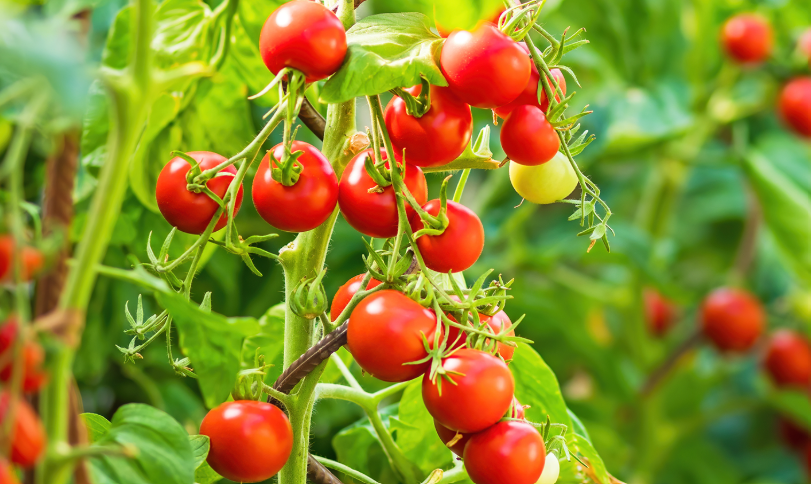
Tomatoes are technically a fruit, even though they are most often treated as a vegetable in cooking and everyday conversation. They are known for their round shape, smooth and glossy skin, and juicy interior filled with seeds surrounded by soft pulp. Tomatoes grow on sprawling or vining plants that need warm weather and plenty of sunlight, producing fruit that ranges in color from deep red to orange, yellow, and even purple depending on the variety.
Tomato plants are typically grown as annuals in most climates, meaning they complete their life cycle within a single growing season before needing to be replanted. The plants flower before setting fruit, and a single healthy plant can produce dozens of tomatoes over the course of a summer. Depending on the variety, tomatoes can range from tiny, bite-sized cherry types to large beefsteak varieties that can weigh well over a pound.
Nutritionally, tomatoes are a good source of vitamin C and the antioxidant lycopene, which is especially concentrated in fully ripe, red varieties. Their flavor balances sweetness with a savory, slightly acidic edge, which is why they are used so widely in salads, sauces, and sandwiches rather than eaten as a typical sweet fruit. Their soft, juicy interior and thin skin make them easy to slice, chop, or eat whole straight off the vine.
Because of their round shape, smooth skin, and vivid coloring, tomatoes are often compared to other fruits that share a similar look, even when those fruits are completely unrelated botanically. Some of these lookalikes are true relatives that grow in similar conditions, while others simply resemble tomatoes because of their size, shape, or color.
Fruits that Look Like Tomatoes
Persimmons
Persimmons share a rounded shape and vivid red-orange color that closely mirrors many tomato varieties, particularly the flatter, tomato-shaped cultivars. Their smooth, glossy skin adds to the resemblance, especially in produce displays where the two are sometimes placed side by side. Once tasted, persimmons reveal a honey-sweet flavor with a soft, custard-like texture quite different from a tomato’s savory juiciness.
Pomegranates
Pomegranates have a rounded shape and firm, smooth skin that can range from deep red to reddish-orange, echoing the color of a ripe tomato. The resemblance ends once the fruit is cut open, revealing hundreds of juicy seed pods rather than the soft, pulpy interior found in a tomato. Their flavor is tart and slightly sweet, eaten seed by seed rather than sliced.
Red Bell Peppers
Red bell peppers share a similar glossy, smooth skin and rounded body that can closely resemble a large tomato, especially from a distance. Both fruits grow on similarly sized plants and are often found together in garden beds and produce sections. Bell peppers are hollow inside with seeds and a crisp texture, a clear contrast to the soft, juicy flesh of a tomato.
Plums
Certain round, red plum varieties can be mistaken for small tomatoes due to their matching color and smooth, glossy skin. Both fruits share a similar size in smaller cultivars, adding to the visual overlap. Plums, however, are sweet with a single central pit, unlike the seed-filled, savory interior of a tomato.
Red Apples
Red apples share a rounded shape and vibrant red color with many tomato varieties, particularly smaller or rounder apple cultivars. Their smooth, waxy skin closely resembles the glossy surface of a ripe tomato. The similarities disappear quickly once bitten into, since apples are crisp and sweet, unlike the soft, juicy texture of a tomato.
Nectarines
Nectarines have smooth, reddish skin and a rounded shape that can resemble certain tomato varieties, especially in warmer color tones. Their size can also closely match mid-sized tomatoes, adding to the potential mix-up in a fruit bowl. Nectarine flesh is soft and juicy around a single pit, quite different from a tomato’s seedy, pulpy interior.
Rose Hips
Rose hips are small, round, and ripen to a vivid red-orange color that can resemble tiny cherry tomatoes on the vine. They grow in clusters on rose bushes, following the flower’s bloom, which adds a similar clustered look to some tomato varieties. Their flavor is tart and slightly sweet, with a fibrous, seedy interior that is typically dried or made into tea rather than eaten fresh.
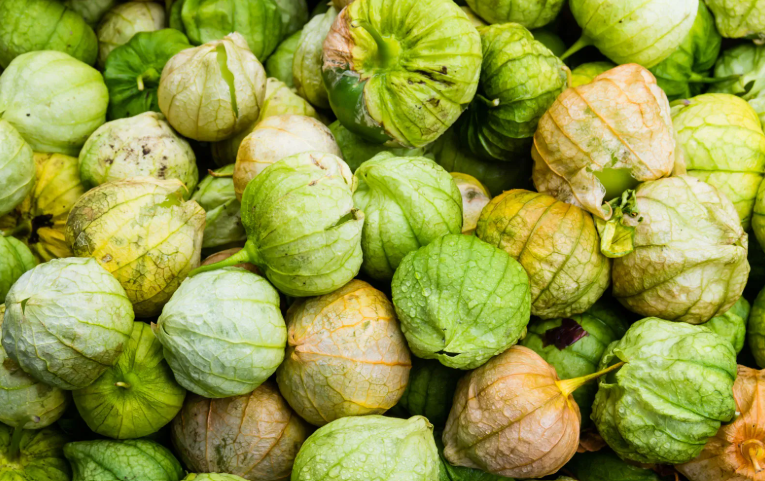
Tomatillos
Tomatillos are close relatives of tomatoes and share a similar round shape, though they are usually green or pale yellow and encased in a papery husk. Once the husk is removed, the smooth, glossy fruit inside closely resembles a small green tomato. Their flavor is tart and slightly citrusy, distinct from the sweeter, more savory taste of a ripe tomato.
Physalis (Golden Berries)
Physalis fruits, also called golden berries, are small and round with smooth, glossy orange-yellow skin, resembling a tiny tomato once removed from their papery husk. They grow on plants closely related to tomatoes and tomatillos, which explains much of the visual similarity. Their flavor is tangy and slightly sweet, different from a tomato’s more savory profile.
Cherry Peppers
Cherry peppers are small, round, and often deep red, closely resembling cherry tomatoes in both size and shape. Their smooth, glossy skin adds to the visual mix-up, especially when mixed together in a salad or garnish. Unlike cherry tomatoes, cherry peppers carry a notable heat and spice rather than sweetness.
Acerola (Barbados Cherry)
Acerola, also known as Barbados cherry, is small, round, and bright red, closely resembling a tiny cherry tomato at a glance. It grows on shrubs in warm climates and has thin, glossy skin similar in texture to a tomato’s surface. Its flavor is tart and slightly acidic, and it is prized mainly for its extremely high vitamin C content.
Crab Apples
Crab apples are small and round with smooth, glossy red or yellow skin that can be mistaken for cherry or grape tomato varieties. They grow in clusters on small trees, adding to a visual similarity with vine-grown cherry tomatoes. Their flavor is notably tart and astringent, most often used in jellies rather than eaten fresh.
Rowan Berries
Rowan berries grow in small, tight clusters and ripen to a bright orange-red that can resemble a bunch of small cherry tomatoes still on the vine. Each berry is smooth and round, closely matching the shape of tiny tomato varieties. Their flavor is very bitter and astringent, making them unsuitable for eating raw.
Hawthorn Berries
Hawthorn berries are small, round, and deep red, growing in clusters that can loosely resemble a cluster of cherry tomatoes on a vine. Their smooth skin and vivid coloring add to the visual similarity, especially from a distance. Their flavor is mildly sweet and slightly tart, often used in jellies, syrups, and traditional remedies.
Chokecherries
Chokecherries grow in long, hanging clusters and ripen to a deep red or purplish-black color that can loosely resemble small tomatoes on a vine, particularly in their earlier red stage. Each berry is round and smooth, matching the general shape of small tomato varieties. Their flavor is extremely tart and astringent, requiring cooking before use in syrups or jellies.
Litchi Tomato
Litchi tomato, sometimes called sticky nightshade fruit, closely resembles a small tomato in both name and appearance, with a round shape and reddish-orange color. It is a distant relative of the tomato, which explains both the name and the strong visual similarity. Unlike garden tomatoes, litchi tomato is rarely eaten fresh due to its seedy, less palatable texture.