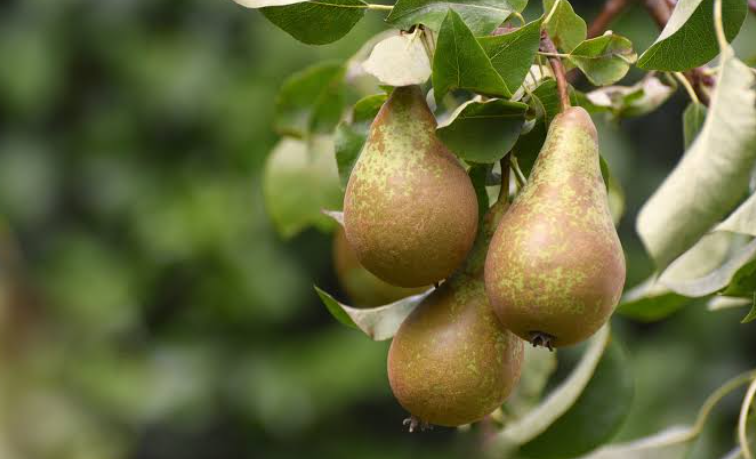
Pears are among the oldest cultivated fruit trees in the world, valued for their sweet flavor, juicy flesh, and elegant bell-like shape. They belong to the Pyrus genus in the rose family (Rosaceae), which also includes apples, cherries, and roses. Pears have been grown for thousands of years throughout Europe and Asia and are now cultivated in temperate regions across the globe. They are enjoyed fresh, canned, dried, poached, baked into desserts, and used in juices, jams, and salads.
Pear trees are deciduous and generally thrive in climates with cold winters and warm summers. Most varieties require a period of winter chilling to break dormancy and produce abundant flowers in spring. The blossoms are typically white with five petals and attract bees and other pollinators. Depending on the variety, pears ripen from late summer through autumn, offering a long harvest season for home gardeners and commercial growers alike.
Pears are highly nutritious and provide dietary fiber, vitamin C, vitamin K, copper, and various antioxidants. They are naturally low in calories while being rich in water, making them a satisfying and hydrating snack. Their high fiber content supports healthy digestion, while antioxidants help protect cells from oxidative stress. Because pears have a relatively low glycemic index, they can be a suitable fruit choice for many balanced diets.
Thousands of pear cultivars exist worldwide, varying in size, color, texture, and flavor. Popular varieties include Bartlett, Anjou, Bosc, Comice, Concorde, and Asian pears. Some have buttery, melting flesh, while others remain crisp even when fully ripe. Their versatility, long storage life, and delightful taste have made pears one of the world’s most beloved orchard fruits.
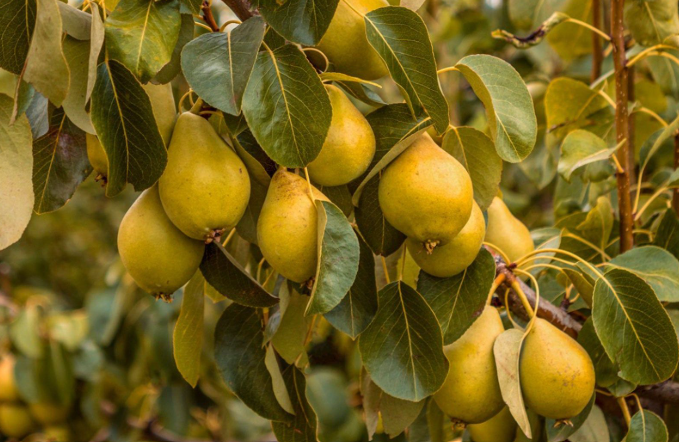
Fruits that Look Like Pears
1. Quince
Quince (Cydonia oblonga) is perhaps the fruit most commonly mistaken for a pear because of its similar rounded base and narrow neck. Many quince fruits are golden yellow when mature and have a firm, aromatic flesh. Unlike pears, however, quinces are usually too hard and tart to eat raw. They become tender and develop a sweet floral flavor when cooked, making them ideal for jams, jellies, desserts, and traditional Mediterranean dishes. Their close botanical relationship to pears also explains their similar appearance.
2. Asian Pear
Despite being a true pear species (Pyrus pyrifolia), the Asian pear looks quite different from common European pears. Some cultivars are nearly round like apples, while others develop a more classic pear shape. Their crisp, juicy flesh remains firm even when ripe, unlike the soft texture of most European pears. Asian pears have thin, smooth skin that ranges from golden brown to greenish-yellow and are popular throughout East Asia.
3. Chayote
Chayote (Sechium edule) is a green squash that strongly resembles a large pear because of its tapered top and broad bottom. Its smooth or slightly wrinkled skin further enhances the resemblance. Although it looks like a fruit, chayote is commonly cooked as a vegetable in soups, stir-fries, salads, and casseroles. Its mild flavor allows it to absorb seasonings well, making it an extremely versatile ingredient.
4. Avocado
Many avocado varieties, especially Fuerte, Bacon, and Zutano, have a classic pear-shaped appearance. Their narrow neck and wider rounded base closely resemble green pears from a distance. However, avocados have thick skin and creamy, oily flesh rather than juicy, sweet pulp. They are prized for their healthy monounsaturated fats, fiber, potassium, and versatility in dishes like guacamole, salads, and sandwiches.
5. Mango
Several mango cultivars develop a distinctly pear-like silhouette, particularly those with a broad lower half and tapered stem end. Their smooth skin may remain green, yellow, or develop shades of red depending on the variety. Unlike pears, mangoes contain a large flat seed and soft tropical flesh that is intensely sweet and fragrant. They are enjoyed fresh, dried, blended into smoothies, or incorporated into desserts and savory recipes.
6. Green Papaya
An immature green papaya often resembles an oversized pear because of its elongated body and tapered stem end. While ripe papayas become yellow or orange with sweet flesh, green papayas are firm and mild in flavor. They are widely used as a vegetable in Southeast Asian cuisine, especially in salads, curries, and stir-fries. Their pear-like outline makes them easy to confuse at first glance.
7. Eggplant (Pear-Shaped Varieties)
Certain heirloom and ornamental eggplant varieties naturally produce pear-shaped fruits with a rounded bottom and narrow stem end. Depending on the cultivar, they may be purple, white, green, or striped. Although botanically fruits, eggplants are almost exclusively used as vegetables in cooking. Their glossy skin and characteristic shape often resemble colorful pears hanging from the plant.
8. Bell Pepper
Some bell pepper cultivars develop a broad, rounded base with a narrowing near the stem that gives them a pear-like profile. Green, yellow, orange, and red peppers may all display this shape. Their crisp walls and hollow interior clearly distinguish them once cut open, but from a distance they can resemble unusually colored pears growing on the plant.
9. Opal Plum
The Opal plum is an oval fruit that occasionally develops a subtle pear-like form, particularly when fully mature. Its reddish-purple skin and golden-yellow flesh make it quite attractive. The fruit is sweet with a pleasant balance of acidity and is excellent for fresh eating, baking, and preserves. Its tapered shape can sometimes lead to confusion with miniature pears.
10. Feijoa (Pineapple Guava)
Feijoa (Acca sellowiana), also called pineapple guava, often resembles a small green pear because of its oval body and slightly tapered end. Its waxy green skin encloses fragrant, jelly-like flesh with flavors reminiscent of pineapple, guava, and mint. Native to South America, feijoas are eaten fresh, blended into beverages, or made into jams and desserts.
11. Bottle Gourd
Bottle gourd (Lagenaria siceraria) is famous for producing fruits shaped remarkably like oversized pears or bottles. Young gourds are harvested as vegetables and cooked in soups, curries, and stews, while mature gourds develop hard shells that are traditionally used to make utensils, musical instruments, and decorative crafts. Their unmistakable pear-like silhouette gives the plant its common name.
12. Tamarillo
Tamarillo (Solanum betaceum), commonly known as the tree tomato, produces egg-shaped to pear-shaped fruits that grow in clusters. Their smooth skin turns red, orange, or yellow as they ripen, surrounding tangy, juicy flesh filled with edible seeds. Tamarillos are used in sauces, juices, desserts, salads, and chutneys. Their attractive shape and colorful appearance often make them resemble small exotic pears at first glance.