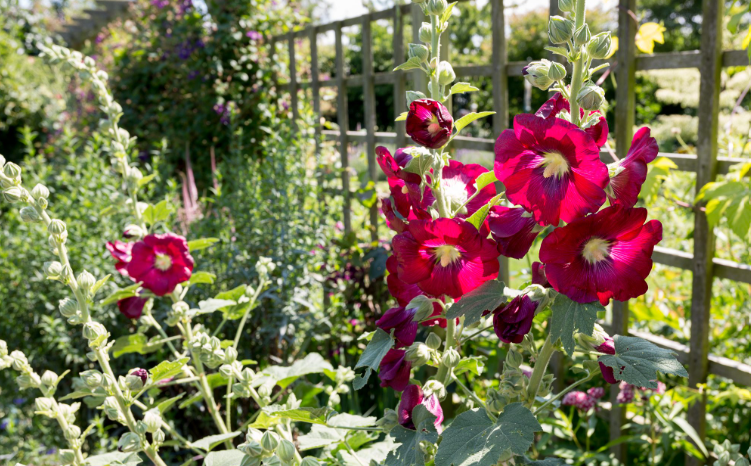
Hollyhocks are one of the easiest ways to add height, color, and an old-fashioned charm to a flower garden. Their tall flower spikes can rise well above many other garden plants, carrying rows of large, colorful blooms from summer into early autumn. They are especially attractive when planted along fences, walls, cottage-garden borders, or at the back of a flower bed.
The most commonly grown hollyhock is Alcea rosea, a member of the mallow family (Malvaceae). Hollyhocks are usually grown as biennials or short-lived perennials. In many cases, they concentrate on producing leaves and roots during the first growing season and flower the following year. Once established, they can also drop seeds that produce new plants, allowing a hollyhock planting to continue from year to year.
Although hollyhocks are generally easy to grow, their tall stems and susceptibility to rust mean that location and basic maintenance matter. Giving them enough sunlight, good drainage, adequate moisture, and plenty of air circulation will help produce stronger plants and better flowers.
Choose a Good Location
The first step in growing healthy hollyhocks is choosing the right planting location. Hollyhocks grow best in full sun, where they can receive several hours of direct sunlight each day. Plants grown in insufficient light may become weaker and produce fewer flowers.
Because hollyhocks can become quite tall, think about their position in the garden before planting them. They work particularly well at the back of borders, along fences, beside walls, or in areas where their height will not block shorter plants.
A sheltered location is especially helpful. Strong winds can catch the tall flower stalks and cause them to lean or fall over. A fence or wall can provide useful protection while still allowing the plant to receive plenty of sunlight.
Prepare the Soil
Hollyhocks can tolerate a range of garden soils, but they perform best in fertile, well-drained soil. Good drainage is important because constantly waterlogged conditions can create problems for the roots.
Before planting, loosen the soil and remove large stones and competing weeds. If the soil is poor, incorporating well-decomposed compost can improve its structure and fertility.
There is no need to create an unusually rich planting hole. Instead, aim for soil that is reasonably fertile throughout the root zone. Hollyhocks are adaptable and can grow in different soil types provided drainage is adequate.
How to Plant Hollyhocks
Hollyhocks can be grown from seed or purchased as young plants. Growing them from seed is particularly worthwhile because seeds are inexpensive and can produce a large number of plants.
If planting a nursery-grown hollyhock, dig a hole slightly wider than its root ball and deep enough to accommodate the roots without burying the crown too deeply. Place the plant at approximately the same depth at which it was growing in its container, then fill around the roots and water thoroughly.
Give individual plants adequate room to develop. About 24 inches of spacing is a useful general guideline for many garden-grown hollyhocks, although the ideal distance can vary with the variety.
Growing Hollyhocks From Seed
One of the easiest ways to establish hollyhocks is by sowing seeds. Hollyhock seeds can be sown directly in the garden or started under protected conditions and transplanted later.
Direct sowing is useful because hollyhocks generally dislike unnecessary root disturbance. Choose a prepared, weed-free location and sow the seeds according to the instructions supplied with the particular variety.
Gardeners should also understand the plant’s growth cycle. Many traditional hollyhocks are biennial, meaning that the plant may spend its first year developing foliage and roots before producing its main display of flowers during the following season.
This can initially seem disappointing if you expect flowers immediately, but patience is part of growing traditional hollyhocks.
Watering Hollyhocks
Young hollyhocks need more attention to watering than established plants. During the first few months, keep the soil consistently moist but not saturated while the roots become established.
Once established in the garden, hollyhocks generally become less demanding. They may need additional water during prolonged periods of hot or dry weather, but they do not need constantly wet soil.
When watering, direct the water toward the soil around the base rather than repeatedly wetting the foliage. Keeping leaves as dry as practical can also help reduce conditions favorable to fungal diseases.
Fertilizing Hollyhocks
Hollyhocks appreciate reasonably fertile soil, particularly when they are producing substantial foliage and tall flowering stems. If your garden soil is poor, adding compost before planting can provide a useful nutritional foundation.
A general-purpose flower fertilizer can also be used during active growth if necessary. Follow the fertilizer label rather than applying excessive amounts.
Overfeeding is rarely a substitute for good growing conditions. Adequate sunlight, drainage, moisture, and air circulation should come first.
Supporting Tall Flower Stems
One of the most noticeable characteristics of hollyhocks is their height. Some varieties can reach approximately 5 to 8 feet, while individual cultivars vary considerably in their mature size. Alcea rosea is listed by the RHS at approximately 1.5–2.5 meters in height.
Tall stems are particularly vulnerable to strong winds and heavy rain. If your garden is exposed, install a stake or other suitable support before the stems become difficult to manage.
A support placed early can be much less noticeable than trying to secure a tall plant after it has already started leaning.
Deadheading Hollyhocks
Removing faded flowers is not essential, but deadheading can make the plant look tidier and may encourage the flowering display to continue.
Cut spent flower stalks back as flowers fade if you do not want the plant to produce large quantities of seed.
On the other hand, gardeners who want hollyhocks to return naturally can allow some flowers to mature and produce seeds. Hollyhocks readily self-seed under suitable conditions, which can help maintain a planting without having to purchase new plants every year.
Hollyhock Rust: A Common Problem
Rust is one of the most important problems associated with hollyhocks. The disease can cause spotting and discoloration on the leaves and may weaken the overall appearance and growth of older plants.
Good cultural practices can help reduce the problem. Avoid overcrowding plants, provide good air circulation, water at the soil level, and remove badly affected foliage or plants where appropriate.
If rust repeatedly becomes severe, growing hollyhocks as annuals or biennials and replacing older plants can help reduce the buildup of disease problems. The RHS specifically notes that replacing plants every year or every other year can help limit rust.
Common Hollyhock Pests
Young hollyhocks can attract slugs and cutworms, while established plants may occasionally experience problems with aphids, capsid bugs, and other insects.
Inspect the foliage regularly, particularly during periods of rapid growth. Look underneath leaves and around young shoots because some pests are easier to detect before they become numerous.
Keeping the garden free of excessive weeds and removing severely damaged plant material can also make it easier to monitor plants.
How to Keep Hollyhocks Healthy
The best hollyhock care is largely preventative. Start with a sunny location, avoid poorly drained soil, provide enough space between plants, and protect tall stems from strong winds.
Do not automatically water simply because the leaves look slightly tired. Check the soil first. Both drought and excessively wet soil can cause plants to appear stressed.
Likewise, if leaves develop spots, inspect the foliage carefully rather than immediately assuming the plant needs fertilizer. Hollyhock rust and other problems can produce symptoms that are better addressed through sanitation, airflow, and moisture management.
Can Hollyhocks Grow in Containers?
Hollyhocks are naturally better suited to garden beds than small containers because of their tall growth and substantial root system. However, smaller varieties can be grown in sufficiently large, deep containers.
Choose a container with drainage holes and use a quality potting mix. Container-grown plants dry out more quickly than those growing in the ground, so check moisture regularly during warm weather.
A sheltered position is particularly valuable because a tall plant in a lightweight container can become unstable in strong wind.
Winter and End-of-Season Care
The appropriate winter treatment depends on the variety and local climate. Hollyhocks are generally hardy plants, but their life cycle means that individual plants may naturally decline after flowering.
After flowering, remove unhealthy foliage and plant debris. If the plant has remained healthy and you want it to reseed, leave some seed-producing flowers in place.
Allowing some mature seed pods to remain can result in seedlings appearing around the original planting. This natural reseeding is one reason hollyhocks can become a long-lasting feature of informal gardens.
Final Tips for Growing Hollyhocks
Hollyhocks do not require complicated care to produce an impressive display. Their greatest needs are sunlight, well-drained fertile soil, consistent moisture while young, good air circulation, and protection from strong winds.
Remember that traditional hollyhocks may not flower during their first year. Their biennial growth habit means that allowing the plant time to establish can lead to a much stronger display in the following season.
For the healthiest plants, avoid overcrowding, water around the base, monitor regularly for rust and pests, and provide support before tall stems begin to lean. If you allow some flowers to produce seeds, hollyhocks may also reseed themselves and create new plants naturally.
With these simple practices, hollyhocks can become one of the most dramatic plants in a summer garden, combining towering flower spikes with a classic cottage-garden appearance.