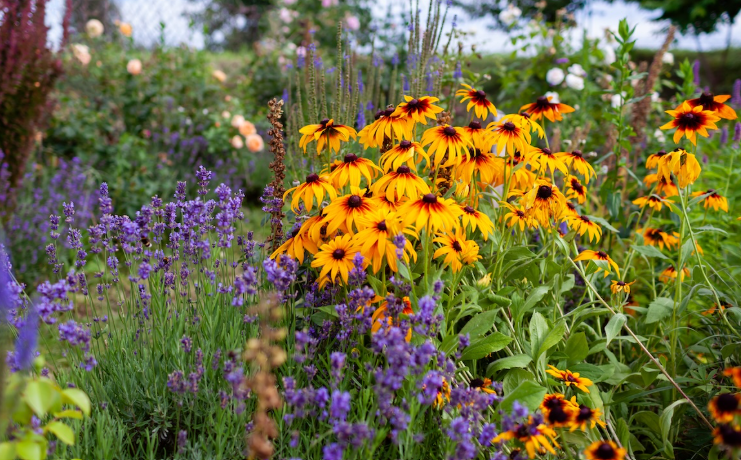
The sunflower is one of the most immediately recognizable flowers on Earth. Its broad, golden-yellow ray petals radiating outward from a rich, dark central disc create a flower form that is simultaneously bold, cheerful, and architecturally satisfying. Native to North America, where indigenous peoples cultivated it for food and oil for thousands of years, the sunflower has become a global icon — a symbol of warmth, energy, and optimism recognized across virtually every culture on the planet.
Botanically, the sunflower belongs to the Asteraceae family — the largest flowering plant family on Earth, containing over 23,000 species. The characteristic structure that gives sunflowers their distinctive appearance, known as a composite or radiate flower head, is shared by hundreds of plants within this family and beyond. What appears to be a single flower is actually a highly organized assembly of two types of florets: ray florets forming the outer “petals” and disc florets packed densely in the central disc. This efficient design has proven extraordinarily successful across millions of years of evolution.
The global sunflower industry is enormous. Sunflowers are cultivated on approximately 26 million hectares worldwide, primarily for their oil-rich seeds. Russia and Ukraine together account for nearly 50% of global sunflower oil production. As ornamental plants, they rank among the top ten most popular garden flowers across Europe and North America, and their instantly cheerful form has inspired gardeners to seek out similar-looking plants that can extend the sunflower aesthetic across different seasons and growing conditions.
The plants in this collection share the sunflower’s essential visual language — the bold central disc, the radiating ray petals, the upright posture, and the warm, sun-drenched color palette that ranges from palest cream through gold, orange, copper, mahogany, and deep burgundy. Some are close botanical relatives, others have arrived at the same form through independent evolution, but all share that immediate, joyful impact that makes the sunflower one of the world’s most beloved flowers.
Also Read: Flowers That Look Like Daffodils
Black-Eyed Susan (Rudbeckia hirta)
Black-Eyed Susan is perhaps the most commonly mistaken sunflower lookalike, producing bright golden-yellow ray petals surrounding a prominent, dark brown to black central disc on plants 2 to 3 feet tall. It is native to the prairies and open woodlands of North America and blooms from midsummer through autumn, providing some of the longest-lasting sunflower-like color of any perennial. Over 30 species of Rudbeckia exist, ranging from compact annual varieties to tall, perennial clump-formers.
Heliopsis (Heliopsis helianthoides)
False Sunflower is aptly named, producing golden-yellow, sunflower-form blooms with a domed yellow-green central disc on bushy, upright plants 3 to 5 feet tall. It is native to the prairies of central and eastern North America and blooms prolifically from early summer through early autumn — a significantly longer season than true sunflowers. Unlike true sunflowers, Heliopsis is a reliable, long-lived perennial that returns and expands year after year without the need for replanting.
Coneflower (Echinacea purpurea)
Purple Coneflower produces ray petals in shades of rose-pink, magenta, white, and orange that sweep downward and backward from a prominent, spiny, domed central cone — a form that is unmistakably sunflower-derived, though in a richer, more unusual color palette. It grows 3 to 4 feet tall and is one of the most important pollinator plants in North American horticulture. Studies show that a single echinacea plant can support visits from over 50 different bee species across a single flowering season.
Also Read: Flowers That Look Like Butterflies
Mexican Sunflower (Tithonia rotundifolia)
Mexican Sunflower produces large, vivid orange-scarlet blooms with a yellow-orange central disc on tall, vigorous plants 4 to 6 feet high that are among the most striking sunflower alternatives for hot, dry gardens. It grows rapidly from seed, blooms from midsummer until the first frosts, and is exceptionally heat and drought-tolerant. The vivid orange flowers are magnets for monarch butterflies and other migrating pollinators during the late summer and early autumn season.
Sneezeweed (Helenium autumnale)
Sneezeweed produces rich, velvety ray petals with distinctive reflexed, fan-shaped tips in warm shades of yellow, orange, red, and mahogany surrounding a prominent, globe-shaped central disc on plants 3 to 5 feet tall. The reflexed ray petals give it a slightly different character from a flat sunflower, but the overall radiate, disc-and-ray composition is unmistakably sunflower-like. It blooms from late summer into autumn, providing vital sunflower-form color when the true sunflower season is drawing to a close.
Prairie Coneflower (Ratibida columnifera)
Mexican Hat produces ray petals in shades of yellow, red-brown, or bicolor drooping downward from an unusually elongated, columnar central disc that gives the flower its memorable common name. It grows 18 to 30 inches tall and is native to the prairies and plains of central North America, where it is one of the most characteristic wildflowers of open grassland habitats. Its elongated central column makes it one of the most architecturally distinctive of all sunflower-like flowers.
Blanket Flower (Gaillardia x grandiflora)
Blanket Flower produces some of the most vividly colored sunflower-like blooms available, with ray petals banded in combinations of fiery red, orange, and yellow around a deep burgundy-red central disc on plants 18 to 24 inches tall. It is native to the prairies of North America and is named for its resemblance to the vivid patterns of Native American blankets. It is extraordinarily heat and drought tolerant and can bloom continuously for five or more months in a single season.
Also Read: Flowers That Look Like Daisies
Ox-Eye Daisy (Leucanthemum vulgare)
Ox-Eye Daisy produces the classic white-ray, yellow-disc sunflower form in a clean, simple, large-scale version that immediately reads as sunflower-like to any observer, growing 18 to 24 inches tall across meadows, roadsides, and garden borders. It is one of the most widely distributed wildflowers in the temperate Northern Hemisphere, naturalized across Europe, Asia, and North America. A single plant can produce up to 200 flower heads in a season and disperse up to 1,300 seeds per stem.
Compass Plant (Silphium laciniatum)
Compass Plant is a towering prairie perennial that produces sunflower-like yellow blooms with 20 to 35 ray petals surrounding a flat yellow disc on plants that can reach an impressive 6 to 10 feet in height. It gets its common name from the tendency of its deeply lobed basal leaves to align themselves on a north-south axis. It is exceptionally long-lived, with established prairie plants known to persist for 100 years or more, and it takes several years to reach flowering size from seed.
Jerusalem Artichoke (Helianthus tuberosus)
Jerusalem Artichoke is a close relative of the sunflower that produces masses of small, bright yellow sunflower-form blooms on tall, leafy stems 5 to 10 feet high in late summer and autumn. Its underground tubers are edible and nutritious, with a sweet, nutty flavor, making it one of the few sunflower-like plants that is as valuable in the kitchen as it is in the garden. Despite its name, it has no connection to Jerusalem — the name is thought to be a corruption of the Italian girasole, meaning sunflower.
Cup Plant (Silphium perfoliatum)
Cup Plant is a bold, architectural prairie perennial that produces clusters of bright yellow sunflower-like blooms with 20 to 30 ray petals on branching stems 4 to 8 feet tall in midsummer. Its common name comes from the distinctive cup formed where pairs of opposite leaves join around the stem, collecting rainwater that provides drinking pools for birds and insects. It is exceptionally attractive to goldfinches, which feed on the seeds, and to a wide range of native bees that visit the flowers.
Tickseed (Coreopsis grandiflora)
Large-Flowered Tickseed produces bright, clear yellow sunflower-form blooms with eight notched ray petals surrounding a small, golden central disc on airy, branching plants 18 to 24 inches tall. It is one of the most floriferous of all sunflower-like perennials, capable of producing hundreds of blooms per plant per season, and is remarkably tolerant of heat, drought, and poor soils. Several species of coreopsis have been designated official wildflowers of individual American states for their ecological and ornamental importance.
Also Read: Flowers That Look Like Tulips
Arnica (Arnica montana)
Mountain Arnica produces bright yellow, sunflower-form blooms with 12 to 20 ray petals surrounding a yellow central disc on stems 12 to 24 inches tall, growing in mountain meadows and subalpine grasslands across Europe and western North America. It is one of the most important medicinal plants in European herbal tradition, used in topical preparations for bruising and inflammation for centuries. Commercial demand for arnica has placed significant pressure on wild populations in some regions, making garden cultivation increasingly important.
Elecampane (Inula helenium)
Elecampane produces large, shaggy, sunflower-like blooms with numerous very narrow, finely fringed ray petals surrounding a yellow central disc on robust plants 4 to 6 feet tall. The finely divided ray petals give it a distinctly shaggier, more textured appearance than a classic sunflower, but the overall radiate, disc-and-ray form is unmistakably sunflower-like. It has been cultivated in European herb gardens since ancient Greek times, when it was named after Helen of Troy.
Pot Marigold (Calendula officinalis)
Pot Marigold produces cheerful, sunflower-form blooms in warm shades of yellow, orange, and cream with a contrasting darker central disc on compact plants 12 to 24 inches tall. It is one of the easiest and most rewarding of all sunflower-like flowers to grow from seed, blooming in as little as 6 to 8 weeks from sowing and continuing through cool autumn weather long after true sunflowers have finished. Calendula has been cultivated in gardens for over 500 years and remains one of the most widely used plants in natural skincare worldwide.
Rough Mule’s Ears (Wyethia amplexicaulis)
Mule’s Ears produces large, butter-yellow sunflower-form blooms up to 4 inches across with broad, overlapping ray petals surrounding a yellow-green central disc on plants 12 to 24 inches tall. It is native to the mountain meadows and sagebrush plains of the western United States and is a significant wildlife plant, providing nectar for native bees and seeds for birds and small mammals. Its large, glossy, ear-shaped basal leaves give the whole plant an attractively bold, architectural quality.
Also Read: Tallest Perennial Flowers For Pots And Containers
Sunflower Maximilian (Helianthus maximiliani)
Maximilian Sunflower is a tall, vigorous perennial sunflower that produces masses of small to medium-sized golden-yellow sunflower blooms along the upper portions of stems reaching 5 to 10 feet tall in late summer and autumn. Unlike the single-stemmed annual sunflower, it is a clump-forming perennial that spreads steadily to fill large areas and can produce hundreds of individual flower heads per plant. It is one of the most important late-season nectar sources for monarch butterflies in the central United States.
African Daisy (Arctotis x hybrida)
African Daisy produces large, sunflower-proportioned blooms in shades of orange, red, yellow, cream, and bicolor with a contrasting dark central disc, on plants 12 to 18 inches tall. Native to South Africa, it is exceptionally drought-tolerant and heat-adapted, making it one of the best sunflower-like flowers for hot, dry gardens and containers. Like many South African composites, its flowers close at night and on overcast days, opening fully only in bright sunshine.
Oxeye (Telekia speciosa)
Telekia produces large, golden-yellow sunflower-like blooms with numerous narrow, slightly drooping ray petals surrounding a prominent central disc on robust, architectural plants 4 to 5 feet tall. It thrives in moist, partially shaded conditions that would stress true sunflowers, making it one of the best sunflower-like alternatives for dappled or light shade. Its large, heart-shaped, aromatic leaves are bold and ornamental throughout the growing season, not just during flowering.
Globe Sunflower (Globerica integrifolia)
Prairie Rosinweed is a sturdy, deep-rooted perennial of the central North American prairies that produces clear yellow, sunflower-form blooms with 8 to 13 ray petals on branching stems 3 to 6 feet tall from midsummer through early autumn. Its extremely deep taproot — which can penetrate up to 14 feet into prairie soil — makes it one of the most drought-resistant of all sunflower-like perennials once established. The resinous quality of its stems and leaves gives the whole plant a pleasant, slightly turpentine-like fragrance in warm weather.
Also Read: Best Cold Hardy Palm Trees
Leopard’s Bane (Doronicum orientale)
Leopard’s Bane produces cheerful, bright yellow sunflower-form blooms on wiry stems 12 to 24 inches tall in early spring — making it one of the earliest sunflower-like flowers to bloom each year, often appearing in March and April when true sunflowers are not yet even seeds in the ground. It is a shade-tolerant woodland perennial that thrives beneath deciduous trees and at the edge of shaded borders. After flowering, the foliage dies back in summer heat, making it an ideal companion for later-emerging perennials.
Shasta Daisy (Leucanthemum x superbum)
Shasta Daisy produces large, clean, white-rayed sunflower-form blooms with bright yellow central discs on plants 2 to 3 feet tall that are among the most classic and enduring of all summer perennials. While white rather than yellow, the broad ray petals and prominent disc create a form that is structurally identical to a sunflower and immediately recognizable as belonging to the same visual family. A single established Shasta Daisy clump can produce over 50 individual flower heads simultaneously at peak bloom.
Golden Marguerite (Anthemis tinctoria)
Golden Marguerite produces masses of bright yellow to creamy white sunflower-form blooms on branching plants 18 to 24 inches tall over a long flowering season from early summer through early autumn. It is one of the most reliable and free-flowering of all yellow daisy perennials, producing so many blooms that the foliage is often barely visible at peak flowering. Historically, the flowers were boiled to produce a warm golden-yellow dye used to color wool — a practice documented across medieval Europe.
Zinnia (Zinnia elegans — Single Forms)
Single-flowered zinnia varieties produce classic sunflower-form blooms with a single ring of broad, flat ray petals surrounding a central disc in the most vivid color range of any sunflower-like annual — scarlet, orange, yellow, coral, lime green, and bicolor. They grow 1 to 3 feet tall and bloom continuously from midsummer until the first hard frosts. Research has found that zinnia plantings attract up to 12 times more monarch butterfly visits than many other common garden flowers, making them one of the most ecologically significant sunflower-like annuals.
Wild Sunflower (Helianthus annuus — Wild Type)
The wild ancestor of the cultivated sunflower produces multiple, smaller flower heads 2 to 3 inches across on branching, multi-stemmed plants 4 to 7 feet tall — quite different from the single, giant-headed cultivated forms. Wild-type sunflowers are native to the open prairies and disturbed ground of central North America and are among the most important native wildflowers for seed-eating birds, particularly goldfinches and chickadees. Their multi-headed habit makes them far more generous in overall flower production than single-headed cultivated varieties.
Perennial Sunflower (Helianthus x multiflorus)
Perennial Sunflower is a garden hybrid between the annual sunflower and a perennial species, producing masses of medium-sized, golden-yellow sunflower blooms on tall, leafy stems 4 to 6 feet high from midsummer through early autumn. Unlike its annual parent, it returns reliably each year and gradually expands into impressive, multi-stemmed clumps. The variety ‘Loddon Gold’ is particularly prized for its fully double, pompom-like blooms that take the sunflower aesthetic in a dramatically fuller, more extravagant direction.
Also Read: Best Ornamental Grasses for Containers & Pots
Rudbeckia Perennial (Rudbeckia fulgida ‘Goldsturm’)
Goldsturm Coneflower is one of the most awarded and widely planted sunflower-like perennials in the world, producing masses of golden-orange blooms with prominent black central discs on tidy, well-branched plants 24 to 30 inches tall from midsummer through autumn. It was named Perennial Plant of the Year by the Perennial Plant Association in 1999 and has since become one of the best-selling herbaceous perennials in the global nursery trade. Its perfectly proportioned, sunflower-form blooms and reliable, trouble-free performance make it a benchmark plant for the genre.
Jerusalem Sage (Phlomis fruticosa)
Jerusalem Sage produces whorled clusters of hooded, golden-yellow flowers arranged in rings around square stems on a silvery-leaved shrub 3 to 4 feet tall. While the individual flower structure differs from a sunflower’s composite head, the overall impression of bold, golden-yellow blooms against silver-grey foliage captures much of the sunflower’s warm, Mediterranean character. It is exceptionally drought-tolerant and thrives in hot, dry, rocky conditions where true sunflowers would struggle significantly.
Bidens (Bidens ferulifolia)
Golden Goddess Bidens produces masses of small, bright golden-yellow sunflower-form blooms with five ray petals surrounding a small central disc on trailing, finely cut-leaved plants that cascade 18 to 24 inches from containers and hanging baskets. It blooms continuously from spring until frost, producing its cheerful sunflower-like flowers for six months or more without pause. Few trailing plants can match its extraordinary output of golden sunflower-form blooms relative to its compact size.
Sunflower Everlasting (Xerochrysum bracteatum)
Strawflower produces papery, sunflower-form blooms in shades of yellow, orange, red, and white with a dry, rustling texture that allows them to retain their color and form perfectly after drying — a quality no true sunflower can match. It grows 12 to 30 inches tall and blooms prolifically from midsummer through autumn. Dried strawflower arrangements can maintain their sunflower-like appearance for years, making them among the most long-lasting of all sunflower-inspired decorative flowers.
Also Read: Best Tall Grasses For Landscaping
Cup-and-Saucer Sunflower (Helianthus simulans)
Muck Sunflower is a tall, robust perennial species closely related to the annual sunflower, producing multiple medium-sized, classic yellow sunflower-form blooms with dark central discs on plants reaching 6 to 10 feet tall in late summer and autumn. It is native to the wetland margins and moist prairies of the southeastern United States and is exceptionally tolerant of poorly drained, heavy soils that would defeat most other sunflower-like plants. Its late season of bloom fills the important gap between midsummer and the first autumn frosts with authentic sunflower character.