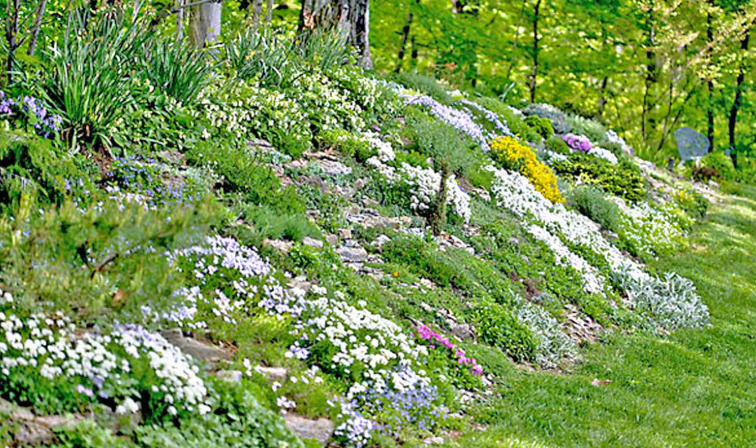
Soil erosion is one of the most serious and costly environmental challenges facing the modern world. Every year, an estimated 24 billion tonnes of fertile topsoil are lost globally through erosion — a staggering figure that represents not just an environmental crisis but an agricultural and economic one. In the United States alone, soil erosion costs an estimated $37.6 billion annually in productivity losses, water quality degradation, and infrastructure damage. On a planet where it takes approximately 500 years to form just one inch of topsoil through natural processes, every inch lost to erosion represents a loss that is effectively irreversible on any human timescale.
Plants are nature’s most effective and sustainable solution to soil erosion. Roots bind soil particles together and anchor them against the forces of water and wind. Above-ground canopy intercepts rainfall, reducing the impact of rain drops on the soil surface — a force known as splash erosion that is responsible for dislodging a significant proportion of eroded soil. Dense groundcovers slow the movement of surface water, reducing its erosive velocity. Decaying plant matter improves soil structure, increasing its ability to absorb water rather than allow it to run off. A well-established plant community working together can reduce soil erosion by up to 95 percent compared to bare ground.
The selection of the right erosion-control plant for a specific situation depends on several key factors. The severity of the slope, the soil type, the moisture regime, the climate, and the desired aesthetic outcome all influence which species will perform best. For steep, dry, sunny slopes in Mediterranean climates, deep-rooted drought-tolerant shrubs and native grasses are the priority. For stream banks and watercourses, plants with flexible, deep, water-tolerant roots that can withstand periodic flooding are essential. For shaded woodland slopes, ground-covering perennials and spreading shrubs that tolerate low light are required. Understanding these distinctions is the foundation of effective erosion-control planting.
Beyond their practical value, erosion-control plants are also among the most ecologically valuable in the landscape. Many of the species in this guide — particularly the native grasses, wildflowers, and shrubs — support hundreds of insect species, provide food and shelter for birds and mammals, and contribute to the broader ecological web of the landscapes they inhabit. Choosing plants for erosion control is not merely a practical decision but an opportunity to make a positive ecological investment in the land.
Also Read: Plants for Hillsides and Steep Slope Planting
1. Vetiver Grass
Vetiver grass has one of the most remarkable root systems of any plant on earth — straight, downward-growing roots that extend to depths of ten to thirteen feet within the first year of establishment, creating a living wall of extraordinary soil-binding power in the ground.
The World Bank’s Vetiver System for land conservation has been adopted in over 100 countries, and studies in India found that hillsides planted with vetiver hedges experienced up to 70 percent reduction in soil erosion. Unlike most grasses, the roots grow almost exclusively downward rather than laterally, making it an outstanding barrier plant when planted in contour rows across slopes.
It does not set viable seed in most climates, which eliminates the invasiveness concern that affects many other aggressive grass species used in erosion control.
2. Native Prairie Grasses (Mixed)
A mixed planting of native prairie grasses — combining switchgrass, big bluestem, little bluestem, and indiangrass — provides one of the most ecologically complete and practically effective erosion-control systems available for sunny, well-drained slopes in temperate climates.
The combined root systems of these species extend from two to eight feet into the soil, binding soil at every horizon simultaneously. Research from the USDA Natural Resources Conservation Service rates native grass mixtures among the top erosion-control strategies for non-irrigated slopes, with studies showing runoff velocity reductions of up to 75 percent compared to bare ground.
The ecological benefits are equally impressive — native prairie grass mixtures support over 300 native insect species collectively, providing a biodiversity contribution that no single-species planting can approach.
3. Crown Vetch
Crown vetch is one of the most aggressively effective erosion-control plants for large-scale hillside and embankment stabilization, spreading rapidly by underground rhizomes to form a dense, weed-suppressing mat that binds soil at multiple depths simultaneously.
Its nitrogen-fixing root nodules enrich the soil as it grows, and studies have shown crown vetch plantings reducing slope erosion by over 80 percent within two growing seasons of establishment. The pink to lavender flower clusters produced through summer add ornamental value to its considerable practical performance.
It is however invasive in many natural areas of North America and should not be planted adjacent to woodland or natural habitats where it can displace native vegetation.
4. Switchgrass
Switchgrass is a native North American prairie grass with roots extending four to six feet into the soil, supporting over 200 native insect species and consistently rated among the top erosion-control grasses by the USDA for non-irrigated slopes.
The airy, cloud-like flower heads and vivid autumn color — deep red, burgundy, and gold depending on the variety — make it one of the most ornamentally rewarding of all practical erosion-control plants, providing landscape beauty alongside exceptional soil stabilization.
Research at the Land Institute in Kansas found that switchgrass roots store up to 2.7 tonnes of carbon per hectare per year in the soil, making it simultaneously one of the most effective erosion-control and carbon-sequestration plants available.
5. Big Bluestem
Big bluestem is the iconic grass of the North American tallgrass prairie, with roots documented at depths of eight to twelve feet in undisturbed prairie soils — a root system that binds soil against erosion while simultaneously building organic matter and improving soil structure over time.
A single established big bluestem plant produces more root biomass than shoot biomass — the underground mass of roots and rhizomes typically exceeding the above-ground plant weight by a ratio of three to four to one. Carbon stored in big bluestem root systems can persist in the soil for over 1,000 years.
The vivid copper, orange, and burgundy autumn foliage makes it one of the most visually spectacular of all erosion-control native grasses.
6. Creeping Juniper
Creeping juniper is the most widely planted woody erosion-control ground cover in North America — a low, spreading evergreen conifer that develops a dense mat of fibrous roots binding soil with extraordinary effectiveness on slopes, banks, and embankments.
It spreads to six to eight feet in width, tolerates extreme cold, poor soils, full exposure, and extended drought with a reliability that no other woody ground cover matches in cool and cold climates. The dense branching pattern also intercepts rainfall and reduces surface runoff velocity.
Creeping juniper is estimated to cover hundreds of millions of square feet of American highway embankments and institutional landscapes, making it the most commercially significant erosion-control shrub in the country.
7. Buffalo Grass
Buffalo grass produces one of the deepest root systems of any common turf or landscape grass, extending five to eight feet into the soil and accessing moisture reserves unavailable to any other standard lawn grass. This root depth is the foundation of its legendary drought tolerance and exceptional erosion-control performance.
Studies at Kansas State University documented buffalo grass surviving fourteen consecutive weeks without rainfall or irrigation while continuing to bind slope soil effectively. Water savings compared to conventional lawn grass on slopes can exceed 75 percent in appropriate climates.
It is the official state grass of Kansas and one of the most recommended native grasses for erosion control across the American Great Plains.
8. Bearberry
Bearberry is a native, low-growing, spreading evergreen shrub of exceptional toughness whose dense fibrous root system and spreading habit make it one of the most reliable erosion-control plants for sandy, acidic, and infertile soils in cold climates.
It grows naturally on coastal dunes, sandy slopes, and exposed hillsides across the Northern Hemisphere — habitats that have shaped its extraordinary resilience and made it one of the most consistently recommended native plants for erosion control in the northern United States and Canada.
The vivid red berries produced in autumn and winter provide important food for wildlife while the evergreen foliage provides year-round soil protection — a combination of practical and ecological value that makes bearberry one of the most complete erosion-control ground covers for appropriate climates.
9. Daylilies
Daylilies produce dense, fibrous, spreading root masses that bind significant volumes of slope soil while their increasing clump size progressively extends the area of stabilized ground. They are among the most widely used perennial erosion-control plants in American residential landscapes.
The extraordinary diversity of available varieties — over 80,000 registered cultivars exist, the most of any ornamental perennial genus — means that daylilies can be selected for virtually any combination of color, bloom time, height, and site conditions. This design flexibility makes them as useful to the landscape designer as to the practical erosion-control planter.
Established daylily plantings on slopes require essentially no maintenance beyond occasional division — making them one of the most cost-effective long-term erosion-control solutions for residential and light commercial landscapes.
Also Read: Perennials With Deep and Strong Roots
10. Forsythia
Forsythia is a large, arching, vigorous shrub whose stems root where they contact the ground and progressively colonize a slope while providing one of the most spectacular early spring flowering displays available from any hardy landscape shrub.
The self-rooting, spreading habit creates an expanding, self-propagating erosion-control system that improves its soil-binding effectiveness with each season without any human intervention. Established forsythia plantings on banks resist erosion even on gradients that challenge most other woody ground covers.
The vivid yellow flowers produced on bare stems in March are among the most immediate and cheerful signs of spring across the temperate world, making forsythia one of the most ornamentally rewarding as well as practically effective erosion-control shrubs.
11. Rugosa Rose
The rugosa rose combines a deep, spreading, suckering root system with a progressive colonization habit that makes it one of the most effective flowering shrubs for large-scale slope stabilization, particularly in coastal situations where its exceptional salt tolerance gives it a significant advantage.
The deep roots extend three to five feet, the spreading by suckers progressively increases slope coverage, and the dense, thorny growth resists grazing pressure that can undermine other erosion-control plantings. The fragrant flowers from late spring through autumn and the vivid red hips through winter provide year-round ornamental value.
It is one of the most widely recommended plants for stabilizing coastal dunes, eroded banks, and exposed hillsides in northern temperate climates.
12. Cotoneaster
The spreading cotoneaster species — particularly cotoneaster dammeri and cotoneaster horizontalis — combine attractive herringbone or prostrate branching with dense fibrous roots that provide highly effective soil binding on gradients too steep for most other woody ground covers.
The ornamental contribution spans multiple seasons — white flowers in spring, attractive summer foliage, vivid red berries through autumn and winter. The arching stems of some species root where they contact the soil, progressively extending the plant’s ground-binding coverage on slopes without any intervention.
Cotoneaster dammeri is one of the most widely specified prostrate shrubs for erosion control in European professional landscaping, where its consistent performance on difficult gradients has earned it a central place in slope planting specifications.
13. Virginia Creeper
Virginia creeper is a vigorous native climbing and ground-covering vine whose fibrous root system and dense above-ground coverage provide outstanding erosion control on slopes, banks, and embankments, binding the soil surface with a continuous, weed-suppressing carpet of attractive foliage.
The five-leaved foliage turns extraordinary shades of vivid scarlet and crimson in autumn — one of the most brilliant and spectacular of any native vine — making it among the most ornamentally rewarding of all erosion-control vines. It tolerates shade, poor soils, and a wide range of slope conditions with equal resilience.
Research has shown Virginia creeper reducing surface runoff by up to 65 percent on established plantings compared to bare slopes of equivalent gradient.
14. Liriope
Liriope is the most widely planted slope ground cover in the southeastern United States, its dense, fibrous-rooted clumps and steady spreading habit providing reliable erosion control on banks and hillsides across a wide range of soil types, moisture levels, and light conditions.
Its tolerance of shade, drought, and root competition beneath established trees extends its erosion-control usefulness to the shaded slope situations that defeat most other practical ground covers. The purple flower spikes in late summer add ornamental value, and the plant requires essentially no maintenance once established.
Liriope muscari and its varieties are estimated to cover more slope surface area in southeastern American commercial landscapes than any other single herbaceous erosion-control plant.
15. Wild Bergamot
Wild bergamot is a fragrant native perennial of outstanding ecological value that combines a deep, spreading root system with a rhizomatous growth habit — creating a soil-binding network at multiple depths that provides effective erosion protection on dry, sunny slopes.
The aromatic foliage provides natural deer resistance — an important erosion-control consideration on hillside plantings where deer browsing can decimate less resistant plants. The vivid pink-lavender flowers support over 20 specialist native bee species through midsummer.
It is one of the most ornamentally complete erosion-control perennials for difficult, dry slopes, combining fragrance, wildlife value, and flower display with genuine soil-binding effectiveness.
16. Creeping Thyme
Creeping thyme forms a dense, fragrant, mat-forming carpet of aromatic foliage and fibrous roots in only the top two to three inches of soil — binding the surface effectively against light rainfall erosion while providing year-round coverage and attractive pink to purple spring flowers.
It is one of the most drought-tolerant of all mat-forming erosion-control plants, tolerating the thin, fast-draining soils of rocky slopes and wall faces where moisture stress defeats most other surface-binding plants. The fragrance released when walked on or brushed against is one of the most pleasant of any landscape ground cover.
It is widely used between paving stones and on low-traffic pathways as well as on thin soils and rocky slopes, demonstrating a versatility that few other shallow-rooted erosion-control plants can match.
17. Saltbush
Saltbush produces root systems extending six to twelve feet into the soil, making it one of the most deeply anchored and drought-tolerant erosion-control shrubs available for arid and semi-arid landscapes — its remarkable salt-tolerance additionally making it uniquely valuable for rehabilitating saline, degraded land that no other erosion-control plant can address.
Studies in Australia found that catchments dominated by deep-rooted saltbush experienced significantly lower rates of dryland salinity and surface erosion than catchments dominated by shallow-rooted vegetation. The plant’s ability to desalinate the surrounding soil through salt excretion gradually improves growing conditions for companion plants.
It covers vast areas of Australian rangeland and is one of the most important native erosion-control plants in the arid zones of the Southern Hemisphere.
18. Sedum (Stonecrop)
Sedums are the definitive plants for erosion control on shallow, rocky, or thin soils where no other practical solution exists — their roots occupying only the top two to four inches of soil but binding it with sufficient effectiveness to prevent erosion on gradients that would defeat plants requiring greater soil depth.
Approximately 70 percent of all extensive green roofs installed globally use sedum as the primary or sole plant — a statistic that reflects their unmatched tolerance of the extremely shallow substrate that green roofs provide. Their drought tolerance, minimal nutrient requirements, and year-round coverage make them equally appropriate for thin-soil hillside situations.
The extraordinary range of sedum species and cultivars — from creeping mats barely an inch tall to upright perennials reaching two feet — provides design flexibility across a very wide range of erosion-control situations.
19. Sagebrush
Sagebrush is one of the most important erosion-control plants of the American West — its root system combining a deep tap root extending three to six feet with extensive lateral roots spreading fifteen to twenty feet from the plant’s center, giving it one of the most comprehensive soil moisture interception and binding systems of any shrub in the temperate world.
The sagebrush steppe covers approximately 175 million acres of the American West — the largest shrub-dominated ecosystem in North America — and the root systems of these vast sagebrush communities represent an enormous erosion-control resource of regional significance. Studies have shown that intact sagebrush communities experience dramatically lower erosion rates than disturbed sagebrush land.
Its aromatic, silver-grey foliage provides one of the most distinctive and evocative visual characters of the western American landscape.
20. Sumac
Sumac species produce root systems extending four to six feet while simultaneously spreading through the surrounding soil by strong rhizomes — creating a combined deep and lateral root architecture that makes them among the most effective large-scale erosion-control shrubs for sunny slopes in eastern and central North American landscapes.
Research from state transportation departments found sumac colonies on highway embankments reducing soil erosion by over 80 percent compared to unplanted slopes. The spreading by root suckers creates a self-expanding, self-improving erosion-control system that requires no human management after initial establishment.
The fiery orange, red, and scarlet autumn foliage makes sumac plantings one of the most spectacular seasonal landscape features of the temperate world, transforming practical erosion-control banks into dramatic autumn displays.
21. Ice Plant (Delosperma)
Hardy ice plants provide outstanding erosion control on dry, sunny slopes through a dense, succulent mat of fleshy leaves and fibrous roots that binds the surface soil while the vivid, glistening daisy flowers in pink, orange, yellow, and white create a floral display of extraordinary brilliance on difficult terrain.
Some cold-hardy delosperma species tolerate temperatures as low as -10°F (-23°C) — far beyond the frost tolerance of most succulent erosion-control plants — extending their geographic range well into the cooler temperate world. Their effectiveness on steep, rocky, south-facing slopes where thin, fast-draining soil defeats most alternatives makes them genuinely irreplaceable in specific situations.
They are among the most recommended plants for slope stabilization in dry, sunny climates across the American West and European Mediterranean region.
22. Prairie Coneflower
The prairie coneflower develops a fibrous root system extending four to six feet into slope soils, anchoring the plant against erosion while the above-ground canopy of deeply divided foliage intercepts rainfall and reduces surface impact. It is one of the most ornamentally attractive of all deep-rooted native erosion-control perennials.
Studies have shown prairie coneflower root systems contributing measurably to soil organic matter within two to three growing seasons of establishment — improving soil structure and increasing its water-absorption capacity, which reduces runoff and erosion simultaneously.
Once established it requires virtually no supplemental water in its native climate range, making it one of the most cost-effective perennial erosion-control plants for sunny, well-drained slopes.
23. Vinca Minor
Vinca minor produces rooting stems at every node as it spreads, creating a continuously expanding network of surface anchors that bind the slope soil with progressive effectiveness as the planting matures. Established vinca on a slope becomes an almost erosion-proof surface covering that is virtually impervious to weed invasion.
It is the most widely planted trailing herbaceous erosion-control ground cover in temperate North America and Europe — a dominance reflecting its unique combination of establishment speed, year-round effectiveness, and essentially maintenance-free long-term performance.
The vivid blue to purple spring flowers and attractive dark green evergreen foliage provide ornamental value that most pure erosion-control plants cannot offer.
24. Muhly Grass
Muhly grass is a warm-season native grass that produces dense, fibrous root masses of exceptional soil-binding power on the sandy, infertile soils of the American Southeast, and its extraordinary autumn flower display — clouds of vivid pink-purple to white airy plumes covering the plant in September and October — makes it one of the most ornamentally spectacular of all erosion-control native grasses.
The flower display of pink muhly grass in autumn has become one of the most celebrated and photographed ornamental grass events in American horticulture, with large highway plantings and botanical garden displays attracting visitors specifically to witness the remarkable seasonal transformation.
It is drought-tolerant, pest-resistant, and requires essentially no maintenance once established on appropriate sandy soils.
25. Goldenrod
Goldenrod’s rhizomatous root system extends three to five feet while spreading laterally to form progressively larger erosion-controlling colonies. A single goldenrod plant supports over 100 native insect species — one of the highest insect-support statistics of any single plant species documented in North American ecological research.
The vivid, arching plumes of golden-yellow flowers in late summer and autumn are among the most cheerful and vivid of any native wild plant, and goldenrod is increasingly used in ornamental landscape planting as its ecological value has become more widely appreciated.
It colonizes disturbed slopes and eroded banks naturally — one of the first plants to appear on bare ground in many parts of eastern North America — demonstrating its effectiveness as a natural first responder to erosion-damaged terrain.
26. Wild Strawberry
Wild strawberry spreads aggressively by surface runners that root at every node, creating a dense, weed-suppressing carpet of fibrous-rooted plants that provides rapid and effective erosion control on shaded and partially shaded slopes with minimal establishment effort.
The edible fruits produced in summer are a valuable wildlife food source, and the white flowers in spring provide nectar for early pollinators. Its tolerance of light foot traffic makes it one of the most practical erosion-control ground covers for slopes adjacent to walking paths and access areas.
It is one of the fastest-establishing erosion-control groundcovers available — capable of covering several square feet per plant in its first growing season — making it particularly valuable for urgent erosion-control situations.
Also Read: Shrubs With Deep Root Systems
27. Lantana
Lantana provides outstanding erosion control on warm-climate hillsides through its spreading, mounding habit and fibrous root system, while its extraordinary long-season flower display in vivid combinations of orange, yellow, red, and pink simultaneously transforms difficult terrain into a garden of remarkable color.
The constant flower production makes lantana one of the most important butterfly nectar plants in warm-climate landscapes, with established plants supporting hundreds of butterfly visits per day. It establishes quickly on poor, thin soils and becomes increasingly drought-tolerant as the root system develops.
Sterile non-seeding varieties should always be selected where lantana is used for erosion control to prevent the naturalisation concerns that affect fertile varieties in frost-free climates.
28. Mesquite
Mesquite holds the record for deepest-rooted shrub in the world — roots documented at over 160 feet in the Sonoran Desert — making it one of the most powerfully soil-anchoring plants in any landscape. Even at more typical garden depths of ten to twenty feet, its root system provides erosion control of extraordinary depth and tenacity.
The nitrogen-fixing root nodules enrich the soil beneath mesquite, improving growing conditions for companion plants over time — a soil-building contribution that progressively enhances the overall erosion resistance of the landscape around it.
It is one of the most important shade trees and erosion-control plants in arid and semi-arid landscapes across the American Southwest and Mexico.
29. Creeping Rosemary
Creeping rosemary hugs the slope surface with prostrate, spreading stems that root where they contact the ground, providing an aromatic, evergreen, drought-tolerant erosion-control cover for warm, dry hillsides that simultaneously delivers culinary value from the aromatic leaves and ornamental value from the blue spring flowers.
It is one of the most recommended plants for dry slope planting in Mediterranean-climate landscaping, combining a deep root system with a surface-covering habit that addresses erosion at both the deep anchoring and surface-binding levels.
Established creeping rosemary slopes require essentially zero supplemental irrigation in appropriate climates — one of the most water-efficient erosion-control solutions available for warm, dry hillsides.
30. Ryegrass (Perennial)
Perennial ryegrass is one of the most widely used rapid-establishment erosion-control grasses in the world, valued primarily for its extraordinary germination speed — producing visible seedlings within five to seven days of sowing, faster than virtually any other turfgrass.
This speed of establishment makes it the most practical choice for emergency erosion-control seeding — situations where bare, disturbed soil needs to be stabilized quickly against imminent rainfall or wind erosion. It is used extensively in highway construction, building site stabilization, and post-disturbance revegetation.
Modern endophyte-enhanced varieties show significantly improved drought tolerance compared to standard varieties, extending their erosion-control effectiveness through dry periods that would otherwise thin the stand.
31. California Poppy
California poppy naturalizes on dry, sunny slopes through self-seeding, with each plant’s deep tap root anchoring effectively in thin soils while the dense self-seeded population creates a continuous covering of foliage and vivid orange-to-gold flowers through spring and summer.
Studies have shown California poppy seedings establishing at success rates of over 80 percent in appropriate climates — one of the highest establishment rates of any wildflower component used in slope seeding programs. The maintenance required after successful establishment is essentially zero.
It is one of the most cost-effective erosion-control wildflowers available for large-scale slope revegetation in Western American climates.
32. Black-Eyed Susan
Black-eyed Susan is a tough, deep-rooted native wildflower that establishes readily from seed on disturbed slopes and eroded banks, quickly forming dense, fibrous-rooted clumps that bind soil while providing vivid golden-yellow daisy flowers through the entire summer and autumn.
It is one of the most commonly included species in erosion-control wildflower seed mixes across North America, valued for its rapid establishment, dense fibrous rooting, self-seeding persistence, and the extended flowering display that adds ornamental value to practical erosion-control plantings.
Once established it requires no maintenance and self-seeds to maintain the population indefinitely on appropriate slopes.
33. Butterfly Weed
Butterfly weed produces a single, deep tap root extending four to six feet — making it extremely difficult to remove once established, and extremely effective at anchoring slope soil against erosion. The deep root stores vast water and nutrient reserves that support the plant through the driest slope conditions.
It is the exclusive larval food plant for monarch butterflies, and with monarch populations having declined by an estimated 80 percent over the past two decades, planting butterfly weed for erosion control simultaneously provides a significant contribution to monarch conservation.
The vivid orange flowers produced in midsummer on dry, sun-baked slopes are among the most brilliant and welcome of any native wildflower in those challenging growing conditions.
34. Ceanothus (California Lilac)
Ceanothus produces deep, nitrogen-fixing roots that anchor effectively in poor, rocky slope soils while enriching them — estimated at 60 to 150 kilograms of nitrogen fixed per hectare per year — and its extraordinary spring flower display of vivid blue, purple, and white transforms practical erosion-control planting into one of the most spectacular hillside flowering events in the temperate world.
After fire it resprouts vigorously from deep root crowns, making it one of the most resilient erosion-control shrubs for fire-prone California hillsides where post-fire erosion is a critical concern. Some species have been documented living for over 100 years in native chaparral habitats.
It is one of the most widely recommended native shrubs for California hillside planting, combining erosion control, soil improvement, and exceptional ornamental value in a single plant.
35. Rockrose (Cistus)
Rockrose establishes quickly on dry, rocky, infertile hillside soils, producing a dense, mounding growth that covers ground rapidly and binds slope soil with its spreading root system while delivering an extraordinary spring flower display of large, tissue-paper-thin flowers in white, pink, and purple.
It is fire-adapted — resprouting from deep root systems after fire in its native Mediterranean habitat — a quality of particular value on the dry, fire-prone hillsides of California and similar landscapes where post-fire erosion control is urgently required and conventional plants cannot re-establish quickly enough.
Studies of Mediterranean hillside erosion have consistently shown that rockrose-dominated slopes experience significantly lower erosion rates than slopes dominated by annual grasses or bare ground.
36. Heather
Heather forms dense, fibrous-rooted mats of spreading stems that provide outstanding erosion control on acidic, peaty, and rocky hillside soils across cool, humid climates — its tolerance of the thin, nutrient-poor soils of moorland and mountain habitat making it one of the most suitable erosion-control plants for conditions that defeat most other species.
The combined flowering season of heather and heath varieties spans virtually the entire year — from winter heaths in November through March to autumn heathers flowering until November — making heather plantings one of the most continuously ornamental as well as practically effective erosion-control solutions for appropriate climates.
The United Kingdom has approximately 75,000 hectares of managed heather moorland — one of the world’s rarest habitats — where heather’s erosion-control function is recognized as a critical ecosystem service alongside its conservation and recreational value.
37. Lespedeza
Lespedeza combines nitrogen-fixing root nodules with a deep, spreading root system and a vigorous arching habit that covers slope ground rapidly, enriches poor soils, and provides one of the most spectacular late-season flowering displays of any erosion-control shrub — the cascading stems covered in vivid pink-purple flowers in late summer creating a dramatic effect on difficult terrain.
The nitrogen-fixing capacity enriches the poor, thin soils of typical hillside situations, improving growing conditions for companion erosion-control plants and contributing to the long-term ecological development of the slope planting.
It is one of the most important deer and small game food plants in the southeastern United States, where wildlife managers actively promote its planting for both erosion control and wildlife habitat development.
38. Muhly Grass (Gulf)
Gulf muhly grass is one of the most important native erosion-control plants for the sandy, coastal soils of the Gulf of Mexico region — its dense, fibrous roots binding sand and light soils with exceptional effectiveness while the extraordinary pink cloud of autumn flowers transforms practical erosion-control planting into a dramatic ornamental event.
It tolerates salt spray, sandy soils, heat, and drought with outstanding resilience, and its natural adaptation to the difficult growing conditions of the Gulf Coast landscape makes it one of the most ecologically appropriate choices for erosion control in that region.
Highway plantings of Gulf muhly grass in Texas have become celebrated landmarks of the autumn driving season, attracting attention and appreciation from thousands of drivers who encounter the spectacular pink displays on embankments and medians.
39. Sea Oats
Sea oats is so effective at binding coastal sand and slope soil that it is a protected species in several southeastern US states — it is illegal to remove or harvest sea oats in Florida, Georgia, and North Carolina because its erosion-control value to coastal dune systems is considered a public resource requiring legal protection.
The root system extends four to six feet and spreads by rhizomes to form progressively larger stabilizing colonies. The bold, arching foliage and attractive drooping seed heads provide considerable ornamental value alongside the critical erosion-control function on coastal slopes and dunes.
The protection of sea oats reflects a broader recognition that erosion-control plants are not merely horticultural tools but essential ecosystem services that deserve the same legal protection as other natural resources.
40. Indiangrass
Indiangrass produces root systems extending seven to nine feet — one of the deepest of all the classic tallgrass prairie species — binding slope soil at depths that address erosion from both surface runoff and deeper ground movement. Prairie restoration plantings including indiangrass consistently record significantly higher biodiversity scores than monoculture grass plantings.
Research has shown that intact prairie grass plantings dominated by deep-rooted species like indiangrass absorb rainfall up to six times faster than equivalent areas of conventional turfgrass — dramatically reducing the surface runoff that is the primary driver of slope erosion.
The golden, turkey-foot seed heads and vivid copper autumn foliage make it one of the most ornamentally complete of all deep-rooted native erosion-control grasses.
41. Wild Ginger
Wild ginger is the premier erosion-control ground cover for dry, shaded slopes beneath established trees — one of the most challenging erosion situations in landscaping, where the combination of shade, tree root competition, and rapid drainage creates conditions that defeat the overwhelming majority of ground-cover plants.
Its spreading rhizomes create a dense, low carpet of large, attractive, heart-shaped leaves that bind the surface soil while suppressing weed germination. Once established it requires essentially zero maintenance and persists for decades, providing a permanent solution to one of the most persistent erosion challenges in the landscape.
It is consistently rated among the top five performers in competitive dry-shade ground-cover trials across the northeastern United States and Pacific Northwest.
Also Read: Decorative Grasses for Shady Areas
42. Erosion Control Wildflower Mix
Purpose-formulated erosion-control wildflower seed mixes — combining native grasses, legumes, and flowering annuals and perennials suited to the specific regional climate — provide one of the most cost-effective, ecologically rich, and ornamentally appealing solutions for large-scale slope revegetation and erosion control.
A well-designed mix establishes rapidly through the fast-germinating annual components while the longer-lived perennial and grass species develop deep root systems over subsequent seasons that provide increasingly effective long-term erosion protection. The collective root systems of a diverse mix bind soil at every depth simultaneously.
Studies have shown that biodiverse seed-mix-established slopes support up to five times more insect species than equivalent single-species erosion-control plantings — a biodiversity benefit that adds significant ecological value to the practical soil-conservation function.
43. Yarrow
Yarrow produces a deep, rhizomatous root system extending three to four feet into slope soils, binding them with progressive effectiveness as the spreading rhizomes increase coverage each season. It is one of the most drought-tolerant of all herbaceous erosion-control perennials, its deep root system accessing subsoil moisture through the hottest and driest conditions.
Studies have shown yarrow plantings attracting over 40 beneficial insect species — including specialist predatory insects that prey on garden pests — making it one of the most ecologically productive as well as practically effective erosion-control perennials.
The flat-topped flower heads in white, yellow, pink, and red provide a long summer flowering season that adds considerable ornamental value to the plant’s considerable practical performance on difficult slopes.
44. Lilyturf (Mondo Grass)
Mondo grass and lilyturf form dense, fibrous-rooted clumps that spread steadily to create effective, low-maintenance erosion-control carpets on shaded and partially shaded slopes throughout warm-temperate and subtropical climates worldwide.
Their exceptional tolerance of poor soils, drought, and root competition beneath established trees makes them among the most practically useful erosion-control plants for the difficult shaded slope conditions that defeat most alternatives. The purple flower spikes and black berries of lilyturf add ornamental value through the growing season.
They are collectively estimated to cover more residential and commercial slope surface area in the southeastern United States than any other single erosion-control ground-cover category.
45. Creeping Phlox
Creeping phlox forms a dense evergreen mat of needle-like foliage and fibrous roots that provides year-round surface soil binding on sunny slopes and rocky banks, while delivering one of the most spectacular spring flowering displays of any ground-cover plant — the entire plant hidden beneath vivid flowers of pink, purple, white, or red in April and May.
It spreads to eighteen to twenty-four inches across and roots where stems contact the soil, progressively increasing its ground-binding effectiveness over time. The evergreen foliage ensures continuous soil protection through all seasons.
It is consistently rated among the top performers in shallow-soil slope stabilization trials and is one of the most recommended plants for rocky embankments and thin-soil hillside situations throughout temperate North America and Europe.
46. Epimedium
Epimedium is rated as the number one erosion-control ground cover for dry, shaded slopes by both the Royal Horticultural Society and multiple North American botanical garden trials — a consensus assessment that reflects its extraordinary performance in the combination of shade and slope drainage that is among the most challenging erosion situations in landscaping.
The fibrous roots penetrate two to four inches into compacted, root-filled soils while spreading rhizomes create a dense, weed-suppressing carpet of semi-evergreen foliage that provides effective soil protection year-round. The spring flowers add seasonal color of considerable charm.
Once established it is effectively maintenance-free and persists for decades — providing a permanent, self-sustaining solution to erosion problems on shaded slopes that no other plant addresses as reliably.
47. Native Ferns (Mixed)
Native ferns — particularly ostrich fern, cinnamon fern, and royal fern — provide outstanding erosion control on moist, shaded slopes through their dense, spreading root masses and the effective canopy their large fronds create over the soil surface, intercepting rainfall and dramatically reducing splash erosion.
A mature fern colony produces a root mass of extraordinary density in the top twelve inches of soil — research has shown fern root masses exceeding 2 tonnes of root biomass per hectare in productive moist woodland conditions. This root density provides some of the most effective surface soil binding of any herbaceous plant community.
The bold architectural fronds and the vivid copper of cinnamon fern’s fertile fronds in autumn make native fern plantings among the most ornamentally dramatic as well as practically effective solutions for moist woodland slope erosion.
48. Groundcovers (Native Mixed)
A carefully selected mixture of native groundcovers — combining wild ginger, creeping phlox, epimedium, native ferns, and wild strawberry — provides the most ecologically rich and practically comprehensive erosion-control solution for complex slope situations with varying light, moisture, and soil conditions.
The complementary root systems of different species address erosion at multiple depths and through multiple mechanisms simultaneously — surface binding from shallow-rooted mat formers, deep anchoring from tap-rooted species, and lateral stabilization from rhizomatous spreaders. Together they provide coverage that no single species can achieve.
The ecological contribution of a diverse native groundcover slope planting — supporting hundreds of insect species, providing food for birds and mammals, and contributing to local biodiversity — makes this approach simultaneously the most environmentally responsible and practically effective erosion-control strategy for naturalistic and ecological landscapes.
49. Rabbitbrush
Rabbitbrush produces root systems extending four to eight feet into dry, often alkaline soils of the American Great Basin — roots that allow it to thrive on difficult hillside terrain and provide effective erosion control in one of North America’s most challenging growing environments.
It is one of the primary colonizers of disturbed land in the intermountain West, with deep-rooting ability allowing it to establish on compacted, degraded soils where most other plants fail. The vivid golden-yellow flowers produced in late summer and autumn when almost nothing else blooms make it one of the most ecologically critical late-season nectar plants for pollinators preparing for winter.
It is one of the most important revegetation and erosion-control plants for mining reclamation and highway disturbance projects across the Great Basin and Rocky Mountain region.
50. Thrift (Armeria)
Sea thrift is one of the most extreme and reliable erosion-control plants for the most challenging exposed coastal situations — its cushion-forming, deeply rooted habit and extraordinary tolerance of salt spray, thin soils, and constant wind providing effective slope and dune stabilization in coastal environments that defeat most other erosion-control plants.
It grows naturally on coastal cliffs, headlands, and exposed rocky slopes where its exceptional resilience has been shaped by centuries of adaptation to extreme conditions. The vivid pink to red ball-shaped flowers on wiry stems provide ornamental value through spring and into summer on slopes that offer very limited growing opportunities for flowering plants.
It is one of the most widely recommended plants for green roof systems in coastal and exposed situations, where its coastal habitat adaptations give it a significant performance advantage over inland-adapted alternatives in the difficult conditions of elevated, wind-exposed roof environments.