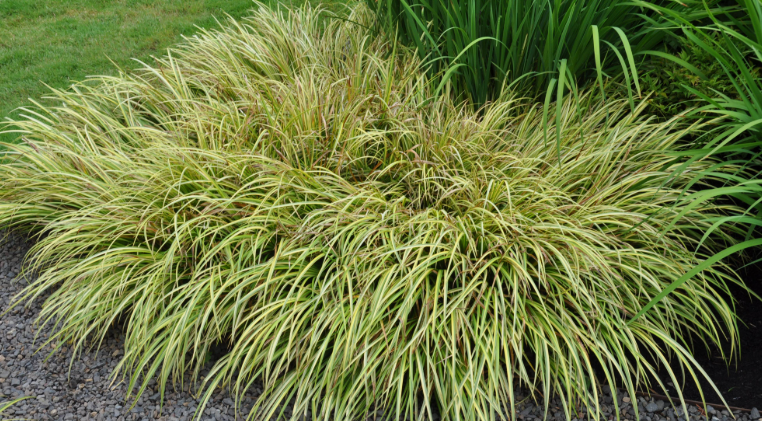
Ornamental grasses have transformed garden design over the past four decades — moving from a niche interest pursued by a handful of pioneering designers to one of the most popular and versatile categories of garden plant in the world. Their ability to provide movement, texture, color, and year-round structure in situations where flowering plants struggle has made them indispensable in contemporary planting schemes. Yet one persistent misconception remains: that ornamental grasses require full sun to perform well.
In reality, a significant and diverse group of ornamental grasses, sedges, rushes, and grass-like plants not only tolerates shade but actively thrives in it. These shade-adapted species have evolved in woodland floors, stream banks, and the filtered light beneath forest canopies — environments that have shaped their ability to photosynthesize efficiently in low light and to produce attractive foliage and form without the direct sun that their prairie-native relatives demand.
The design value of these shade-tolerant grasses is considerable. In areas where most flowering perennials struggle and large-leaved foliage plants dominate, ornamental grasses bring a lightness, movement, and textural variety that transforms the character of the planting. The narrow, arching leaves of a carex catch and reflect light in ways that broad, flat leaves cannot. The rustling, animated quality of a shade-tolerant grass in a gentle breeze brings a living dynamism to shaded beds that static foliage plants simply do not provide.
It is worth noting that “shade-tolerant” covers a range of conditions. Dappled shade beneath deciduous trees — where light levels fluctuate through the day and the canopy opens in winter — is the most accommodating situation and supports the widest range of species. Partial shade, where a space receives direct sun for two to four hours daily, is equally manageable for most of the plants in this guide. Deep, dense shade beneath evergreen conifers or in a north-facing enclosed space is more challenging, but even here a handful of genuinely tough, shade-adapted grasses can be established and maintained successfully.
1. Japanese Forest Grass ‘Aureola’
Japanese forest grass Aureola is widely regarded as the finest ornamental grass for shaded garden use — a graceful, arching, slow-spreading plant that produces cascading mounds of brilliantly variegated leaves in vivid yellow-gold with narrow green stripes, creating a luminous, almost glowing effect in the shaded border that is unmatched by any other shade-tolerant grass.
It thrives in dappled to moderate shade — the vivid leaf color actually burns and bleaches in strong direct sun, making it a plant that genuinely performs better in shade than in full sun, a reversal of the usual situation with ornamental grasses. Each mound grows to about twelve to eighteen inches in height with a spreading width of roughly two feet.
The golden foliage turns warm buff and copper tones in autumn before dying back, and in spring the vivid new growth emerges with a freshness and intensity that makes it one of the most eagerly anticipated seasonal events in the shade garden.
2. Sedge ‘Evergold’
Evergold is a compact, evergreen Japanese sedge with brightly variegated leaves — a broad, creamy-yellow central stripe edged with deep green on each narrow, arching leaf — that forms a neat, rounded mound of year-round color in shaded positions where most variegated plants struggle to perform.
It grows to about twelve inches in height and spread and is one of the most reliably evergreen of all shade-tolerant ornamental grasses, maintaining its vivid coloring through winter with minimal browning or weather damage. The bright central stripe catches whatever light is available in shaded positions, creating an illuminating effect disproportionate to the plant’s modest size.
It is particularly effective planted in generous groups or drifts where the combined effect of multiple mounds creates a substantial, luminous groundcover that is both decorative and largely weed-suppressing.
3. Bowles’ Golden Sedge
Bowles’ golden sedge is a classic British garden plant — a clump-forming, semi-evergreen sedge with vivid, luminous golden-yellow leaves that are brightest in spring and early summer, providing some of the most vivid yellow color available from any shade-tolerant grass-like plant at a time of year when yellow in the shaded border is particularly welcome.
It grows to around eighteen inches and produces its best color in partial shade — full sun causes the bright yellow to bleach to a less interesting pale straw, while too much shade dulls the vivid tone. The right balance, typically found beneath high-canopied deciduous trees or in an east-facing border, produces the characteristic bright, luminous gold that has made this one of the most popular shade sedges in British gardens for over a century.
4. Fox Sedge
Fox sedge is a native North American sedge of woodland streambanks and moist, shaded sites that produces upright, arching, rich dark green foliage with distinctive, fox-brush flower heads in spring — simultaneously one of the most ornamental and most ecologically valuable native grass-like plants for shaded, moist garden situations.
It grows to two to three feet in height and forms steadily expanding clumps that work beautifully in naturalistic woodland garden plantings. The spring flower heads are genuinely decorative — dense, bristly spikes of warm brown that stand above the foliage and catch the light in a satisfying way. It provides important habitat and food for birds and insects, and its native status makes it an ecologically responsible choice for North American shade gardens.
5. Pennsylvania Sedge
Pennsylvania sedge is a fine-leaved, low-growing native North American sedge that has emerged as one of the most promising lawn and groundcover alternatives for shaded areas — a species capable of forming a dense, attractive, naturally low mat of soft, fine-textured greenery with minimal mowing and no irrigation once established.
Studies at the Lady Bird Johnson Wildflower Center found Pennsylvania sedge to require 65 to 75 percent less water than conventional lawn grass in shade conditions, and it performs in dry to medium moisture shade that defeats most other groundcover options. At a mowing height of three to four inches it produces a remarkably lawn-like appearance, and many homeowners in the northeastern United States have successfully converted shaded lawn areas to Pennsylvania sedge.
It grows to around six to nine inches without mowing and spreads steadily by rhizomes to eventually cover large areas.
6. Leatherleaf Sedge
Leatherleaf sedge is a bold, imposing, evergreen sedge from New Zealand that produces wide, arching, copper-bronze to reddish-brown leaves of considerable visual impact — one of the most richly colored of all the sedge family and a plant that brings a warm, dramatic, autumnal quality to the shade garden throughout the entire year.
It forms generous clumps reaching two feet in height and three feet across, with leaves that are broader and more substantial than most ornamental sedges, giving the plant a presence and weight that smaller, finer-leaved sedges cannot match. The warm copper-bronze coloration is most intense in brighter situations but remains attractive even in moderate shade.
It is one of the most dramatic and striking of all shade-tolerant ornamental grasses for providing strong foliar presence in difficult positions.
7. Tufted Hair Grass
Tufted hair grass is one of the finest native cool-season grasses for partially shaded garden use — a clump-forming species with narrow, dark green leaves and tall, extraordinarily delicate, cloud-like flower heads composed of tiny, sparkling spikelets that catch the light with a shimmering, almost crystalline quality from midsummer through autumn.
It grows to two to three feet in flower and performs well in partial to moderate shade, where the delicate flower heads catch whatever light filters through the canopy above. It is native to wet meadows and woodland edges across Europe, North America, and Asia, and in all three regions it is increasingly valued in naturalistic garden design for the combination of fine texture, movement, and seasonal flower interest it provides in shaded conditions.
Karl Foerster — the legendary German plantsman credited with pioneering the use of ornamental grasses in European gardens — was among the first to recognize and promote the garden value of tufted hair grass in the 20th century.
8. Golden Variegated Sweet Flag
Sweet flag is a grass-like plant of wetland and streamside habitats that produces upright, sword-like leaves with bold variegation — in the golden form, each leaf is striped lengthwise with rich yellow-gold and green — creating a vivid, iris-like foliage display in moist, partially shaded positions.
It thrives in the moist, humus-rich conditions along shaded stream banks and pond margins and grows to around eighteen inches in height. The bright variegation performs particularly well in partial shade, where it provides vivid color contrast without the bleaching that occurs in full sun. It spreads steadily by rhizomes and in appropriate moisture conditions makes an excellent low-maintenance groundcover for wet, shaded areas.
It is toxic if ingested but has a long history of traditional medicinal use across Asia, Europe, and North America.
9. Wood Sedge
Wood sedge is a British native sedge of ancient woodland and hedgerow habitats — one of the most genuinely shade-tolerant of all sedge species, capable of growing in the relatively deep shade beneath beech, oak, and hornbeam canopies where many other shade-tolerant plants struggle.
It forms spreading, loose mats of bright green, arching foliage with characteristic drooping flower spikes in spring and early summer, creating a natural, woodland-floor feel that is perfectly suited to naturalistic planting beneath established trees. It is a plant of considerable ecological value in its native range, providing habitat for ground-nesting insects and food for specialist butterfly larvae.
For recreating the feel of a British woodland floor in a garden setting, wood sedge is one of the most authentic and appropriate plant choices available.
10. Bottlebrush Grass
Bottlebrush grass is a native North American woodland grass with one of the most distinctive and ornamental flower and seed head structures of any shade-tolerant grass — the long, bristly, green to purplish-tinged spikes that appear in summer bearing considerable resemblance to old-fashioned bottle brushes and persisting attractively into autumn.
It grows two to three feet in height and tolerates moderate to deep shade beneath deciduous trees — a genuine shade plant rather than merely a shade-tolerant one. The upright, bristly seed heads are particularly effective in combinations with broad-leaved shade perennials such as hostas and ferns, where the fine-textured, vertical seed spikes provide strong contrast to the surrounding horizontal foliage.
It is native to the forest understory from Quebec to North Carolina and is an excellent choice for naturalistic planting in woodland gardens across eastern North America.
11. Greater Woodrush
Greater woodrush is a clump-forming, grass-like plant of shaded woodland habitats with broad, flat, bright green leaves edged with distinctive soft white hairs that give the plant a tactile and visually appealing quality unlike most grasses and sedges. It is genuinely tolerant of deep shade and dry conditions — a combination that makes it invaluable in the most challenging garden situations.
It forms steadily expanding clumps reaching one to two feet and produces attractive, drooping flower and seed clusters in spring that add seasonal interest above the evergreen foliage. Its tolerance of dry shade beneath dense trees is particularly remarkable — it is one of the few ornamental grass-like plants that performs reliably in the notoriously difficult dry shade beneath large conifers and beech trees.
A 2019 RHS trial of plants for dry shade ranked greater woodrush among the top-performing species for sustained ornamental performance in challenging shaded conditions.
12. Autumn Moor Grass
Autumn moor grass is a semi-evergreen, fine-leaved grass that produces arching, narrow mounds of bright green foliage and, in late summer and autumn, tall, airy, purple-tinged flower spikes that catch the low autumn light with a delicate, sparkling quality. It is one of the few grasses that genuinely improves its performance in partial shade compared to full sun.
The combination of fine texture, attractive flower spikes, and good shade tolerance makes it one of the most complete and seasonally interesting of all the shade-tolerant ornamental grasses. It grows to two to three feet in flower and produces its best display in the late-season garden when many other plants are fading.
It is a short-lived grass by the standards of the genus — typically performing well for three to five years before declining — but it self-seeds freely in congenial conditions, ensuring its continuity in the garden without intervention.
13. Snowy Woodrush
Snowy woodrush is a low-growing, spreading evergreen woodrush with narrow, dark green leaves edged with distinctive white silky hairs that forms a dense, slowly spreading groundcover for shaded positions, including quite deep, dry shade where few other plants will grow successfully.
It produces small, rust-brown flower heads in spring that are modest but pleasantly natural in character, and the evergreen foliage provides year-round interest and effective weed suppression once the plant is established. The white-edged leaves brighten dark corners considerably and the plant’s tolerance of considerable drought and shade makes it genuinely invaluable in the most difficult and neglected garden situations.
It spreads slowly and steadily to form a neat, carpet-like mat that eventually covers large areas beneath trees with minimal maintenance required.
14. Sedge ‘Ice Dance’
Ice Dance is a vigorous, spreading, evergreen Japanese sedge with attractively variegated leaves — deep green with a bold, clean white margin — that produces one of the most effective and dynamic white-variegated groundcovers available for shaded positions, brightening dark areas with its clean, crisp coloring throughout the year.
It grows to around twelve inches and spreads steadily by rhizomes to cover considerable areas — more aggressively than many other ornamental sedges — which makes it an excellent practical choice for large shaded areas where ground coverage is more important than restraint. The bold, clean variegation maintains its brightness even in moderate to relatively deep shade.
Ice Dance is considerably more vigorous and faster-spreading than many other variegated sedges, and this energy makes it one of the most effective and practical solutions for covering difficult shaded ground quickly and attractively.
15. Japanese Sedge ‘Silk Tassel’
Silk Tassel is a fine, delicate Japanese sedge with thread-like, silvery-green leaves that form low, cascading mounds of exceptional textural refinement — a plant whose fine, wispy foliage brings a quality of almost ethereal lightness to the shade garden that coarser-leaved plants cannot replicate.
It grows to around ten to twelve inches and is particularly effective in containers, at the edge of raised beds, or in gaps between paving in shaded areas where its cascading, thread-fine foliage can spill gracefully over an edge. The silver-green leaf color is luminous in shade and catches whatever ambient light is available with a soft, reflective quality.
It is less cold-hardy than many other ornamental sedges and performs best in USDA zones 7 to 10, where mild winters allow it to maintain its attractive appearance year-round.
16. Blue-Eyed Grass (Shade Form)
The shade-tolerant forms of blue-eyed grass — technically a member of the iris family rather than a true grass — produce tufts of narrow, flat, bright green leaves and small, vivid blue-purple flowers with a distinctive golden eye throughout spring and early summer, combining a grass-like foliage character with genuine flowering interest that few true grasses can match.
It grows to around twelve to eighteen inches and tolerates partial shade well, producing its best combined foliage and flower display in the dappled light beneath deciduous trees. The flowers are small but vivid and are produced in succession over several weeks, providing a long period of color in the part-shade garden at a time of year when the wider border is at its freshest.
It is a North American native with considerable ecological value, supporting specialist bee species that depend on iris-family flowers for early-season pollen.
17. Striped Rush
Striped rush — sometimes called zebra rush or striped club rush — is a bold, upright, aquatic to semi-aquatic rush that produces cylindrical, dark green stems horizontally banded with creamy-white variegation at irregular intervals, creating one of the most visually striking and unusual variegation patterns of any grass-like plant.
It grows to two to three feet in height and thrives in moist to wet, partially shaded positions — at pond margins, in bog gardens, or in any consistently moist situation in partial shade. The architectural, upright stems and striking banding create a strong structural statement that works particularly well as a vertical accent in a shaded water garden.
It spreads by rhizomes and can be vigorous in consistently wet conditions, potentially requiring division every few years to maintain within its allotted space.
18. Shade Bentgrass (Decorative Form)
Several bentgrass species in their ornamental forms produce remarkably fine, dense, silvery-green tufts of exceptional delicacy in partially shaded garden situations — plants that combine the fine, silky texture of the finest lawn grasses with an ornamental character suited to garden bed and container use.
These decorative forms grow to around six to twelve inches and produce fine, airy, nodding flower spikes of silvery-green to pale straw color in summer that add a delicate, shimmering quality to the planting. They are best used in smaller-scale plantings — at path edges, in rock garden situations, or in containers — where their exceptionally fine texture can be appreciated at close range.
Their tolerance of partial shade and their fine texture make them valuable gap-fillers between broader-leaved shade plants where a lightening, fine-textured contrast is needed.
19. Soft Rush (Ornamental Forms)
The soft rush — in its ornamental spiral form, known as corkscrew rush — is one of the most architecturally distinctive of all shade-tolerant grass-like plants, its stems curled and twisted in a continuous spiral that creates a sculptural, kinetic-looking effect quite unlike any other garden plant.
It grows to around two feet and performs well in moist, partially shaded conditions — at pond margins, in wet borders, and in containers kept consistently moist. The twisted stems provide interest throughout the entire year, with the golden winter tones of the faded stems adding a further seasonal dimension to the year-round structural display.
The corkscrew form is a naturally occurring mutation rather than a bred cultivar, which gives it a botanical authenticity and unpredictability that adds to its considerable charm.
20. Carex ‘Prairie Fire’
Prairie Fire is a vivid, upright-leaved ornamental sedge with striking red to bronze-red foliage that provides some of the most intense warm color available from any shade-tolerant grass-like plant — a strong, striking contrast to the cool greens and blues that dominate most shaded planting schemes.
It grows to around twelve to fifteen inches with narrow, upright leaves that hold their rich color throughout the growing season, and it performs well in partial to moderate shade. The warm, reddish tones are most intense in brighter positions but remain distinctly ornamental in shade, providing the kind of vivid warm color accent that most shade gardens lack.
It is a relatively compact plant well suited to smaller shade gardens and container planting, and it combines particularly well with blue-green hostas and the golden foliage of Japanese forest grass.
21. Narrow-Leaved Moor Grass
The narrow-leaved moor grass is a compact, fine-textured cool-season grass native to the moist meadows and light woodland edges of central Europe that produces low, dense mounds of narrow, bright green leaves and airy, branching flower heads in shades of violet-purple and green that are among the most delicate and beautiful of any shade-tolerant grass.
It grows to around one to two feet and performs well in partial shade with moist, reasonably fertile soil. The flower heads appear in early summer and persist into autumn, providing months of airy, delicate interest above the tidy foliage mounds. It combines beautifully with spring bulbs and early shade perennials, its fresh green growth emerging at exactly the right time to fill the gaps left by fading spring flowers.
22. Golden Hakone Grass (All Gold)
All Gold is a completely golden-leaved selection of Japanese forest grass — lacking the green striping of the Aureola variety — that produces entirely yellow-gold, arching mounds of extraordinary luminosity in partial shade, creating the most vivid and concentrated patch of warm golden color available from any shade-tolerant grass.
It grows to twelve to eighteen inches and performs best in partial shade, where the golden foliage glows with a warmth and intensity that full sun actually diminishes through bleaching. It is slower-growing and slightly more compact than the Aureola variety and commands a premium price in the nursery trade that reflects both its ornamental quality and the relative difficulty of its production.
In the right position — catching the low morning light through a gap in the tree canopy — All Gold produces an effect of almost theatrical beauty in the shaded border.
23. Plantain-Leaved Sedge
Plantain-leaved sedge is a robust, bold-leaved native North American sedge with unusually wide, pleated, rich green leaves that create a dramatic, textural contrast to the narrow-leaved sedges that dominate most ornamental grass plantings. It is one of the most distinctive and architecturally interesting of all shade-tolerant sedge species.
It grows to one to two feet and tolerates moderately deep shade beneath deciduous trees, spreading steadily by rhizomes to form dense, weed-suppressing colonies of considerable ornamental quality. The broad, strongly veined leaves have a pleated, corrugated surface texture that catches light beautifully and creates interesting shadow patterns throughout the day.
It is native to the woodland floors of eastern North America and is an excellent choice for naturalistic planting in gardens seeking to reflect and enhance the local ecology.
24. Fiber Optic Grass
Fiber optic grass is a distinctive, eye-catching rush-like plant that produces tufts of slender, arching green stems — each one tipped with a tiny, pale flower head at the very tip that gives the plant its evocative common name, the effect resembling a cluster of illuminated fiber optic cables catching the light.
It grows to around twelve inches and performs well in moist, partially shaded conditions — it requires consistently moist soil and does not tolerate drought, but in appropriate damp, shaded conditions it is a charming and unusual addition to the shade garden or container planting. The fine, delicate stems move with great sensitivity in any air movement, giving the plant a particularly animated, lively quality.
It is widely used in container plantings, particularly in combination with shade-tolerant flowering plants where its unusual form and movement provide a strong textural contrast.
25. Hakone Grass ‘Nicolas’
Nicolas is a newer, more compact selection of Japanese forest grass with slightly narrower leaves and a particularly neat, well-controlled growth habit that makes it suitable for smaller garden spaces, rock garden settings, and container cultivation where the standard forms might be too spreading.
The foliage is green with golden-yellow striping in the typical Hakone grass manner, providing the characteristic luminous quality of the genus in a more refined and constrained form. It grows to around ten to twelve inches and is one of the most architecturally precise and tidy of all the Japanese forest grass varieties.
For smaller shade gardens and urban courtyard spaces where every plant needs to earn its space, Nicolas offers the outstanding ornamental qualities of Japanese forest grass in a more manageable and appropriate scale.
26. Black Mondo Grass
Black mondo grass is one of the most visually dramatic of all shade-tolerant grass-like plants — producing low, slowly spreading mounds of strap-like leaves in an extraordinary, near-black to deep purple-black color that provides a striking, unusual, and highly effective contrast to green, gold, and silver foliage in the shaded border.
It grows to around six to eight inches and tolerates partial to moderate shade, performing particularly well in the dappled light beneath deciduous trees. In late summer it produces small, pale pink to white flowers on short spikes, followed by glossy black berries that provide further seasonal interest. The near-black foliage is most intense in brighter positions but remains distinctly dark and ornamental in shade.
Black mondo grass has become one of the most popular and widely planted ornamental grass-like plants in contemporary garden design, used frequently as a dramatic edging plant and contrast element in both shaded and partially shaded situations.
27. Variegated Lilyturf
Variegated lilyturf is a robust, evergreen, grass-like perennial that produces wide, arching, deep green leaves with bold cream to white margins — forming dense, spreading mounds of vivid year-round color in shaded positions — and in late summer produces tall spikes of small, vivid lilac-purple flowers above the foliage that are among the most colorful flowers produced by any grass-like shade plant.
It grows to twelve to eighteen inches and spreads steadily to form generous colonies that work effectively as large-scale groundcover in shaded areas. The combination of attractive variegated foliage throughout the year and the vivid summer flower spikes makes variegated lilyturf one of the most complete and multi-season ornamental grass-like plants for shade.
Studies have shown that lilyturf establishes effectively in shade where lawn grass fails, making it one of the most practical solutions for replacing struggling lawns beneath established trees.
28. Hakone Grass ‘Beni-Kaze’
Beni-Kaze — meaning “red wind” in Japanese — is a green-leaved form of Japanese forest grass that develops vivid red and scarlet tints through the foliage in autumn, creating one of the most spectacular seasonal color displays available from any shade-tolerant grass at a time of year when the shaded garden is often at its most colorful.
It grows to around twelve to eighteen inches with the characteristic arching, cascading habit of all Japanese forest grass varieties, and through spring and summer it is an attractive, fine-textured green grass of good ornamental quality. In autumn the transformation is remarkable — the leaves flushing through orange to a vivid, burning red that rivals the best autumn-coloring trees and shrubs.
For gardeners who want to bring the drama and warmth of autumn color into a shaded garden space, Beni-Kaze is one of the most reliable and rewarding choices available in the ornamental grass world.