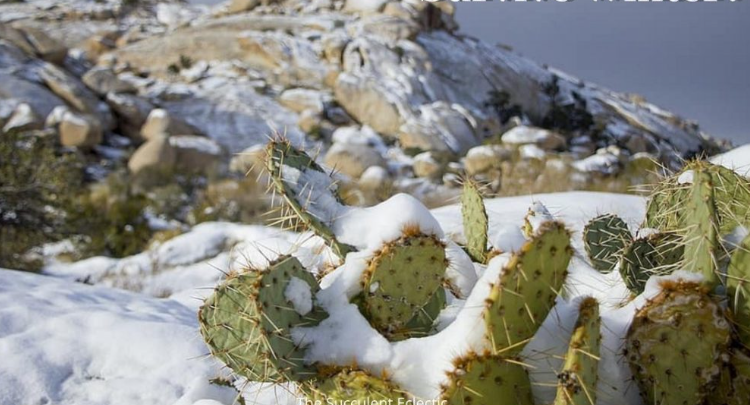
Most people think succulents and picture sun-drenched deserts, terracotta pots on windowsills, or warm Mediterranean gardens. What surprises many is just how many succulents are built for brutal cold — plants that shrug off deep freezes, heavy snowfall, and months of grey skies without missing a beat.
Cold hardiness in succulents comes down to a few key adaptations. Their thick, water-storing leaves and stems are often protected by waxy coatings, dense rosette shapes that shed snow naturally, and root systems that go dormant rather than die. Many also produce natural antifreeze compounds — sugars that lower the freezing point of their cellular fluids.
Winter moisture is often the real killer, not the cold itself. Most hardy succulents tolerate frozen ground beautifully but struggle in wet, waterlogged soil. Well-draining gravel beds and rocky slopes are their natural habitat. In the garden, this means raised beds, slopes, or sandy-gritty soil mixes make all the difference between survival and rot.
Succulents that winter over outdoors
Sedums & Stonecrops
Stonecrop
One of the most versatile cold-hardy succulents around. Low-growing varieties spread like a carpet over rocks and walls, while upright types form clumps that turn vivid red in autumn. Tough enough for Zone 3 winters, they need almost no care once established.
Autumn Joy Sedum
A classic for cold climates, this upright sedum produces flat-topped flower clusters that open pink in late summer, deepen to copper-red by autumn, and stand through winter as handsome seed heads. Reliable from Zone 3 to Zone 9.
Dragon’s Blood Sedum
Named for its brilliant red foliage that intensifies in cold and sun, this low mat-former is one of the toughest ground covers available. It handles poor soil, drought, foot traffic, and temperatures well below zero without complaint.
Two-Row Stonecrop
A dense, spreading sedum with tightly packed succulent leaves that turn purplish-bronze in winter. It covers bare ground quickly and forms thick mats that suppress weeds. Hardy to Zone 3 and unfazed by snow cover for months.
Gold Moss Sedum
Bright yellow-green foliage forms a mossy carpet that adds cheer to rock gardens year-round. In spring it erupts with tiny yellow flowers. It laughs at cold winters and handles heat just as well, making it one of the most adaptable ground-cover sedums.
Kamschatka Stonecrop
A vigorous spreader from far-eastern Russia, so cold tolerance is baked into its DNA. Bright green leaves turn fiery orange-red in autumn. It tolerates partial shade better than most sedums, making it useful under deciduous trees.
Sempervivums
Common Houseleek
Among the hardiest plants on earth, surviving temperatures down to −30°F and below. Tight rosettes multiply into dense colonies, filling in gaps between rocks and paving stones effortlessly. The nickname “hens and chicks” comes from how the mother rosette spawns dozens of tiny offsets.
Cobweb Houseleek
Distinctive white webbing stretches across each rosette like fine spun silk — a structural feature that helps insulate against frost. One of the most eye-catching succulents for alpine troughs and crevice gardens. Hardy to Zone 4 with excellent drainage.
Mountain Houseleek
A high-altitude native from the Alps and Pyrenees, naturally adapted to brutal cold, fierce winds, and shallow soils. Forms compact rosettes in shades of green, red, and purple. An ideal candidate for exposed rock gardens in cold climates.
Arachnoideum Hybrid
Hybrid cobweb sempervivums bred for maximum cold hardiness and ornamental appeal. They offer all the charm of the cobweb species — that extraordinary white filigree — in a wider range of rosette colors from deep maroon to bright green. Hardy to Zone 4.
Agaves
Century Plant
A dramatic architectural agave that survives Zone 7 winters and even brief dips into Zone 6 with protection. Bold blue-grey rosettes can reach 5 feet across. It blooms once spectacularly — a towering spike up to 20 feet tall — then dies, leaving behind offsets to carry on.
Havard Agave
Native to the high desert of Texas and New Mexico where winters are genuinely cold. Compact and tight-rosetting compared to many agaves, it handles temperatures down to about 0°F. A superb choice for Zone 6 xeriscape gardens with well-draining soil.
Parryi Agave
One of the most cold-tolerant agaves available, surviving to around −10°F in dry conditions. The silver-blue compact rosettes are striking in any season. Excellent in rock gardens and gravel beds in Zones 5–6, especially on south-facing slopes.
Utahensis Agave
From the Colorado Plateau and Great Basin — one of the hardiest agaves in existence, tolerating temperatures well below −10°F when dry. Slow-growing and compact, with narrow grey-green leaves tipped with sharp spines. Suited to Zone 5 and above.
Yuccas
Adam’s Needle
A stately yucca native to the eastern United States, hardy to Zone 4. Stiff sword-like leaves radiate from a central rosette, and summer brings a spectacular 4–8 foot spike of creamy bell-shaped flowers. An architectural statement in any winter landscape.
Soapweed Yucca
Native to the Great Plains, where temperatures regularly plunge to −20°F and brutal winds are the norm. One of the toughest yuccas available and a natural choice for cold, dry climates from Zone 3 onward. Compact and slow-growing with clean narrow foliage.
Spanish Bayonet
A bold, multi-stemmed yucca that develops a striking trunk over time, giving it a sculptural presence in the winter garden. Hardy to Zone 5, it tolerates coastal conditions and drought equally well. The flower stalks can reach 10 feet in summer.
Weak-Leaf Yucca
Softer, more flexible leaves than most yuccas make this species easier to plant near paths without injury. Hardy to Zone 4 and tolerant of clay soils better than most succulents. It forms attractive clumps that spread slowly into bold colonies.
Opuntia Cacti
Plains Prickly Pear
Native to the high plains of the American West, this flat-padded cactus tolerates temperatures below −20°F. In summer it produces vivid yellow flowers followed by red fruits. The pads shrivel and lie flat in winter — a natural antifreeze response — then plump up again in spring.
Brittle Prickly Pear
The hardiest prickly pear of all, surviving temperatures as low as −35°F in documented cases. Small, compact pads form low-lying mounds that tuck under snow easily. An extraordinary plant for Zone 3 and 4 rock gardens where almost nothing else will grow.
Eastern Prickly Pear
The native cactus of the eastern US seaboard, found naturally as far north as Ontario, Canada. It shrugs off humid cold winters that would kill most western cacti. Large yellow flowers in June and dark red fruits in autumn make it ornamentally valuable year-round.
Claret Cup Cactus
Spectacular scarlet-red flowers make this cold-hardy cactus one of the showiest in the genus. Cylindrical stems form clumping mounds that handle temperatures to −10°F easily. Native to rocky hillsides in the Southwest where winters are cold and dry.
Delosperma & Ice Plants
Hardy Ice Plant
Neon-bright daisy-like flowers in magenta, pink, yellow, or orange carpet the ground from midsummer into autumn. The most cold-tolerant Delosperma species survives Zone 5 winters in well-drained soil. A revelation for gardeners who assumed ice plants were strictly warm-climate plants.
Mesa Verde Ice Plant
An award-winning selection with unusually deep orange flowers and excellent cold hardiness to Zone 4. Bred specifically for northern gardens, it stays evergreen in mild winters and recovers quickly after hard freezes. A standout in slopes, walls, and rock gardens.
Lavender Ice Plant
Soft purple-lavender flowers and grey-green foliage give this ice plant a more subdued, elegant look compared to its brighter cousins. Hardy to Zone 6, it forms dense weed-suppressing mats that need no supplemental watering once established in the right soil.
Jovibarba & Rosularia
Jovibarba Heuffelii
Often mistaken for sempervivum but with a unique reproduction method — the rosette splits rather than producing offsets. Stout, firm rosettes in shades of green and bronze, extremely cold-tolerant to Zone 3. An underused gem for alpine troughs and exposed gardens.
Rosularia Platyphylla
A little-known relative of sempervivum from central Asia, forming tight flat rosettes with a silvery quality. Hardy to Zone 5 and tolerant of part shade, it fills gaps in alpine plantings beautifully. Soft pink flowers appear in summer above the neat ground-hugging rosettes.
Dasylirion & Nolina
Desert Spoon
Hundreds of narrow, serrated leaves radiate from a central trunk-like base to create an extraordinary spherical fountain of texture. Native to the Chihuahuan Desert where hard freezes are common, it handles Zone 7 and sometimes Zone 6 winters with ease. Slow-growing but very long-lived.
Bear Grass
Despite the grass-like appearance, this is a true succulent relative with thick water-storing roots. Native to the Great Plains and mountain West, it tolerates temperatures to −20°F. Graceful arching foliage moves beautifully in wind, making it ideal for naturalistic landscapes.
Phedimus & Hardy Rosettes
Phedimus Spurius
Formerly classified as sedum, this mat-forming succulent is even more cold-tolerant than many true sedums. Bronze-red winter foliage brightens the dormant garden considerably. It tolerates compacted soils and some foot traffic, spreading steadily without becoming invasive.
Dudleya Cymosa
A cliff-dwelling California native that handles coastal cold and moisture far better than most succulents. Compact rosettes of pale green to silver-blue leaves grow directly from rocky faces, looking spectacular in crevice walls. Hardy to Zone 7 in dry conditions.
Graptopetalum Paraguayense
The ghost plant earns its name from its pale silvery-lavender rosettes that seem to glow in low light. Hardier than most echeveria relatives, surviving temperatures to about 10°F. Excellent in Zone 8 and warmer Zone 7 gardens with good drainage and some winter sun.
Echinocereus & Desert Cacti
Hedgehog Cactus
Forms dense clumps of cylindrical ribbed stems studded with spines. When hot pink flowers open in spring, the effect is breathtaking. Various species in this genus are hardy to Zone 5 and some to Zone 4. They need sharp drainage but ask for almost nothing else.
Strawberry Cactus
Bright red edible fruits follow the spectacular spring flowers, earning this cactus its common name. Cold-tolerant to Zone 5, it forms low clumps that spread over rocky ground. A productive and beautiful addition to xeriscape gardens in cold dry climates.
Orostachys & Cushion Plants
Dunce Cap
Flat rosettes slowly build a pointed central tower of leaves before flowering and setting seed — the “dunce cap” shape. Native to Siberia and Mongolia, it is among the most cold-tolerant of all succulent genera, surviving Zone 3 with ease. Excellent in gravel gardens and troughs.
Chinese Dunce Cap
A slightly larger species with looser, more open rosettes that take on attractive bronze and silver tones in cold weather. Same extraordinary cold tolerance as the standard species — down to Zone 3. Monocarpic like all orostachys, dying after flowering but self-seeding freely.
Lewisia & Mountain Succulents
Bitterroot Lewisia
The state flower of Montana, this native mountain plant is technically a succulent, storing water in thick fleshy roots and leaves. Hardy to Zone 3, it produces gorgeous pink flowers in late spring, then goes dormant in summer heat. Perfect for alpine troughs and crevice gardens.
Cotyledon Lewisia
Evergreen rosettes of succulent leaves topped by brilliant multi-colored flowers in shades of pink, orange, and white. Hardy to Zone 4, this lewisia performs best planted on its side in a wall crack where rain drains away from the crown — exactly mimicking its native cliff habitat.
Rare & Unusual Hardy Succulents
Escobaria Vivipara
A small barrel-shaped cactus native to the prairies and high deserts of North America, reliably hardy to Zone 4. Dense white spines give it a frosted appearance year-round, and vivid pink-magenta flowers light up the rock garden in summer. Self-pollinating and easy from seed.
Woolly Senecio
Silver-white woolly leaves create a striking contrast against gravel or dark soil. Several species in this group handle light frosts well into Zone 8, making them excellent for Mediterranean-style winter gardens. The felt-like coating is not just ornamental — it’s moisture management by design.