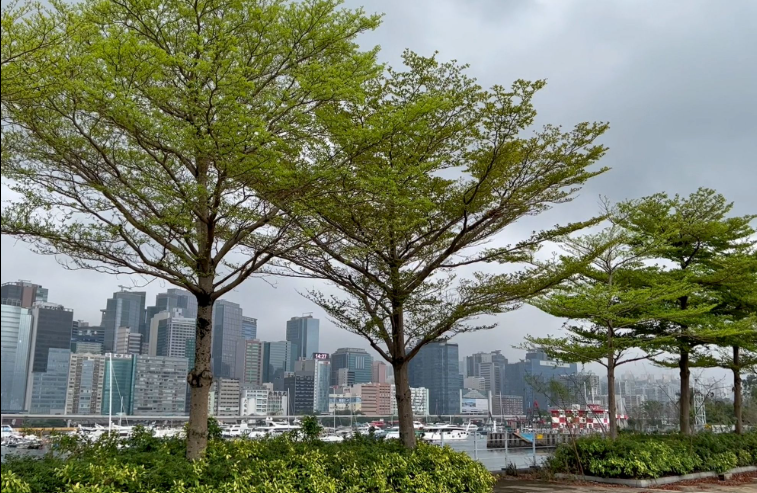
Trees face one of their most punishing challenges when exposed to salt — whether from ocean spray, coastal winds, or road deicing chemicals. Salt draws moisture out of plant tissues, disrupts nutrient uptake, and can poison the soil over time. Despite this, a remarkable group of trees has evolved or adapted to not only survive in salty conditions but to thrive in them. These trees are essential tools for landscapers, urban planners, coastal property owners, and anyone working with challenging soils.
Salt damage affects millions of trees annually. In the United States alone, an estimated 22 million tons of road salt are applied each year, creating a slow but persistent threat to roadside vegetation. Along coastlines, salt spray can travel up to 30 miles inland under strong wind conditions, exposing trees far beyond the beach to marine salt stress. Understanding which trees can handle these conditions is critical for long-term landscape success.
Salt tolerant trees play a vital role in erosion control, carbon sequestration, wildlife habitat, and urban beautification. Many of them also bring ornamental value — with striking foliage, vibrant flowers, or dramatic forms — making them practical and attractive choices. Whether you are planting along a coastal bluff, a highway median, or a seaside garden, the following 40 trees offer proven resilience against salt stress.
Also Read: Plants That Look Like Palm Trees (But Aren’t)
Black Pine (Pinus thunbergii)
One of the most iconic salt-tolerant trees in the world, Black Pine is a staple of Japanese coastal landscapes and is widely planted along seashores across Asia, Europe, and North America. It forms a rugged, irregular crown and develops deeply furrowed dark bark with age, giving it a dramatic, windswept appearance. It handles direct salt spray exceptionally well and is commonly used as a windbreak along beachfronts.
Eastern Red Cedar (Juniperus virginiana)
Eastern Red Cedar is a tough, adaptable evergreen native to eastern North America that tolerates both salt spray and salt-laden soils with ease. It produces small bluish berries that attract a wide variety of birds and offers year-round screening and windbreak value. Its dense foliage and moderate growth rate make it a practical choice for coastal and inland roadsides alike.
Live Oak (Quercus virginiana)
Live Oak is one of the most celebrated trees of the American South, known for its sweeping horizontal branches draped with Spanish moss along Gulf and Atlantic coastlines. It is remarkably salt-tolerant, resisting both soil salinity and salt spray, and can live for several hundred years. A mature Live Oak can spread its canopy over 100 feet wide, making it one of the most magnificent shade trees available for coastal landscapes.
Tamarisk (Tamarix spp.)
Tamarisk, also known as Salt Cedar, is one of the most salt-tolerant trees on the planet, capable of excreting excess salt through specialized glands in its feathery foliage. It thrives in coastal dunes, dry riverbeds, and heavily saline soils where most other trees cannot survive. While its hardiness is extraordinary, it is considered invasive in some regions, so local regulations should be checked before planting.
Also Read: Types of Locust Trees
Coconut Palm (Cocos nucifera)
The Coconut Palm is one of the world’s most recognizable trees and one of the most salt-tolerant, thriving on tropical beaches worldwide where roots are regularly bathed in salt-laden groundwater. It is estimated that coconut palms are cultivated in over 90 countries, producing more than 61 billion coconuts annually. Its graceful, swaying trunk and feathery fronds make it the ultimate symbol of coastal living.
Sea Buckthorn (Hippophae rhamnoides)
Sea Buckthorn is a hardy, thorny tree or large shrub native to coastal and mountainous regions of Europe and Asia, prized for its exceptional salt and wind tolerance. It produces dense clusters of bright orange berries that are extraordinarily rich in vitamins C and E, and is widely used for coastal stabilization, shelterbelts, and ecological restoration. Its nitrogen-fixing root system also helps improve degraded or saline soils.
Monterey Cypress (Hesperocyparis macrocarpa)
Native to a small stretch of California coastline, the Monterey Cypress is naturally adapted to withstand salt-laden ocean winds, often developing dramatic, sculpted forms in exposed coastal positions. It grows quickly into a large, dense tree that provides excellent windbreak and privacy screening. Though naturally restricted to two small groves in the wild, it has been planted widely along coastlines in temperate climates worldwide.
Australian Pine (Casuarina equisetifolia)
Despite its common name, the Australian Pine is not a true pine but a casuarina, producing long, needle-like branchlets that give it a pine-like appearance. It is extraordinarily tolerant of salt, wind, and poor sandy soils, making it one of the most widely planted coastal trees in tropical and subtropical regions. It is used extensively for dune stabilization and coastal protection in parts of Asia, Africa, and the Americas.
Red Mangrove (Rhizophora mangle)
Red Mangrove is one of nature’s most specialized salt-tolerant trees, capable of growing with its roots submerged in seawater through a sophisticated system of salt exclusion and filtration. Mangrove forests cover approximately 137,000 square kilometers of coastline globally and protect shorelines from wave erosion and storm surges. The Red Mangrove’s distinctive arching prop roots create rich underwater habitats for fish, crustaceans, and other marine life.
Also Read: Types of Maple Trees
White Mangrove (Laguncularia racemosa)
White Mangrove grows at slightly higher elevations than Red Mangrove and has developed a different salt management strategy — it excretes salt directly through pores in its leaves. It is a vital component of coastal mangrove systems across the Americas and West Africa and plays a critical role in trapping sediment, filtering water, and storing coastal carbon. Its dense root system is highly effective at protecting shorelines from erosion.
Seaside Alder (Alnus maritima)
Seaside Alder is a rare North American native found naturally only along a few coastal and inland waterways, where it tolerates both salt influence and periodic flooding. It is a modest-sized tree with glossy green leaves and attractive catkins, making it useful for riparian restoration and coastal planting projects. Its nitrogen-fixing root nodules help it establish in poor and saline soils where other trees struggle.
Oleaster / Russian Olive (Elaeagnus angustifolia)
Russian Olive is a small to medium-sized tree with silvery, willowy foliage that gives it a distinctive, almost shimmering appearance in the landscape. It is highly salt tolerant, drought resistant, and wind hardy, making it a popular choice for shelterbelts and coastal hedgerows in dry and semi-arid regions. Its small, olive-like fruits are fragrant and attract birds, and like Sea Buckthorn, it can fix nitrogen through root associations.
Honey Locust (Gleditsia triacanthos)
Honey Locust is one of the most adaptable urban trees in North America, well known for its tolerance of salt, compacted soils, drought, and air pollution. The thornless cultivars most commonly planted in cities produce fine, feathery foliage that casts light, dappled shade without darkening the understory. It is a preferred street tree in many North American cities precisely because of its ability to withstand the punishment of road salt splash and runoff.
Also Read: Types of Maple Trees
Bald Cypress (Taxodium distichum)
Bald Cypress is a remarkable deciduous conifer native to the swamps and coastal wetlands of the southeastern United States, where it regularly encounters brackish water with moderate salt content. It develops iconic fluted buttresses at the base and, in waterlogged conditions, sends up distinctive woody “knees” from its roots. With the right conditions, Bald Cypress can live for over 1,000 years, making it one of the longest-lived trees in North America.
Loblolly Pine (Pinus taeda)
Loblolly Pine is one of the most commercially important trees in the southeastern United States, covering more than 30 million acres across the region, and it demonstrates good tolerance to moderate coastal salt exposure. It grows rapidly, sometimes adding more than two feet of height per year in favorable conditions, and is widely planted for timber, pulpwood, and reforestation along coastal plains. Its adaptability to a range of soil types, including somewhat saline sandy soils, makes it a dependable coastal woodland species.
Pitch Pine (Pinus rigida)
Pitch Pine is a rugged, fire-adapted tree native to the Atlantic coastal plain and Appalachian region of eastern North America, where it thrives in poor, sandy, often salt-influenced soils. It has an irregular, picturesque growth habit and thick, scaly bark that resists not only fire but the desiccating effects of coastal winds and salt spray. Pitch Pine was historically one of the most valued timber trees in early America due to its extremely resinous and decay-resistant wood.
Atlas Cedar (Cedrus atlantica)
Atlas Cedar is a stately, large-growing conifer native to the Atlas Mountains of North Africa, where it tolerates a range of difficult soil conditions including moderate salinity. It develops a striking, open, somewhat irregular crown with bluish-green or silvery-blue needles, particularly in the popular ‘Glauca’ form. Its deep root system and drought tolerance make it a good long-term choice for exposed coastal gardens and parks in Mediterranean-climate regions.
Italian Stone Pine (Pinus pinea)
The Italian Stone Pine is one of the most iconic trees of the Mediterranean landscape, instantly recognizable for its distinctive umbrella-shaped crown that develops as the tree matures. It is well adapted to coastal conditions, tolerating salt-laden winds, sandy soils, and the dry summers of Mediterranean climates. The large, edible seeds — pine nuts — produced by this tree are an important food crop, with global production valued at over $500 million annually.
Aleppo Pine (Pinus halepensis)
Aleppo Pine is one of the most salt and drought-tolerant pines in the world, native to the Mediterranean basin where it grows right down to the shoreline in many locations. It thrives in rocky, calcareous, or sandy coastal soils and is widely used for reforestation of degraded coastal and semi-arid lands across the Mediterranean region and beyond. Its light, open canopy and graceful, sometimes twisted form give it a natural, informal character well suited to naturalistic landscapes.
Cajeput Tree (Melaleuca cajuputi)
The Cajeput Tree is a medium to large paperbark tree native to coastal and wetland regions of Southeast Asia and northern Australia, known for its remarkable tolerance of both salt and periodic flooding. It has distinctive spongy, whitish-brown peeling bark and produces bottlebrush-like white flowers that are highly attractive to birds and bees. It is widely planted for coastal stabilization, timber, and the production of cajuput oil, a medicinal essential oil extracted from its leaves.
Swamp Mahogany (Eucalyptus robusta)
Swamp Mahogany is a large, robust eucalyptus native to coastal areas of eastern Australia, where it naturally grows in saline swamps and along tidal waterways. It tolerates both salt-affected soils and periodic waterlogging, making it one of the most versatile of the eucalyptus species for challenging coastal environments. Its dense, dark green foliage and large clusters of cream to pink flowers make it an attractive as well as functional planting choice.
Canary Island Date Palm (Phoenix canariensis)
The Canary Island Date Palm is one of the most majestic ornamental palms in the world, producing a massive crown of arching, deep green fronds atop a stout, patterned trunk. It is moderately to well tolerant of coastal salt conditions and is widely planted along seaside boulevards, promenades, and resort landscapes in warm-temperate and subtropical regions. A mature specimen can weigh several tons and support a crown of over 100 individual fronds, making it a truly imposing landscape feature.
Windmill Palm (Trachycarpus fortunei)
The Windmill Palm is one of the most cold-hardy palms in cultivation, capable of surviving temperatures as low as 5°F (−15°C), and it also demonstrates good tolerance of coastal salt conditions. Its compact size, typically reaching 20 to 40 feet, and distinctive fibrous trunk covered in brown matting make it an attractive and manageable palm for smaller coastal gardens. It is widely planted along the coasts of the UK, Pacific Northwest, and other surprisingly cold maritime climates.
Also Read: Best Cold Hardy Palm Trees
Torrey Pine (Pinus torreyana)
The Torrey Pine is the rarest native pine in the United States, with natural populations restricted to a small coastal reserve near San Diego and a separate stand on Santa Rosa Island — together totaling fewer than 3,000 wild trees. Despite its rarity, it is well adapted to harsh coastal conditions, tolerating poor, rocky, salt-influenced soils and coastal winds. Its long, graceful needles and broad, spreading crown make it one of the most beautiful of the American pines when given space to develop.
White Poplar (Populus alba)
White Poplar is a fast-growing tree native to central Asia and southern Europe that has been widely planted across the world for its striking foliage — dark green above and brilliant white and woolly beneath — and its tolerance of difficult conditions including coastal salt spray. The leaves shimmer and flash in the wind, creating a dramatic two-tone effect that makes White Poplar highly recognizable in the landscape. It spreads readily by root suckers and is effective for rapid colonization of disturbed or saline coastal sites.
Griselinia (Griselinia littoralis)
Griselinia is a New Zealand native tree that has become one of the most popular choices for coastal hedging and screening in temperate maritime climates, particularly in the UK and Ireland. Its glossy, apple-green leaves are thick and leathery — an adaptation that helps resist salt damage — and it tolerates both direct salt spray and salt-laden soils remarkably well. It can be grown as a formal clipped hedge or left to develop naturally into a multi-stemmed small tree.
Sea Grape (Coccoloba uvifera)
Sea Grape is a tropical tree native to Caribbean and Atlantic coastlines, one of the most salt-tolerant broadleaved trees in tropical regions. It grows right down to the edge of beaches, its large, round, leathery leaves with red veins providing a bold tropical texture that is both ornamental and functional. The clusters of grape-like fruits it produces are edible and are used in the Caribbean to make jams and beverages.
Also Read: Trees that Grow Well In Clay Soil
Buttonwood (Conocarpus erectus)
Buttonwood, also known as Button Mangrove, is a salt-tolerant coastal tree of tropical and subtropical Americas, frequently found growing at the landward edge of mangrove systems in brackish and saline conditions. It has small, narrow leaves and produces distinctive button-like clusters of small fruits that give the tree its name. It is widely used in coastal landscaping across Florida, the Caribbean, and Central America for both its salt tolerance and its attractive, fine-textured appearance.
Black Mangrove (Avicennia germinans)
Black Mangrove is one of the most salt-tolerant trees on earth, able to excrete salt crystals directly through its leaf surfaces — a phenomenon that is visible as a white crystalline residue on older leaves. It grows in the most saline zones of mangrove systems, often forming pure stands along tidal creeks and estuaries in the tropical and subtropical Americas, West Africa, and the Gulf Coast. Its distinctive pneumatophores — small pencil-like breathing roots that protrude from the mud — help the tree survive in oxygen-poor waterlogged soils.
Holm Oak (Quercus ilex)
Holm Oak, also called Evergreen Oak, is a large, long-lived Mediterranean oak that is extremely well suited to coastal planting due to its tolerance of salt spray, thin rocky soils, and dry summers. Its small, dark, glossy leaves — somewhat holly-like in appearance — are thick and waxy, providing effective resistance to salt and wind damage. Holm Oak is widely used for coastal windbreaks and shelter belts across the Mediterranean and in temperate maritime climates such as the British Isles and the Pacific Northwest.
Taupata (Coprosma repens)
Taupata is a New Zealand native coastal tree or large shrub with some of the most brilliantly glossy leaves of any salt-tolerant species — the thick, mirror-like foliage effectively deflects salt spray. It is one of the most important pioneer trees of New Zealand’s coastal cliffs and headlands, often forming the front line of coastal vegetation where nothing else will grow. Various cultivars with golden, variegated, or deep chocolate foliage have made it a popular ornamental choice for coastal gardens worldwide.
Eucalyptus camaldulensis (River Red Gum)
River Red Gum is one of Australia’s most widespread and adaptable eucalyptus trees, tolerating a broad range of challenging conditions including moderate soil salinity, flooding, and drought. It is a large, spreading tree with smooth, mottled bark in cream, grey, and pink tones that is striking in any landscape. It has been planted extensively around the world for shade, timber, windbreaks, and salinity management in agricultural areas with salt-affected soils.
Also Read: How to Grow Maple Trees From Seed
Norfolk Island Pine (Araucaria heterophylla)
The Norfolk Island Pine is a striking, symmetrical conifer native to Norfolk Island in the South Pacific, where it grows naturally in coastal conditions exposed to salt-laden trade winds. Its perfectly tiered, horizontal branches give it an architectural quality unlike almost any other conifer, making it highly prized as an ornamental tree in coastal gardens worldwide. In warm coastal climates it grows into a tall, stately specimen reaching 100 feet or more, and it is one of the most widely planted coastal trees across subtropical and tropical regions.
Pohutukawa (Metrosideros excelsa)
Known as the New Zealand Christmas Tree, the Pohutukawa is a magnificent coastal tree that blooms in brilliant crimson around the Christmas holiday in the Southern Hemisphere, creating spectacular displays along cliff faces and beaches. It is extraordinarily tolerant of salt spray, strong winds, and drought, anchoring its massive frame to coastal rocks with powerful surface roots. The Pohutukawa has deep cultural significance in Māori tradition and is considered a national symbol of New Zealand’s coastal identity.
Sabal Palm (Sabal palmetto)
The Sabal Palm, or Cabbage Palm, is the state tree of both Florida and South Carolina, and it is one of the most salt-tolerant palms cultivated in North America. It grows naturally in coastal swamps, beachfronts, and maritime hammocks where it regularly experiences salt spray and brackish groundwater. It is an extremely hardy palm, capable of surviving not only salt stress but also hurricane-force winds, flooding, and drought — a truly resilient choice for coastal landscaping.
Also Read: Cold Tolerant Avocado Trees
Hackberry (Celtis occidentalis)
Hackberry is a medium to large native North American tree that often goes unnoticed despite its remarkable adaptability to a wide range of difficult growing conditions, including moderate soil salinity and road salt exposure. Its deeply ridged, corky bark is distinctive, and it produces small dark berries that are highly popular with songbirds and other wildlife. It is increasingly recognized by urban foresters as a valuable street and park tree for its toughness, fast growth, and ecological benefits.
Green Ash (Fraxinus pennsylvanica)
Green Ash is one of the most widely planted street trees in North America, valued for its adaptability to urban conditions including moderate salt tolerance from road deicing. It grows rapidly, tolerates flooding and compacted soils, and develops into a handsome, medium to large shade tree with attractive yellow fall color. Populations have been severely impacted by the Emerald Ash Borer in recent decades, but resistant cultivars and ongoing breeding programs continue to make it a significant landscape species.
Siberian Elm (Ulmus pumila)
Siberian Elm is one of the toughest, most adaptable elms in cultivation, naturally evolved to survive the harsh continental conditions of Central Asia — including saline soils, extreme cold, and severe drought. It is a fast-growing, medium-sized tree widely used for shelterbelts, windbreaks, and street planting in challenging climates across North America, Europe, and Asia. While sometimes considered invasive in disturbed habitats, its salt tolerance and adaptability make it genuinely useful in the most difficult planting situations.
Shining Sumac (Rhus copallinum)
Shining Sumac is a small native North American tree or large shrub that thrives in poor, rocky, sandy, and moderately saline soils along the Atlantic and Gulf Coastal plains. Its glossy, compound leaves turn a spectacular deep red and scarlet in autumn, making it one of the most ornamental of the salt-tolerant native trees. It spreads by root suckers to form naturalistic colonies and is an excellent choice for coastal slope stabilization, native planting, and erosion control.
Also Read: Oak Trees that Grow Well In Florida
Oleander (Nerium oleander)
While typically grown as a large shrub, Oleander commonly develops into a multi-stemmed small tree in warm coastal climates, and it is among the most salt-tolerant broadleaved woody plants available for Mediterranean, subtropical, and warm-temperate gardens. It produces abundant flowers in shades of white, pink, red, and yellow throughout the warm season, providing months of color in coastal landscapes where flowering choices can be limited. All parts of the plant are toxic if ingested, which should be considered in planting decisions near children and animals.
Tamarind (Tamarindus indica)
Tamarind is a large, slow-growing tropical tree with a broad, spreading crown of fine, feathery foliage that provides dense shade in hot coastal climates. It demonstrates good tolerance of coastal salt conditions and thrives in the sandy, well-drained soils typical of tropical coastlines. The tree produces the well-known tamarind pods used extensively in cooking across South and Southeast Asia, the Caribbean, and Latin America, making it both a functional landscape tree and an important food crop.