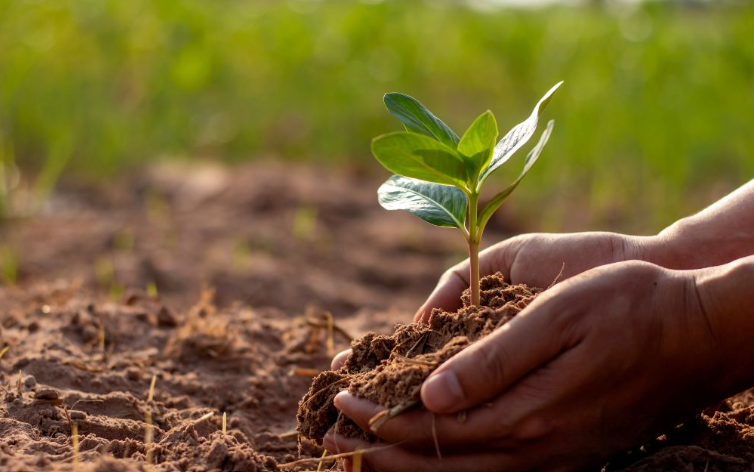
Clay soil has a well-earned reputation for being one of the most challenging growing mediums a gardener or landscaper can encounter. It drains poorly, compacts easily, bakes hard in summer heat, and turns into a sticky, waterlogged morass after heavy rain. Roots struggle to penetrate it, and many plants simply drown in the anaerobic conditions that develop when air pockets are squeezed out by standing water. For the uninitiated, planting into clay can feel like a battle against the land itself.
Yet clay soil has real strengths that are easy to overlook. It is naturally rich in minerals and nutrients, it retains moisture far better than sandy soils during dry spells, and it holds fertilizer and organic amendments remarkably well once they have been incorporated. The key to success with clay is not to fight it, but to work with it — choosing plants that are naturally adapted to its particular characteristics and improving drainage and structure gradually over time through the addition of organic matter.
Trees are among the best long-term investments you can make in a clay soil garden. Their deep, extensive root systems gradually break up compaction, their leaf litter adds organic matter to the surface, and their canopies moderate the drying and baking that leaves bare clay cracked and lifeless in midsummer. The right tree, planted in the right spot, will not merely tolerate clay — it will thrive in it, growing stronger and more beautiful with each passing year.
The following trees have all demonstrated a genuine ability to establish and flourish in clay soil conditions. They range from towering shade trees and elegant ornamentals to fruiting species and wildlife havens, offering options for every garden size, climate, and aesthetic preference. Whether you are planting a single specimen or designing an entire landscape, this list provides a solid, reliable foundation for clay soil success.
Also Read: Fast Growing Trees Suitable For USDA Zone 4
Red Maple (Acer rubrum)
The Red Maple is one of the most widely adaptable trees in North America, thriving in everything from wet bottomlands to moderately dry uplands — and clay soil falls comfortably within its range. It grows at a moderate to fast pace, reaching 40 to 70 feet at maturity, and delivers spectacular value across three seasons: delicate red flowers in late winter, fresh green summer foliage, and a breathtaking display of brilliant scarlet and orange in autumn. It is an excellent shade tree for larger properties and an important wildlife resource.
Silver Maple (Acer saccharinum)
Silver Maple is one of the most vigorous and adaptable maples available, well known for its ability to grow in wet, poorly drained, heavy clay soils where many trees would fail. Its deeply cut, silvery-backed leaves shimmer beautifully in a breeze, creating a lovely, dappled light effect beneath its broad canopy. It grows rapidly — often three feet or more per year in good conditions — making it one of the fastest shade trees available. It is best suited to large, open spaces where its surface roots and wide canopy have room to spread freely.
Bur Oak (Quercus macrocarpa)
The Bur Oak is one of the most clay-tolerant of all oaks, its powerful, deeply penetrating root system capable of breaking through even compacted heavy soils to access moisture and nutrients far below the surface. It is a long-lived, massively built tree with deeply furrowed, fire-resistant bark and the largest acorns of any native North American oak. Growing slowly but surely to 60 to 80 feet, a Bur Oak planted today becomes a generational landmark — a tree that will be standing, sheltering, and feeding wildlife long after the planter is gone.
Swamp White Oak (Quercus bicolor)
As its name suggests, the Swamp White Oak is perfectly suited to wet, heavy, poorly drained clay soils, where it grows into a handsome, medium-to-large shade tree with attractive, peeling bark on the upper branches and a broad, rounded canopy. Its two-tone leaves — dark green above and almost whitish beneath — are distinctive and attractive, and its fall color ranges from yellow-brown to deep wine-red. It is an excellent urban tree, tolerating compacted and wet soils better than most oaks while still providing outstanding wildlife habitat value through its abundant acorn crops.
Pin Oak (Quercus palustris)
Pin Oak is one of the most commonly planted oaks in urban and suburban landscapes precisely because of its tolerance for wet, compacted, and clay-heavy soils. It grows at a faster rate than most oaks — often two feet per year — into a pyramidal to broadly oval tree with deeply cut, glossy leaves that turn brilliant scarlet in autumn.
Its distinctive branching habit — upper branches ascending, middle branches horizontal, lower branches drooping — gives it a graceful, layered appearance. It is a superb street tree and park specimen that performs reliably under difficult soil conditions.
Willow Oak (Quercus phellos)
Willow Oak is a fine-textured, graceful tree whose narrow, willow-like leaves cast a light, pleasant shade that allows grass and understory plants to grow comfortably beneath it. It is highly tolerant of wet, clay soils and periodic flooding, growing naturally along stream banks and bottomlands throughout the eastern United States.
It forms a rounded to oval crown at maturity and grows at a moderately fast pace, reaching 40 to 60 feet over time. Its small acorns are produced in prodigious quantities, making it an outstanding wildlife tree for birds and mammals.
Eastern Redbud (Cercis canadensis)
The Eastern Redbud is one of the most beloved small flowering trees in North American horticulture, and it adapts surprisingly well to clay soils when drainage is not excessively poor. Each spring, before the leaves emerge, the bare branches are smothered in clusters of vivid pink-purple flowers that create a breathtaking display from top to bottom of the tree.
Heart-shaped, blue-green summer leaves follow, turning clear yellow in autumn. It is a perfect small to medium garden tree, reaching just 20 to 30 feet, and performs beautifully as a specimen, in groupings, or at the woodland edge.
River Birch (Betula nigra)
River Birch is the most heat and clay-tolerant of the birch family, naturally growing along stream banks and river floodplains where soils are consistently wet and heavy. Its most striking feature is its exfoliating bark, which peels away in papery, curling sheets to reveal creamy, salmon, and cinnamon-colored inner bark — one of the most beautiful bark textures of any deciduous tree.
It grows rapidly into a graceful, multi-stemmed specimen reaching 40 to 60 feet and provides outstanding year-round interest. It is also one of the most pest-resistant birches available, unlike many of its relatives.
Sweetgum (Liquidambar styraciflua)
Sweetgum is a tall, stately tree that tolerates clay and wet soils with ease, growing naturally in bottomland forests and along stream margins throughout the eastern and southern United States. Its star-shaped, maple-like leaves deliver one of the most spectacular fall color displays of any North American tree — a kaleidoscope of yellow, orange, red, and deep purple, often all on the same tree simultaneously.
It grows at a moderate to fast pace into a pyramidal form reaching 60 to 75 feet. The spiky, ball-shaped fruit capsules it drops are a mild inconvenience on lawns but provide food for numerous bird species.
American Sweetbay Magnolia (Magnolia virginiana)
Sweetbay Magnolia is a graceful, semi-evergreen to evergreen magnolia that thrives in wet, poorly drained, and heavy clay soils, growing naturally in swamps and bog margins along the Atlantic Coastal Plain. Its creamy white, lemon-scented flowers appear in late spring and continue intermittently through summer, and its leaves are a beautiful two-tone — glossy dark green above and silvery white beneath.
It grows as a large shrub or small multi-stemmed tree to 20 to 30 feet, making it suitable for smaller gardens. It is an excellent choice for wet, shaded corners where other ornamental trees struggle.
Tulip Poplar (Liriodendron tulipifera)
The Tulip Poplar is one of the tallest and most architecturally impressive native trees of eastern North America, growing to 70 to 90 feet with a straight, columnar trunk and a high, open canopy. It tolerates clay soils well as long as drainage is at least moderate and produces large, uniquely shaped leaves — each one looking as though the tip has been cut off — that turn a clear, bright yellow in autumn.
In late spring, it bears large, tulip-shaped flowers in yellow-green and orange that are extraordinarily beautiful up close, though their height often places them above easy viewing. Hummingbirds visit the flowers avidly.
Hackberry (Celtis occidentalis)
Hackberry is one of the most underappreciated and genuinely tough native trees available, tolerating clay soils, compaction, drought, flooding, heat, and urban pollution with equal equanimity. It grows to 40 to 60 feet with a broad, vase-shaped crown and distinctive cork-warty bark that gives it year-round interest.
Its small, dark purple berries, produced in abundance each autumn, are a critical food source for a remarkable number of bird species, making it one of the most wildlife-valuable trees you can plant. It is an outstanding choice for difficult urban and suburban sites where more sensitive trees would struggle.
Also Read: Fast Growing Trees Suitable For USDA Zone 9
American Sycamore (Platanus occidentalis)
The American Sycamore is a massive, iconic native tree that naturally colonizes streambanks and floodplains — environments defined by wet, heavy, silty soils — making it extraordinarily well adapted to clay growing conditions. Its most arresting feature is its bark, which exfoliates in irregular patches to reveal a patchwork of creamy white, tan, and greenish inner bark that is luminous in winter light.
It grows very large — 70 to 100 feet — and needs considerable space, but as a specimen in a large landscape it is simply magnificent. Its leaves provide dense summer shade and shelter for a wide variety of wildlife.
Green Ash (Fraxinus pennsylvanica)
Green Ash is one of the most widely planted shade trees across the American Midwest and Plains precisely because of its remarkable tolerance for wet, heavy, clay soils and periodic flooding. It grows quickly into a medium to large tree with a rounded crown, providing dense summer shade, and its leaves turn a clean, clear yellow in autumn.
While the species has been devastated in many regions by the Emerald Ash Borer, resistant cultivars and hybrids are being developed and planted, and it remains a valuable tree in areas where the borer has not yet arrived.
Black Gum (Nyssa sylvatica)
Black Gum, also called Black Tupelo or Sour Gum, is a native tree of extraordinary beauty and remarkable adaptability, growing naturally in both upland forests and swampy bottomlands with heavy, wet soils.
Its fall color is among the most vivid of any North American tree — a brilliant scarlet that arrives earlier than almost any other species, making it the herald of autumn in the landscape. It grows slowly to 30 to 50 feet into a pyramidal form with horizontal branching that gives it year-round structural interest. The small, blue-black fruits are eaten by over thirty species of birds.
Bald Cypress (Taxodium distichum)
Bald Cypress is perhaps the ultimate clay and wet-soil tree — a magnificent conifer that grows naturally in swamps, bayous, and flooded river plains throughout the American Southeast and is virtually impossible to over-water. Despite being a conifer, it is deciduous, dropping its feathery, soft needles in autumn after they turn a beautiful coppery orange.
It grows into a stately, pyramidal tree reaching 50 to 70 feet, with a broad, buttressed trunk and, in perpetually wet sites, distinctive woody knees that emerge from the roots around the base. It is a superb specimen tree for wet, difficult sites.
Dawn Redwood (Metasequoia glyptostroboides)
Dawn Redwood is a living fossil — a deciduous conifer known only from the fossil record until a living population was discovered in China in the 1940s — and it performs beautifully in clay soils, particularly those that retain moisture. Like Bald Cypress, it is a deciduous conifer that turns a lovely coppery bronze-red before shedding its soft, feathery foliage in autumn.
It grows vigorously into a narrow, conical tree reaching 70 to 100 feet, and its fast growth rate, dramatic form, and adaptability to wet conditions make it an increasingly popular choice for large gardens and public spaces.
Weeping Willow (Salix babylonica)
The Weeping Willow is the classic tree of waterside plantings, and its love of moisture makes it an excellent performer in heavy, wet clay soils where water sits for extended periods. Its long, cascading curtains of slender, yellow-green branches create one of the most romantic silhouettes in the landscape, moving beautifully in the slightest breeze.
It grows with remarkable speed — up to eight feet per year in ideal conditions — and reaches 30 to 50 feet at maturity. It is best suited to large, open sites away from drains, pipes, and foundations, as its roots are vigorous and water-seeking.
Elderberry (Sambucus canadensis)
Elderberry is a fast-growing native shrub-tree that thrives in moist, heavy clay soils along stream banks, woodland edges, and low-lying areas throughout North America.
It produces large, flat-topped clusters of creamy white flowers in early summer that are beloved by pollinators, followed by heavy drooping clusters of small, deep purple-black berries that attract an impressive array of birds and can be harvested for jams, wines, and syrups. Growing quickly to 5 to 12 feet, it works beautifully as a naturalistic screen, a wildlife garden anchor plant, or a productive edible landscape specimen.
Crabapple (Malus spp.)
Ornamental crabapples are among the finest small flowering trees for clay soil gardens, tolerating heavy, moderately drained clay soils and rewarding the grower with a magnificent spring flower display, attractive summer foliage, and a profusion of small, colorful fruits in autumn that persist through winter and feed birds during the lean cold months.
With dozens of cultivars available in sizes from 8 to 25 feet and flowers ranging from pure white to deep rose-pink, there is a crabapple suited to virtually every garden size and design aesthetic. Choose disease-resistant varieties for the best long-term performance.
Hawthorn (Crataegus spp.)
Hawthorns are tough, adaptable small trees that perform exceptionally well in clay soils, tolerating both wet conditions and moderate drought once established. They produce clouds of white or pink flowers in spring, followed by attractive red, orange, or yellow berries in autumn and winter that are among the most important wildlife food sources of any landscape tree. Their dense, thorny branches also provide excellent nesting cover for birds.
Growing to 15 to 30 feet depending on species, hawthorns are outstanding choices for wildlife gardens, naturalistic hedges, and small urban gardens with challenging soil conditions.
Serviceberry (Amelanchier spp.)
Serviceberry, also called Juneberry or Shadbush, is a native small tree or large shrub that grows naturally in a wide range of soils including clay, particularly in moist woodland edge and streamside habitats.
One of the earliest trees to bloom in spring, it produces a delicate cloud of white flowers before the leaves emerge, followed by edible, blueberry-like purple fruits that are sweet and delicious — eagerly consumed by birds within days of ripening. Its fall color of orange and red is exceptionally beautiful. Growing to 15 to 25 feet, it is an ideal multi-season specimen for the smaller garden.
Hornbeam (Carpinus betulus)
The European Hornbeam is an underused but outstanding medium-sized deciduous tree that tolerates clay soils with impressive resilience, growing naturally in the understory of dense European woodlands where soils are often heavy and wet.
It has beautiful, heavily ridged, muscle-like gray bark, attractive serrated leaves that turn yellow to orange in autumn, and hanging clusters of winged nutlets that feed birds through winter. Hornbeam responds well to pruning and can be trained as a formal hedge or pleached screen. It grows slowly to 40 to 60 feet and is an excellent choice for formal garden designs.
American Hornbeam (Carpinus caroliniana)
The American Hornbeam, also called Musclewood or Blue Beech, is a native understory tree that grows naturally in moist, shaded woodlands and along stream banks in heavy clay and silt soils across eastern North America. Its smooth, gray, sinuously fluted bark — which looks remarkably like flexed muscles beneath skin — is one of the most distinctive and beautiful bark textures of any native tree.
It grows slowly to 20 to 35 feet with a graceful, multi-stemmed form, produces attractive fall color, and is superb for naturalistic gardens and shaded, wet areas where few ornamental trees perform reliably.
Catalpa (Catalpa speciosa)
Northern Catalpa is a bold, tropical-looking native tree that thrives in clay soils, including those that are compacted and poorly drained, growing naturally in bottomland forests and river floodplains of the central United States.
Its enormous, heart-shaped leaves — some of the largest of any native deciduous tree — create a dramatic, lush canopy, and in early summer it produces spectacular upright clusters of large, orchid-like white flowers with purple and yellow markings. Long, bean-like seed pods follow and persist through winter, giving the tree its alternative common name of Indian Bean Tree. It grows quickly to 40 to 60 feet.
Linden (Tilia cordata)
The Littleleaf Linden is a beautiful, medium to large deciduous shade tree that adapts well to clay soils and is widely used in European and North American urban and suburban landscapes. It produces small, intensely fragrant yellow-white flowers in early summer that fill the air with a honey-sweet perfume and are enormously attractive to bees — linden honey is considered among the finest in the world.
It grows at a moderate pace to 50 to 70 feet, forming a dense, broadly pyramidal canopy that provides excellent shade. It tolerates urban conditions and air pollution well and responds beautifully to pruning and shaping.
Persimmon (Diospyros virginiana)
The American Persimmon is a tough, adaptable native fruit tree that tolerates clay soils, drought, and difficult growing conditions with minimal complaint, making it one of the most valuable multi-purpose trees for challenging sites.
It grows to 35 to 60 feet with attractive, blocky, alligator-skin-like bark and produces round, orange-red fruits in autumn that are astringent when unripe but become intensely sweet and richly flavored after frost softens them. The fruits are relished by deer, raccoons, opossums, foxes, and numerous bird species. Female trees need a male pollinator nearby for reliable fruit production.
Swamp Magnolia (Magnolia × soulangeana — Saucer Magnolia)
The Saucer Magnolia is one of the most spectacular flowering trees in the temperate landscape, producing enormous, chalice-shaped flowers in pink, purple-pink, and white in early spring before the leaves emerge.
It adapts reasonably well to clay soils as long as drainage is not completely impeded, growing as a large, multi-stemmed shrub-tree to 20 to 30 feet with a broad, spreading form. The dramatic, large-scale flower display each spring makes it one of the most eye-catching specimen trees available, and its substantial size and dark green summer foliage provide welcome structure and shade for the remainder of the growing season.
Also Read: Types of Dogwood Trees And Shrubs
Ironwood (Ostrya virginiana)
Ironwood, also called Hop Hornbeam, is a small to medium native understory tree that grows naturally in a range of soil types including clay, particularly in moist woodland situations. Its common name refers to its extraordinarily dense, hard wood — one of the heaviest and hardest of any North American tree — and its bark has an attractive, shreddy, gray-brown texture.
It produces distinctive, hop-like clusters of papery fruit that persist through winter and provide food for birds and small mammals. Growing slowly to 25 to 40 feet, it is an excellent low-maintenance choice for shaded, naturalistic garden areas with heavy soils.
Pawpaw (Asimina triloba)
The Pawpaw is a fascinating and underplanted native fruit tree that grows naturally in rich, moist, bottomland forests with heavy clay and alluvial soils, often forming dense thickets along stream banks in the eastern United States.
It produces the largest edible fruit native to North America — a tropical-flavored, custard-textured fruit with flavor notes of banana, mango, and vanilla — making it a uniquely rewarding edible landscape tree. It grows to 15 to 30 feet with large, tropical-looking leaves and maroon flowers in spring. It typically requires two different seedling-grown trees nearby for cross-pollination and reliable fruiting.
Ginkgo Tree (Ginkgo biloba)
Ginkgo is an exceptionally tough landscape tree that can handle a surprisingly wide range of soil conditions, including clay and compacted urban soils. Its distinctive fan-shaped leaves make it easy to recognize, and in fall they turn a brilliant golden yellow before dropping, often creating a striking carpet beneath the tree. The species grows slowly to moderately and eventually develops into a substantial shade tree, so it needs adequate room to mature.
One of ginkgo’s greatest strengths is its adaptability. The Missouri Botanical Garden lists ginkgo as tolerant of clay soil, compacted soils, heat, air pollution, and both acidic and alkaline conditions. It performs best in full sun and well-drained soil, although its tolerance makes it particularly useful where soil conditions are less than ideal.
Kentucky Coffeetree (Gymnocladus dioicus)
Kentucky Coffeetree is a distinctive native tree with a tall, open form and unusually large compound leaves. The foliage emerges relatively late in spring and provides a light, filtered shade during summer before turning yellow in autumn. Its coarse branching structure gives it an architectural appearance, particularly after the leaves have fallen.
This is another tree worth considering where clay soil is combined with periods of dryness. University of Minnesota Extension lists Kentucky coffeetree among trees that tolerate dry soil conditions, while also noting that it can tolerate some shade. Because clay can hold substantial moisture after rain but become hard and dry during extended drought, a tree with reasonable tolerance for both conditions can be valuable on challenging sites.
Honey Locust (Gleditsia triacanthos)
Honey locust is a fast-growing shade tree with an airy canopy that allows considerably more sunlight to reach the ground than many large deciduous trees. The fine-textured foliage gives the tree a softer appearance than its size might suggest, and the leaves turn yellow in autumn. Thornless cultivars are generally the better choice for residential landscapes because they avoid the large thorns found on the wild form.
Honey locust is particularly useful where heavy soil is combined with periodic dryness. University of Minnesota Extension includes honeylocust among trees that tolerate dry soil conditions, while also identifying it as a useful tree for a range of challenging landscape conditions. Give it full sun and enough room for its mature canopy, and it can become a durable shade tree even where the soil is less than perfect.
White Oak (Quercus alba)
White Oak is one of the great long-lived hardwood trees of eastern North America. It develops a broad, rounded crown with age and produces the familiar lobed leaves associated with many oaks. The foliage turns reddish, brown, or purple in autumn, while the acorns provide an important food source for wildlife.
Although White Oak does best in deep, fertile, well-drained soil, established trees can tolerate a variety of soil conditions. University of Minnesota Extension includes white oak among trees recommended for landscape and woodland applications and lists it alongside several other oaks suitable for difficult regional conditions. In heavy clay, the most important consideration is avoiding a site that remains saturated for long periods.
Northern Red Oak (Quercus rubra)
Northern Red Oak is a large, vigorous native shade tree recognized by its pointed leaf lobes and strong, upright branching structure. Its foliage develops attractive red to russet tones in fall, and its acorns provide food for squirrels, deer, and numerous other wildlife species. Once established, the tree can become an impressive focal point in a large landscape.
This oak is better suited to clay sites that are reasonably drained than to permanently waterlogged ground. University of Minnesota Extension lists Northern Red Oak among recommended trees for several landscape and woodland applications. Because clay soils can become compacted easily, preparing the planting area carefully and avoiding unnecessary compaction around the young tree can make establishment much easier.
Black Walnut (Juglans nigra)
Black Walnut is a large native hardwood with a tall trunk, rounded crown, and pinnately divided leaves. Its compound foliage creates a lush appearance during summer, while the developing walnuts provide food for wildlife and can also be harvested by people when mature. The tree is particularly impressive when given plenty of room to develop naturally.
Black Walnut can tolerate a range of soil conditions and is associated with fertile, moisture-retentive sites. University of Minnesota Extension includes it among recommended deciduous trees for woodland and landscape use. However, its eventual size and the production of walnuts make it a better choice for larger properties than small residential yards.
Shagbark Hickory (Carya ovata)
Shagbark Hickory is best known for its shaggy strips of gray-brown bark, which curl away from the trunk and give mature trees an unmistakable appearance. The tree develops a tall, rounded crown and produces edible nuts enclosed in thick husks. Its golden-yellow fall foliage adds another season of interest.
This is a long-lived native tree that deserves consideration for larger landscapes with heavy soils, provided the site has adequate drainage. University of Minnesota Extension includes shagbark hickory among recommended native deciduous trees for woodland and agroforestry settings. Its eventual size means that it should be planted well away from buildings, overhead wires, and other structures.
American Elm (Ulmus americana)
American Elm was once one of the most recognizable street and shade trees in North America, forming tall trunks and graceful, vase-shaped crowns. Modern disease-resistant cultivars have renewed interest in the species for landscapes where a large native shade tree is appropriate. Its arching branches can eventually create an impressive canopy over lawns, streets, and open garden areas.
The species is adaptable to a range of soil conditions, including moist soils, although drainage and cultivar selection remain important. University of Minnesota Extension recommends disease-resistant American elm varieties in areas where Dutch elm disease is a concern. For a clay-soil garden, selecting an improved cultivar and giving the tree sufficient root space can provide a better long-term result than planting an unselected seed-grown tree.
Sugar Maple (Acer saccharum)
Sugar Maple is one of North America’s most celebrated shade trees, famous for its brilliant autumn foliage and dense, rounded crown. Its leaves can turn shades of yellow, orange, and red as temperatures cool, creating a spectacular display. Mature trees can become very large, so this is primarily a choice for spacious properties rather than compact yards.
Sugar Maple prefers fertile, moist, well-drained soil and is less forgiving of severe compaction than some of the tougher trees on this list. University of Minnesota Extension specifically notes that it grows poorly in compacted soils. For that reason, it is best suited to clay soil that has good structure and drainage rather than dense clay that remains saturated or heavily compacted.
Ohio Buckeye (Aesculus glabra)
Ohio Buckeye is a medium-sized native tree with a rounded crown, palmate leaves, and attractive yellow-to-orange fall color. In spring, it produces clusters of small yellowish flowers, followed by the distinctive glossy brown seeds traditionally associated with buckeye trees. Its moderate size can make it more manageable than some of the enormous shade trees used on heavy soils.
The species is adaptable, but it performs best when the soil retains moisture without remaining permanently saturated. It can be a useful choice for a clay-soil landscape where there is adequate drainage and enough room for the mature canopy. University of Minnesota Extension includes Ohio buckeye among trees used in regional landscape and windbreak recommendations.
Choosing the Right Tree for Clay Soil
Not all clay soil is the same. Some clay soils are fertile and moisture-retentive but drain adequately, while others become saturated after rain and hard as concrete during dry weather. Before choosing a tree, pay attention to how quickly water disappears after heavy rainfall and whether the soil becomes severely compacted during dry periods.
Tree selection should therefore be based on the specific conditions of your site, not simply on whether a species appears on a clay-soil list. University of Minnesota Extension recommends choosing moisture-tolerant trees for sites with standing water or heavy clay, while drought-tolerant selections are more appropriate for clay soils that become dry after the rainy period.
Improving Heavy Clay Before Planting
Even a clay-tolerant tree benefits from good planting conditions. Avoid working clay when it is saturated, because walking or driving equipment over wet soil can compact it further. Instead, allow excessively wet soil to dry to a workable condition before planting.
After planting, maintain a layer of organic mulch over the root zone without piling it against the trunk. Mulch can help conserve moisture and moderate soil conditions while the tree establishes. Most importantly, choose a tree that matches the drainage, sunlight, available space, and moisture conditions of the planting site rather than trying to force a poorly suited species to survive.
With the right selection, heavy clay does not have to prevent you from growing beautiful trees. From golden-foliaged ginkgo and honey locust to long-lived oaks, hickories, and native shade trees, there are plenty of possibilities for turning a difficult soil into a productive and attractive landscape.
References
- Utah State University Extension — Gardening in Clay Soils.
Utah State University Extension — Gardening in Clay Soils
A particularly useful reference because it provides a specific list of trees adapted to clay soils, including river birch, bald cypress, honeylocust, red maple, silver maple, swamp white oak, London planetree, sweetgum, willows, and several poplars. - University of Minnesota Extension — Planting and Transplanting Trees and Shrubs.
University of Minnesota Extension — Planting and Transplanting Trees and Shrubs
Explains how heavy clay affects drainage and root oxygen and identifies trees such as river birch, larch, hackberry, bicolor oak, and red maple as suitable for moist or heavy clay conditions. - University of Maine Cooperative Extension — Maine Home Garden News: Plants for Clay Soils.
University of Maine Cooperative Extension — Plants for Clay Soils
Provides a useful selection of evergreen and deciduous trees that perform well in clay, including red maple, silver maple, river birch, hackberry, honeylocust, Kentucky coffeetree, swamp white oak, pin oak, poplar, willow, linden, and elm. - Penn State Extension — Forest Landowners Guide to Tree Planting Success.
Penn State Extension — Forest Landowners Guide to Tree Planting Success
Discusses the effects of soil structure, compaction, drainage, and soil pH on tree establishment. It also notes that some trees, including speckled alder and American sycamore, are adapted to heavy or periodically wet soils. - Royal Horticultural Society — Clay Soils: Plants for Clay.
Royal Horticultural Society — Clay Soils: Plants for Clay
Offers a broad plant-selection guide for clay soils and includes trees such as Japanese maple, birch, hawthorn, and serviceberry among suitable choices. - University of Illinois Extension — Some Trees Weather Wet Soils and Floods Better Than Others.
University of Illinois Extension — Some Trees Weather Wet Soils and Floods Better Than Others
Useful for explaining why trees adapted to wet conditions can be good candidates for poorly drained clay. The source discusses river birch, hackberry, dawn redwood, black gum, bald cypress, and other moisture-tolerant trees. - University of Maryland Extension — Watering Trees and Shrubs.
University of Maryland Extension — Watering Trees and Shrubs
Provides useful background on clay’s slow drainage and explains how soil type influences watering requirements for trees and shrubs.