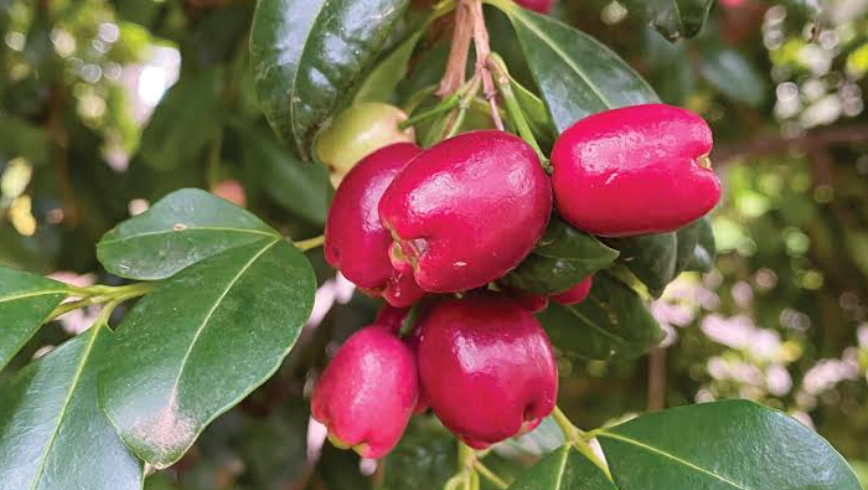
Lilly pilly is the common name for numerous species in the genus Syzygium, part of the myrtle family that also includes eucalypts and tea trees. Worldwide, Syzygium contains somewhere around 1,200 species, and roughly 50 to 75 of those are native to Australia, occurring from the Kimberley region of Western Australia across the Northern Territory, Queensland, and northern New South Wales.
Size varies enormously across the group, which is part of why “lilly pilly” can mean such different things depending on the species or cultivar involved. A specimen growing wild in undisturbed rainforest can reach 30 to 35 meters, developing substantial buttress roots at its base, while a dwarf ornamental cultivar bred for home gardens might top out under a meter, small enough for a pot on a balcony.
The taxonomy has genuinely shifted underneath gardeners’ feet in recent decades. Species once classified separately under the genera Acmena, Eugenia, and Waterhousea have all since been absorbed into Syzygium, though the older names persist widely on nursery labels, which is a large part of why buying a lilly pilly can feel confusing even for an experienced gardener. At least one species, the magenta lilly pilly, is also officially listed as vulnerable under Australia’s national environment protection law, a reminder that not every species in such a widely planted genus is thriving in the wild.
The lilly pilly psyllid remains the single most common problem across the group, a small native insect that burrows into new leaf growth and causes disfiguring, pimple-like galls, which is why so much recent breeding effort has gone into psyllid-resistant cultivars. The list below splits into 2 honest categories: true wild species within the genus Syzygium, each with its own natural range and distinct appearance, and popular named cultivars bred specifically from one of those species, most often Syzygium australe, for hedging and garden use. Both categories matter, since a nursery label reading “lilly pilly” could mean either one. What follows covers 22 types of lilly pilly.
Common Lilly Pilly
Common lilly pilly, scientifically Syzygium smithii and long sold under its older name Acmena smithii, is the most widespread species in the genus, found in rainforest types and wetter eucalypt forest from northern Queensland down through Victoria. Its rough bark, waxy green leaves, and pink flushes of new growth make it one of the most recognizable lilly pillies in cultivation.
It thrives in full sun to partial shade and tolerates moderate frost and extended dry periods once established, though it looks its best with reliable water. Its considerable resistance to the lilly pilly psyllid, along with its documented use as a fire retardant species by several Australian fire authorities, has made it a genuinely practical choice well beyond its ornamental appeal.
Riberry
Riberry, also called small-leaved lilly pilly and clove lilly pilly, is native to coastal subtropical rainforest north of Kempsey, New South Wales, extending into southeast Queensland. Its fruit carries a genuinely spicy, clove-and-nutmeg character distinct from the simple sweetness of most other edible lilly pillies.
It thrives in full sun to partial shade and rich, well-drained soil, growing into a substantial tree in open ground or staying more compact under regular pruning. Its considerable commercial development as a gourmet bush food since the early 1980s has made it the most economically significant lilly pilly species grown in Australia today.
Creek Lilly Pilly
Creek lilly pilly, also called brush cherry, scrub cherry, creek satinash, and watergum, is a rainforest tree native to eastern Australia and one of the most widely cultivated lilly pilly species of all. It’s also the parent species behind most of the popular hedging cultivars grown across the country.
It thrives in full sun to partial shade and consistently moist soil, reflecting its natural preference for growing along creek lines. Its considerable tolerance for pruning has made it the default starting point for breeders developing compact, hedge-friendly lilly pilly cultivars.
Magenta Lilly Pilly
Magenta lilly pilly, also called magenta cherry, is a rainforest species frequently confused in cultivation with the far more common brush cherry, despite being officially listed as vulnerable under Australia’s national environment protection law. Its fruit ripens to a distinctive deep magenta-pink color that gives the species its common name.
It thrives in full sun to partial shade and well-drained soil, tolerating a range of garden conditions once established. Its vulnerable conservation status makes buying nursery stock correctly labeled by species, rather than an unlabeled generic “lilly pilly,” a genuinely meaningful choice for a gardener wanting to support the true species.
Blue Lilly Pilly
Blue lilly pilly, also called blue cherry, scented satinash, and coastal cherry, is native to a wide range along Australia’s eastern coast, growing as an understory tree from coastal warm temperate rainforest to more tropical, mountainous forest types. Its fruit ripens from purplish-red to a distinctive purplish-blue, unusual coloring among lilly pillies.
It thrives in full sun to partial shade and well-drained soil, tolerating a range of forest and garden conditions across its considerable native range. Its blue fruit can be eaten fresh or cooked, adding genuine culinary versatility to its ornamental appeal.
Broad-leaved Lilly Pilly
Broad-leaved lilly pilly, also called blush satinash, cassowary gum, and Eungella gum, is a large rainforest tree capable of reaching 35 meters in height in favorable conditions. Its common name cassowary gum reflects the fruit’s genuine importance as a food source for the endangered southern cassowary in the rainforests where both occur together.
It thrives in full sun to partial shade and rich, consistently moist soil, reflecting its origin in substantial, mature rainforest. Its considerable height at maturity makes it far better suited to a large property or bushland restoration planting than an ordinary suburban garden.
Powderpuff Lilly Pilly
Powderpuff lilly pilly is genuinely distinctive among lilly pillies for its striking, fluffy red or pink flowers, which give the species its common name and make it one of the most ornamentally sought-after wild lilly pilly species. Its considerable flower drama sets it apart from the more subdued white or cream blooms typical of most other species on this list.
It thrives in full sun to partial shade and well-drained, humus-rich soil, reflecting its rainforest origins. Its striking flowers have made it a favorite among native plant collectors specifically seeking a more visually dramatic lilly pilly than the common hedging types provide.
Coolamon
Coolamon, also called durobby, rose apple, and watermelon tree, is an especially attractive rainforest species capable of exceeding 30 meters with a densely foliated canopy under favorable growing conditions. Its considerable size and visual appeal have made mature specimens genuine landscape features wherever they’re preserved.
It thrives in full sun to partial shade and rich, moist soil, reflecting its origin in substantial rainforest. Its impressive mature size means it’s best reserved for a large property or a significant public planting rather than an average suburban yard.
Weeping Lilly Pilly
Weeping lilly pilly is named for its gently drooping branch habit, a softer, more graceful silhouette than the more upright form typical of many other lilly pilly species. Its considerable textural difference from the stiffer, more formal hedging cultivars has made it a favorite for a more naturalistic garden style.
It thrives in full sun to partial shade and well-drained soil, tolerating a range of garden conditions once established. Its weeping form makes it a genuinely distinctive specimen tree choice for a gardener wanting something other than the tightly clipped hedge look most people associate with lilly pilly.
Watergum
Watergum, scientifically Syzygium francisii, shares a common name with creek lilly pilly, which is sometimes also called watergum, a genuine naming overlap worth knowing before buying either species. Despite the shared name, the 2 are botanically distinct species with their own separate native ranges and characteristics.
It thrives in full sun to partial shade and consistently moist soil, reflecting the water-loving habitat its common name references. Checking the scientific name rather than relying on the common name alone is genuinely the safest way to know which watergum a nursery is actually selling.
White Apple
White apple, also called flaky-barked satinash and brown satinash, is native to both New Guinea and northern Australia, its distinctive peeling, flaky bark setting it apart visually from the smoother-barked species more common further south. It was formally reclassified into its current scientific placement in a major 1983 revision of the genus.
It thrives in full sun to partial shade and rich, moist tropical soil, reflecting its native range across 2 countries’ worth of tropical rainforest. Its considerable geographic range beyond Australia alone makes it somewhat unusual among the species on this list.
Pink Satinash
Pink satinash is a large tree capable of reaching 35 meters, with distinctive flaky bark and a native range concentrated in a specific area of tropical Queensland. Its species name honors the Australian naturalist William Sayer, a common practice in 19th-century Australian botanical naming.
It thrives in full sun to partial shade and rich, consistently moist tropical soil, reflecting its origin in substantial rainforest. Its considerable height at maturity makes it a tree suited to genuine rainforest restoration work rather than an ordinary home garden.
White Satinash
White satinash, also called downy satinash, is a small tree with a naturally weeping habit, colorful fruit, and pendulous flower clusters that in principle would make it a genuinely attractive garden plant, though there’s no evidence it’s currently sold by any nursery. It also serves as a host plant for the caterpillars of the pale cerulean butterfly.
It tolerates the specific rainforest conditions of its native Queensland range, though detailed garden performance data is limited given how rarely it’s cultivated. Its ecological role as a butterfly host plant gives it real value in its native habitat regardless of its absence from the nursery trade.
Lockerbie Satinash
Lockerbie satinash is a small tree with a conservation listing that reflects genuine concern for its long-term survival in the wild. Its limited native distribution has made it one of the less commonly encountered species even among dedicated native plant enthusiasts.
It tolerates the specific tropical conditions of its restricted native range, though it remains rare in cultivation. Its conservation status makes it a species better supported through habitat protection than through home garden planting.
Resilience
Resilience is a popular named cultivar of creek lilly pilly, bred and selected specifically for dense, compact hedging performance in home gardens. Its reliable, uniform growth has made it one of the standard choices recommended for a formal clipped hedge.
It thrives in full sun to partial shade and well-drained soil, responding well to regular pruning to maintain its dense form. Its considerable popularity reflects genuinely dependable performance as a hedging plant across a range of garden conditions.
Straight and Narrow
Straight and Narrow is a cultivar specifically bred for a tall, narrow growth habit, making it particularly well suited to a tight side passage or a narrow screening application where a wider hedging variety wouldn’t fit. Its naturally upright form requires considerably less lateral pruning than a broader cultivar would need to maintain the same narrow footprint.
It thrives in full sun to partial shade and well-drained soil, and it’s specifically noted for naturally low susceptibility to the lilly pilly psyllid compared to older, unimproved forms. That combination of narrow habit and pest resistance has made it a particularly practical modern choice for tight urban gardens.
Bush Christmas
Bush Christmas is a compact cultivar of creek lilly pilly, its dense, shrubby habit making it well suited to a smaller hedge or foundation planting rather than a full-scale screen. Its manageable size has made it accessible for a gardener without room for a larger hedging variety.
It thrives in full sun to partial shade and well-drained soil, maintaining a naturally tidy shape with only modest pruning. Its compact scale has made it a practical choice for smaller modern garden footprints.
Aussie Boomer
Aussie Boomer is a shrub-like cultivar of creek lilly pilly, bred for reliable, dense garden performance under Australian conditions. Its considerable hardiness reflects breeding specifically focused on real-world garden toughness rather than pure ornamental novelty.
It thrives in full sun to partial shade and well-drained soil, tolerating a range of garden conditions with minimal fuss. Its dependable, no-nonsense performance has made it a popular practical choice among hedging cultivars.
Aussie Compact
Aussie Compact is, true to its name, a smaller-growing cultivar of creek lilly pilly bred specifically to stay more contained than the straight species or many older cultivars. Its manageable mature size makes it well suited to a smaller garden bed or a lower hedge.
It thrives in full sun to partial shade and well-drained soil, requiring less frequent hard pruning to control its size than a larger-growing cultivar would. Its compact habit has made it a practical choice where space is genuinely limited.
Tiny Trev
Tiny Trev is among the smallest named lilly pilly cultivars commonly sold, bred specifically for use in a container, a very low border, or a tightly confined garden bed. Its diminutive scale sets it apart clearly from the larger hedging and screening cultivars elsewhere on this list.
It thrives in full sun to partial shade and well-drained soil, and its small size makes it particularly well suited to pot culture. Its manageable scale has made it a favorite for a courtyard or balcony garden where a full-sized lilly pilly simply wouldn’t fit.
Allyn Magic
Allyn Magic is a dwarf cultivar of common lilly pilly, bred for a compact, low-growing habit well suited to a low hedge or topiary shape rather than a tall screen. Its naturally dense, tidy growth requires considerably less shaping effort than a larger-growing lilly pilly to maintain a neat appearance.
It thrives in full sun to partial shade and well-drained soil, tolerating regular pruning without losing its compact form. Its manageable size has made it a popular choice specifically for formal, low garden edging.
Red Head
Red Head is a cultivar valued specifically for its richly colored new growth, producing small white flowers that give way to deeply hued purple, edible fruit. Its considerable color display through its new growth flushes sets it apart visually from cultivars selected mainly for foliage density or compact size.
It thrives in full sun to partial shade and well-drained soil, rewarding regular light pruning with fresh, colorful new growth flushes. Its ornamental new growth color has made it a favorite for a gardener specifically wanting more visual drama than a plain green hedge provides.