Australia’s flora is genuinely unlike almost anywhere else on Earth, a direct result of the continent drifting in near-total isolation for tens of millions of years after separating from the rest of the ancient supercontinent Gondwana. That extended isolation let plant life evolve along its own path largely undisturbed by the species mixing that shaped flora on more connected continents, and the result is a flora where the overwhelming majority of native species genuinely exist nowhere else on the planet. Banksia, kangaroo paw, and the waratah aren’t just regionally distinctive, they’re evolutionary outcomes that simply couldn’t have happened anywhere but Australia.
Australia also has a genuinely formal system of floral emblems worth knowing before diving into a broader list, since it organizes a real cross-section of the country’s most iconic native flowers by region. The golden wattle serves as the national emblem, while each of the 6 states and 2 territories has adopted its own official flower, the waratah for New South Wales, the red and green kangaroo paw for Western Australia, Sturt’s desert pea for South Australia, and so on, each chosen specifically to represent a distinct corner of the country’s remarkably varied climate and landscape.
That climate variation, from tropical Queensland rainforest to the arid interior outback to Tasmania’s cool temperate south, is really why the flora itself stays so diverse across such a single continent. The Australian National Botanic Gardens’ floral emblems reference is a solid starting point for the official state and territory flowers specifically. What follows covers 55 Australian native flowers, spanning the official floral emblems and a broader range of the country’s most recognizable native species.
Golden Wattle
Golden wattle produces masses of small, fragrant, brilliant yellow flower balls each spring, serving as Australia’s official national floral emblem since 1988. Its flowers have a genuine history in perfume, potpourri, and traditional bath herbs.
It tolerates poor, dry soil and full sun, thriving across a wide range of the drier conditions found through much of southeastern Australia.
Waratah
Waratah produces an enormous, brilliant red flower head made up of hundreds of individual small flowers surrounded by crimson bracts, serving as the official floral emblem of New South Wales since 1962. Its considerable size and bold color have made it one of the most recognizable native Australian flowers worldwide.
It tolerates a range of soil conditions and grows as a substantial shrub, reaching up to 4 meters tall in favorable conditions.
Common Heath
Common heath produces slender stems lined with numerous small, tubular flowers ranging from pale white to deep red, serving as Victoria’s official floral emblem since 1958, the first state to adopt one. Its nectar-rich blooms draw small birds that perch directly among its short, spiked leaves to feed.
It tolerates coastal heathland and montane conditions, growing as a compact, upright shrub reaching about a meter tall.
Cooktown Orchid
Cooktown orchid produces delicate lilac-pink flowers on an epiphytic plant that grows attached to the trunks of large trees rather than rooted in soil, serving as Queensland’s official floral emblem since 1959. Its natural range is genuinely restricted to the Cape York Peninsula in the state’s far north.
It flowers for about 6 weeks each autumn and winter, and wild specimens remain protected given ongoing pressure from illegal collecting.
Sturt’s Desert Pea
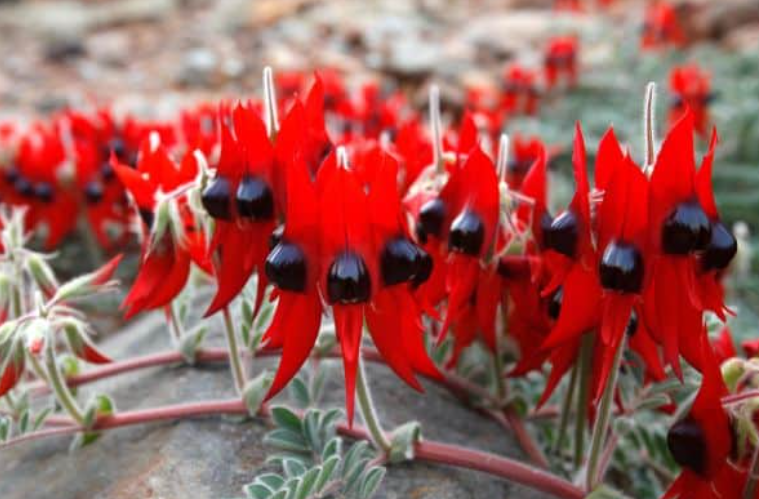
Sturt’s desert pea produces one of the most striking flowers in Australian flora, a brilliant red bloom with a glossy black center, serving as South Australia’s official floral emblem since 1961. Its considerable drought tolerance lets it thrive in some of the harshest arid interior habitat in the country.
It typically flowers specifically after rain, found in the Simpson Desert and Flinders Ranges among other remote, dry parts of the state.
Red and Green Kangaroo Paw
Red and green kangaroo paw produces unmistakable, fuzzy, claw-shaped flowers in a genuinely striking combination of deep red and metallic green, serving as Western Australia’s official floral emblem since 1960. Its unusual curved shape specifically evolved to deposit pollen on the heads of nectar-feeding birds.
It’s found naturally nowhere else in the world beyond the southwest corner of Western Australia, blooming between August and November.
Tasmanian Blue Gum
Tasmanian blue gum produces distinctive, fluffy, cream-colored flower clusters on a substantial eucalyptus tree, serving as Tasmania’s official floral emblem since 1962. Its considerable value to the timber and essential oil industries extends well beyond its ornamental role.
It tolerates a range of soil conditions and grows into a genuinely large forest tree, among the tallest flowering plants in the world.
Sturt’s Desert Rose
Sturt’s desert rose, despite the name, isn’t a true rose at all, producing mauve to lilac flowers with a distinctive red center on a drought-tolerant shrub, serving as the Northern Territory’s official floral emblem. Its 5-petaled flower appears on the Northern Territory’s flag, its petals representing Australia’s 6 states plus the territory itself.
It thrives on rocky slopes and dry creek beds throughout Central Australia, closely related to commercial cotton species.
Royal Bluebell
Royal bluebell produces vivid blue-purple flowers on long, slender stems, serving as the Australian Capital Territory’s official floral emblem. Its considerable altitude tolerance sets it apart from many other Australian native wildflowers.
It grows mainly in sub-alpine woodland across the ACT, southeastern New South Wales, and Victoria.
Cootamundra Wattle
Cootamundra wattle produces abundant, fragrant golden flower balls in late winter, one of the earlier-blooming wattle species and a genuine harbinger of the Australian spring ahead. Its silvery-blue foliage provides attractive contrast even outside the bloom period.
It tolerates poor, dry soil and full sun, growing quickly into a substantial small tree.
Silver Wattle
Silver wattle produces fragrant, pale yellow flower balls against distinctive silvery-gray, finely divided foliage, among the most widely recognized wattle species given its considerable range across southeastern Australia. Its rapid growth has made it a common sight in disturbed and regenerating bushland.
It tolerates a range of soil conditions and full sun, growing into a substantial tree within just a few years.
Blackwood Wattle
Blackwood wattle produces pale cream flower balls that are considerably less showy than many of its wattle relatives, though the tree’s genuinely valuable timber has made it economically significant well beyond its ornamental value. Its dense, dark wood has a long history of use in furniture making.
It tolerates a range of soil and moisture conditions, growing into one of the larger and longer-lived wattle species.
Banksia
Banksia produces bold, cylindrical or dome-shaped flower spikes made up of hundreds of individual small flowers, an unmistakably Australian genus with a considerable diversity of species across the continent. Its woody seed cones persist long after flowering, often requiring fire to release their seeds.
It tolerates poor, sandy soil and considerable drought, thriving in exactly the nutrient-poor conditions much of coastal Australia provides.
Hairpin Banksia
Hairpin banksia produces distinctive orange-gold flower spikes with old flowers curling back into a genuine hairpin shape as the bloom matures. Its considerable nectar production makes it a significant food source for native birds and small mammals.
It tolerates sandy, nutrient-poor soil, thriving in coastal heathland habitat across much of southeastern Australia.
Scarlet Banksia
Scarlet banksia produces vivid orange-red flower spikes, among the more colorful members of the banksia genus and a genuine standout in a native garden setting. Its considerable bird and pollinator appeal makes it a valuable wildlife plant.
It tolerates poor, sandy soil and full sun, growing as a substantial shrub across parts of southwestern Australia.
Grevillea
Grevillea produces a genuinely enormous diversity of flower shapes across its many species, from delicate spider-like blooms to dense, brush-like clusters, one of the most widely planted native Australian genera in gardens worldwide. Its considerable nectar production makes it a favorite of native honeyeaters.
It tolerates poor, well-drained soil and full sun, with species and cultivars suited to nearly every Australian climate zone.
Robyn Gordon Grevillea
Robyn Gordon is a genuinely famous grevillea hybrid cultivar producing large, deep red-orange flower clusters over a remarkably long bloom period. Its considerable popularity has made it one of the most widely planted grevillea cultivars in Australian gardens.
It tolerates a range of soil conditions and full sun, blooming reliably through much of the year in a favorable climate.
Spider Flower Grevillea
Spider flower grevillea produces genuinely delicate, spidery flower clusters in shades of pink, red, or cream, among the more finely textured grevillea types available. Its fine, needle-like foliage adds further textural interest beyond the unusual blooms.
It tolerates poor, sandy soil and full sun, thriving in exactly the lean coastal conditions many grevillea species favor.
Bottlebrush
Bottlebrush produces distinctive, brush-shaped flower spikes in red, pink, or cream, one of the most recognizable and widely cultivated native Australian shrubs both domestically and internationally. Its considerable nectar production draws honeyeaters and other native birds in genuine numbers.
It tolerates a range of soil conditions and full sun, adapting well to both a wet and a considerably drier Australian climate.
Flannel Flower
Flannel flower produces soft, velvety white blooms with a genuinely felted, fabric-like texture that gives the plant its common name. Its delicate appearance belies real toughness in the poor, sandy soil of its native coastal heath habitat.
It tolerates poor, sandy soil and full sun, native primarily to the sandstone country around Sydney and the surrounding coast.
NSW Christmas Bush
New South Wales Christmas bush produces small flowers surrounded by crimson, petal-like bracts that intensify in color around the December holiday season, giving the plant its common name. Its considerable seasonal timing has made it a genuine Australian Christmas tradition.
It tolerates a range of soil conditions, native to the central coast and adjoining mountain ranges of New South Wales.
Boronia
Boronia produces small, often intensely fragrant flowers, with brown boronia specifically prized for a scent considered among the most captivating of any Australian native plant. Its considerable fragrance has made select species genuinely significant in the Australian perfume industry.
It tolerates a range of soil conditions and typically prefers some protection from the most intense afternoon sun.
Red Flowering Gum
Red flowering gum produces vivid clusters of red, pink, or orange flowers on a genuinely spectacular ornamental eucalyptus species, among the showiest flowering trees native to Australia. Its considerable bloom display has made it a popular street and garden tree well beyond its native range.
It tolerates poor soil and drought once established, thriving in full sun across a range of climates.
Bluebell Creeper
Bluebell creeper produces small, nodding, genuinely bell-shaped blue flowers on a twining native climbing vine. Its modest scale and reliable flowering make it a useful groundcover or low climber in a native garden.
It tolerates a range of soil conditions and partial shade, spreading readily once established in a favorable spot.
Correa
Correa, also called native fuchsia, produces small, tubular flowers in red, pink, or cream that genuinely resemble the unrelated fuchsia’s pendant blooms. Its considerable shade tolerance sets it apart from many other sun-loving Australian natives.
It tolerates partial shade and a range of soil conditions, flowering reliably through much of the cooler months.
Tea Tree
Tea tree produces abundant small white or pink flowers covering its fine, needle-like foliage, a genuinely widespread native shrub with considerable commercial importance for its essential oil. Its dense growth habit also makes it a useful coastal windbreak.
It tolerates poor, sandy soil and salt exposure well, thriving in exactly the harsh coastal conditions much of its native range provides.
Paperbark
Paperbark produces dense, bottlebrush-like flower spikes in white or cream on a tree genuinely notable for its distinctive, peeling, papery bark. Its considerable wetland tolerance sets it apart from many other flowering native trees.
It tolerates consistently wet soil and even periodic flooding, thriving in swampy and low-lying habitat across much of its native range.
Guinea Flower
Guinea flower produces cheerful, bright yellow blooms with a genuine resemblance to a small, flat coin, giving the plant its common name. Its considerable bloom volume provides reliable color across a long flowering season.
It tolerates a range of soil conditions and full sun to partial shade, growing as either a groundcover or a small shrub depending on the species.
Happy Wanderer
Happy wanderer, also called native sarsaparilla, produces cascading clusters of small purple, pea-like flowers on a vigorous native climbing vine. Its considerable bloom volume in spring creates a genuinely dramatic curtain of color.
It tolerates a range of soil conditions and full sun to partial shade, climbing readily given a trellis or fence to grow on.
Wonga Wonga Vine
Wonga wonga vine produces clusters of cream, bell-shaped flowers often speckled with maroon or brown markings inside, a genuinely vigorous native climbing vine well suited to covering a fence or arbor. Its dense evergreen foliage also provides year-round screening value.
It tolerates a range of soil conditions and partial shade, climbing readily given adequate support.
Flame Pea
Flame pea produces small, vivid orange-red, pea-shaped flowers on a genuinely striking native shrub, its color living up to the common name. Its considerable bloom display in spring makes it a real standout in a native garden.
It tolerates poor, well-drained soil and full sun, thriving in exactly the lean conditions many other Australian natives favor.
Dampiera
Dampiera produces small, genuinely vivid blue flowers, a color considered relatively uncommon among Australian native wildflowers and prized for exactly that reason. Its low, spreading habit makes it a useful groundcover in a native garden bed.
It tolerates poor, sandy soil and full sun, thriving in exactly the difficult conditions many showier plants can’t handle.
Swan River Daisy
Swan River daisy produces abundant small, daisy-like flowers in shades of purple, pink, or white over a genuinely long bloom period. Its reliable, easy-care nature has made it a popular native annual and short-lived perennial in Australian gardens.
It tolerates a range of soil conditions and full sun, often self-seeding readily once established.
Thryptomene
Thryptomene produces masses of tiny, star-shaped pink or white flowers covering fine, heath-like foliage, a genuinely delicate native shrub valued heavily in the cut-flower industry. Its considerable flower density creates a striking overall effect despite each individual bloom being quite small.
It tolerates poor, sandy soil and full sun, thriving in exactly the lean coastal conditions common across its native range.
Drumsticks
Drumsticks, or isopogon, produce distinctive, rounded, drumstick-shaped flower heads in shades of pink, purple, or yellow, an unmistakable native Australian wildflower genus. Its unusual bloom shape sets it apart from almost anything else in a native garden.
It tolerates poor, sandy soil and full sun, thriving in exactly the nutrient-poor conditions much of its native range provides.
Featherflower
Featherflower, or verticordia, produces genuinely intricate, fringed flowers that create a soft, feathery texture unlike almost any other Australian native bloom. Its considerable delicacy and beauty have made it a prized subject among wildflower photographers.
It tolerates poor, sandy soil and full sun, native primarily to the wildflower-rich southwest of Western Australia.
Grass Tree
Grass tree produces an enormous, dense flower spike rising well above its grass-like foliage crown, a genuinely iconic and slow-growing native Australian plant. Its considerable age, some individuals estimated at several centuries old, makes a mature specimen a genuine living landmark.
It tolerates poor, sandy soil and full sun, growing extremely slowly over the course of a genuinely long lifespan.
Everlasting Daisy
Everlasting daisy produces papery-textured flowers in a range of vivid colors that hold their shape and color for a genuinely long time even after being cut and dried. Its considerable durability has made it a popular choice for dried flower arrangements.
It tolerates poor, dry soil and full sun, often carpeting entire hillsides in a spectacular mass bloom during a good wildflower season.
Billy Buttons
Billy buttons produce small, perfectly round, button-like yellow flower heads atop wiry stems, a genuinely whimsical native Australian wildflower. Its unusual, simple bloom shape makes it instantly recognizable in a native meadow planting.
It tolerates a range of soil conditions and full sun, often naturalizing readily in a favorable native garden setting.
Paper Daisy
Paper daisy produces papery-textured blooms similar to everlasting daisy, in a genuinely wide range of colors from white through pink to deep red. Its considerable bloom volume during a good season creates spectacular native wildflower displays across parts of the outback.
It tolerates poor, dry soil and full sun, often germinating in mass abundance following sufficient rain in an arid region.
Native Hibiscus
Native hibiscus, or alyogyne, produces large, showy flowers genuinely resembling tropical hibiscus in shades of purple, blue, or white. Its considerable drought tolerance once established sets it apart from many tropical hibiscus relatives.
It tolerates poor, well-drained soil and full sun, thriving in considerably drier conditions than its tropical-looking blooms might suggest.
Waxflower
Waxflower produces small, star-shaped flowers with a genuinely waxy texture in shades of white, pink, and purple, a significant Australian export in the global cut-flower trade. Its considerable vase life has made it a florist favorite worldwide.
It tolerates poor, sandy soil and full sun, native primarily to the southwest coast of Western Australia.
Bush Pea
Bush pea produces small, bright yellow, pea-shaped flowers on a genuinely tough native shrub common across much of southeastern Australia. Its considerable adaptability makes it a reliable, low-maintenance addition to a native garden.
It tolerates poor, dry soil and full sun, thriving with minimal ongoing care once established.
Pincushion Hakea
Pincushion hakea produces distinctive, spiky, rounded flower clusters that genuinely resemble a pincushion, an unmistakable native Australian wildflower. Its considerable nectar production draws native birds in real numbers.
It tolerates poor, sandy soil and full sun, thriving in exactly the nutrient-poor coastal conditions much of its native range provides.
Snottygobble
Snottygobble, more formally persoonia, produces small yellow flowers on a genuinely unusually named native Australian shrub, with the common name referring to the texture of its fruit rather than the flower itself. Its considerable ecological importance includes serving as a host plant for several native butterfly species.
It tolerates poor, sandy soil and full sun to partial shade, native to parts of southwestern Australia.
Native Bluebell
Native bluebell, distinct from the specific royal bluebell species used as the ACT’s floral emblem, produces small, nodding, genuinely bell-shaped blue or purple flowers across a considerably broader native range. Its delicate appearance belies real toughness in a range of Australian conditions.
It tolerates a range of soil conditions and full sun to partial shade, found naturally across much of temperate Australia.
Mint Bush
Mint bush produces small, tubular purple or white flowers on aromatic foliage that releases a genuine minty scent when brushed. Its considerable fragrance adds a sensory dimension beyond its modest but reliable flowering.
It tolerates a range of soil conditions and partial shade, thriving in the dappled light of open eucalypt woodland.
Native Violet
Native violet produces small, genuinely violet-like purple and white flowers on a low, spreading groundcover well suited to a shaded native garden bed. Its considerable shade tolerance sets it apart from many sun-loving Australian natives.
It tolerates significant shade and consistently moist soil, spreading readily to form an attractive groundcover.
Fringe Lily
Fringe lily produces delicate purple flowers with genuinely fringed, feathery petal edges, a distinctive and somewhat delicate native Australian wildflower. Its individual flowers typically last only a single day, opening fresh blooms in succession.
It tolerates a range of soil conditions and full sun to partial shade, often found in open woodland and grassland habitat.
Blue Flax Lily
Blue flax lily produces small, star-shaped blue flowers followed by distinctive purple-blue berries on a genuinely tough, strappy-leaved native perennial. Its considerable berry display extends its ornamental value well beyond the modest flowers alone.
It tolerates a wide range of soil and light conditions, remaining one of the more adaptable native groundcover perennials available.
Kunzea
Kunzea produces masses of small, fluffy flower clusters in white, pink, or purple on a genuinely tough native shrub tolerating a wide range of difficult conditions. Its considerable resilience has made it valuable for erosion control and coastal revegetation projects.
It tolerates poor, sandy soil, salt exposure, and considerable wind, thriving in exactly the harsh coastal conditions much of its native range provides.
Sundew
Sundew produces small, delicate flowers on a genuinely carnivorous native plant that traps and digests insects using sticky, glandular hairs on its leaves. Its unusual predatory lifestyle makes it a genuine curiosity beyond its modest floral display.
It tolerates consistently moist, nutrient-poor soil, thriving in boggy habitat where its carnivorous adaptation compensates for the lack of available soil nutrients.
Native Iris
Native iris, or patersonia, produces delicate purple, iris-like flowers on a genuinely tough native perennial found across a range of Australian habitats. Its individual blooms typically last only a single day, similar to several other native wildflowers.
It tolerates poor, well-drained soil and full sun, thriving in open woodland and heath habitat.
Tall Kangaroo Paw
Tall kangaroo paw produces the same distinctive, fuzzy, claw-shaped flowers as its Western Australian state emblem relative, but on considerably taller stems reaching well over a meter in height. Its dramatic scale makes it a genuine focal point in a native garden bed.
It tolerates poor, sandy soil and full sun, native to the wildflower-rich southwest corner of Western Australia alongside its shorter relatives.
Silver Princess
Silver princess produces large, pendant, genuinely showy pink-red flowers on a distinctive, weeping ornamental eucalyptus species. Its considerable ornamental value has made it a popular specimen tree well beyond its native Western Australian range.
It tolerates poor, dry soil and full sun, thriving on considerable neglect once established in the right climate.
Key Takeaways
Australian native flowers include a wide range of species adapted to the country’s diverse climates and landscapes. They vary greatly in flower color, shape, size, foliage, growth habit, and flowering season, providing many options for gardens and natural landscapes.
Choosing Australian native flowers depends on the local climate, soil type, sunlight, moisture, and available space. Some species are suited to dry conditions and poor soils, while others prefer wetter environments or more sheltered locations. Understanding each plant’s natural habitat can help with proper selection and establishment.
With suitable conditions and regular care, Australian native flowers can add long-lasting color, texture, and ecological value to gardens. Selecting species suited to the local environment can reduce maintenance needs while providing habitat and food for native wildlife such as birds and insects.