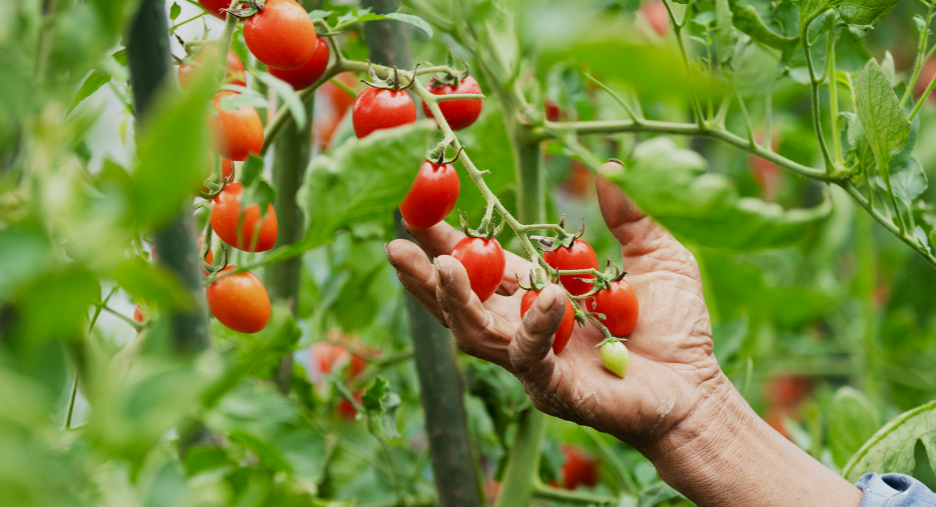
Determinate tomatoes are the compact, bush-type plants that grow to a set size, set their fruit on the ends of the shoots, and ripen most of the crop in a short stretch. They’re also called bush tomatoes, and they’re the reason a gardener with a patio, a small bed, or a canning project can grow tomatoes without wrestling a 6-foot vine. Knowing which varieties belong in this group makes it far easier to match a plant to a space and a schedule.
The numbers define the type. University of California Master Gardeners of San Luis Obispo County put determinate plants at 3 to 5 feet tall, while North Carolina State’s extension leaflet gives a wider range of 1 to 5 feet. Most of the crop ripens within 1 to 3 weeks, and days to maturity across all tomatoes run from under 50 to more than 90, so a determinate variety with 45 to 60 days can be harvested before a 90-day variety has ripened its first fruit.
Determinate plants also need less work than their vining cousins. Arizona’s extension service notes that they generally require minimal staking and little pruning, and North Carolina State recommends pruning them only once, when suckers are 2 to 4 inches long, since later pruning reduces size. The trade-off is a lower total yield per plant and a plant that declines soon after its main harvest.
Classification isn’t always clean, and sources sometimes disagree. Rutgers, for example, is listed as determinate by several sources, yet some seed sellers describe their strains as semi-determinate or even indeterminate, and Celebrity is called determinate by some lists and semi-determinate by others, so it’s left out here. What follows covers 40 determinate tomatoes, grouped into paste and plum types, processing classics, slicers and beefsteaks, disease-resistant and regional performers, early and cool-climate varieties, and container and small-fruited selections.
Paste and Plum Tomatoes
Roma
Roma is the best-known paste tomato and a determinate type, with fruits weighing 2 to 3 ounces and a reputation for making good sauces. It’s the standard against which other plum tomatoes are measured, which is why so many of them carry Roma in their names.
Holmes Seed notes that Roma and other paste types fall into the determinate group because a concentrated harvest is ideal for sauce. A single planting can deliver enough ripe fruit at once to fill a canning pot, rather than a trickle over the summer.
Italian Roma
Italian Roma is a determinate variety whose vines bear elongated fruits that are larger than standard Roma tomatoes. It’s also described as higher in sugar, which gives it a bit more flavor for fresh use.
Because it keeps the compact bush habit of its namesake, it fits small gardens and containers. Its larger fruit means a heavier load per plant, so a short stake or cage helps keep the branches off the ground.
Martino’s Roma
Martino’s Roma has a distinctly Italian profile and is a determinate variety. It’s known for dropping from the plant when fully ripe, a quirk that sets it apart from most tomatoes.
That habit means ripe fruit can end up on the ground if left too long. Regular picking during the short harvest window is the simplest way to save the crop.
Mariana
Mariana is a large Roma-type determinate tomato with a plum shape. Gardening references note that it resists several common viruses, which is a real advantage in a garden with a history of disease.
Its size makes it useful for sauce and canning. Like other determinate types, it ripens over a short period, so plan for a concentrated batch.
Principe Borghese
Principe Borghese is an Italian determinate tomato with small, plum-shaped fruit that’s prized for drying. It has a long tradition as a sun-dried tomato across Italy and the Mediterranean.
Its small, plum-shaped fruit and drying reputation make it a favorite for gardeners who preserve tomatoes at home. Because the plant is determinate, the crop arrives in a short, heavy harvest.
Ten Fingers of Naples
Ten Fingers of Naples is a red determinate tomato with a long, narrow Italian shape. It has a rich flavor and is used for canning.
The elongated fruit has dense flesh with relatively few seeds, much like other paste types. Because it’s determinate, the crop arrives in a burst, which suits a single canning day.
Rosso Sicilian
Rosso Sicilian is a bright red determinate tomato that grows up to 6 ounces, according to the Seed Savers Exchange. It’s used mainly for sauces.
The larger size gives it more flesh than a typical small paste tomato. It’s a good choice for gardeners who want a bigger sauce tomato from a compact plant.
Plum Crimson
Plum Crimson is a dark red determinate plum tomato that produces fruits of up to 4 ounces, as listed in Rutgers’ tomato variety database. It’s suitable for eating fresh or adding to pasta.
Its mid-size fruit works well for gardeners who want a plum tomato that isn’t strictly for processing. Like most determinate types, it ripens its crop over a short period.
Picus
Picus is a plum-shaped determinate tomato with a deep red color, producing 4-ounce fruits on plants that reach about 4 feet. It’s listed in Rutgers’ variety database.
At 4 feet, it sits near the upper end of the determinate range. A cage or sturdy stake keeps the plant upright when the fruit load peaks.
Heinz 1350
Heinz 1350 is a mid-season determinate tomato used for sauces and canning. It was developed for Eastern Canada and the Northeastern United States.
It shares the Heinz name with Heinz 9129, which was developed for similar processing uses. Both depend on a determinate habit, which concentrates the harvest into a short window.
Processing Classics
Rutgers
Rutgers was introduced in 1934 by Lyman Schermerhorn, a plant scientist at Rutgers University, as a cross between the sweet Marglobe and the tart JTD. It became the basis for Campbell’s tomato soup and Heinz’s ketchup, and the press nicknamed it the super tomato.
In the 1960s a deadly new tomato disease, along with industry demand for tougher fruit that machines could harvest and ship long distances, ended its run as a commercial tomato. Rutgers revived it in spring 2016 as Rutgers 250, timed to the university’s 250th anniversary. Classifications vary, since some seed sellers describe their strains as semi-determinate or indeterminate, while Gardening Channel and other lists call it determinate.
Marglobe
Marglobe is a juicy determinate tomato with orange-red skin, suited to canning. Rutgers describes it as a leading variety developed at the USDA.
It’s best known as a parent of Rutgers, which came from a cross of Marglobe and JTD. That lineage makes it one of the most influential tomatoes in American history.
Heinz 9129
Heinz 9129 is a determinate heirloom used for canning and sauces. It’s slightly larger than other Heinz varieties.
Like its sibling Heinz 1350, it was bred for processing. Its determinate habit concentrates the harvest into a short window that suits large canning batches.
Slicers and Beefsteaks
Bush Beefsteak
Bush Beefsteak is a determinate red tomato popular in shorter growing regions, with plants reaching up to 3 feet. Texas A&M AgriLife lists it at 62 days to maturity, producing small to medium fruit.
It offers the beefsteak look on a bush plant. That makes it a practical option for gardeners who want slicing tomatoes without a tall trellis.
Ace
Ace is a determinate red tomato with a slightly flattened shape and fruit up to 8 ounces. It’s listed in Rutgers’ tomato variety database.
It’s a dependable garden slicer on a compact plant. Support with a cage or stake keeps heavy clusters off the ground.
Scarlet Red
Scarlet Red is a determinate tomato with a slightly flattened profile that grows to 12 ounces. It’s sliceable and works well for sandwiches.
At 12 ounces, it’s among the larger determinate slicers. Staking is a smart precaution with fruit that size.
Shady Lady
Shady Lady is a red determinate tomato with fruit reaching 10 ounces. It resists Fusarium wilt race 1 and Alternaria stem canker, according to Rutgers’ database.
That disease resistance makes it a good fit for gardens where those problems linger in the soil. Its large fruit still ripens over a short period.
Tribeca
Tribeca is a deep red determinate tomato with fruit of about 10 ounces and normal leaf size. It’s listed in Rutgers’ tomato variety database.
It offers a classic slicing tomato on a compact plant. Like other determinate slicers, it ripens most of its crop over a short period, so picking often prevents waste.
Florida 47
Florida 47 is a dark red determinate tomato that grows on small plants and produces fruit up to 10 ounces. The University of Florida’s extension service lists it among its recommended varieties.
Iowa State University lists the Florida 47R strain among its recommended determinate varieties for field and high tunnel production. The recognition from 2 different states shows how widely it performs.
Legend
Legend is a determinate tomato with round fruit up to 8 ounces. It’s known for resisting blight.
The San Luis Obispo County Master Gardeners suggest it for coastal gardens, where it’s marked for late blight resistance. That resistance helps in cool, damp seasons when blight spreads.
Torbay
Torbay is a pink determinate tomato that can be eaten fresh, with fruit up to 8 ounces. It’s listed in Rutgers’ tomato variety database.
Pink-fruited tomatoes are less common among determinate types, which makes it a distinctive option. Its compact habit suits smaller beds.
Disease-Resistant and Regional Performers
Solar Fire
Solar Fire is an early, determinate, jointed hybrid, as the University of Florida’s extension service describes it. Iowa State University lists it among recommended determinate varieties, and Rutgers Cooperative Extension is credited with recommending it as well.
The University of California Master Gardeners of San Luis Obispo County suggest it, marked for resistance to Verticillium and Fusarium, for inland areas such as Paso Robles. Recognition from extension programs in Florida, Iowa, New Jersey, and California shows how widely it’s used.
Florida 91
Florida 91 is a determinate variety that Iowa State University lists among its recommended determinate tomatoes for field and high tunnel production. Iowa State’s extension vegetable specialist Hank Taber also lists it among the varieties he recommends.
The University of Florida’s disease-resistance table lists it with resistance to several diseases. That broad tolerance helps in regions with heavy disease pressure.
Kewalo
Kewalo is a determinate tomato bred by the University of Hawaii. It’s known for a sweet flavor and was bred to resist bacteria and viruses.
Because it was developed in a warm, humid climate where disease is a constant challenge, it’s a sensible pick for similar conditions. It joins Anahu, another Hawaiian determinate bred by Dr. Jim Gilbert, as proof that island breeding programs have produced useful bush tomatoes.
Homestead 24
Homestead 24 is a determinate tomato that thrives in hot, humid areas and resists cracking. The University of California Master Gardeners of San Luis Obispo County list it as a suggested variety for several areas.
Crack resistance is a useful trait in humid regions where rain is frequent. The variety is also on the San Luis Obispo County Master Gardeners’ suggested list for inland areas.
Taxi
Taxi is a determinate yellow-orange tomato that does well in hot, humid regions. It’s good for slicing and sandwiches.
It also appears in the San Luis Obispo County Master Gardeners’ suggestions for both inland and coastal areas, which shows it works in more than one climate. Its bright color adds variety to a garden of red tomatoes.
Early and Cool-Climate Varieties
42 Days
42 Days is an open-pollinated determinate tomato with plants up to 2 feet tall. The fruits have very few seeds.
The name points to very fast maturity, which suits short-season gardens. Its small size also keeps it manageable in a cage or container.
Beaverlodge Slicer
Beaverlodge Slicer is a determinate tomato from the Beaverlodge Research Centre in Canada, needing only 54 days to reach maturity. That speed makes it suitable for cold environments.
Colorado State University Extension defines an early variety as one maturing in fewer than 69 days, and at 54 days this one falls well inside that range. That timing helps gardeners in short-season regions get ripe fruit before frost.
New Yorker
New Yorker is a determinate tomato suited to cooler climates, maturing in about 63 days. It’s a dependable early variety.
At 63 days it falls in the early range, under Colorado State University Extension’s 69-day cutoff for early varieties. That timing makes it a practical choice for northern gardens.
Sasha Altai
Sasha Altai is a determinate tomato that was gifted in Siberia in 1989 by a man named Sasha. It’s considered one of the best early-producing tomatoes in the world.
Siberian varieties are bred to ripen in very short summers. That makes it a good choice for cold-climate gardeners who struggle to ripen tomatoes.
Manitoba
Manitoba is a red determinate tomato suited to small gardens in cooler climates. Colorado State University Extension lists it as an open-pollinated, early, determinate variety.
The plant’s modest size suits a raised bed or large container. The San Luis Obispo County Master Gardeners also suggest it for cooler coastal gardens.
Sub-Arctic Plenty
Sub-Arctic Plenty is a determinate variety with upright stems, made for cold environments and recommended for early harvests. The name tells you what it’s built for.
Its upright stems and early harvest are the traits that make it a cold-climate pick. Gardeners in northern zones plant it to get a harvest before the first fall frost.
Northern Delight
Northern Delight is a determinate tomato that’s sweet and suited to early crops in cooler seasons. It’s another variety bred for short summers.
Its sweet flavor makes it popular for fresh eating. It pairs well with other early varieties for a staggered harvest.
Sophie’s Choice
Sophie’s Choice is a determinate tomato introduced in Edmonton, Canada, and it’s suited to cooler areas. It was bred for places with short, mild summers.
It’s a good choice for gardeners in northern climates who want a variety proven in cold conditions. It ripens reliably when warm weather is limited.
Container and Small-Fruited Selections
Tiny Tim
Tiny Tim is a determinate tomato that needs only 45 days to reach maturity and was developed by the University of New Hampshire. As the name suggests, it’s a very small plant.
Mississippi State’s extension service recommends a container at least a foot deep for container tomatoes. Tiny Tim fits easily in a pot, which makes it a classic windowsill and patio variety.
Tumbler
Tumbler is a small hybrid determinate tomato that’s quick to grow, harvested in about 50 days. That puts it among the fastest varieties in this list.
Its short timeline and small size suit containers and patios. Like other container tomatoes, it benefits from a pot at least a foot deep with drainage holes, as Mississippi State’s extension service recommends.
Red Robin
Red Robin is a determinate tomato that needs 54 days to reach maturity and has a sweet flavor. Colorado State University Extension lists it as an open-pollinated, early, determinate variety.
It’s eaten fresh and grows well in containers. At 54 days, it’s one of the quickest tomatoes to ripen, which makes it a good patio choice.
Early Wonder
Early Wonder is a determinate tomato that was first introduced in 1950. It’s suitable for container growing.
Introduced in 1950, it has been available to gardeners for more than 70 years. That track record makes it a proven early variety for pots and small beds.
Window Box
Window Box is a determinate tomato that produces oval, 3-ounce red fruits. The name tells you the intended use.
Its name points to small-space growing, and Mississippi State’s advice of a container at least a foot deep applies. Fruit this size is best eaten fresh or sliced into salads.
Gold Nugget Cherry
Gold Nugget Cherry is a determinate cherry tomato with yellow to orange fruit. It’s suitable for snacking.
Most cherry tomatoes are indeterminate, according to University of Florida extension guidance, so a determinate cherry is unusual. Its compact size makes it a good choice for containers.