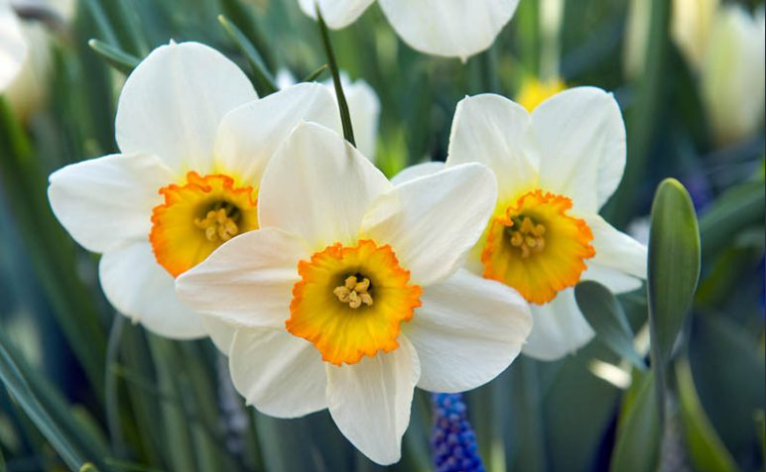
The first time I planted daffodils, I honestly underestimated how different they could look from one another. I expected the familiar yellow trumpet flowers that appear every spring, but after growing a few different varieties, I started noticing just how much variation there is in flower shape, color, height, fragrance, and bloom time. Some stood tall with large golden trumpets, while others stayed close to the ground with delicate, swept-back petals. That experience is what made me want to explore more of the many daffodils available to gardeners.
And there are a lot more than most people realize. The American Daffodil Society notes that there are more than 32,000 registered daffodil cultivars, while the exact number of recognized Narcissus species, subspecies, and varieties varies depending on the classification used. These cultivars are organized into 13 official divisions, based largely on flower characteristics such as the shape and length of the corona and petals. The Royal Horticultural Society serves as the International Cultivar Registration Authority for Narcissus and maintains the International Daffodil Register, helping gardeners and growers keep track of the enormous diversity within the genus.
With so many choices, picking the right daffodil can be surprisingly difficult. I have found that the best approach is not simply choosing the brightest yellow flower in the catalog, but looking at how a particular variety will actually fit into the garden—whether you want an early splash of color, fragrant flowers, compact plants for containers, large blooms for a traditional border, or varieties that can naturalize and return year after year.
In this guide, I’ve brought together 35 types of daffodils worth knowing, from classic favorites to unusual forms, with a closer look at what makes each one special and where it can work best in a garden.
Types of Daffodils to Brighten Your Spring Garden
1. King Alfred Daffodil
King Alfred is one of the classic daffodils that many gardeners picture when they think of spring. It produces large, bright golden-yellow flowers with a prominent trumpet surrounded by six broad petals. The flowers stand on sturdy stems, making them easy to see above surrounding spring foliage.
This traditional variety is particularly effective when planted in groups, where its strong yellow color creates a dramatic display. King Alfred is also useful for naturalizing in lawns and informal areas, and its tall stems make it a practical choice for cut-flower arrangements.
2. Mount Hood Daffodil
Mount Hood is an elegant trumpet daffodil that provides a softer alternative to the traditional yellow varieties. Its flowers open with a creamy-yellow appearance before gradually becoming predominantly white, creating a clean and sophisticated look in the spring garden.
The large flowers stand prominently above the foliage and work especially well in borders and mixed bulb displays. Planting Mount Hood alongside blue or purple spring flowers can create an attractive color contrast without making the garden look overly bright.
3. Carlton Daffodil
Carlton is a large-cupped daffodil with broad yellow petals surrounding a slightly darker yellow cup. It has the cheerful appearance associated with traditional daffodils but has a more open flower shape than a trumpet variety.
Its reliable growth and strong spring color make it useful for mass planting, borders, and naturalizing. A group of Carlton bulbs planted together can produce a particularly impressive display because the flowers tend to create a strong block of yellow rather than appearing as isolated plants.
4. Ice Follies
Ice Follies is a large-cupped daffodil known for its attractive combination of pale petals and a broad central cup. The flowers typically open with a yellowish cup that becomes much paler as the bloom matures, giving the plant a changing appearance throughout its flowering period.
This variety works well in both formal and informal gardens because its color is relatively easy to combine with other spring flowers. It can be planted in borders, containers, or larger groups where its pale flowers provide a softer contrast to stronger yellow daffodils.
5. Salome
Salome is an especially interesting daffodil because its flower changes character as it matures. The broad outer petals are pale, while the cup begins yellow and can develop warm peach and pink tones as the flower ages.
This changing coloration makes Salome a good choice for gardeners who want something more sophisticated than a standard yellow daffodil. It is particularly attractive when planted in mixed borders, where the gradual development of pink tones can complement other pastel spring flowers.
6. Pink Charm
Pink Charm is a large-cupped daffodil that demonstrates how much color variation can be found among modern daffodils. Its pale outer petals contrast with a warm-colored central corona, creating a flower that looks considerably different from the traditional all-yellow types.
The subtle coloring makes Pink Charm useful in cottage gardens and mixed spring borders. It can also be grown for cutting, where its unusual center gives floral arrangements more variation than standard yellow daffodils.
7. Flower Record
Flower Record is a classic large-cupped daffodil with pale petals and a contrasting yellow center. Its familiar flower shape makes it easy to combine with many other daffodils, while its relatively restrained color scheme gives it a timeless appearance.
It is particularly effective when planted in groups or combined with other spring bulbs. Because the flowers have a traditional appearance, Flower Record can fit naturally into cottage gardens, perennial borders, and more formal spring plantings.
8. Actaea
Actaea belongs to the Poeticus group of daffodils and looks quite different from large trumpet varieties. It has crisp white petals surrounding a very small yellow cup with a contrasting reddish edge. The flowers also have a pleasant fragrance, making the plant especially enjoyable when grown near paths or seating areas.
This is a later-flowering daffodil, so it can help extend the spring display after some of the earliest varieties have finished. Its simple white-and-red coloring also works beautifully in woodland-style plantings and informal cottage gardens.
9. Thalia
Thalia is a graceful white daffodil belonging to the Triandrus division. Instead of producing one large flower, it typically carries two or more delicate flowers per stem, with the blooms hanging slightly downward and the petals gently reflexed.
Its smaller, more delicate appearance makes Thalia particularly effective when planted among grasses, woodland plants, or naturalized areas. The pure white flowers can also look striking when planted in groups beneath trees or along the edges of informal paths.
10. Hawera
Hawera is a charming small daffodil that produces several nodding, lemon-yellow flowers on each stem. The flowers have a delicate appearance, while the relatively short stature makes the plant much easier to fit into small gardens than many tall trumpet daffodils.
Because of its compact growth, Hawera is well suited to containers, rock gardens, raised beds, and the front of borders. Planting several bulbs together can create a concentrated patch of yellow without overwhelming the surrounding plants.
11. Jenny
Jenny is a Cyclamineus daffodil recognized by its swept-back petals and slender yellow trumpet. The petals are generally creamy white, while the central trumpet provides a contrasting lemon-yellow color.
Its compact size and distinctive flower shape make Jenny particularly useful in smaller spaces. It can be planted in pots, at the front of borders, or among other low-growing spring bulbs where its reflexed petals can be appreciated at close range.
12. Jetfire
Jetfire is a small but exceptionally colorful Cyclamineus daffodil. Its bright yellow petals curve backward from a vivid orange trumpet, producing a strong contrast despite the flower’s relatively small size.
The plant’s compact stature makes it a useful choice for containers and rock gardens, but it can also be planted in groups at the front of larger borders. Its bold coloring means that even a small number of bulbs can make a noticeable contribution to a spring display.
13. February Gold
February Gold is valued primarily for its early flowering and bright golden-yellow flowers. It can begin flowering before many of the larger traditional daffodils, making it useful for gardeners who want to see spring color as early as possible.
Its swept-back petals give it the characteristic Cyclamineus appearance, while its relatively compact size makes it versatile. Plant it along paths, in containers, around shrubs, or in groups through areas of lawn where its early flowers can be easily noticed.
14. Tête-à-Tête
Tête-à-Tête is one of the best-known miniature daffodils and is particularly popular because of its compact size and cheerful yellow flowers. The plant generally remains short while producing attractive golden blooms, making it ideal for places where a full-sized daffodil would look out of proportion.
It is an excellent choice for containers, window boxes, rock gardens, and the front of flower borders. Tête-à-Tête can also be naturalized in short grass, where groups of the small flowers can create a charming early-spring display.
15. Jack Snipe
Jack Snipe is a Cyclamineus daffodil with creamy-white petals and a contrasting yellow trumpet. Its petals sweep backward from the center, giving the flower a distinctly different appearance from upright trumpet daffodils.
The plant is relatively compact and works well in containers and small borders. Its two-tone flowers also combine easily with other spring bulbs, particularly blue, purple, and white flowers that reinforce its cool spring color palette.
16. Sailboat
Sailboat is a Jonquilla-type daffodil that produces several flowers per stem. Its pale flowers have a soft lemon coloration in the center, creating a delicate appearance rather than the bold contrast found in some yellow-and-orange cultivars.
Jonquilla daffodils are often valued for their fragrance as well as their flowers, and Sailboat is an appealing option for gardeners who want a more delicate spring display. It can be used in borders, cottage gardens, and informal plantings where several flowers per stem create a fuller effect.
17. Geranium
Geranium is a Tazetta daffodil that produces clusters of flowers rather than a single bloom on each stem. The white petals contrast dramatically with orange-red centers, while the flowers are also pleasantly fragrant.
The combination of multiple flowers, strong color contrast, and fragrance makes Geranium especially useful near patios, entrances, and other places where the flowers can be enjoyed closely. It is also an attractive choice for cutting because several blooms can be gathered from a relatively small number of stems.
18. Cheerfulness
Cheerfulness is a double daffodil with clusters of creamy flowers that have a much fuller appearance than ordinary single-flowered types. Its layered petals give the flowers a soft, almost rose-like character.
This makes Cheerfulness particularly attractive in cottage gardens and informal borders. It can also be grown for cutting, where the fuller flowers provide a different texture from the simpler trumpet and large-cupped daffodils.
19. Bridal Crown
Bridal Crown is a fragrant double daffodil with creamy-white flowers and yellow tones toward the center. Several flowers can appear on a stem, creating a full cluster that looks quite different from the traditional single-flowered daffodil.
Its fragrance is one of its most appealing qualities, especially when planted close to a walkway, patio, or entrance. Bridal Crown can also be used for indoor forcing and cut flowers, making it a versatile choice for gardeners who want to enjoy their daffodils inside as well as outdoors.
20. Golden Ducat
Golden Ducat produces large, richly colored double flowers made up of numerous golden-yellow segments. The flowers have a dense, elaborate appearance and can become a strong focal point in a spring border.
Because the blooms are so full, Golden Ducat looks especially effective when planted in groups or used as a feature among simpler daffodil varieties. Its warm color also pairs well with other yellow and orange spring flowers.
21. Rip van Winkle
Rip van Winkle is one of the most unusual-looking daffodils in this group. Instead of broad, rounded petals, it produces narrow, pointed yellow segments that give the flower a star-like appearance.
The plant is also notably short, making it particularly useful for rock gardens and containers. Its unusual flower shape means it can serve as a conversation piece among more familiar daffodil varieties.
22. Erlicheer
Erlicheer is a fragrant double daffodil that produces clusters of creamy flowers. Its multiple blooms and strong scent distinguish it from many traditional daffodils and make it especially appealing for gardeners who value fragrance.
It can be grown outdoors in suitable conditions or used for forcing and cut flowers. Planted near areas where people spend time, Erlicheer can contribute both visual interest and fragrance to the spring garden.
23. Sir Winston Churchill
Sir Winston Churchill is a double-flowered daffodil with creamy-white and yellow tones arranged in a full, layered bloom. Its flowers have a soft appearance that works particularly well in informal spring displays.
The fuller flowers can add variety when planted alongside single-flowered daffodils. It is also useful as a cut flower, where its layered structure provides a more substantial appearance in bouquets.
24. Tahiti
Tahiti is a striking double daffodil with yellow outer petals and warm orange-red tones toward the center. The combination creates one of the more colorful flowers among the traditional double forms.
It works particularly well when used to introduce stronger color into a spring border. Planting Tahiti among paler white or cream daffodils can make its warm center stand out even more.
25. Replete
Replete is a double daffodil notable for the soft pink coloration that develops toward the center of its flower. Its outer petals are lighter, producing a gentle contrast rather than the intense yellow associated with many classic daffodils.
This makes Replete an excellent option for pastel spring gardens. It pairs naturally with pink, lavender, white, and pale-blue spring flowers and can also be used as a cut flower.
26. Ice King
Ice King is a large double daffodil with layers of creamy-white and yellow segments. Its full flowers can create a soft, substantial appearance that makes the plant stand out in a spring border.
Because of its pale coloration, Ice King is easy to combine with many other bulbs and perennials. It can be used in containers, cottage gardens, mixed borders, or cut-flower plantings where the full flowers provide visual weight.
27. Golden Bells
Golden Bells belongs to an unusual group of daffodils derived from Narcissus bulbocodium. Instead of having large outer petals surrounding a small cup, the flowers are dominated by a broad, funnel-shaped corona with very small petals.
The plants are compact and can be particularly effective in rock gardens and containers. Their unusual shape makes them a good choice for gardeners who want something that looks distinctly different from the conventional daffodil.
28. Sabrosa
Sabrosa is a Jonquilla-type daffodil and is a good example of how daffodils can combine relatively small flowers with fragrance and a graceful habit. Jonquilla flowers tend to have narrower foliage and multiple blooms, giving them a somewhat lighter appearance.
Sabrosa is well suited to gardeners who prefer delicate, fragrant daffodils rather than very large trumpet flowers. It can be incorporated into borders, containers, and mixed spring plantings where fragrance is an important part of the garden experience.
29. Poeticus Daffodil
Poeticus daffodils are among the oldest and most distinctive groups within the genus. They typically have pure white petals surrounding a very small central cup, often marked with a contrasting colored rim.
These daffodils are also known for their fragrance and relatively late flowering. They can therefore extend the daffodil season after many early trumpet and miniature varieties have finished, making them valuable in gardens designed for a long succession of spring flowers.
30. Split-Cupped Daffodils
Split-cupped daffodils are immediately recognizable because their corona is divided into separate sections rather than forming one continuous trumpet or cup. The resulting flowers can have an almost butterfly-like or collar-like appearance.
These unusual forms are particularly appealing to gardeners who enjoy collecting distinctive plants. They work best where their unusual flowers can be viewed closely, such as near paths, patios, or the front of ornamental borders.
31. White Lion
White Lion is a double daffodil with a soft, creamy-white appearance. Its multiple layers of petal-like segments give the flower a considerably fuller look than a standard single-flowered daffodil.
The pale flowers work well in cottage gardens and mixed spring borders, especially when combined with yellow or pastel-colored bulbs. White Lion can also be grown as a cut flower for arrangements that call for a softer, fuller bloom.
32. British Gamble
British Gamble is a large-cupped daffodil that combines pale outer petals with a contrasting pink-toned central corona. Its coloring gives it a more delicate appearance than the traditional yellow daffodil.
It is particularly useful in mixed borders where gardeners want to introduce pink without relying entirely on tulips or other spring bulbs. The large flowers can also be appreciated in cut-flower arrangements.
33. Yellow Sailboat
Yellow Sailboat is a Jonquilla daffodil with bright yellow flowers and a graceful, somewhat delicate appearance. Its flowers are carried on stems above the foliage and can provide a cheerful display without the bulk of some large trumpet varieties.
As with other Jonquilla types, it is especially attractive to gardeners who appreciate fragrance and multiple flowers. It can be used in smaller borders, containers, and informal spring plantings.
34. Minnow
Minnow is a small Tazetta-type daffodil that produces several flowers on each stem. The individual blooms are much smaller than those of large trumpet daffodils, but the clusters give the plant plenty of visual interest.
Its compact size makes Minnow particularly useful for containers, rock gardens, and the front of borders. A group of bulbs can create a delicate, clustered display that contrasts nicely with larger daffodils planted farther back.
35. Topolino
Topolino is a compact trumpet daffodil that provides the traditional trumpet flower shape in a smaller plant. Its relatively short stature makes it useful for gardeners who love classic daffodils but have limited space.
It can be planted in containers, small borders, and other locations where a large trumpet daffodil would be too imposing. Grouping several Topolino bulbs together can produce a concentrated display of classic spring color.
The Main Daffodil Types Explained
The 35 daffodils above belong to several different horticultural divisions. Understanding these divisions can make it easier to choose plants according to the type of flower you prefer.
Trumpet Daffodils
Trumpet daffodils have one large flower per stem, with a trumpet or corona that is at least as long as the surrounding petals. King Alfred, Mount Hood, and Topolino are examples.
Large-Cupped Daffodils
Large-cupped types have one flower per stem and a corona that is more than one-third the length of the surrounding petals but shorter than them. Carlton, Ice Follies, Salome, and British Gamble belong to this group.
Double Daffodils
Double daffodils have additional petal-like segments, doubled coronas, or both. Cheerfulness, Bridal Crown, Tahiti, Replete, and Golden Ducat demonstrate the wide range of appearances possible within this group.
Triandrus Daffodils
Triandrus daffodils generally have several nodding flowers per stem and reflexed petals. Thalia and Hawera are good examples of this delicate flower form.
Cyclamineus Daffodils
Cyclamineus types have strongly reflexed petals and flowers that often appear to lean away from the stem. Jenny, Jetfire, February Gold, and Jack Snipe are examples.
Jonquilla Daffodils
Jonquilla types generally have narrow foliage and several flowers per stem. Many are valued for their fragrance. Sailboat, Sabrosa, and Yellow Sailboat are examples.
Tazetta Daffodils
Tazetta daffodils produce clusters of flowers on each stem and many are fragrant. Geranium and Minnow are examples.
Poeticus Daffodils
Poeticus daffodils generally have white petals and a very small corona, often with a contrasting rim. They are also known for their fragrance and later flowering.
Botanical and Unusual Daffodils
Botanical species and specialty groups provide some of the most unusual flowers. Golden Bells, for example, has a large funnel-shaped corona and very small outer petals, while split-cupped daffodils have coronas divided into distinct sections.
How to Choose the Right Daffodil
The best daffodil depends on what you want the plant to accomplish in your garden. If you want the traditional spring appearance, large trumpet and large-cupped types are an easy place to start. King Alfred, Carlton, and Mount Hood can provide strong visual impact when planted in groups.
For small spaces, miniature varieties are usually more practical. Tête-à-Tête, Jetfire, Hawera, Rip van Winkle, and Topolino can fit comfortably into containers, rock gardens, and the front of borders without overwhelming neighboring plants.
If fragrance is a priority, look more closely at Jonquilla, Tazetta, and Poeticus types. Geranium, Bridal Crown, Erlicheer, and Actaea can add another dimension to the garden because their appeal isn’t limited to their appearance.
Gardeners who want unusual flowers should explore double, split-cupped, and botanical daffodils. These varieties can provide shapes and colors that look completely different from the familiar yellow trumpet.
How to Get Daffodils to Return Every Year
Daffodils are generally planted from bulbs in autumn so that they can establish roots before flowering in spring. They prefer well-drained soil and generally perform best in full sun or light shade.
After flowering, resist the temptation to cut the foliage immediately. The green leaves continue producing energy for the bulb, helping it prepare for the following year’s growth. Allow the foliage to yellow and die back naturally before removing it.
For the strongest visual effect, plant bulbs in groups rather than scattering individual plants randomly throughout the garden. Different cultivars can also be combined to create a longer flowering season, with early, mid-season, and late varieties providing color over several weeks.
Final Thoughts
There are far more daffodils available than the familiar yellow trumpet flowers seen in many spring gardens. The genus Narcissus includes flowers with enormous trumpets, tiny cups, reflexed petals, multiple blooms per stem, elaborate double flowers, unusual split coronas, and delicate fragrant blooms.
The best way to choose among them is to think about the experience you want from your garden. For bold color, choose traditional yellow trumpet and large-cupped varieties. For small spaces, consider miniature daffodils. For fragrance, explore Jonquilla, Tazetta, and Poeticus types. And for something truly different, look at double, split-cupped, and botanical forms.
By combining several types, you can create a spring garden with different heights, colors, flower shapes, fragrances, and flowering times rather than relying on one variety. That diversity is what makes growing daffodils so rewarding—and gives you plenty of possibilities to explore from one spring to the next.
Further References
- Royal Horticultural Society — How to Grow Daffodils
A comprehensive horticultural source covering daffodil cultivation, flower forms, growing conditions, flowering periods, and the official 13-division classification system. - Royal Horticultural Society — Daffodils
Useful for general information about Narcissus, including flower structure, plant size, growing preferences, and examples of named cultivars. - Royal Horticultural Society — Horticultural Classification of Daffodils
An authoritative reference for the characteristics used to place daffodils into the different horticultural divisions, including Trumpet, Large-Cupped, Small-Cupped, Double, Triandrus, and Cyclamineus types. - Royal Horticultural Society — A Host of Golden Daffodils
Provides useful historical information about daffodil cultivation and classification and notes that the RHS International Daffodil Register contains more than 27,000 named cultivars. - Northern California Daffodil Society — Daffodil Divisions
Helpful for visual and descriptive comparisons of all 13 daffodil divisions, including their characteristic flower shapes, number of flowers per stem, and fragrance. - Royal Horticultural Society — Narcissus Botanical Names
Useful for checking botanical names and species-level information within the genus Narcissus, particularly for wild and species daffodils classified under Division 13.