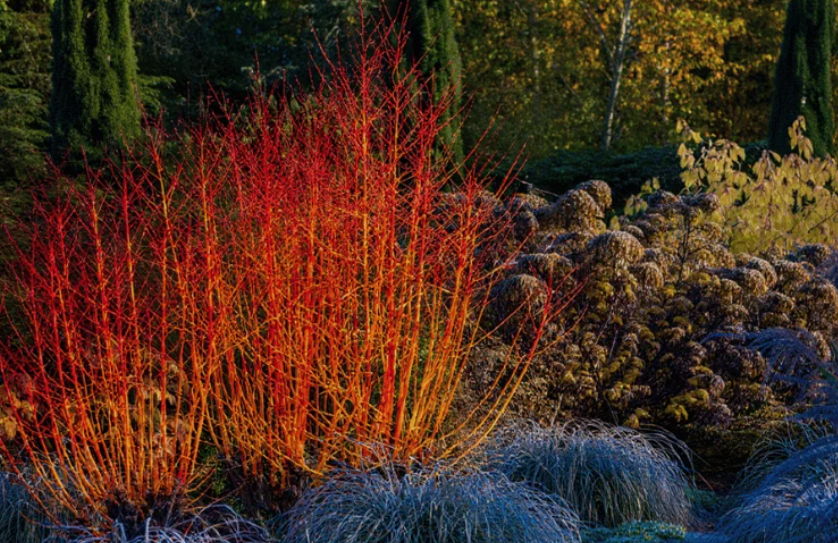
Shrubs with colorful stems in winter bring life to the garden when flowers and leaves are long gone. Once their foliage drops in fall, these plants reveal bright red, yellow, orange, coral, purple, black or even white branches. Against snow, evergreens or a gray winter sky, they become some of the most eye-catching plants in the landscape.
The secret to their color lies in young growth. On most of these shrubs, the brightest stems are less than three years old, and older wood fades to gray or brown. That is why gardeners prune them regularly, either by removing about one-third of the oldest stems every year or two or by cutting the whole plant back close to the ground every year or few years.
Sunlight also plays a big role. Stem color is usually richest on plants that get at least 6 to 8 hours of direct sun, and color often deepens as temperatures drop. Planting where the low winter sun can light up the stems from behind makes the effect even more dramatic.
Many of these shrubs are tough, fast-growing and tolerant of wet soil, making them useful for rain gardens, pond edges and low spots. Several are native to North America, while others come from Europe and Asia but grow well across much of the United States and Canada. Their cut stems are also prized for winter containers and holiday arrangements.
1. Redosier Dogwood
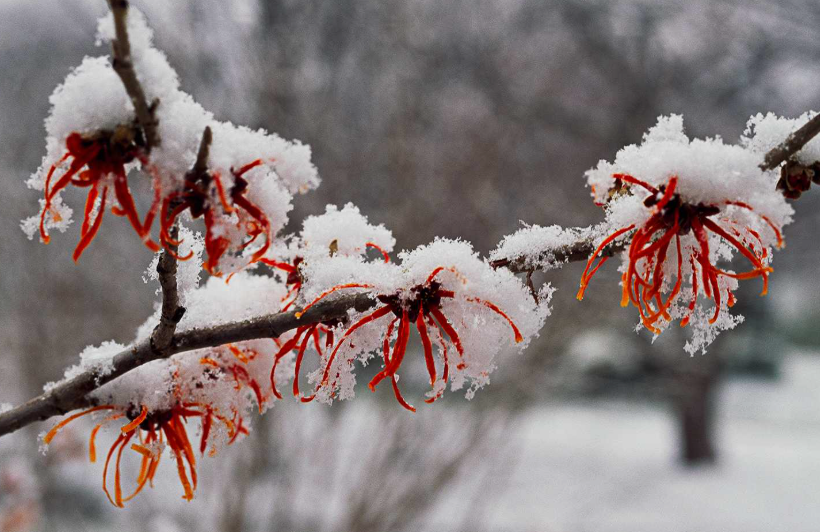
Redosier dogwood is the classic red-stemmed shrub of North American gardens. Its young stems turn bright red in late summer and grow even redder through winter. In spring, it produces flat clusters of small white flowers. Summer brings white berries that birds eagerly eat. The shrub usually grows 6 to 10 feet tall and spreads by suckering stems.
It is one of the most versatile native shrubs for wet soil, stream banks and rain gardens. Popular cultivars include Cardinal, which has brilliant red stems and grows about 10 feet tall and wide. Compact forms such as Kelseyi stay much smaller. Removing the oldest stems every year or two keeps its color bright. It is native across much of North America, from Alaska and Canada south through the northern and western United States.
2. Tatarian Dogwood
Tatarian dogwood is an Asian relative of redosier dogwood with deep red winter stems. Its stems are often a richer, blood-red color than those of the native species. It produces small white flowers in spring and pale blue-white berries in summer. Some forms have variegated or golden leaves. It grows 6 to 10 feet tall and wide.
Popular cultivars include Sibirica, with coral-red stems, and Bloodgood, with vibrant red stems in winter. It tolerates wet and dry soils and handles cold winters well. Like other twig dogwoods, it needs regular pruning to keep producing bright young stems. It makes a striking hedge or mass planting. It is native to Siberia, northern China and Korea and is grown widely in the northern and central United States.
3. Yellow-Twig Dogwood
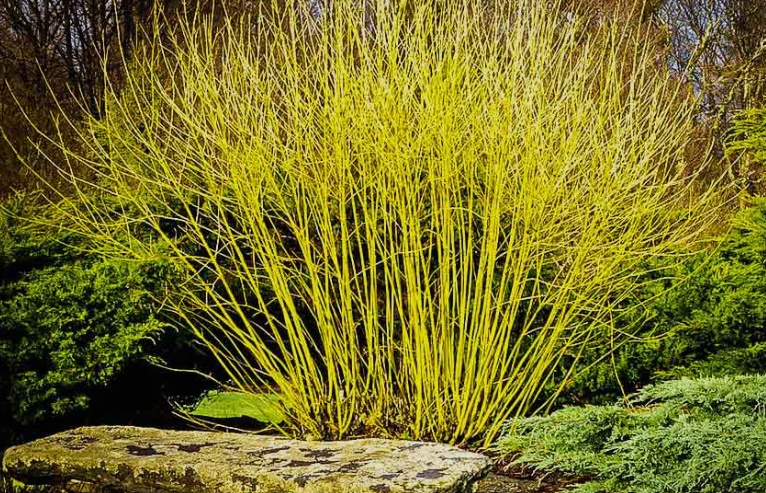
Yellow-twig dogwood is a form of redosier dogwood with bright yellow to yellow-green stems. Its color glows especially well against dark evergreens or red-stemmed dogwoods. It produces small white flowers in spring and white berries in summer. Its leaves turn soft yellow in fall. It grows about 6 to 8 feet tall and wide.
The best-known cultivar is Flaviramea, which has bright yellow stems in winter. Silver and Gold adds white-edged leaves in summer along with yellow winter stems. It thrives in moist soil and full sun to partial shade. Planting red and yellow twig dogwoods together creates a bold winter display. It is grown in gardens across the northern United States and southern Canada.
4. Bloodtwig Dogwood
Bloodtwig dogwood offers some of the most fiery stem colors of any shrub. Its stems are golden yellow near the base and blend into orange and red at the tips. The effect looks like flickering flames in winter sunlight. Its leaves turn yellow to orange in fall. It grows about 4 to 6 feet tall and wide.
Its most popular cultivar is Midwinter Fire, known for its glowing, multicolored stems. Arctic Sun is a newer, more compact form with similar warm tones. It grows best in full sun, which brings out the strongest color. It tolerates a range of soils, including clay. It is native to Europe and western Asia and is grown in gardens across much of the United States.
5. Black-Stemmed Dogwood
Black-stemmed dogwood is an unusual form of Tatarian dogwood with very dark stems. Its young stems are deep purple to nearly black. They create a dramatic contrast with snow and with bright red or yellow twig dogwoods. In summer, its leaves are often tinged purple. It grows about 6 to 8 feet tall.
The best-known cultivar is Kesselringii. Its dark stems look especially striking when planted in front of light-colored walls or next to golden-stemmed shrubs. It tolerates wet soil and cold winters. Like other twig dogwoods, it needs regular pruning to keep its stems richly colored. It is a selection of a species native to northern Asia and is grown in gardens across the northern United States.
6. Coral Bark Willow
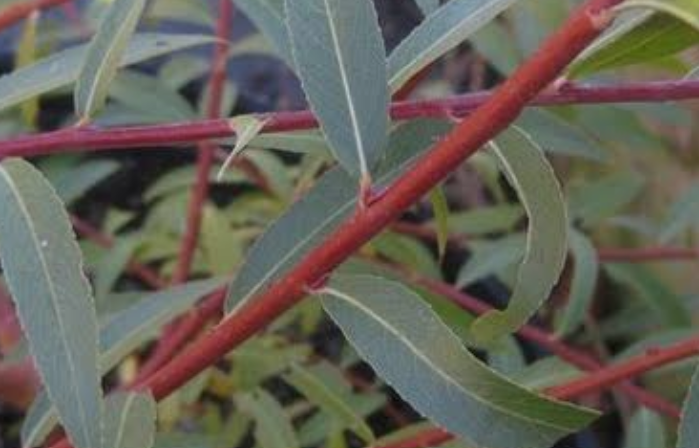
Coral bark willow is a fast-growing willow grown for its glowing winter stems. Its young shoots range from yellow-orange to bright orange-red. The color is strongest in late winter, just before the leaves emerge. Its narrow leaves are silvery green in summer. Left unpruned, it can grow into a large tree.
Gardeners usually cut it back close to the ground every late winter. This keeps it shrubby and produces a fresh crop of brightly colored stems. It thrives in moist soil and full sun and grows quickly after pruning. It is ideal for pond edges, rain gardens and wet spots. It is a selection of white willow, which is native to Europe and western Asia, and it is grown in gardens across much of the United States.
7. Golden Willow
Golden willow is a bright yellow-stemmed willow. Its young shoots are a rich, egg-yolk yellow in winter. The stems glow against dark evergreens and gray skies. Its leaves are narrow and silvery green. Like coral bark willow, it can grow into a large tree if not pruned.
It is usually pruned back hard every year to keep its stems young and colorful. Annual pruning also keeps it at a manageable shrub size. It grows quickly in moist soil and full sun. It pairs well with red-stemmed dogwoods and willows. It is a form of white willow, native to Europe and western Asia, and it is grown across much of the United States.
8. Flame Willow
Flame willow is a willow known for its glowing orange-red winter stems. Its upright branches form a dense, rounded shrub. In winter, the stems take on a fiery color that looks especially bright in sunlight. Its narrow green leaves turn yellow in fall. It can grow 15 to 20 feet tall if left unpruned.
It is one of the most popular willows for winter color in the northern United States. It should be cut back near the ground every year or two to produce fresh, colorful growth. It grows quickly in moist soil and full sun. It tolerates cold winters well. It is a garden selection grown mainly in the Midwest and northern United States.
9. Violet Willow
Violet willow is a willow with purple stems covered in a pale, waxy bloom. The bloom gives its dark stems a frosted, silvery-violet look in winter. In early spring, it produces large, silky catkins similar to pussy willows. Its leaves are narrow and glossy green. It grows quickly into a large shrub or small tree.
Its frosted stems are prized in winter gardens and floral arrangements. It is often pruned hard every year or two to encourage fresh, colorful shoots. It grows best in moist soil and full sun. It tolerates wet sites and clay soils. It is native to Europe and central Asia and is grown in gardens across the northern and central United States.
10. Coral Bark Japanese Maple
Coral bark Japanese maple is grown for its brilliant coral-red winter stems. Its young branches turn bright pinkish red in cold weather. The color is strongest on new growth and fades slightly as the branches age. Its leaves are light green in summer and golden yellow in fall. It grows into a small tree or large shrub about 15 to 25 feet tall.
Unlike twig dogwoods and willows, it is not cut back hard each year. Light pruning to encourage new growth helps keep its color bright. It prefers partial shade and moist, well-drained soil. Its red stems are especially striking against snow and evergreens. It was developed in Japan and is grown in gardens across much of the United States.
11. Ghost Bramble
Ghost bramble is an ornamental bramble with striking white winter stems. Its arching canes are coated with a chalky, white bloom. In winter, they look almost ghostly against dark backgrounds. Its fern-like leaves are green in summer. It grows about 6 to 8 feet tall and spreads by suckers.
Its stems are thorny, so it is best planted away from paths. Cutting old canes to the ground after winter encourages new, brightly colored growth. It grows in full sun to partial shade and tolerates a range of soils. It can spread quickly, so it needs room or regular control. It is native to China and is grown as an ornamental in the northern and central United States and Europe.
12. Japanese Kerria
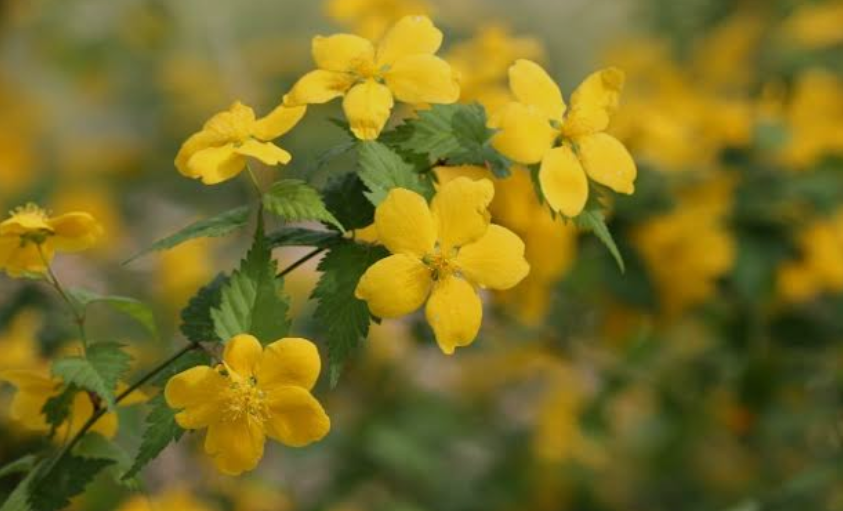
Japanese kerria is a shrub with bright green stems that stay colorful through winter. Its slender, arching branches add a fresh green look to the dormant garden. In spring, it bears cheerful yellow flowers that look like small roses. Its leaves are bright green and toothed. It grows about 4 to 6 feet tall and spreads by suckers.
Its green stems contrast well with red twig dogwoods and dark evergreens. It thrives in partial to full shade, making it useful where many colorful-stemmed shrubs struggle. Removing old stems after flowering keeps it tidy and encourages new green growth. It tolerates a range of soils. It is native to China and Japan and is grown in gardens across much of the United States.
Sources
University of Minnesota, “Redosier Dogwood”
Iowa State University, “Which shrubs have attractive bark in winter?”
Virginia Tech, “Red Twig Dogwoods: Tatarian Dogwood and Redosier Dogwood”
University of California Master Gardeners of Placer County, “Colorful Winter Stems”