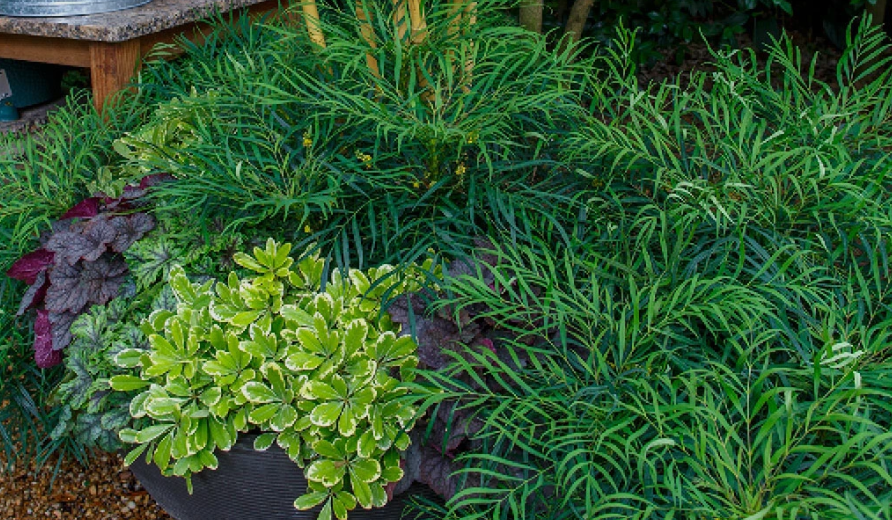
The best companion plants for mahonia share its love of shade, moist but well-drained soil and steady, low-maintenance growth. Mahonia brings bold, spiny evergreen leaves, bright yellow winter flowers and blue berries to the garden. Pairing it with plants that contrast in texture, color and bloom time turns a single shrub into a layered, year-round planting.
Mahonias flower when most of the garden is asleep, often from late fall through early spring. Companions that bloom in winter, such as hellebores and witch hazel, extend that early show. Others, such as hostas and ferns, take over in summer, when mahonia’s flowers are long gone and its leaves provide a steady green backdrop.
Texture matters as much as color. Mahonia’s stiff, holly-like leaves look striking next to soft fern fronds, broad hosta leaves and fine, flowing grasses. Low groundcovers at its feet help hide its sometimes leggy lower stems and cover the soil.
Most of these companions are also deer-resistant, which makes them practical in yards where browsing animals are a problem. All grow well in the partial to full shade that mahonias prefer, and most suit gardens across much of the United States, from the Pacific Northwest to the Mid-Atlantic and Southeast.
1. Hellebores
Hellebores are evergreen perennials that bloom in the heart of winter. Their nodding, cup-shaped flowers come in white, pink, plum, green and nearly black. Many have speckled or double blooms. Their leathery, divided leaves stay green through most winters. Plants grow about 12 to 18 inches tall.
Hellebores bloom at the same time as many mahonias, creating a winter garden full of flowers. Their soft pink and purple tones contrast beautifully with mahonia’s bright yellow spikes. They thrive in partial to full shade and moist, well-drained soil. They are tough, long-lived and rarely bothered by deer or rabbits. They are native to Europe and western Asia and are grown in shade gardens across most of the United States.
Also Read: Different Types of Mahonia
2. Ferns
Ferns are classic shade plants that add soft, feathery texture to the garden. Popular choices include autumn fern, Christmas fern, Japanese painted fern and western sword fern. Some are evergreen, while others die back in winter. Their fronds range from deep green to silver and coppery red. Most grow 1 to 3 feet tall.
The lacy fronds of ferns create a striking contrast with mahonia’s stiff, spiny leaves. Evergreen ferns keep the planting full through winter, while deciduous types add fresh green growth in spring. In the Pacific Northwest, western sword fern often grows wild alongside native Oregon grape. Ferns thrive in the same shady, moist conditions as mahonia. Different species are native to North America, Asia and Europe, and they are grown in shade gardens across the United States.
3. Hostas
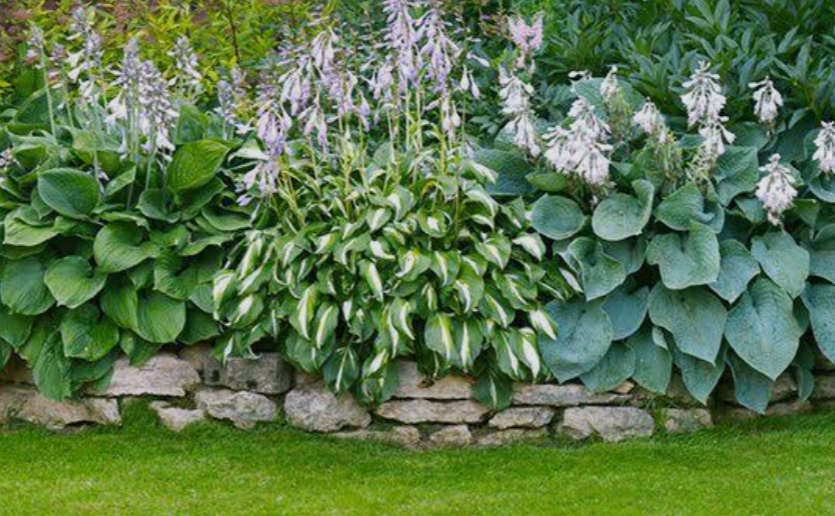
Hostas are shade-loving perennials grown for their bold, colorful leaves. Their foliage comes in shades of green, blue, gold and white, often with variegated edges or centers. They range from tiny types only a few inches tall to giants over 3 feet tall. In summer, they send up spikes of lavender or white flowers. They die back to the ground in winter.
Hostas fill in around mahonia in summer, when the shrub is no longer in bloom. Their broad, smooth leaves contrast well with mahonia’s spiny foliage. Gold and variegated hostas brighten dark corners beneath taller mahonias. They grow best in moist, rich soil and partial to full shade. They are native to Japan, China and Korea and are among the most popular shade plants in the United States, though deer often eat them.
4. Witch Hazel
Witch hazel is a deciduous shrub known for its spidery, fragrant winter flowers. Its blooms come in yellow, orange and coppery red. They open on bare branches in late winter. Many types also turn bright yellow or orange in fall. The shrubs usually grow 10 to 15 feet tall and wide.
Witch hazel and mahonia make a natural winter pairing. Both bloom in the coldest months and offer fragrance and color when little else is flowering. Witch hazel’s open, vase-shaped form adds height behind lower mahonias. It grows in full sun to partial shade and prefers moist, well-drained soil. Some species are native to eastern North America, while popular hybrids come from Asian species and are grown in gardens across the United States.
5. Camellias
Camellias are evergreen shrubs prized for their large, showy flowers. Their blooms come in white, pink, red and bicolors, often with layered petals. Many types bloom from fall through early spring. Their glossy, dark green leaves stay attractive all year. They usually grow 7 to 12 feet tall.
Camellias and mahonias both bloom in the cool season and enjoy similar conditions. The rich pinks and reds of camellia flowers contrast with mahonia’s bright yellow spikes. Both prefer morning sun with afternoon shade and moist, well-drained, slightly acidic soil. Together they create a lush, evergreen backdrop for smaller plants. Camellias are native to China and Japan and are especially popular in the Southeast and Pacific Northwest.
6. Sweet Box
Sweet box is a low, evergreen shrub with a powerful winter fragrance. Its tiny white flowers are hidden among narrow, glossy leaves. In mid to late winter, they release a sweet, vanilla-like scent that can fill the garden. Small black or red berries follow the flowers. Most types grow 1 to 2 feet tall and spread slowly.
Sweet box makes an excellent low companion at the base of taller mahonias. It covers bare soil and hides the lower stems of mature shrubs. Its fragrance pairs well with mahonia’s own scented winter flowers. It tolerates deep shade and dry soil once established, and deer usually avoid it. It is native to China and the Himalayas and grows best in the Pacific Northwest, Mid-Atlantic and upper South.
7. Snowdrops
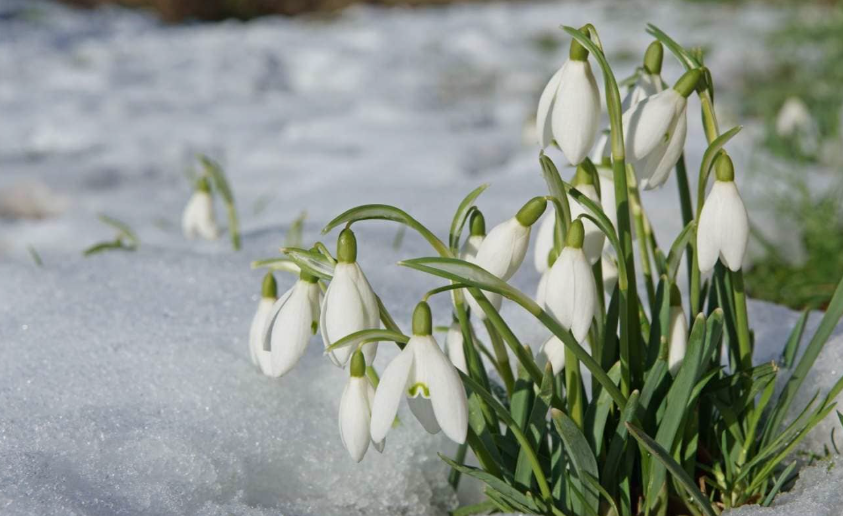
Snowdrops are small bulbs that bloom in late winter. Their nodding white flowers have green markings on the inner petals. They often push up through snow or frozen ground. Plants grow only about 4 to 6 inches tall. They spread slowly into drifts over time.
Snowdrops add delicate white flowers beneath mahonias during their winter bloom. Their small size lets them tuck into gaps around shrubs without crowding them. They grow best in partial shade and moist, well-drained soil rich in organic matter. They go dormant by late spring, leaving room for summer plants. They are native to Europe and western Asia and are grown in gardens across the northern and central United States.
8. Coral Bells
Coral bells are compact perennials grown for their colorful foliage. Their rounded, ruffled leaves come in shades of green, burgundy, purple, amber, lime and silver. In late spring and summer, they send up tall, airy stems of tiny flowers. Many types stay evergreen in mild winters. Plants usually grow 8 to 18 inches tall.
Coral bells add bright color at the feet of mahonias. Burgundy and purple types contrast boldly with mahonia’s green leaves and yellow flowers. Lime and amber types brighten shady corners. They grow best in partial shade and well-drained soil. They are native to North America and are grown in gardens across most of the United States.
9. Epimedium
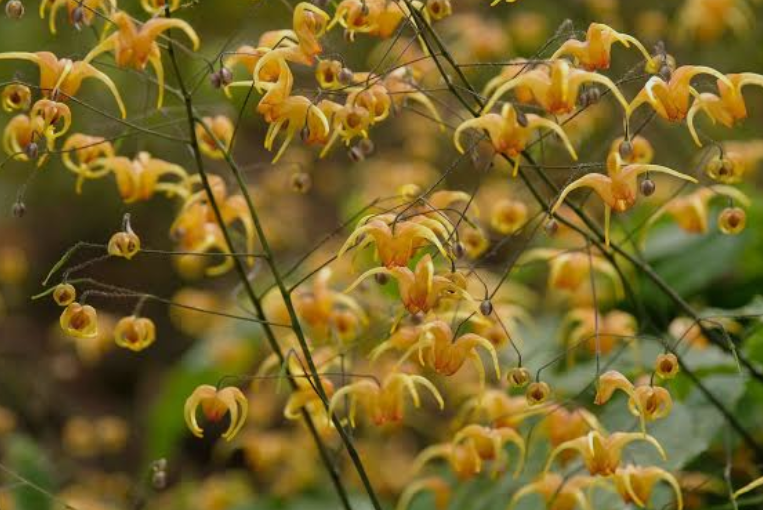
Epimedium is a tough, low-growing groundcover for shade. Its heart-shaped leaves often emerge with red or bronze tints in spring. Its small, spidery flowers come in yellow, pink, white, red and purple. Many types keep their leaves through winter. Plants usually grow 8 to 12 inches tall.
Epimedium is one of the best groundcovers for dry shade under shrubs. It spreads slowly to form a dense carpet around mahonias. Its dainty flowers appear in early spring, just as mahonia’s bloom fades. It is deer-resistant and needs little care once established. It is native to Asia and the Mediterranean region and is grown in shade gardens across the United States.
10. Japanese Forest Grass
Japanese forest grass is a graceful, shade-loving ornamental grass. Its soft, arching leaves cascade in one direction like a waterfall. Popular types are bright gold, lime green or striped. In fall, the leaves often take on orange or reddish tones. It usually grows 12 to 18 inches tall.
Its flowing, fine-textured leaves contrast beautifully with mahonia’s bold, spiny foliage. Gold types light up shady spots beneath darker mahonias. It grows best in partial shade and moist, well-drained soil. It spreads slowly and needs little maintenance. It is native to the mountain forests of Japan and is grown in shade gardens across much of the United States.
Sources
Washington State University, “Shade Loving Garden”
Washington State University, “Winter Gardens”
Washington State University, “Hellebores”