Winter is often the quietest season for indoor gardeners. Days are short, the air inside is dry from heating systems, and the windows that once held sun-loving plants now mostly show gray skies. Many homes start to feel static by December, and the houseplants that were lush in summer begin to look tired and still.
Yet a surprising number of common houseplants save their best performance for exactly these months. Some respond to the lengthening nights by setting buds, while others are simply bred or naturally inclined to flower during the cooler season. Whether you want a splash of red for the holidays, a fragrant bloom to lift a dreary January, or a long-lasting display that carries you into spring, there is a plant that fits.
The plants below are reliable winter performers that can thrive in an ordinary home with a bright window and a little attention. Each description gives the plant’s flowers, its basic care, and the small details that tend to make or break winter blooming. With the right placement and watering habits, these plants can turn a gray season into a colorful one.
1. Christmas Cactus (Schlumbergera bridgesii)
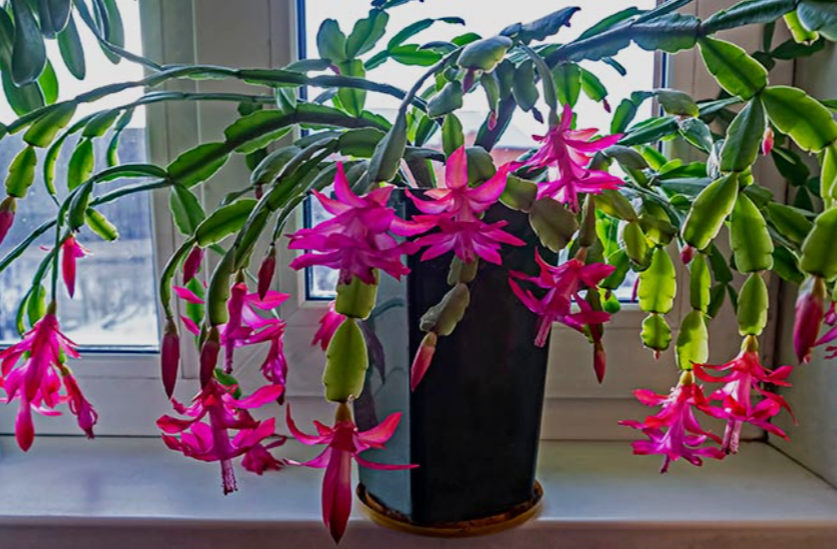
The Christmas cactus is the classic winter bloomer, producing arching, segmented stems that become covered in flowers in red, pink, white, orange, or purple. Its blooming is triggered by longer nights in late autumn, so it often opens its flowers just as the holidays approach. The flowers are tubular and tend to hang from the tips of the stem segments, creating a cascading display on a hanging basket or a tabletop.
Keep it in bright, indirect light, and water when the top inch of soil feels dry, reducing water slightly once buds form. Avoid moving the plant after buds appear, since a sudden change in position or temperature can cause them to drop. Christmas cacti are long-lived and can rebloom reliably each year when given a cool, dry rest period in early autumn.
2. Amaryllis (Hippeastrum)
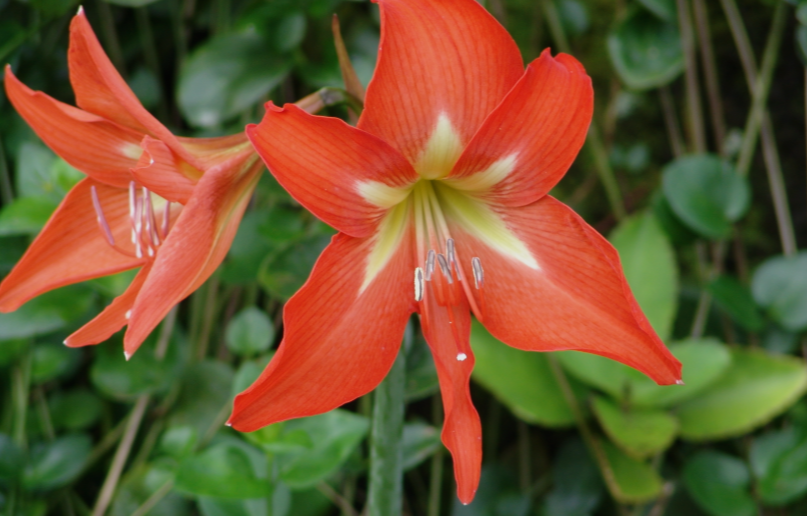
Amaryllis grows from a large bulb and produces tall, sturdy flower stalks topped with several trumpet-shaped blooms in red, white, pink, or striped patterns. Bulbs bought in autumn often bloom around the holidays, usually four to eight weeks after planting. The flowers are large and dramatic, and a single bulb can produce two or more stalks in a good season.
Plant the bulb in a pot only slightly larger than its base, with the top third above the soil, and water sparingly until growth appears. Place the pot in a bright spot and rotate it every few days so the stalk grows straight. After flowering, cut the stalk back, keep the leaves growing in a sunny window, and let the bulb rest later in the year before starting the cycle again.
3. Poinsettia (Euphorbia pulcherrima)
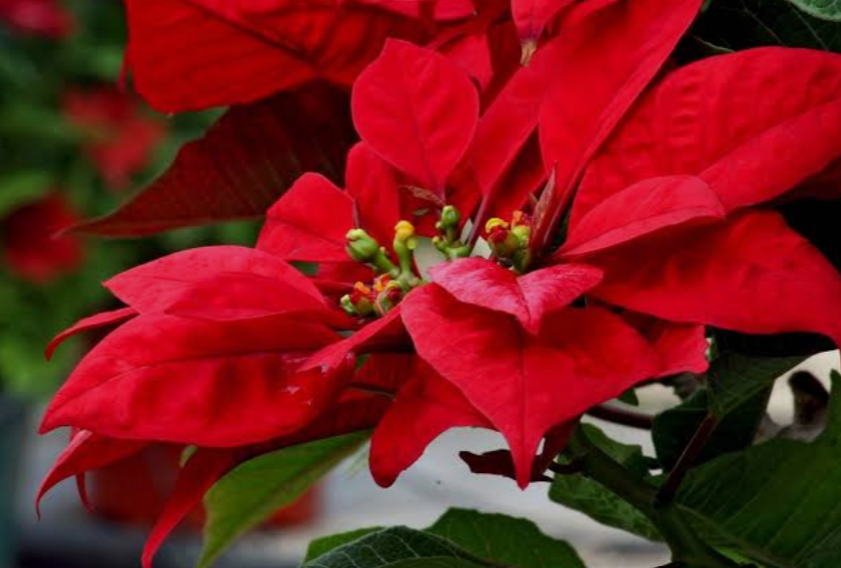
Poinsettia is famous for its colorful bracts, which are modified leaves that surround small yellow flowers at the center. The bracts turn red, pink, cream, or white as the days shorten in autumn, and the display can last for many weeks indoors. The colored part is often mistaken for the flower itself, but the true blossoms are the tiny yellow structures in the middle.
Keep the plant in bright light, away from cold drafts, heat vents, and cold windows, and water when the soil begins to feel dry. Poinsettias are mildly toxic if eaten, so keep them away from pets and small children. Once the bracts fade, most people treat the plant as seasonal, but it can be kept and encouraged to color again with careful attention to light and darkness during autumn.
4. Cyclamen (Cyclamen persicum)
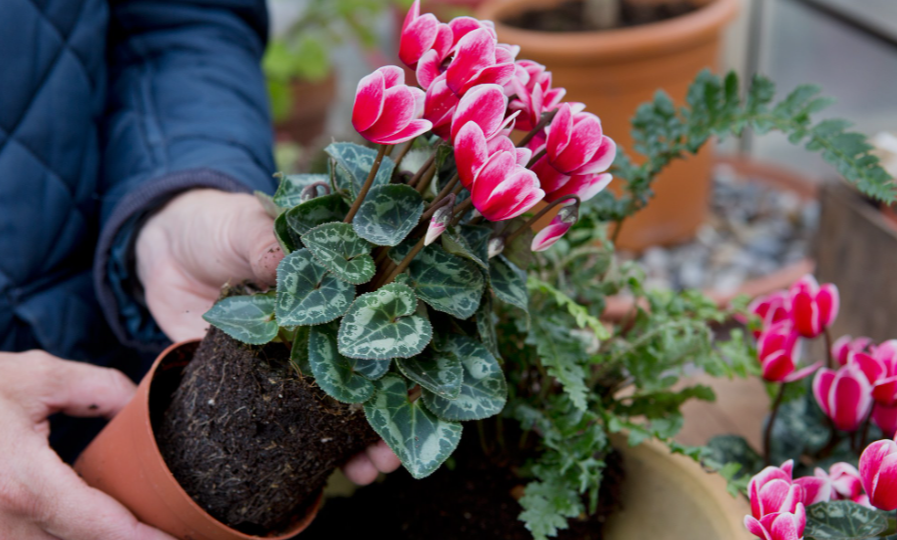
Cyclamen produces swept-back, butterfly-like flowers in white, pink, red, or purple above heart-shaped leaves that are often marbled in silver. The flowers rise on slender stalks above the foliage, giving the plant an elegant, floating appearance. It blooms over a long period in cool conditions and is one of the most attractive winter plants available in garden centers.
Cyclamen does best in cool rooms, around 60 to 65°F (15 to 18°C), with bright indirect light. Water from below or carefully at the soil line, never over the top of the corm, since moisture on the crown can cause rot. Remove spent flowers and yellowing leaves at the base of the plant to keep it healthy and encourage new buds.
5. African Violet (Saintpaulia)
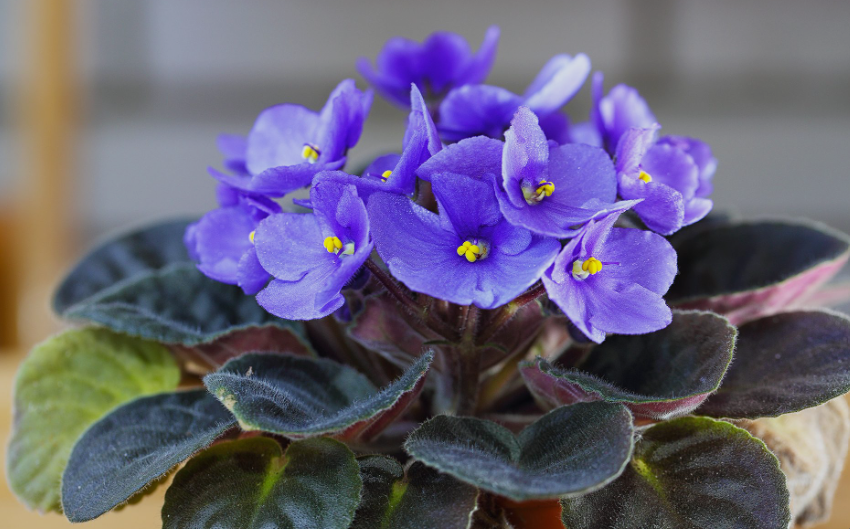
African violets are compact, fuzzy-leaved plants that can bloom almost continuously when grown well, and winter is a particularly good time for their flowers in purple, pink, blue, or white. Their clusters of blossoms sit above a rosette of soft leaves, making them ideal for windowsills and small tables. Many varieties are available, including single, double, and ruffled forms.
They prefer bright indirect light, and an east or north window often works best, since direct sun can scorch the leaves. Water from below or carefully at the base, keeping water off the fuzzy leaves to avoid spotting. Use room-temperature water, and give the plant a quarter turn every week so it grows evenly toward the light.
6. Kalanchoe (Kalanchoe blossfeldiana)
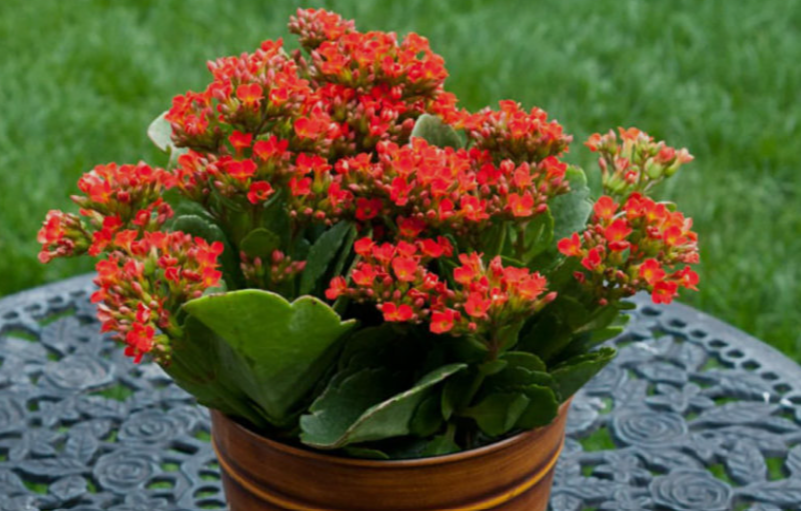
Kalanchoe is a succulent that produces dense clusters of small, long-lasting flowers in red, orange, yellow, pink, or white. Its blooming is triggered by shorter days, so it often flowers through the winter months when many other houseplants are resting. The flowers come in tight, rounded clusters that can last for several weeks.
It needs bright light and infrequent watering, allowing the soil to dry out between waterings. It tolerates the dry air of heated homes well and is one of the more forgiving winter bloomers for busy households. Remove faded flowers to keep the plant tidy and to encourage the next round of blooms.
7. Paperwhite Narcissus (Narcissus papyraceus)
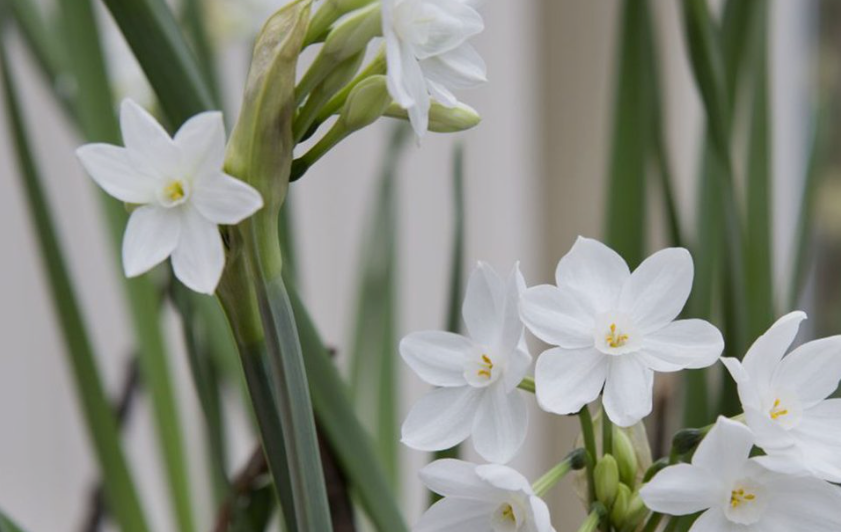
Paperwhites are fast-forcing bulbs that produce clusters of small, white, intensely fragrant flowers on tall stems, usually within four to six weeks. They can be grown in shallow bowls filled with pebbles or gravel and a little water, which makes them easy to start in any room. Their scent can fill a small space, so they are a favorite for holiday decorating.
Keep the bulbs cool and bright while they grow, and keep the water level just below the base of the bulbs so the roots reach the water without rotting. Because the stems can flop as they grow tall, place the bowl in a cool spot and consider a light stake or ribbon for support. Once flowering finishes, the bulbs are generally used up and are best discarded or planted outdoors in mild climates.
8. Hyacinth (Hyacinthus orientalis)
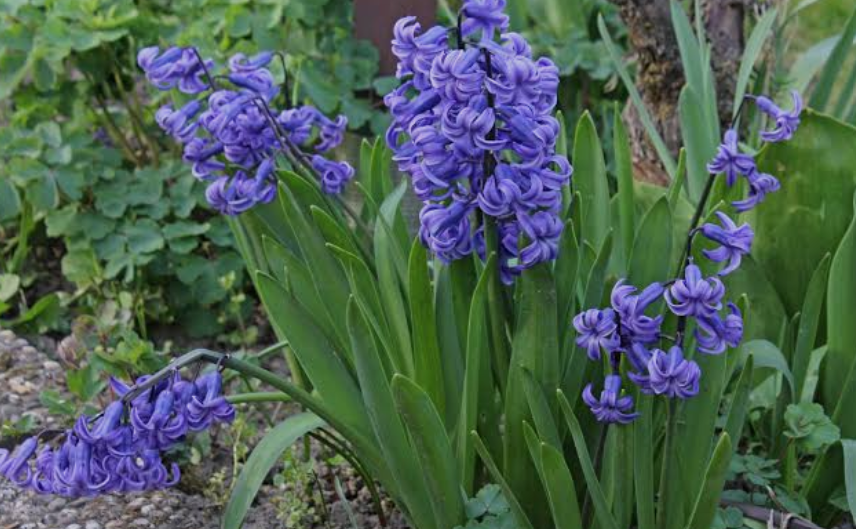
Forced hyacinths produce dense, upright spikes of intensely fragrant flowers in blue, purple, pink, white, or yellow. Pre-chilled bulbs can be potted in autumn and brought into a cool, bright room to bloom in winter, filling the room with a sweet, strong scent. The bloom spike is one of the most classic sights of the season in a cold-weather home.
Keep the soil moist, and place the pot in a cool room to extend the bloom time and prevent the flowers from fading too quickly. Once the flowers fade, the bulbs are typically not reliable for rebloom indoors, so many gardeners plant them outdoors in the garden in spring. Keep the bulb tops just above the soil line to avoid rot as the roots develop.
9. Winter Jasmine (Jasminum polyanthum)
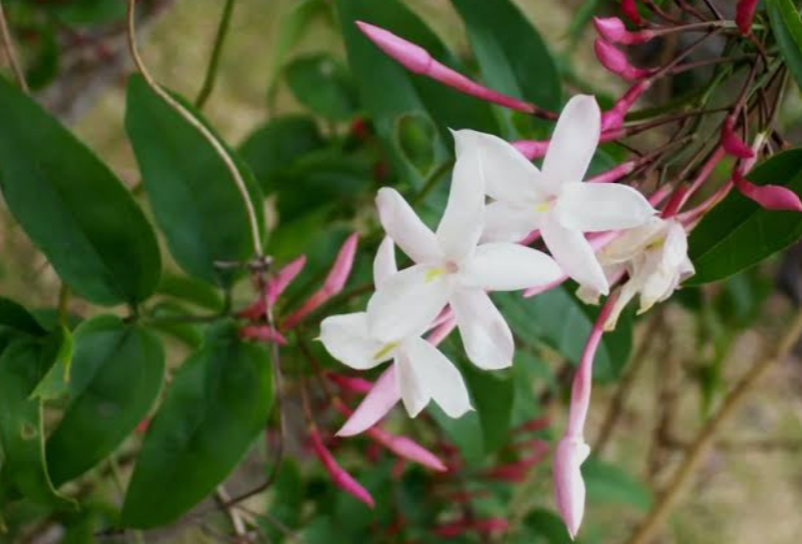
Winter jasmine, often called pink jasmine, produces clusters of small flowers that open white with a pink tint and give off a strong, sweet fragrance. It is a vining plant that needs a trellis, wire frame, or other support, and it can be trained into a neat shape over time. Its scent makes it especially welcome in a sunroom or entryway during the colder months.
Give it bright light and water consistently during the growing season, reducing water in the cooler months. A period of cooler temperatures in autumn helps set flower buds, so keeping it in a cool room before the winter blooms begin can improve flowering. Prune lightly after flowering to control size and maintain the shape of the vine.
10. Peace Lily (Spathiphyllum)
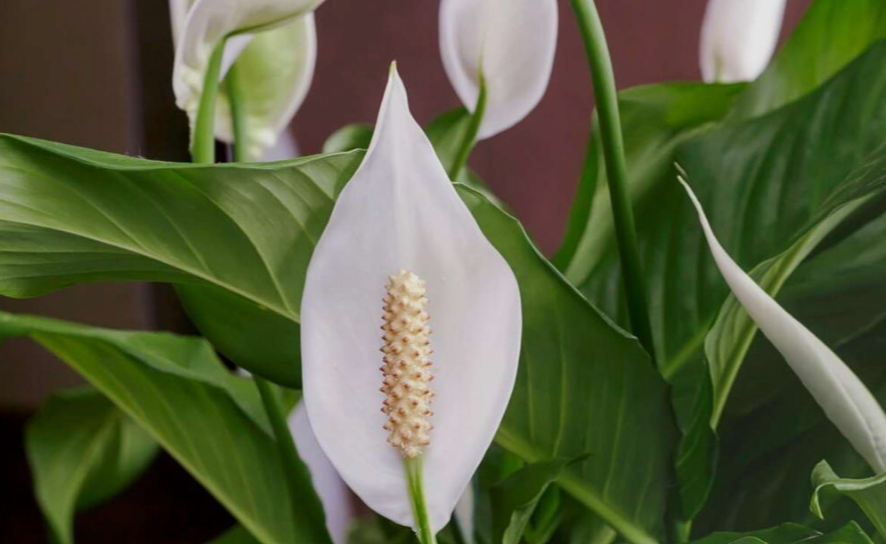
Peace lily is one of the most dependable indoor bloomers, producing white spathes that look like flowers but are actually modified leaves surrounding a central spike. It blooms in low to medium light, which makes it useful in rooms without strong direct sun. The flowers can last for several weeks and often return throughout the year when the plant is healthy.
Peace lily droops visibly when it needs water, which makes it a helpful indicator plant, and it recovers quickly after a drink. Keep the soil lightly moist and avoid letting it sit in standing water. Remove spent spathes at the base to keep the plant looking fresh and to encourage new flowers.
11. Anthurium (Anthurium andraeanum)
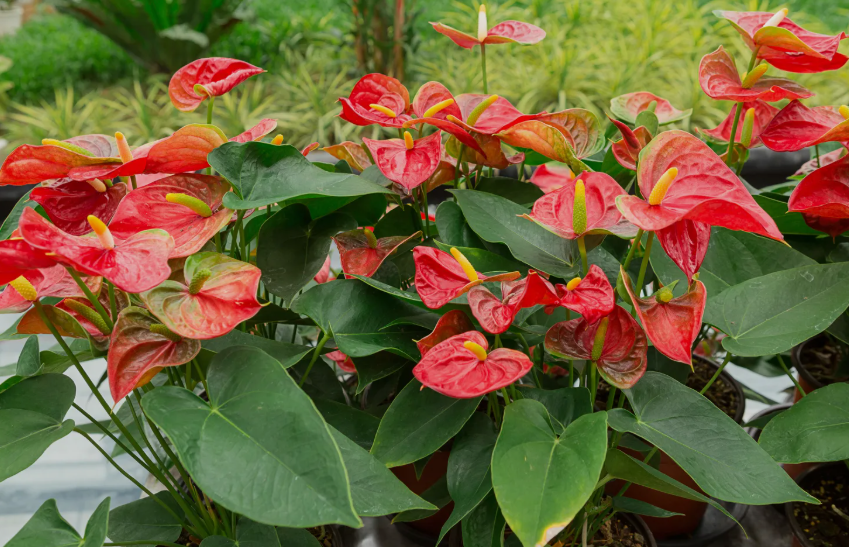
Anthurium produces glossy, heart-shaped spathes in red, pink, white, or orange with a distinctive upright spadix at the center. The flowers are long-lasting, often remaining attractive for weeks, and the plant produces new blooms at intervals throughout the year. Its waxy, sculptural look makes it a striking addition to a bright room.
Give it bright indirect light, keep the potting mix moist but not soggy, and maintain reasonable humidity, since dry air can cause brown leaf tips. Use a well-draining, airy mix rather than dense garden soil. Remove spent spathes at the base to encourage new flowering stems.
12. Guzmania Bromeliad (Guzmania)
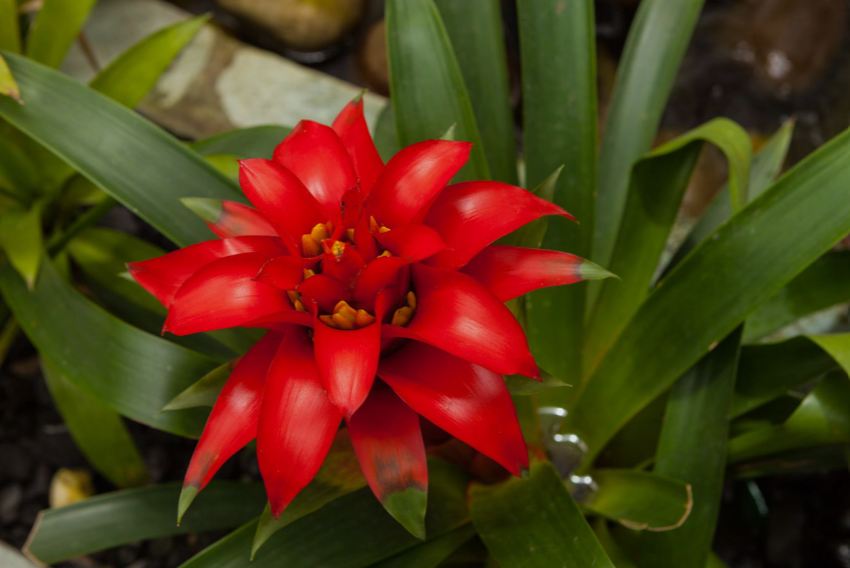
Bromeliads form a central rosette of leaves that holds water in a cup, and a colorful flower spike emerges from the center and can last for months. Guzmania is the most common houseplant type, with bracts in red, orange, or yellow that often remain showy long after the small true flowers have finished. The plant’s bold form adds a tropical accent to any winter room.
Keep water in the central cup and refresh it periodically to prevent stagnation, and avoid letting the cup dry out completely. Place the plant in bright, indirect light, and keep the room warm. After the main bloom fades, the mother plant slowly declines, but it typically produces pups, or offsets, that can be separated and grown on.
13. Winter Begonia (Begonia × hiemalis)
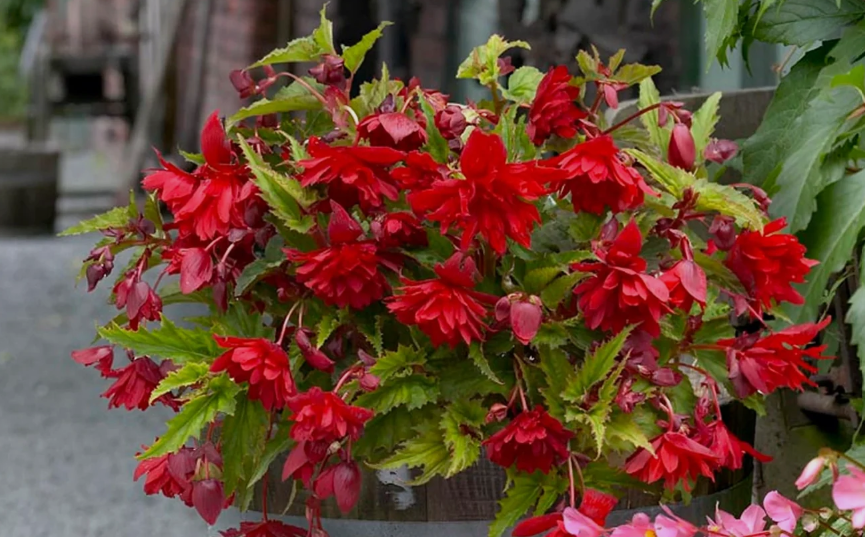
Winter-flowering begonias, often called Rieger begonias, produce clusters of flowers in red, pink, orange, yellow, or white through the cooler months. Their blooms are abundant and show up reliably when many other plants have slowed down. The plant’s flowers sit above attractive, often glossy foliage, which gives the plant a full, colorful appearance.
These begonias like bright indirect light and steady moisture, and they resent cold drafts. Water at the base to keep the foliage dry and reduce the risk of rot and mildew. Remove spent blooms regularly to keep the plant flowering and tidy.
14. Moth Orchid (Phalaenopsis)
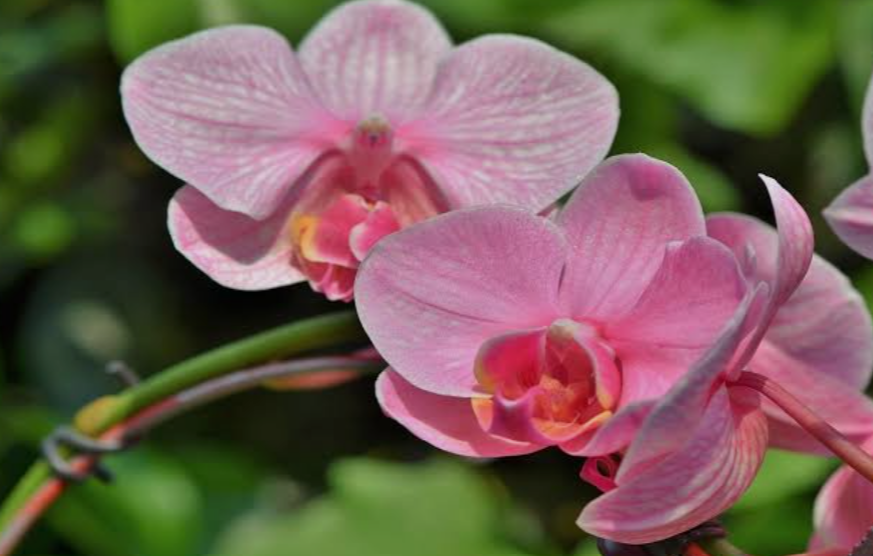
Moth orchids are among the most popular houseplants, and many varieties bloom in winter, with flower spikes that can last two to three months. Their large, long-lasting flowers come in white, pink, purple, yellow, and striped patterns, and the plant often produces new spikes after the first bloom fades. The elegant form and long bloom time make them a favorite for gifts and indoor displays.
Give them bright indirect light, water when the potting medium is nearly dry, and avoid soggy roots, which are the most common cause of decline. Use a bark-based orchid mix rather than regular potting soil, and keep the plant out of direct midday sun. When the flower spike finishes, cut it just above a node below the old flowers, since it may rebloom from that point.
15. Tropical Hibiscus (Hibiscus rosa-sinensis)
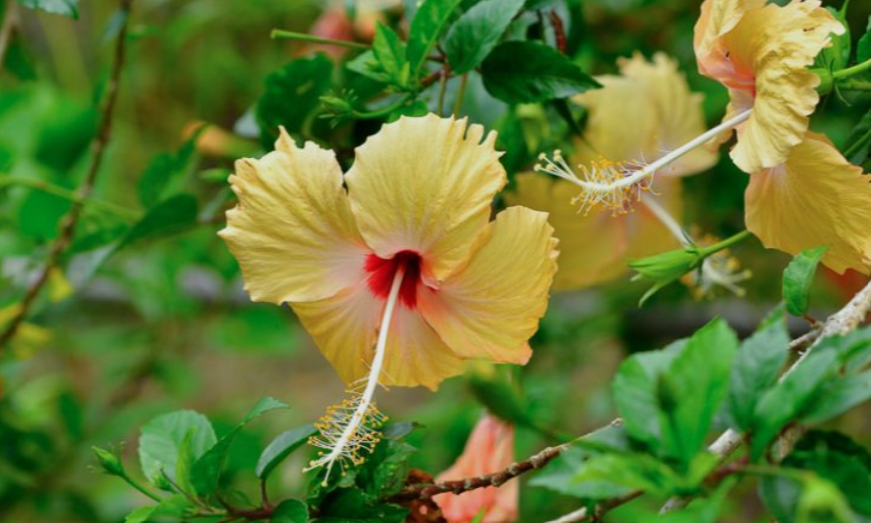
Tropical hibiscus can keep blooming through winter in a bright, warm room, producing large, showy flowers in red, orange, yellow, pink, or white. Each flower lasts only a day, but a healthy plant produces buds continuously, so the display stays lively for weeks. It makes a bold statement by a sunny window and adds a vivid, summery feel to the cold months.
It needs as much light as possible, so a south or west window generally works best. Water when the top of the soil begins to dry, and keep the plant away from cold drafts, which can cause buds to drop. Feed lightly during active growth, and move it outdoors in warm weather if you want it to thrive in summer.
Frequently Asked Questions:
Why do some houseplants bloom in winter when most others rest?
Many winter bloomers respond to changes in day length. Plants such as Christmas cactus, poinsettia, and kalanchoe are short-day plants, which set flower buds when nights are long. Others, like amaryllis and paperwhite narcissus, are grown from bulbs that were chilled or stored and then forced into flower. Peace lily and anthurium are less sensitive to day length and bloom in lower light, which is why they can flower at any time of year.
Do winter-blooming houseplants need more light?
Most do. Winter days are short and the sun is weaker, so placing plants in the brightest window available usually makes the biggest difference. South and west windows generally offer the most light in winter. Moth orchids, begonias, and tropical hibiscus also benefit from being moved closer to the glass. Peace lily is the main exception, since it tolerates lower light.
Why did my plant drop its buds?
Bud drop is most often caused by sudden changes. Moving a plant after buds have formed, placing it near a cold draft or heat vent, or letting the soil dry out completely can all cause buds to fall. Keeping the plant in a stable spot and watering consistently usually prevents the problem.
How often should I water winter-blooming plants?
Less often than in summer, in most cases. Indoor heating dries the air and can make soil look dry while the roots are still moist, so check the soil before watering. Christmas cactus, kalanchoe, and amaryllis prefer to dry out between waterings, while peace lily and begonia like the soil to stay lightly moist. Overwatering is one of the most common causes of problems in winter, especially with orchids and cyclamen.
Can I get these plants to bloom again next year?
Often, yes. Christmas cactus and kalanchoe can rebloom reliably after a cool, dry rest period in early autumn that encourages bud formation. Amaryllis can rebloom after a dormancy period, while a moth orchid can produce a new spike from the same stem after the old flowers fade. Paperwhites and forced hyacinths are usually used up after one season indoors and are best planted outdoors if you want to keep them.
Are winter-blooming houseplants safe around pets and children?
Not always. Poinsettias, amaryllis, and cyclamen can cause stomach upset or other symptoms if eaten, and all parts of many bulb plants are best kept out of reach. Christmas cactus, African violet, and peace lily are generally regarded as less problematic, but any plant can cause irritation if chewed. Check a trusted source such as the ASPCA’s toxic plant list before bringing a new plant home, and keep plants out of reach of pets and young children.