Celeste Fig Tree: The South’s Beloved “Sugar Fig”
The Celeste fig is the classic fig of the American South. Across Louisiana, Mississippi, Alabama, Georgia, and Texas, it grows by back porches, along fence lines, and in old farmyards. Many of these trees were planted generations ago and still produce baskets of small, purplish-brown figs every summer. Southerners often call it the “sugar fig” because its fruit is so intensely sweet. It is the fig behind countless jars of homemade fig preserves.
Celeste has earned its place through toughness as much as flavor. It is one of the most cold-hardy figs grown in the United States, and its fruit has a tightly closed eye that resists rot. Those 2 traits make it unusually well suited to the hot, humid, rainy summers and occasional hard freezes of the Southeast. The University of Florida describes it as probably the second most common fig in the southeastern United States, after Brown Turkey.
Botanical Classification
Celeste is a cultivar of the common edible fig, a member of the mulberry family native to western Asia and the Mediterranean. It goes by many names, including Blue Celeste, Celestial, Sugar Fig, Little Brown Sugar, Honey Fig, and Malta. The variety of names reflects how long it has been grown and shared across the South.
Celeste belongs to the “common” group of figs, which set fruit without pollination by the fig wasp. That means a single tree bears fruit on its own, and it can be grown anywhere its climate allows. Inside the fruit, the tiny flowers develop without forming true seeds. The figs have a smooth, jam-like texture with very few crunchy seeds.
Brief History
Celeste has been grown in the South for well over a century. A 1908 orchard report from Louisiana State University’s agricultural experiment station in Baton Rouge mentions both Celeste and Brown Turkey. They are still 2 of the most common figs in Louisiana today. Its exact origin is uncertain. One of its alternate names, Malta, hints at Mediterranean roots, but there is no firm record of where or when it was first brought to North America.
Celeste’s success in the humid South made it the starting point for fig breeding in the region. In the 1950s, Louisiana State University began a fig breeding program to develop new varieties with Celeste’s hardiness and closed eye, but with larger fruit and higher yields. That program produced several popular figs, including LSU Purple, LSU Gold, LSU Improved Celeste, and Champagne, also called Golden Celeste. Many of these descend from or were compared directly with Celeste.
Identifying Characteristics
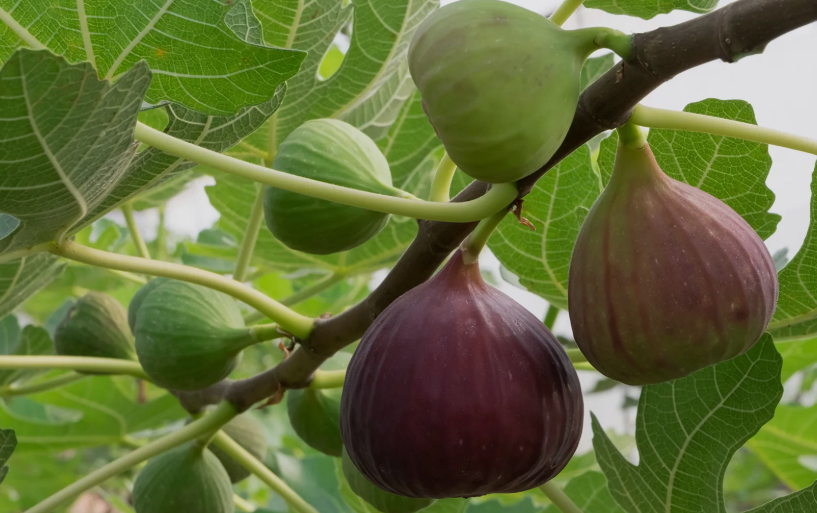
Celeste fig trees are vigorous and productive. They often grow as broad, multi-trunked shrubs or small trees. In the Southeast they typically reach about 10 to 15 feet tall and wide. Larger trees are possible where winters are mild, but periodic freezes keep most fig trees in the region well under 25 feet. The bark is smooth and gray, and the large, rough leaves are deeply lobed. Celeste is known for a somewhat compact growth habit, which makes it a good choice for smaller yards and large containers.
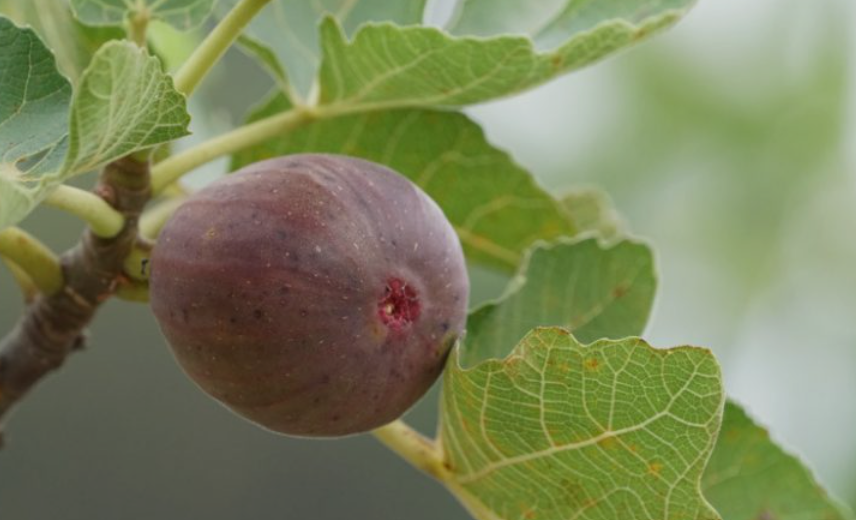
The fruit is small to medium and pear-shaped, with a short neck. The skin ripens to light brown, purplish brown, or violet, sometimes with a bluish bloom. That bloom explains the name Blue Celeste. Inside, the flesh is strawberry pink to light amber. The flavor is very sweet and rich, with notes of honey and brown sugar. The eye at the base of the fruit is tightly closed, one of Celeste’s most valuable traits. Like all figs, the tree produces a milky white sap that can irritate the skin.
Why the Closed Eye Matters
The eye, also called the ostiole, is the small opening at the bottom of a fig. In many figs this opening is loose or open, which lets rainwater and insects inside. In hot, humid climates, that often leads to fig souring. Yeasts and bacteria carried in by insects such as dried fruit beetles cause the fruit to ferment and spoil on the tree.
Celeste’s tightly closed eye blocks rain and insects. Texas A&M AgriLife Extension notes that the closed eye inhibits the entry of the dried fruit beetle and of rainwater that can cause souring. Louisiana State University horticulturists consider the closed eye essential for figs grown in the state’s frequent rain and high humidity. That one trait is a big part of why Celeste has outlasted so many other figs in Southern gardens.
Also Read: Different Types of Fig Trees
Ripening Season
Celeste is an early-ripening fig. It produces its main crop in early summer, before most other varieties. In Texas it usually ripens in mid to late June. In Louisiana, the harvest typically begins around the Fourth of July and lasts about 2 weeks. In Florida it begins ripening in early July. In cooler parts of its range, the harvest may continue into August.
Celeste usually produces little or no breba crop. Breba figs are the small early crop that grows on the previous year’s wood. Nearly all of its fruit comes in a single, concentrated harvest. That short, heavy season is ideal for preserving, since a mature tree can produce large quantities of fruit within a few weeks.
Cold Hardiness
Celeste is one of the most cold-hardy figs commonly grown in the United States. Texas A&M AgriLife Extension reports that it appears to be the most cold-hardy of all the fig varieties evaluated in Texas. Louisiana State University horticulturists also rank it among the hardiest. It is generally recommended for USDA zones 7 through 10. With some protection, it is often grown in the colder parts of zone 7 and even zone 6.
Fully dormant fig trees generally tolerate temperatures down to about 15 to 20 degrees Fahrenheit before suffering damage. Severe freezes can kill Celeste back to the ground, but the tree usually resprouts from its roots. Texas A&M notes that although Celeste is relatively cold-hardy, it usually doesn’t produce abundant fruit in years after winter injury. In colder areas, planting it near a south-facing wall and mulching the roots heavily in winter improves its chances.
Celeste Versus Brown Turkey
Celeste and Brown Turkey are the 2 most common figs in the South, and gardeners often wonder which to plant. Louisiana State University horticulturists offer a clear comparison. Brown Turkey has larger fruit than Celeste. However, its eye isn’t as tightly closed, so it is more prone to souring and splitting. It is also less cold-hardy and less sweet.
Celeste ripens earlier and over a shorter period, while Brown Turkey produces over a longer season. For gardeners who want the sweetest fruit, the most cold hardiness, and the fewest problems with rot, Celeste is usually the better choice. Gardeners who want larger figs and a longer harvest often prefer Brown Turkey. Many Southern gardeners grow both.
Planting and Care
Plant Celeste in full sun, with at least 6 to 8 hours of direct sunlight a day. Figs grow in many types of soil but need good drainage. They do poorly in waterlogged ground. Water young trees regularly through their first growing season to help them establish.
Established Celeste trees tolerate heat well, but they need steady moisture while the fruit is developing. Celeste is known for dropping its fruit before it ripens when trees are stressed by drought, especially young trees. Deep watering during dry spells in late spring and early summer helps prevent fruit drop. A thick layer of mulch around the tree conserves soil moisture and protects shallow roots. Fertilize lightly, if at all. Too much nitrogen encourages leafy growth and fewer figs.
Pruning
Celeste needs only light pruning. Prune during the dormant season, in late winter before new growth begins. Remove dead, damaged, and crossing branches, and thin crowded growth to open the canopy to light and air. Shorten overly long branches to keep the fruit within reach.
Avoid heavy pruning on mature Celeste trees. Texas A&M AgriLife Extension specifically warns that heavy pruning of mature Celeste trees can reduce the crop. Where winter freezes have killed some branches, wait until new growth appears in spring. Then cut back to live wood.
Growing in Containers
Celeste’s compact growth habit makes it one of the better figs for containers. Use a pot of at least 15 to 20 gallons, with drainage holes and a well-drained potting mix. Place it in full sun, and water regularly, since potted figs dry out quickly in summer heat. Keeping the soil evenly moist helps prevent fruit drop.
In cold climates, move the container to an unheated garage, shed, or basement after the leaves drop in fall. Keep it where temperatures stay above about 20 degrees Fahrenheit, and water lightly once a month. Return the plant outdoors in spring after the danger of hard frost has passed.
Harvesting
Celeste figs are ready to pick when they have turned fully brown to violet, feel soft when gently squeezed, and droop on their stems. A ripe Celeste fig often shows small cracks in the skin and may have a drop of nectar at the eye. Figs don’t ripen further after picking, so wait until they are fully ripe for the best sweetness.
Because the harvest is concentrated, check the tree every day or 2 during peak season. Birds, squirrels, and raccoons quickly find ripe figs, so netting may help protect the crop. Wear gloves and long sleeves to protect your skin from the milky sap. Fresh figs keep only a few days in the refrigerator.
Pests and Problems
Celeste’s closed eye makes it much less prone to souring than many figs, but a few problems are still common. Fruit drop in dry weather is the most frequent complaint, especially on young trees. Birds and other wildlife are major competitors for ripe fruit.
Root-knot nematodes, microscopic soil worms, can stunt fig trees in the sandy soils common across the Gulf Coast. Mulching and adding organic matter can help. Fig rust is a fungal disease that causes yellow-brown spots on the leaves and early leaf drop in humid summers. It is common in the Southeast but rarely kills trees. Fig mosaic virus may cause mottled leaves, but it usually doesn’t seriously affect production.
In the Kitchen
Celeste figs are delicious fresh, with an intensely sweet, honey-like flavor. Texas A&M describes their fresh dessert quality as excellent. They are wonderful eaten straight from the tree, sliced over yogurt or ice cream, or paired with cheese and cured meats. They can also be roasted, grilled, or baked into cakes, tarts, and breads.
Celeste is best known as a preserving fig. Its sweet, nearly seedless flesh makes rich, golden-brown fig preserves, a Southern tradition passed down through generations. The figs also freeze well and can be dried. In many Southern families, the annual Celeste harvest and the making of fig preserves are cherished summer rituals.
Sources
Texas A&M AgriLife Extension, “Figs”
LSU AgCenter, “When Picking a Fig Variety, You Have Choices”
LSU AgCenter, “Fig Trees Can Enhance Landscapes”
University of Florida IFAS Extension, “The Fig”
University of Kentucky Center for Crop Diversification, “Figs”