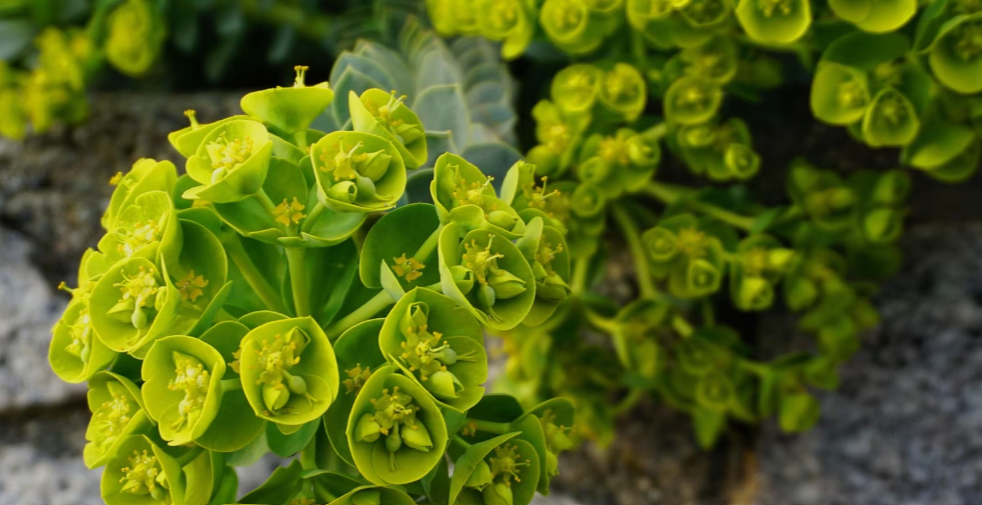
Plants with lime green foliage do something no flower can manage, which is hold a bright, glowing color from the last frost of spring to the first frost of fall. A bloom lasts a few weeks, while a lime leaf works for six months or more. That staying power is why designers treat this color as a permanent light source in the garden.
The color itself comes from a shortage of pigment. Lime leaves carry less chlorophyll than ordinary green ones, so the yellow pigments underneath show through. The same shortage makes many of these plants prone to scorch, which explains why so many of them prefer afternoon shade.
Light also changes the shade you actually get. In full sun most of these plants lean toward gold, and in deep shade they slide back toward plain green. The true lime tone usually sits in the middle, with 3 to 4 hours of morning sun.
This list sorts 21 plants from the ground up, starting with creeping groundcovers and ending with trees and houseplants. Each entry notes the light level where the lime color holds best, since that is the detail most plant tags leave out. Hardiness ranges refer to the USDA zones used across the United States.
1. Golden Creeping Jenny
Golden creeping Jenny is a flat, trailing groundcover with coin-shaped leaves about three-quarters of an inch across. The mat stays only 2 to 4 inches tall, yet a single plant can cover 2 feet of ground in a season. It is hardy in zones 3 to 9 and stays evergreen through mild winters.
This is the clearest example of light changing the color, because the leaves turn chartreuse in shade and more golden in full sun. Part shade and steady moisture give the best lime tone. Keep it in containers or edged beds, since the stems root wherever they touch soil and several states list the plant as invasive.
2. Scotch Moss
Scotch moss is not a true moss but a flowering perennial that forms a tight, springy cushion about 1 inch tall. Each plant spreads roughly 12 inches wide and carries tiny white star-shaped flowers in late spring. It grows in zones 4 to 8 and tolerates light foot traffic between stepping stones.
The lime color is strongest in cool weather with morning sun. Hot, humid summers cause brown patches, so gardeners in the Southeast often struggle with it. It performs best in the Pacific Northwest, the Northeast, and the upper Midwest.
3. ‘Lemon Coral’ Sedum
‘Lemon Coral’ sedum is a succulent with needle-like leaves that look like a mound of lime green sea coral. It grows 3 to 10 inches tall and trails about 14 inches from the edge of a pot. Gardeners in zones 7 to 11 keep it as a perennial, and everyone else grows it as an annual.
Unlike most plants on this list, it wants full sun and takes heat without scorching. The foliage stays lime in part shade and shifts closer to yellow in 6 or more hours of direct light. It needs sharp drainage and very little water once established.
4. ‘Lime Rickey’ Coral Bells
‘Lime Rickey’ coral bells forms a low mound of ruffled leaves about 8 inches tall and 18 inches wide. The foliage opens bright chartreuse in spring and settles into a softer lime green by midsummer. Small white flowers rise on 17-inch stems in late spring.
Coral bells descend from North American woodland natives, which explains their taste for dappled light. This variety scorches in hot afternoon sun, especially south of zone 7. It is hardy in zones 4 to 9 and keeps its leaves through winter in milder regions.
5. ‘Sum and Substance’ Hosta
‘Sum and Substance’ is one of the largest hostas sold in the United States, reaching about 3 feet tall and 5 to 6 feet wide. Individual leaves can measure 20 inches long and have a thick, glossy surface. It was named Hosta of the Year in 2004 and remains a standard in zones 3 to 9.
The leaves are lime green in shade and turn closer to gold with a few hours of sun. Thick leaf tissue makes it more sun tolerant and more slug resistant than thin-leaved hostas. Pale lavender flowers appear on tall stalks in late summer.
6. ‘Margarita’ Sweet Potato Vine
‘Margarita’ sweet potato vine is a fast annual with heart-shaped leaves in a bright, even lime. The stems can trail 6 feet or more in one summer, which makes it a common spiller in large containers. It survives winter only in zones 9 to 11.
The color stays lime in full sun across most of the country, though desert heat can bleach it. The plant forms tubers that are technically edible but bland and starchy. Many gardeners lift those tubers in fall and store them indoors for replanting.
7. ‘Wasabi’ Coleus
‘Wasabi’ coleus has serrated, solid chartreuse leaves with no second color at all. It is a large variety, growing 18 to 30 inches tall and nearly as wide in a single season. Like all coleus, it is a frost-tender annual outside zones 10 and 11.
Older coleus needed shade, but this one was bred to hold its color in full sun. It also flowers very late, so the plant spends its energy on leaves instead of seed. Pinching the tips in early summer produces a bushier, denser plant.
8. ‘Sun King’ Aralia
‘Sun King’ aralia is a bold perennial that looks like a shrub, with compound leaves that can reach 3 feet long. Most plants settle at 3 feet tall and wide, though old clumps in rich soil can double that. It dies to the ground each winter and returns reliably in zones 3 to 9.
The plant was found in a Japanese garden center and named Perennial Plant of the Year in 2020. A few hours of sun keep the leaves yellow-gold, while heavier shade produces chartreuse to lime green. Deer leave it alone, which is rare for a plant this lush.
9. ‘All Gold’ Japanese Forest Grass
‘All Gold’ Japanese forest grass forms a low, arching mound that resembles a small waterfall of leaves. It grows 9 to 14 inches tall and spreads slowly, so it never needs dividing to keep it in bounds. The grass is hardy in zones 5 to 9.
Despite the name, the blades are lime green in the shade where this grass grows best. Gold tones appear only with morning sun and constant moisture. It is one of the few ornamental grasses that prefers shade, which makes it valuable under trees.
10. ‘Everillo’ Sedge
‘Everillo’ sedge is an evergreen, grass-like perennial with narrow, weeping blades. It forms a tidy clump 12 to 18 inches tall and about 2 feet wide. Gardeners in zones 5 to 9 can count on color through winter.
New blades emerge lime green and age toward yellow-gold as the season advances. The lime stage lasts longest in full shade, where the plant still grows well. It handles dry shade better than most lime-leaved plants once the roots are established.
11. ‘Lime Zinger’ Elephant Ear
‘Lime Zinger’ elephant ear carries arrowhead-shaped leaves that can exceed 18 inches long. Plants reach 2 to 4 feet in a northern summer and up to 6 feet along the Gulf Coast. The tubers survive winter in the ground only in zones 8 to 10.
The leaves are a clean chartreuse that looks almost lit from within in part shade. Full sun is possible with constant water, but dry soil quickly browns the edges. Gardeners in colder zones dig the tubers after the first frost and store them dry indoors.
12. ‘Lemon Lime’ Nandina
‘Lemon Lime’ nandina is a compact evergreen shrub that grows 3 to 4 feet tall and wide. New growth opens bright lime and fades to a soft light green by late summer. It is hardy in zones 6 to 9 and popular across the South.
Most nandinas flush red, so this is the only widely sold variety with lime new growth. It rarely flowers or sets berries, which matters because ordinary nandina spreads by seed in Southeastern woodlands. Morning sun with afternoon shade gives the brightest spring color.
13. ‘Limemound’ Spirea
‘Limemound’ spirea is a rounded deciduous shrub about 2 to 3 feet tall and 3 to 4 feet wide. Spring leaves open lemon-yellow with a russet tint and then mature to lime green. Light pink flower clusters cover the plant in early summer.
This shrub needs full sun to keep its color and its dense shape. It is hardy in zones 3 to 8, which covers nearly all of the northern United States. Fall brings a third color change, when the leaves turn orange-red before dropping.
14. ‘Golden Spirit’ Smokebush
‘Golden Spirit’ smokebush is a large shrub with rounded, paddle-shaped leaves on upright stems. It commonly reaches 8 feet tall and 6 feet wide in zones 5 to 8. Hazy pink flower plumes give the plant its smoke effect in early summer.
The leaves are lime green in part shade and golden in full sun, and they do not scorch easily. Autumn color is the real surprise, with coral, orange, and red on the same branch. Hard pruning in late winter keeps the shrub near 4 feet and produces larger leaves.
15. ‘Tiger Eyes’ Sumac
‘Tiger Eyes’ sumac is a dwarf form of the staghorn sumac that grows wild across the eastern United States. It tops out near 6 feet tall and wide, with deeply cut, almost lacy leaves on fuzzy pink stems. The shrub is hardy in zones 4 to 8.
The plant began as a chance mutation, first selected in July 1985 at a Minnesota nursery. Its lime stage comes in spring, when new growth opens chartreuse before turning lemon yellow for summer. Fall finishes the show with orange and scarlet.
16. Golden Full Moon Maple
Golden full moon maple is a small, slow tree with rounded leaves divided into 9 to 13 shallow lobes. It gains only about 10 feet in its first 10 years and rarely passes 20 feet. The tree grows best in zones 5 to 7.
Spring leaves open a vivid lime and hold a chartreuse tone through summer in light shade. Afternoon sun burns the leaf edges, so an east-facing spot is the safest choice. Cool-summer regions such as the Pacific Northwest and New England suit it far better than the South.
17. ‘Frisia’ Black Locust
‘Frisia’ black locust is the tallest plant on this list, reaching 30 to 50 feet at maturity. It is a selection of a tree native to the Appalachians and the Ozarks, although the variety itself was found in the Netherlands in 1935. It is hardy in zones 4 to 9.
The feathery leaves stay chartreuse-lime all summer in full sun and deepen to butter yellow in fall. The fine texture lets light through, so grass and perennials grow well underneath. Buyers should plan for thorns, root suckers, and brittle branches in windy sites.
18. Lemon Cypress
Lemon cypress is a narrow, cone-shaped conifer with soft lime-chartreuse needles that smell of citrus when brushed. It is a golden form of Monterey cypress, a tree native to just 2 small groves on the central California coast. Potted plants stay under 3 feet for years, while trees in the ground can pass 16 feet.
The color depends on strong light, and plants kept in shade fade to plain green. Outdoors it is hardy in zones 7 to 10 and prefers cool, humid air. Indoors it needs 5 to 6 hours of direct sun and a room that stays below 70 degrees in winter.
19. ‘Neon’ Pothos
‘Neon’ pothos is a trailing houseplant with heart-shaped leaves in a solid, almost fluorescent lime. The vines grow 6 to 10 feet long indoors and root easily from cuttings in water. It carries no variegation, so every leaf is the same shade.
The plant needs moderate to bright light to stay neon, and new leaves turn darker and duller in dim corners. Direct sun through glass causes pale, yellowed patches. All parts are toxic to cats and dogs, so hanging baskets are the practical choice in homes with pets.
20. ‘Lemon Lime’ Philodendron
‘Lemon Lime’ philodendron looks similar to ‘Neon’ pothos but has thinner, softer leaves with a matte finish. New leaves emerge pinkish-yellow and settle into lime green within a few weeks. The vines trail several feet and can also climb a moss pole.
This plant holds its color in lower light better than the pothos does. It comes from the tropical Americas and prefers rooms between 65 and 80 degrees. Letting the top inch of soil dry between waterings prevents the root rot that kills most indoor philodendrons.
21. ‘Limelight’ Dracaena
‘Limelight’ dracaena is an upright houseplant with glossy, strap-shaped leaves about 2 feet long. It grows slowly on a cane-like stem and reaches roughly 5 feet indoors. The shape suits floor pots in offices and living rooms.
Its main advantage is that the lime color persists in low light, where most bright-leaved plants turn green. The leaf tips brown when watered with fluoridated tap water, so distilled water or rainwater works better. Like other dracaenas, it is toxic to cats and dogs.
Key Takeaways
- Lime green foliage adds instant brightness to gardens, containers, borders, and indoor spaces, creating a fresh contrast against darker foliage.
- There are many types to choose from, including shrubs, perennials, ornamental grasses, tropical plants, succulents, and popular houseplants.
- Light requirements vary considerably: some lime-green plants perform best in full sun, while others retain their brightest color in partial or filtered shade.
- Foliage color can change with growing conditions, with sunlight, temperature, moisture, and cultivar genetics all influencing how bright or yellow-green the leaves appear.
- Lime green works especially well with contrasting foliage, including deep green, burgundy, purple, blue-green, and silver-colored plants.
- Plant size ranges widely, from compact groundcovers and container plants to shrubs several feet tall, so mature height and spread should be considered before planting.