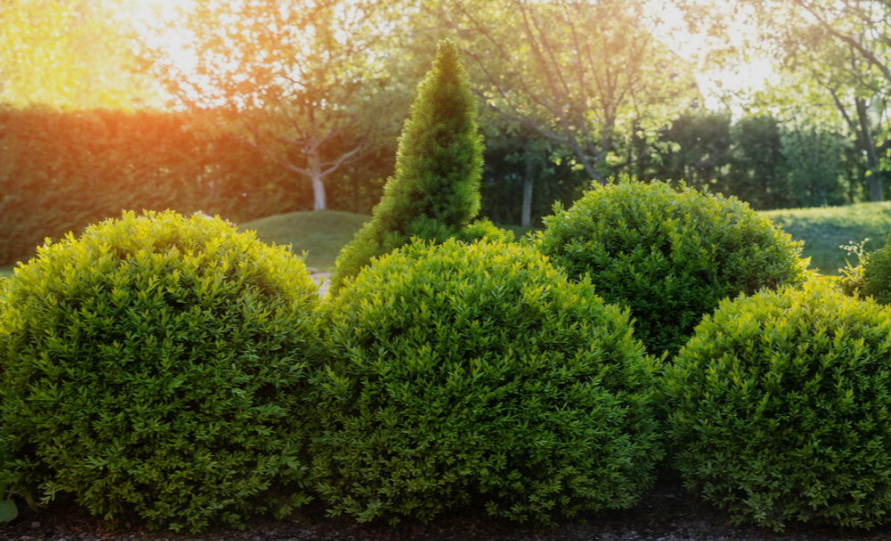
The best boxwood varieties for hedges combine dense growth, small evergreen leaves, good winter color, and the ability to take regular shearing without thinning out. Boxwood has been the classic hedge plant for formal gardens for centuries. It edges walkways and parterres, outlines beds, and forms low walls of green around homes. Not every variety performs equally well, however. Some stay compact while others grow tall and narrow, some keep their deep green color through winter while others turn bronze, and some resist disease much better than others.
Choosing the right variety matters more today than ever. Boxwood blight, a fungal disease that appeared in the United States in 2011, can defoliate and kill entire hedges, and the classic English boxwood is among the most susceptible. Breeders and nurseries have responded with new varieties that tolerate blight far better. Older cold-hardy hybrids have also proven more resistant than expected.
University of Wisconsin–Madison Extension lists several boxwoods that have been documented as resistant to boxwood blight. They include NewGen Independence, NewGen Freedom, ‘Winter Gem’, ‘Wintergreen’, and ‘Green Gem’. Resistance does not mean immunity. Even resistant plants can develop symptoms when they are stressed, crowded, or poorly drained.
The 12 varieties below are among the most reliable boxwoods for hedges in North American gardens, from low edging to tall, narrow screens. Each entry describes the plant’s size, shape, winter color, hardiness, and disease resistance, so you can match the right boxwood to your hedge. No boxwood variety is resistant to the box tree moth, so gardeners in affected regions should also plan for regular monitoring.
1. NewGen Independence
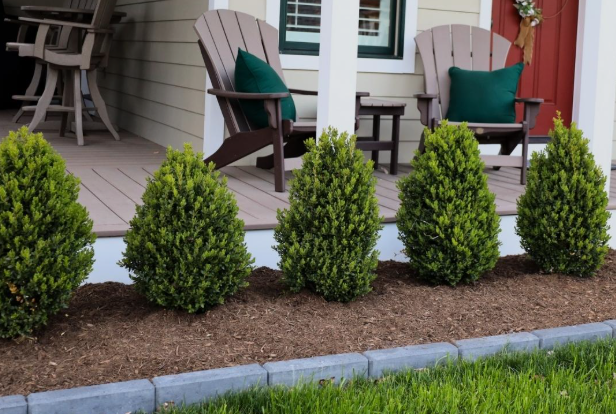
NewGen Independence is one of the most widely recommended modern boxwoods for hedges. It was developed by Saunders Brothers Nursery in Virginia as part of a breeding program launched after boxwood blight arrived in the United States. It has glossy, deep green leaves that hold their color well through winter. It grows into a rounded shrub about 3 feet tall and wide in 15 years and 4½ feet in 25 years.
NewGen Independence is rated for Zones 5b through 8 and grows in sun, part sun, or shade. It combines high tolerance to boxwood blight with better resistance to boxwood leafminer, one of the most common boxwood insects. It grows at a moderate rate, which makes it easy to keep tidy with 1 or 2 shearings per year. It is an excellent replacement for older varieties such as ‘Green Velvet’ in hedges where blight is a concern.
2. NewGen Freedom
NewGen Freedom is the faster-growing companion to NewGen Independence. It grows 3 to 5 inches per year and reaches about 4 feet tall and 3½ feet wide in 15 years. Its slightly upright, rounded form makes it a good choice for medium hedges up to 4 or 5 feet tall. Its dense, deep green foliage holds its color through winter.
NewGen Freedom is rated for Zones 5 through 8 and grows in sun, part sun, or shade. Like Independence, it has high tolerance to boxwood blight and good resistance to leafminer. Because it grows vigorously, it needs more frequent shearing to keep a crisp shape. It is often recommended as a substitute for older upright varieties such as ‘Green Mountain’.
3. Green Velvet
‘Green Velvet’ is one of the most popular boxwoods in North America and a classic choice for low to medium hedges. It is one of the famous Sheridan hybrids, developed from open-pollinated crosses made at Sheridan Nurseries in Ontario, Canada, in the 1960s. It combines the cold hardiness and compact size of Korean boxwood with the rich, deep green color of English boxwood. It typically grows about 3 feet tall and 4 feet wide.
‘Green Velvet’ is hardy in Zones 4 through 8 and has good resistance to winter bronzing. It shears beautifully into rounded or squared-off hedges. Its moderate growth rate means it stays neat with little pruning. It is somewhat susceptible to boxwood blight, so gardeners in blight-prone areas may prefer NewGen Independence.
4. Green Mountain
‘Green Mountain’ is another Sheridan hybrid. It is known for its upright, pyramidal shape and dense, dark green foliage. It typically grows 4 to 5 feet tall and about 3 feet wide, making it ideal for taller formal hedges and narrow spaces. Its natural cone shape also makes it popular for topiary and accent plantings.
‘Green Mountain’ is hardy in Zones 4 through 8 and holds its deep green color well in winter. It shears easily into tall hedges with straight sides. Like ‘Green Velvet’, it has some susceptibility to boxwood blight. Good spacing and air circulation help reduce disease problems.
Also Read: Different Types of Boxwood Shrubs
5. Green Gem
‘Green Gem’ is a slow-growing Sheridan hybrid that forms a tight, round globe. It usually reaches 2 to 3 feet tall and wide. Its small, rich green leaves keep their color well through winter. It is one of the best boxwoods for low hedges, parterres, and edging along paths and beds.
‘Green Gem’ is very cold hardy, growing in Zones 4 through 8. UW–Madison Extension notes that it has been documented as resistant to boxwood blight, a major advantage for low hedges where plants grow close together. Its slow growth means it rarely needs heavy pruning. It is a good choice for formal knot gardens and container hedges.
6. Winter Gem
‘Winter Gem’ is a Korean littleleaf boxwood that grows faster than many hedge boxwoods. It typically reaches 3 to 4 feet tall and wide, with small, bright green leaves. It shears well into rounded or squared hedges. Its quick growth makes it useful for establishing hedges faster.
‘Winter Gem’ is extremely cold hardy, growing in Zones 4 through 9. It has been documented as resistant to boxwood blight, according to UW–Madison Extension. Its leaves may turn bronze or yellow-green in winter, especially in full sun and wind, and green up again in spring. Planting it in a sheltered site reduces winter color change.
7. Wintergreen
‘Wintergreen’ is another cold-hardy Korean littleleaf boxwood, prized for its ability to hold its color better than many other Korean types. It forms a dense, rounded shrub 2 to 4 feet tall and wide. Its small, bright green leaves give it a fine texture. It is a common choice for low hedges in northern gardens.
‘Wintergreen’ grows in Zones 4 through 9 and tolerates cold winters, heat, and a range of soils. UW–Madison Extension lists it among the varieties documented as resistant to boxwood blight. It responds well to regular shearing. It is a reliable choice for gardeners in the Upper Midwest and Northeast.
8. Chicagoland Green
Chicagoland Green, also sold under the cultivar name ‘Glencoe’, was selected at the Chicago Botanic Garden for its cold hardiness and winter color. It forms a dense, rounded shrub 3 to 4 feet tall and up to 5 feet wide. Its glossy, medium green leaves resemble English boxwood. It shears easily into uniform hedges.
Chicagoland Green is hardy in Zones 4 through 8 and is popular in the Midwest and other cold regions. It is very susceptible to boxwood leafminer and shows variable results with boxwood blight. Regular inspection and good air circulation help keep it healthy. It remains a strong choice where winter hardiness is the top priority.
9. Dee Runk
‘Dee Runk’ is a narrow, columnar boxwood that grows tall and slim with little pruning. It typically reaches 6 to 8 feet tall but only 2 to 3 feet wide. Its upright form makes it ideal for tall, narrow hedges, screening along property lines, and formal accents. Its dark green leaves give it a classic boxwood look.
‘Dee Runk’ grows best in Zones 6 through 8 and prefers partial shade and well-drained soil. It is a selection of American boxwood, which is generally more susceptible to boxwood blight than Korean or hybrid types. Plant it with good spacing and airflow to reduce disease risk. It needs little shearing to keep its columnar shape.
10. Graham Blandy
‘Graham Blandy’ is one of the narrowest boxwoods available, forming a tall, pencil-like column. It was introduced in 1949 by the University of Virginia’s Blandy Experimental Farm. It typically grows 8 to 9 feet tall and about 2 feet wide. Its upright form makes it ideal for narrow hedges, formal accents, and tight spaces.
‘Graham Blandy’ grows in Zones 5 through 8 and prefers partial shade with protection from harsh winter winds. Like other American boxwoods, it is susceptible to boxwood blight. It holds its dark green color well. Its narrow habit means it rarely needs heavy pruning.
Also Read: How To Grow And Care For Boxwoods
11. Dwarf English Boxwood
Dwarf English boxwood is the classic edging boxwood of formal European and colonial American gardens. It grows very slowly into a soft, mounding shrub, usually staying 1 to 3 feet tall for many years. Its small, rich green leaves have a distinctive fragrance. It is ideal for low edging, knot gardens, and parterres.
Dwarf English boxwood grows in Zones 5 through 8 and prefers partial shade and well-drained soil. It is one of the boxwoods most susceptible to boxwood blight. Many experts now recommend replacing it with more resistant varieties in blight-prone areas. It remains valued in historic gardens where its classic look is important.
12. American Boxwood
American boxwood is the common, full-sized form of English boxwood used for tall formal hedges. It can grow 10 to 20 feet tall over many decades, though it is usually kept much smaller by pruning. Its dark green, glossy leaves and dense branching make it ideal for traditional tall hedges. It has been used in American gardens since colonial times.
American boxwood grows in Zones 5 through 8 and performs best in partial shade with protection from winter wind. It is susceptible to boxwood blight and boxwood leafminer. Good spacing, air circulation, and regular inspection help reduce problems. In blight-prone areas, NewGen Freedom or ‘Green Mountain’ may be better choices for tall hedges.
Sources
University of Wisconsin–Madison Extension, “Boxwood Blight”
NC State Extension Gardener Plant Toolbox, “Green Velvet Boxwood”
University of Arkansas Cooperative Extension, “Plant of the Week: Green Velvet Boxwood”
Purdue Landscape Report, “Blight, Leafminers, and Moths: The Plight of Boxwoods”