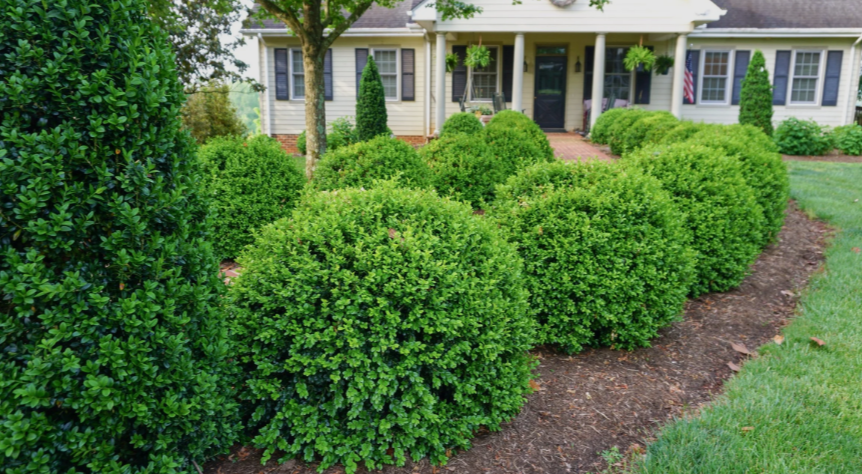
NewGen Independence is a modern boxwood bred to solve the biggest problems facing boxwoods today. It offers the dense, glossy, deep green look gardeners love in a classic boxwood, while standing up far better to boxwood blight and boxwood leafminer. For homeowners and landscapers who have watched older boxwoods brown and decline, it represents a fresh start.
This compact, rounded shrub reaches about 3 feet tall and wide and holds its rich color through winter. It is used for hedges, foundation plantings, edging and formal accents, just like traditional boxwoods. Since its release in 2020, it has quickly become one of the most talked-about boxwoods in North America.
Botanical Classification
NewGen Independence belongs to the box family, a small group of evergreen shrubs that also includes pachysandra and sweet box. It is a hybrid boxwood developed through a long breeding and selection program, and it is sold under the cultivar code SB 108 along with its trade name.
It is part of the NewGen boxwood series, which was created specifically to resist the diseases and pests that have damaged so many boxwood plantings. Its sister plant in the series, NewGen Freedom, was released at the same time and shares many of its strengths.
Brief History
Boxwood blight, a destructive fungal disease, was first found in the United States in 2011. It spread quickly through nurseries and gardens, causing rapid leaf drop and killing many plants, especially popular types such as English boxwood. Growers began searching for boxwoods that could resist the disease.
A long-established Virginia boxwood nursery took up the challenge. After the disease arrived, the nursery sent a team to Europe to study blight and began working with plant disease researchers. Over several years, it evaluated more than 150 boxwood cultivars and selections for their tolerance to blight and leafminer, in cooperation with universities and private industry.
From this work came the NewGen brand. NewGen Independence and NewGen Freedom were the first two introductions, reaching the market in 2020. In large field trials, NewGen Independence was one of only seven boxwoods to show resistance or low susceptibility to both boxwood blight and boxwood leafminer.
Identifying Characteristics
NewGen Independence has small, oval leaves about half an inch to an inch long. They are deep green and very glossy, giving the plant a polished, high-shine look. The leaves grow in pairs on opposite sides of the stem and are packed densely together.
It grows into a compact, rounded shrub about 3 feet tall and 3 feet wide at maturity. Its growth rate is steady and moderate, similar to the popular Green Beauty boxwood. This makes it easy to keep in shape without frequent pruning.
One of its main selling points is its winter color. The leaves stay deep green through the cold months, avoiding the bronze or yellow tones that affect many boxwoods. Its strong, sturdy branching also helps it keep its shape in harsh winter weather.
Like other boxwoods, it produces tiny, pale yellow-green flowers in early spring. They are fragrant and attract bees but are easy to overlook.
Landscape Uses
NewGen Independence is well suited to low hedges and borders. Its dense growth and rounded form create a neat green edge along walkways, patios and garden beds. It is a strong replacement for blight-damaged hedges where the disease is not present in the soil.
It also works well in foundation plantings, where its compact size fits neatly under windows and along the front of houses. Single plants make attractive accents near entrances, and pairs can frame doors and gates.
It grows well in containers and planters, where its glossy leaves stand out. It can be clipped into simple shapes such as balls and low cubes. Like other boxwoods, it is deer-resistant, and all parts of the plant are toxic if eaten.
Growing Considerations
NewGen Independence is hardy from about USDA zone 5b to zone 8. It grows well across much of the eastern, central and southern United States, from the Mid-Atlantic and Midwest to parts of the Southeast.
It grows in full sun to partial shade. In hot regions, a little afternoon shade helps keep its leaves healthy. In colder areas, a site sheltered from strong winter wind helps reduce winter stress.
Good drainage is essential. Like all boxwoods, it can develop root rot in soggy soil. It grows best in loose, well-drained soil enriched with compost. It prefers slightly acidic to neutral soil, around pH 6.5 to 7.0.
Its roots are shallow, so a thin layer of mulch, about 1 to 2 inches, helps keep them cool and moist. Keep mulch away from the stems. Water young plants regularly through their first two growing seasons, and give established plants a deep watering during dry spells and in fall.
Pruning and Care
NewGen Independence needs only light pruning because of its compact, steady growth. Trim it in late spring after new growth hardens to keep a neat shape. A second light trim in early summer can help formal hedges stay crisp.
Avoid pruning in late summer or fall. Late cuts can trigger tender growth that is damaged by frost. Thinning a few interior branches each year lets in light and air, which helps keep the plant healthy.
Fertilize lightly in spring if growth is weak or leaves look pale. Because it is not a heavy feeder, too much fertilizer can do more harm than good.
Pests and Diseases
NewGen Independence was bred specifically for resistance to boxwood blight and boxwood leafminer. It shows good resistance to common strains of boxwood blight when grown with proper care. It also has much better resistance to leafminer than popular boxwoods such as Green Beauty, Green Velvet and Green Mountain.
It is not completely immune to blight. The fungus that causes boxwood blight can survive in leaf debris and soil for years. For this reason, even resistant boxwoods are not recommended for sites where blight has recently killed other boxwoods.
Other possible problems include spider mites, boxwood psyllids and root rot in poorly drained soils. The invasive box tree moth, whose caterpillars can strip boxwoods of their leaves, has spread across Europe and into parts of North America and should be watched for in late spring and summer.
Also Read: Types of Boxwood Shrubs
NewGen Independence vs. NewGen Freedom
NewGen Independence and NewGen Freedom were released together and share good resistance to blight and leafminer. Independence has very glossy, deep green leaves and grows into a compact mound about 3 feet tall and wide. It is hardy to zone 5b.
Freedom grows slightly faster and a bit larger, reaching about 3.5 feet tall, and is hardy to zone 5. It forms a rounded shrub that is slightly taller than wide. Freedom benefits from regular pruning to keep a tight habit, while Independence holds its shape more naturally.
NewGen Independence vs. Traditional Boxwoods
Compared with English boxwood, NewGen Independence grows faster, is much more resistant to boxwood blight and has glossier leaves. English boxwood has a softer, cloud-like shape and is valued in historic gardens, but it is highly susceptible to blight.
Compared with Green Beauty, NewGen Independence has a similar growth rate and shape but much better resistance to leafminer. For gardeners who want a reliable, classic-looking boxwood with fewer disease and pest problems, NewGen Independence is one of the strongest choices available.
Sources
Nursery Management, “NewGen Boxwood Shrub”
Proven Winners ColorChoice, “NewGen Independence Boxwood”
Garden Center Magazine, “NewGen Boxwood Introduces New Varieties”