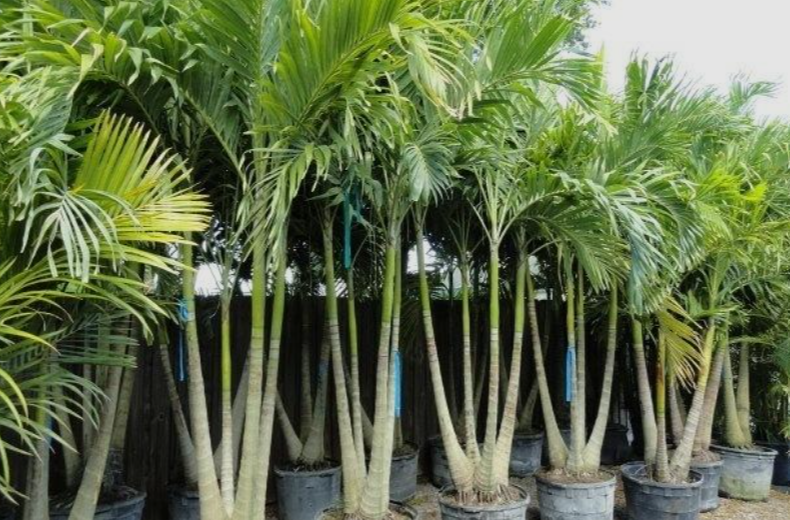
It might be surprising, but a few palm trees can survive a Jersey Shore winter. Several types of palm trees survive in New Jersey because they come from cold mountain regions of Asia or from the river bottoms and forests of the American Southeast. Under the 2023 USDA Plant Hardiness Zone Map, New Jersey’s zones run from 6b in the cooler northwest to 8a at the southern tip of Cape May.
That range matters a lot for palms. Gardeners in Cape May, Atlantic, and Ocean counties have the best odds, while growers in the Skylands usually need sheltered spots and winter protection. Planting near a south-facing wall, improving drainage, and mulching the base heavily all help a young palm get through its first few winters.
The palms below are among the best choices for the Garden State. Some are tough enough to need almost no help, while others do best with a winter wrap during hard freezes.
1. Needle Palm
The needle palm is often called the hardiest palm in the world, and it is the safest choice for New Jersey gardeners. It can handle temperatures down to 0 degrees Fahrenheit. It forms a low, shrubby clump instead of a tall trunk, which helps protect its growing point from cold winds. Its common name comes from the sharp black needles, 4 to 10 inches long, that grow around its trunk.
The glossy evergreen fronds can reach up to 8 feet tall and wide, though growth is slow. In New Jersey, it does best in part shade with moist, well-drained soil, which makes it a good fit for woodland borders and shady corners of the yard. Its spines also keep deer away, which is a real plus in many suburban neighborhoods. Wear gloves when planting or trimming it, because the needles are sharp.
2. Windmill Palm
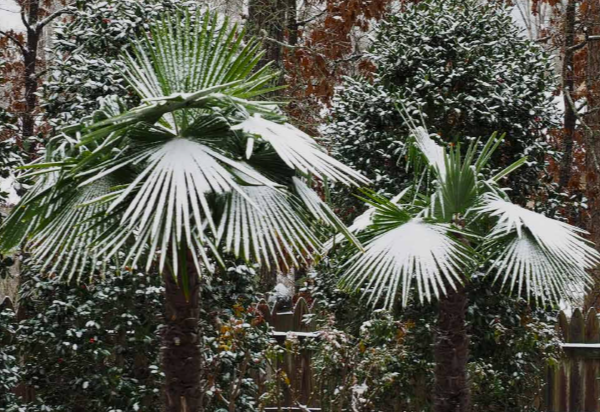
The windmill palm is the classic trunked palm for cold climates and the one most New Jersey gardeners picture first. It has survived temperatures as low as minus 10 degrees Fahrenheit. Its fan-shaped leaves sit on top of a slender trunk wrapped in dark, hairy fiber that helps insulate it. It even grows in places as far north as Canada and Scotland.
This palm suits coastal yards, since it is moderately wind and salt tolerant. In New Jersey, it can slowly reach 10 to 20 feet tall over many years. Young plants benefit from a frost cloth wrap and heavy mulch during their first two or three winters. It looks nice planted in groups of three to five to accent a building corner or courtyard entrance.
Also Read: Most Common Palm Tree Problems
3. Dwarf Palmetto
The dwarf palmetto is a low, clumping palm native to the Southeast, and it is one of the toughest palms available. It may show leaf damage at around 5 degrees Fahrenheit but is hardy to minus 5 degrees. Its trunk usually grows underground, so the growing point stays protected even when the fronds take a hit. Its stiff, fan-shaped leaves range from deep green to blue-green.
It typically grows 4 to 5 feet high and wide and is native to river floodplains. That background makes it more tolerant of wet soil than most palms, which helps in clay-heavy New Jersey yards. It works well as a foundation plant, under taller trees, or in tropical-style borders. Once established, it needs very little care beyond removing old brown fronds in spring.
4. Birmingham Palmetto
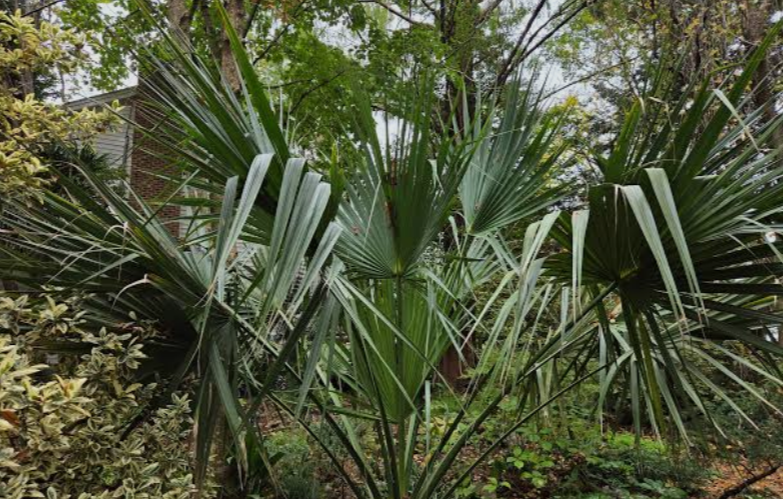
The Birmingham palmetto is a cold-hardy palmetto that has become popular with northern palm enthusiasts. It was discovered outside Birmingham, Alabama, and has survived temperatures as low as 0 degrees Fahrenheit. It is thought to be a natural cross between palmetto types, and it eventually forms a short trunk. Its large, stiff fan leaves give it a bold look in the landscape.
In New Jersey, the Birmingham palmetto grows slowly, often staying shrub-sized for several years before forming a visible trunk. It prefers full sun to part shade and well-drained soil. Heavy mulch over the root zone during winter helps young plants establish. It is a good choice for gardeners who want a palmetto with more height than the dwarf palmetto.
5. McCurtain Palmetto
The McCurtain palmetto is a cold-hardy form of the dwarf palmetto that comes from McCurtain County in southeastern Oklahoma. Plants from this far-inland population have adapted to harsher winters than palmettos along the Gulf Coast. That makes it a smart pick for gardeners in central and northern New Jersey. It forms a compact clump of blue-green fan leaves.
This palmetto usually stays under 5 feet tall and does not form a tall trunk. It handles both sun and part shade and tolerates heavier soils than many palms. It looks good in mixed borders alongside ornamental grasses and hardy shrubs. Its cold tolerance makes it one of the lower-risk palms for zone 6b and 7a yards.
6. Louisiana Palmetto
The Louisiana palmetto is a larger form of the dwarf palmetto that can develop a short, visible trunk over time. It is native to wet bottomlands in Louisiana and nearby states. It has broad fan leaves and a fuller look than the standard dwarf palmetto. Many growers treat it as a middle ground between shrub palmettos and tree palmettos.
In New Jersey, it does best in the warmer southern and coastal counties, where winter lows stay milder. It likes moist soil and can handle occasional wet spells better than many other palms. Mulching and wrapping young plants during severe cold snaps helps them survive. With patience, it can become a striking focal point in a sunny yard.
7. Brazoria Palmetto
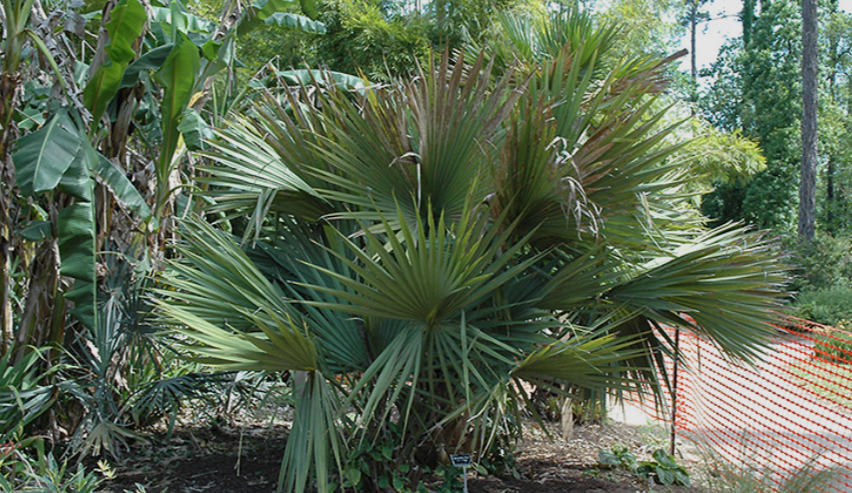
The Brazoria palmetto is a palmetto type from Brazoria County, Texas, and is believed to be a natural hybrid between palmetto species. It forms a short trunk and has large, stiff fan leaves. Gardeners value it for combining good cold hardiness with a more tree-like shape. It is less common in nurseries but is available from specialty palm growers.
This palm suits zone 7 and 8 gardens in New Jersey, especially near the coast. It needs full sun and well-drained soil to grow well. Young plants grow slowly and should get winter protection for their first few years. Over time, it can give a southern New Jersey yard a real Gulf Coast look.
8. Wagner’s Windmill Palm
Wagner’s windmill palm is a compact form of the windmill palm with smaller, stiffer leaves. The tighter, more rigid fronds hold up better in strong winds than the standard windmill palm. That makes it especially useful along the Jersey Shore, where winter winds can shred softer palm leaves. Its cold hardiness is similar to the standard windmill palm.
This palm grows slowly and usually stays smaller than the standard windmill palm, which suits small yards and patios. It also does well in large containers that can be moved to a protected spot in winter. It prefers full sun to part shade and soil that drains well. Its neat, tidy look makes it a favorite for formal plantings.
9. Himalayan Windmill Palm
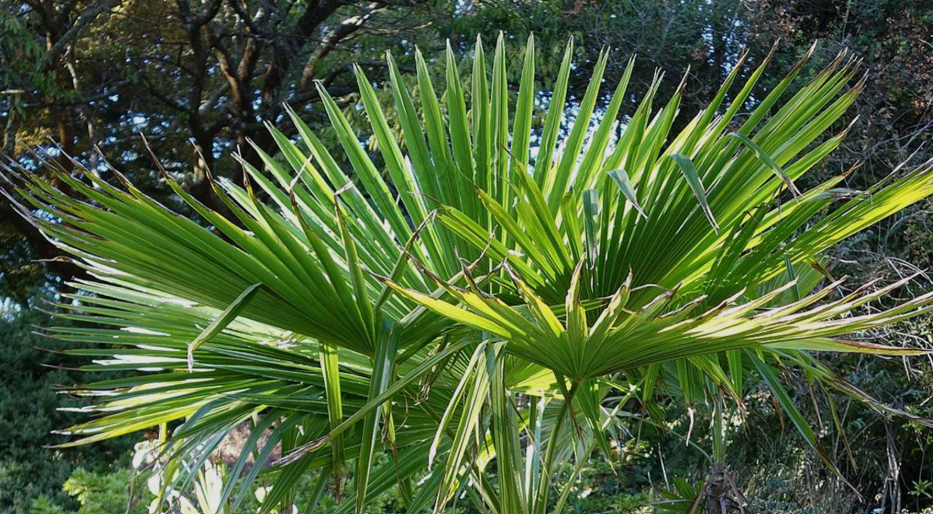
The Himalayan windmill palm comes from the Kumaon hills of northern India, where it grows at high elevations with cold, snowy winters. It looks similar to the windmill palm but has a thicker trunk and broader, rounder leaves. Many palm growers consider it equal to or slightly hardier than the standard windmill palm. That makes it a strong option for colder parts of New Jersey.
This palm grows slowly and can eventually reach 15 feet or more in a sheltered spot. It does best in full sun to part shade with good drainage. Like other trunked palms, young plants benefit from wrapping during their first winters. It is harder to find than the standard windmill palm, but specialty nurseries often carry it.
Also Read: Palm Trees with Edible Fruits
10. Cabbage Palmetto
The cabbage palmetto is a tall, single-trunked palm and the state tree of both Florida and South Carolina. It is native to the southeastern United States and can reach about 50 feet tall in warm climates. In New Jersey, it is a borderline palm best suited to the mildest coastal spots in zone 7b and 8a. Plants grown from northern seed sources tend to handle cold better.
Gardeners in Cape May and along the southern shore have the best chance with this palm. It needs full sun, sandy, well-drained soil, and protection from harsh northwest winds. Wrapping the trunk and crown during deep freezes is strongly recommended. When it succeeds, it gives a New Jersey yard a truly tropical look.
11. Mediterranean Fan Palm
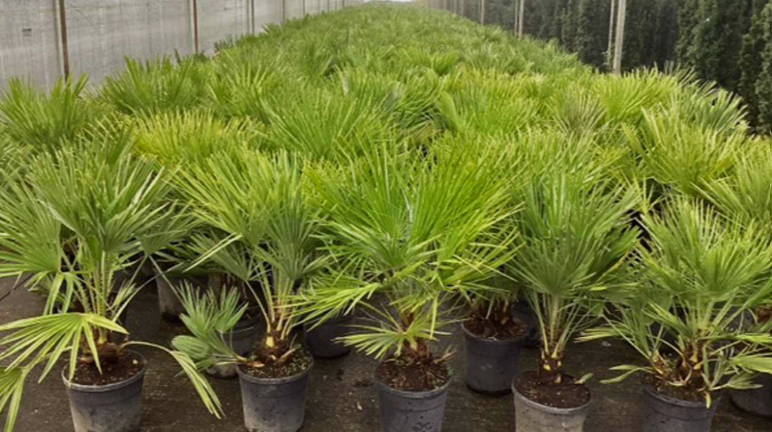
The Mediterranean fan palm is a clumping palm native to southern Europe and North Africa. It is almost as cold hardy as the windmill palm. Its stiff fan leaves come in shades from deep green to silvery blue, depending on the variety. It usually grows several trunks from one base, which gives it a full, bushy look.
In New Jersey, this palm does best in zone 7b and 8a gardens with full sun and sharp drainage. It handles drought, salt spray, and sandy soil well, which makes it a good fit for shore properties. Winter protection is important during cold snaps, especially for young plants. It also grows well in large containers on patios that can be sheltered in winter.
12. Saw Palmetto
The saw palmetto is a low, spreading palm native to the southeastern United States. It gets its name from the sharp, saw-like teeth along its leaf stems. Its fan leaves can be green or silvery blue, and the silver forms are especially popular in landscaping. It grows from creeping stems that spread slowly along the ground.
In New Jersey, saw palmetto is a marginal choice best suited to the warmest coastal areas. It needs full sun and sandy, well-drained soil to do well. Heavy mulch and a frost cloth during cold snaps help it survive winter. Gardeners who succeed with it get a tough, drought-tolerant ground cover with a distinctly southern feel.
Sources
University of Florida IFAS, “Needle Palm” (Florida-Friendly Landscaping)
University of Florida IFAS, “Windmill Palm”
University of Georgia, “Cold-Hardy Palms Grow Throughout Georgia”
University of Georgia, “Palms Add a Tropical Flair”
Mississippi State University Extension, “Hardy Palms and Cycads for Mississippi”
Rutgers University, “New Jersey Is Getting Warmer for Gardeners, Farmers and Nurseries”