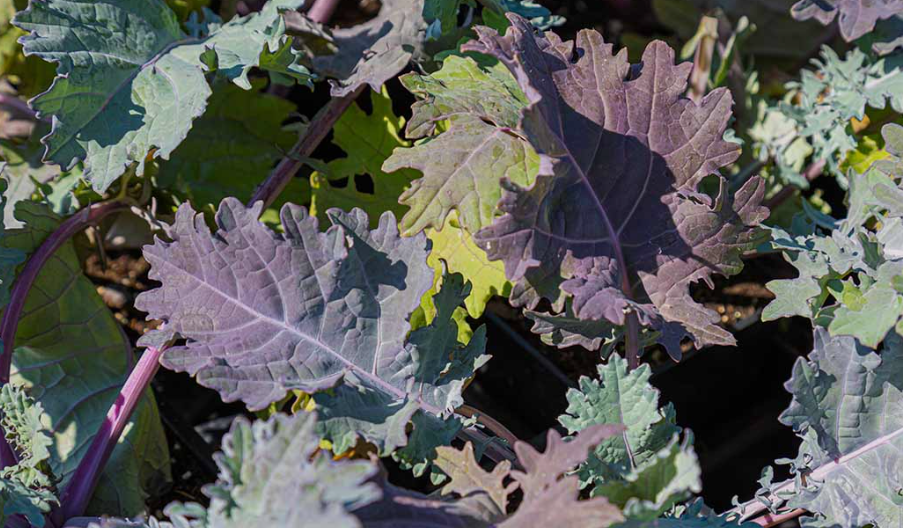
Red Russian kale is a flat-leaved heirloom with purple stems and grayish green leaves edged in red-purple. Its leaves are tender and mild, which makes it one of the most popular kales for salads and baby greens. Its color often brightens after frost, and the plant tolerates both cold and heat better than many kales.
The plant is a member of the Russian kale group, which is botanically distinct from the curly and Lacinato types. Its leaves are less frilled than curly kales and have a lobed, serrated edge that gives it a rustic look. Gardeners often choose it for its combination of color, flavor, and dependable yield.
This guide covers where Red Russian kale came from, how it grows, how long it takes to harvest, how to choose seed, and how to use it in the kitchen.
Origin and Development
Red Russian kale is an heirloom that is generally traced to Siberia or Russia, and it is described in some seed catalogs as having reached North America in the 1800s. One seed company says Russian traders brought it to Canada in that period, while another notes that it is an heirloom dating to before 1885. Its exact breeder and place of origin are not clearly documented, since the records come mainly from seed catalogs rather than formal breeding histories.
The variety is also associated with the American horticulturist Frank Morton, who is credited by one seed company with developing a red cultivar that thrived in his garden in Oregon during the 1980s. This claim is widely repeated in seed listings, but it conflicts with the older heirloom accounts, so the two histories should be presented carefully rather than as settled fact.
What Makes It Distinct
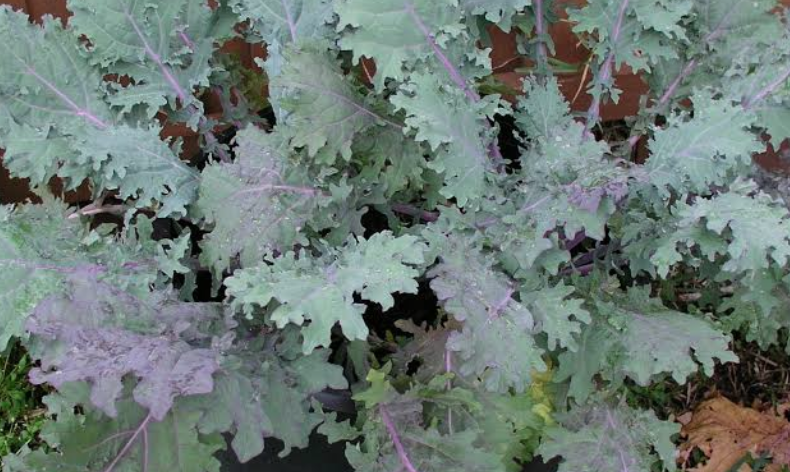
Red Russian kale typically grows 18 to 30 inches tall, depending on the source and growing conditions, with leaves that can reach two feet long at maturity. Its leaves are flat, deeply lobed, and edged with red or purple, while the stems and veins are purple. The color is strongest in cool weather, and some sources describe the leaves as blue-green or slate-green.
Its flavor is described as mild and slightly sweet, and its texture is tender compared with many other kales. The leaves are good raw when young and remain pleasant when cooked, which gives the plant a broad range of uses in the kitchen.
Growing Conditions
Red Russian kale is a cool-season crop that grows best in temperatures between about 45 and 75°F, though it tolerates heat better than many kales. It is usually planted in late summer for a fall and winter harvest, or in early spring for an early crop. Some sources say it is the most heat-tolerant of the common kales, but very hot weather can still produce bitter leaves.
It grows well in full sun or partial shade, depending on the season. The soil should be fertile, well drained, and rich in organic matter, and a pH between about 6.0 and 7.0 suits it well. Kale is a heavy feeder, so side-dress with a nitrogen-rich fertilizer once or twice during the season. Space plants 12 to 18 inches apart to give the leaves room to develop.
Planting and Care
Sow seeds about a quarter inch deep, or set out transplants when they are four to six weeks old. Seeds typically germinate in 5 to 10 days when the soil is warm enough, and the seedlings can be thinned to the strongest plants. Keep the soil evenly moist, and water at the base of the plant rather than over the leaves.
Watch for aphids, cabbage worms, flea beetles, and thrips, which are the common pests of Red Russian kale. Row covers help keep butterflies from laying eggs on the leaves, and hand-picking caterpillars works well on small plantings. Remove yellowing lower leaves to improve airflow and reduce disease.
Also Read: Different Types of Kales to Grow At Home
Days to Harvest
Red Russian kale is generally ready for full-size harvest about 50 to 60 days after planting, though some sources give a range up to 65 days. Baby greens can be picked much earlier, typically within 25 to 30 days. Plan planting dates around the season you want, since cool weather tends to extend the harvest period and sweeten the leaves.
Harvest the lower leaves first and leave the upper leaves and central growth intact so the plant keeps producing. Pick in the morning when the leaves are crisp, and avoid removing more than about a third of the plant at once. Frequent harvesting extends the season well into winter in mild climates.
Choosing Seed
Look for seed packets that state the variety name, the days to maturity, and a recent packing date. Red Russian seed is commonly sold as open-pollinated and heirloom, and it remains viable for several years when stored cool and dry. Suppliers list pack sizes from about 200 to 300 seeds, and organic seed is widely available.
Check the seed listing for the plant’s botanical name. Most suppliers list it as Brassica napus var. pabularia, though a few list it as a type of Brassica oleracea, so the botanical name on the packet is worth confirming if you plan to save seed or cross-check varieties.
Culinary Uses
Red Russian kale’s tender young leaves are excellent in salads, especially when mixed with other greens or paired with citrus and nuts. Baby greens can be used raw or lightly wilted. The mature leaves can be steamed, blanched, sautéed, or added to soups, stews, and stir-fries, where they hold their color and texture.
Frost tends to sweeten the leaves and soften any bitterness, so many cooks prefer the late-season harvest for cooking. Remove the tough central rib from mature leaves before cooking. Store harvested leaves in a sealed bag in the refrigerator, where they keep for about a week, and blanch and freeze them for longer storage.
Frequently Asked Questions
Where did Red Russian kale come from?
It is generally traced to Russia or Siberia and was brought to North America in the 1800s. Its exact breeder is not clearly documented, and one seed company credits a 1980s Oregon gardener with developing a red cultivar.
How long does Red Russian kale take to harvest?
Full-size leaves are typically ready about 50 to 60 days after planting. Baby greens can be picked within 25 to 30 days.
Is Red Russian kale cold hardy?
Yes. It tolerates cold well, and its flavor often improves after frost.
Does it bolt in summer?
It tolerates heat better than many kales, but very hot weather can still cause bitter leaves.
Is it the same as Ragged Jack kale?
Some seed suppliers list Red Russian and Ragged Jack as the same plant, while others describe Ragged Jack as a separate, deeply divided type. Check the botanical name and leaf description before buying.
Can I grow it in containers?
Yes. A container at least 12 inches deep and wide will support one plant, and it is especially useful for growing baby greens.