Mahonia shrubs are tough evergreens prized for their spiny, holly-like leaves, bright yellow winter flowers and clusters of dusty blue berries. Few shrubs bloom when the garden is at its quietest, yet many mahonias open their fragrant flower spikes between late fall and early spring. Bees and hummingbirds visit them eagerly at a time of year when little else is in flower.
The group includes roughly 70 species, most of them native to eastern Asia, with others growing wild across western North America and into Mexico and Central America. Botanists have recently moved many mahonias into the closely related barberry genus, so plant labels may use either name. Gardeners and nurseries, however, still widely call them mahonias.
Mahonias range from ground-hugging plants only a foot tall to upright shrubs reaching 10 feet or more. Oregon grape, one of the best-known native types, became Oregon’s state flower in 1899. Newer spineless forms, such as Soft Caress, introduced in 2002, have made mahonias easier to use near walkways and patios.
Most mahonias grow best in partial to full shade and moist, well-drained soil. They are generally deer-resistant, and their berries feed birds through winter. One Asian type, leatherleaf mahonia, has escaped gardens and become invasive in parts of the Southeast, so choosing the right kind matters as much as finding the right spot.
1. Oregon Grape
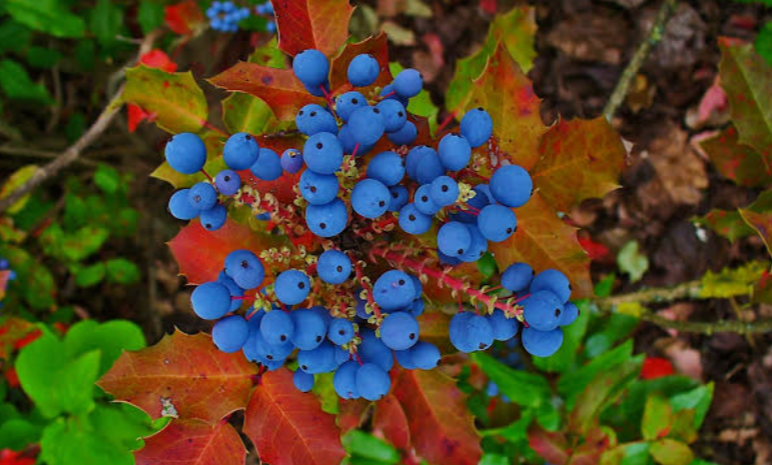
Oregon grape is the most familiar native mahonia in North America. Its leaves are divided into 7 to 13 glossy, spiny-edged leaflets. In winter, the foliage often turns bronze, purple or bright red. Bright yellow flowers appear in dense clusters in early spring. They are followed by dusty blue berries that look like small grapes.
The plant usually grows 3 to 6 feet tall and spreads slowly by underground stems. It tolerates shade, drought and a wide range of soils once established. Its tart berries are edible when cooked and are often made into jelly. Birds also eat the berries through late summer and fall. It is native to the Pacific Northwest, from British Columbia through Washington and Oregon to northern California.
2. Compact Oregon Grape
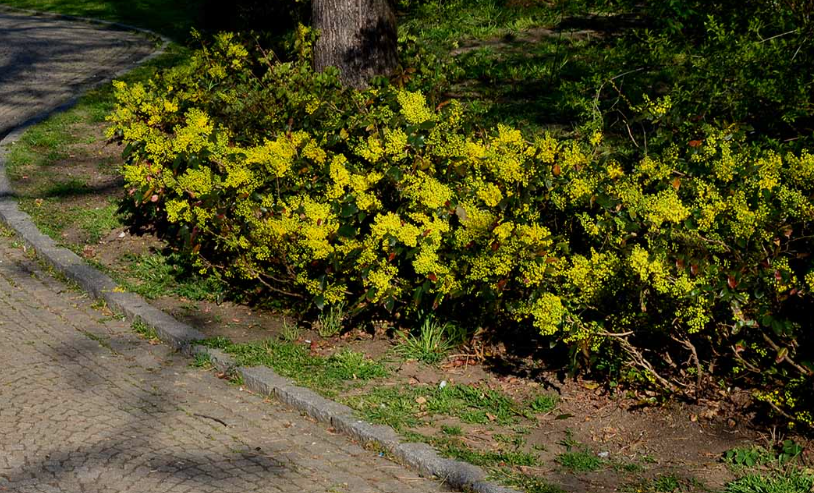
Compact Oregon grape is a dwarf form of the native Oregon grape. It has the same glossy, spiny leaflets and bright yellow spring flowers. Its new leaves often emerge with bronze or reddish tints. The plant forms a low, dense mound about 2 to 3 feet tall. It spreads slowly into a neat patch.
Its small size makes it ideal for foundation plantings, borders and shady slopes. It holds its leaves through winter and often turns purple-bronze in cold weather. It tolerates dry shade under trees better than many shrubs. Birds feed on its blue berries in summer. It is a selection of a species native to the Pacific Northwest and is grown in gardens across the western and northern United States.
3. Creeping Mahonia
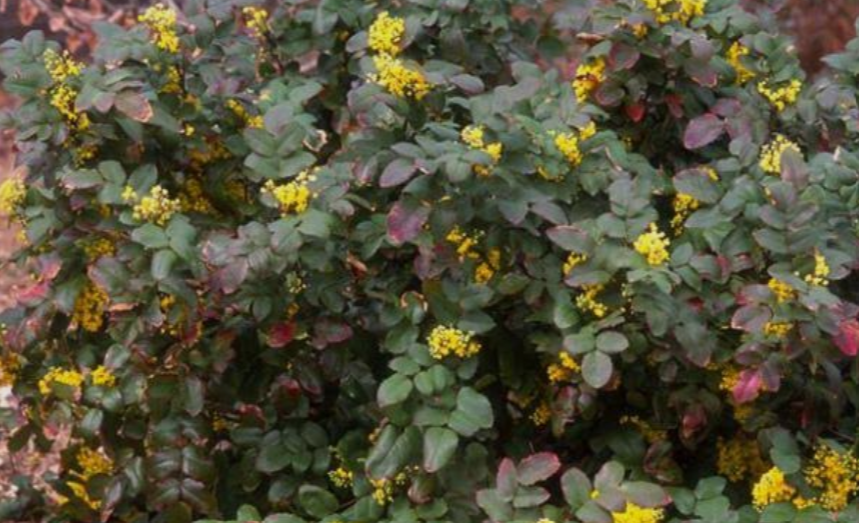
Creeping mahonia is a low, spreading mahonia that works as a groundcover. Its leaves have fewer and wider leaflets than Oregon grape. They are dull blue-green and often turn red or purple in winter. Yellow flowers appear in spring, followed by blue berries. The plant usually stays only 8 to 12 inches tall.
It spreads steadily by underground stems to form a dense carpet. It tolerates shade, drought and poor soil once established. It is an excellent choice for dry slopes and woodland gardens in the West. Native peoples used its roots to make a yellow dye. It is native to the Rocky Mountains and other ranges of the western United States and southwestern Canada.
4. Cascade Oregon Grape
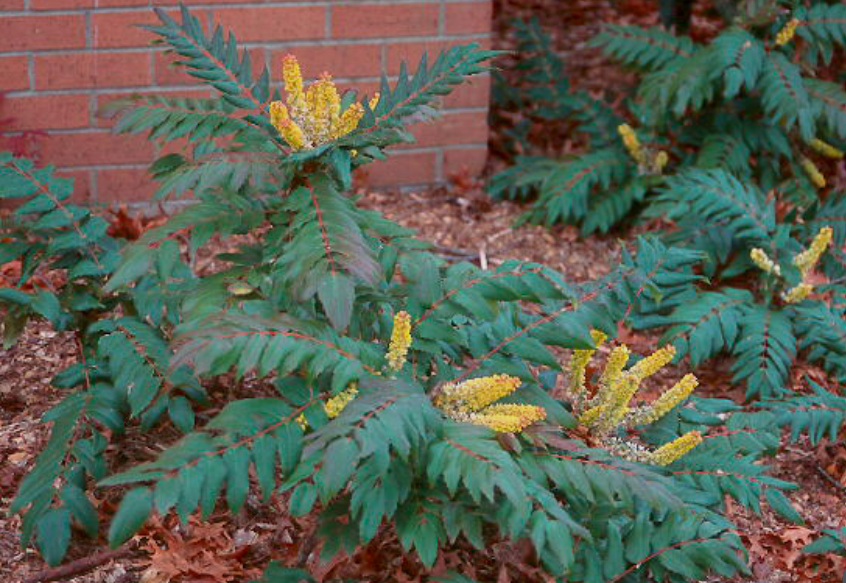
Cascade Oregon grape is a forest-floor mahonia of the Pacific Northwest. Its leaves are long and divided into as many as 21 leaflets. The leaflets are dull green rather than glossy, which earned it the name dull Oregon grape. Yellow flowers rise on upright spikes in spring. Blue berries follow in summer.
It grows only 1 to 2 feet tall and spreads slowly. It thrives in the deep shade of conifer forests. It is a good choice for woodland gardens and shady native plantings. Its berries are eaten by birds and small mammals. It is native to the forests of the Pacific Coast, from British Columbia to northern California.
Also Read: Different Types of Ninebark Shrubs For Landscaping
5. Leatherleaf Mahonia
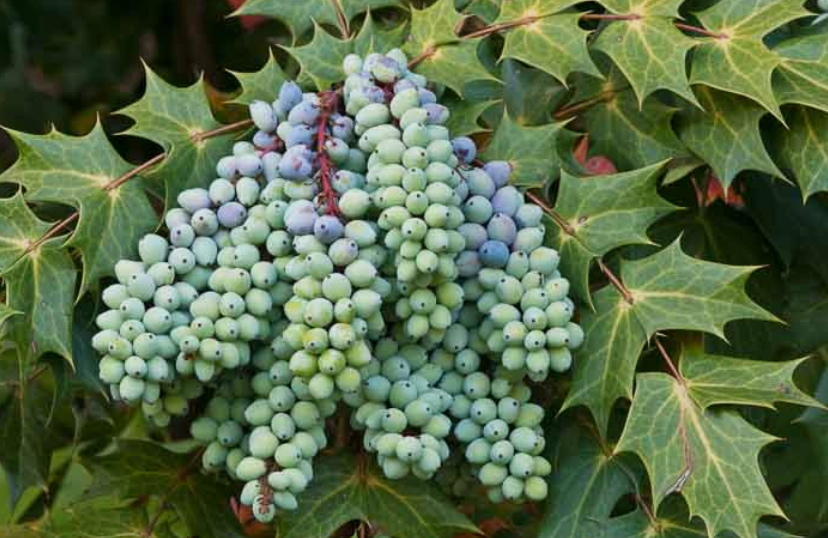
Leatherleaf mahonia is a large Asian mahonia with bold, stiff foliage. Its leaves can reach 18 inches long and are divided into broad, spiny leaflets. Fragrant, lemon-yellow flowers appear in upright clusters in late winter. They are followed by blue-black berries in spring. The shrub grows 5 to 10 feet tall with a coarse, upright form.
It has escaped cultivation and become invasive in many parts of the Southeast. Birds spread its seeds into woodlands, where it crowds out native plants. Several states list it as an invasive or emerging threat. Gardeners in the Southeast are often encouraged to choose native or non-invasive alternatives. It is native to central and eastern China and has naturalized from Maryland and Tennessee south to Georgia and the Gulf Coast.
6. Japanese Mahonia
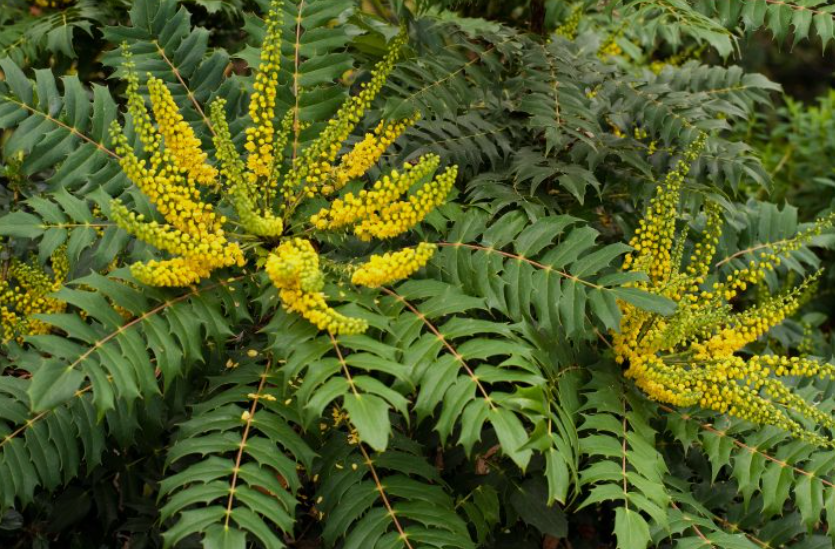
Japanese mahonia is a winter-flowering mahonia with especially fragrant blooms. Its pale yellow flowers hang in long, arching sprays. They have a sweet scent often compared to lily of the valley. Its leaves are dark green and spiny, turning red in cold weather. The shrub grows 4 to 7 feet tall.
It blooms from late fall through winter, providing nectar when little else is flowering. Its blue-black berries ripen in spring. It grows best in shade and moist, well-drained soil. Despite its name, it likely originated in Taiwan and China and was long grown in Japan. It is grown in gardens in the Pacific Northwest, the Mid-Atlantic and the upper South.
7. Charity Mahonia
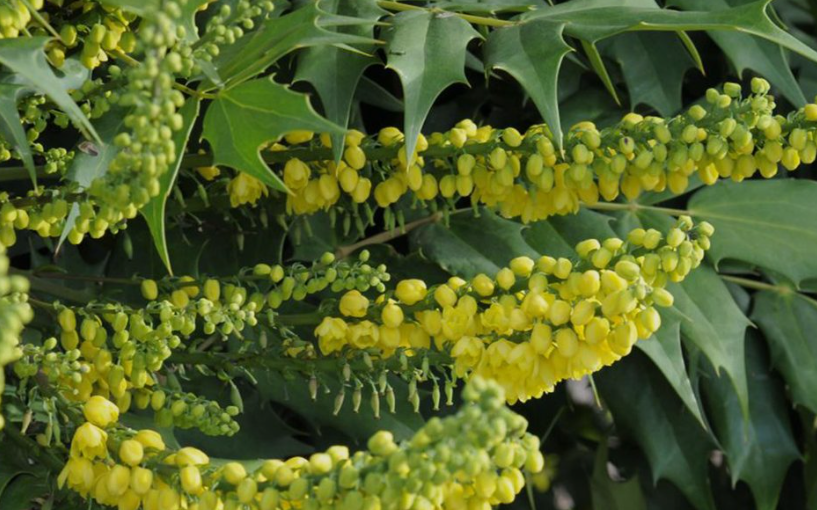
Charity is one of the most popular hybrid mahonias. It forms a tall, upright shrub with long, spiny leaves arranged in whorls. Its bright yellow flowers bloom in long, upright spikes. Flowering often starts in late fall and continues into early spring. The shrub can reach 10 feet tall.
It is a hybrid between Japanese mahonia and a taller Asian species. Its flowers are lightly fragrant and attract hummingbirds and bees in winter. It grows best in partial shade with protection from cold winds. It is hardy to about zone 7. It is grown in gardens in the Pacific Northwest, the Mid-Atlantic and the Southeast.
8. Winter Sun Mahonia
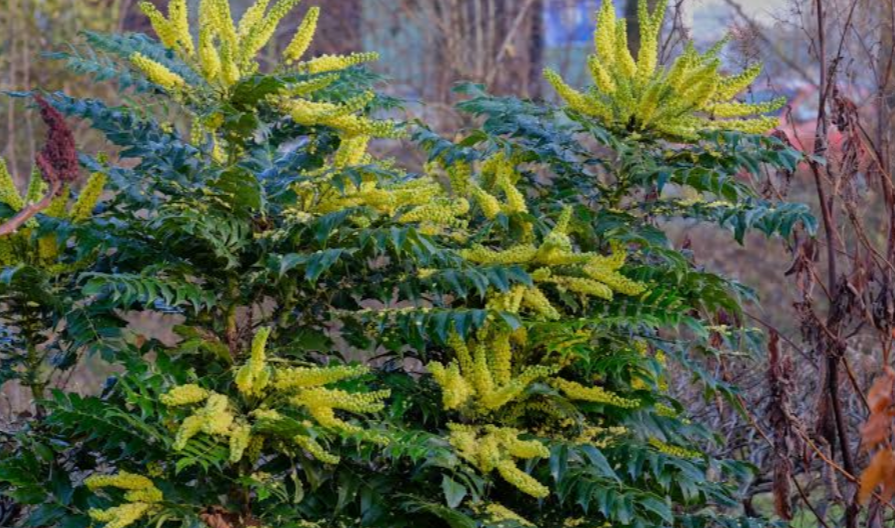
Winter Sun is a hybrid mahonia closely related to Charity. Its flower spikes arch outward instead of standing straight up. The flowers are bright yellow and lightly fragrant. Its leaves are long, glossy and spiny. The shrub forms a tall, upright clump.
It blooms in late fall and winter, adding color to shady gardens. It is slightly more compact than Charity. Its flowers attract hummingbirds where they overwinter. It grows best in partial shade and moist, well-drained soil. It is grown in gardens in mild-winter regions such as the Pacific Northwest and the Southeast.
Also Read: Best Companion Plants for Mahonia
9. Lionel Fortescue Mahonia
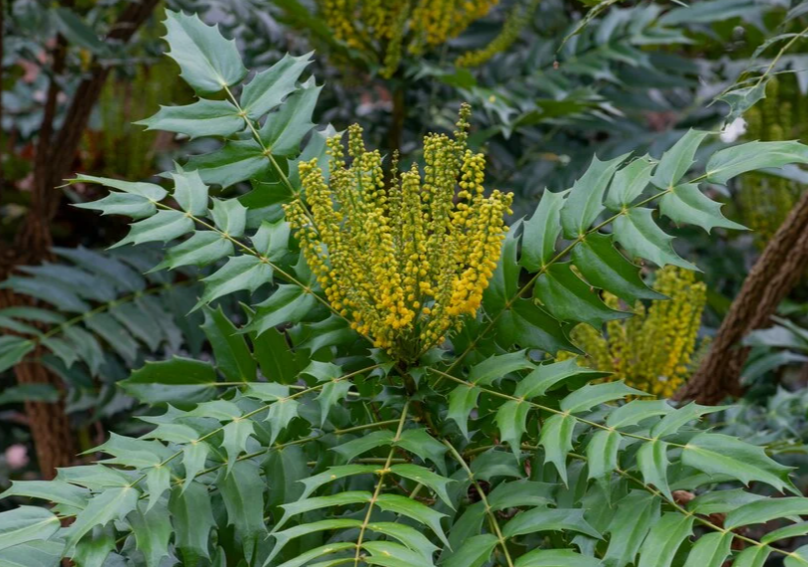
Lionel Fortescue is a tall hybrid mahonia with showy winter flowers. Its upright spikes of bright yellow flowers stand above the foliage like candles. Its leaves are long and divided into many spiny leaflets. The shrub grows 8 to 10 feet tall. It has a bold, architectural form.
It is valued for its long flowering season in late fall and winter. Its flowers are lightly fragrant and attract pollinators. It suits large shady borders and woodland gardens. It needs shelter from harsh winter winds. It was raised in England and is grown in mild-climate gardens in the United States and Europe.
10. Arthur Menzies Mahonia
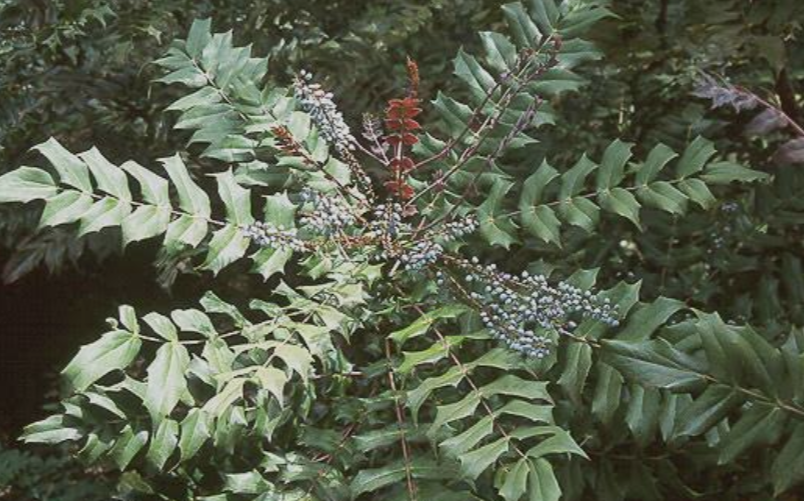
Arthur Menzies is a tall hybrid mahonia noted for its cold hardiness. Its upright flower spikes are lemon-yellow and bloom in winter. Its leaves are long, glossy and spiny. The shrub grows 8 to 12 feet tall with a strong, upright habit. Blue berries follow the flowers.
It is considered one of the hardier tall hybrid mahonias. It blooms from early winter into early spring. Its flowers are visited by hummingbirds in mild climates. It grows best in partial shade and moist soil. It was raised in the Pacific Northwest and is grown in gardens in Washington, Oregon and other mild regions.
11. Soft Caress Mahonia
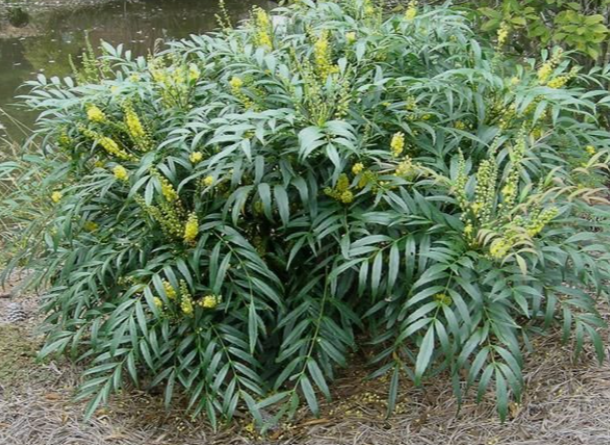
Soft Caress is a spineless mahonia with fine, fern-like leaves. Its narrow leaflets are soft to the touch and lack the sharp spines of most mahonias. Bright yellow flowers appear in upright spikes in late summer and fall. Blue berries follow in winter. The shrub grows about 3 to 4 feet tall.
It was introduced in 2002 and quickly became one of the most popular mahonias. Its soft foliage makes it safe near walkways, patios and children’s play areas. It grows well in partial shade and works in containers. It is hardy to about zone 7. It is a selection of a species native to China and is grown in gardens across the southern and mid-Atlantic United States.
12. Marvel Mahonia
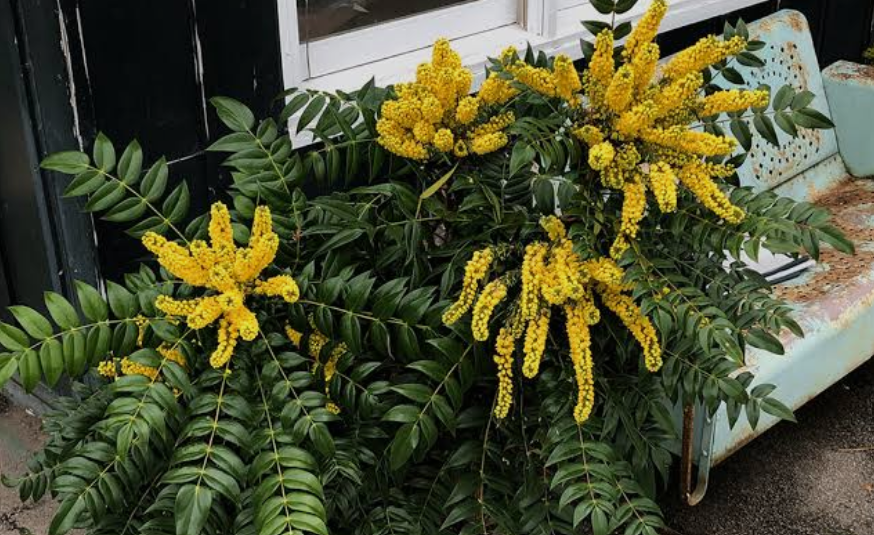
Marvel is a compact, spineless mahonia similar to Soft Caress. Its leaves are narrow, soft and glossy green. Its yellow flowers rise in upright spikes in fall. The flowers stand above the foliage, making them more visible than on some mahonias. Blue berries follow in winter.
It grows about 3 to 4 feet tall and wide. It suits containers, small gardens and shady borders. Its soft foliage makes it easy to place near paths. It grows best in partial shade with steady moisture. It is a newer garden selection grown in the southern and mid-Atlantic United States.
13. Fortune’s Mahonia
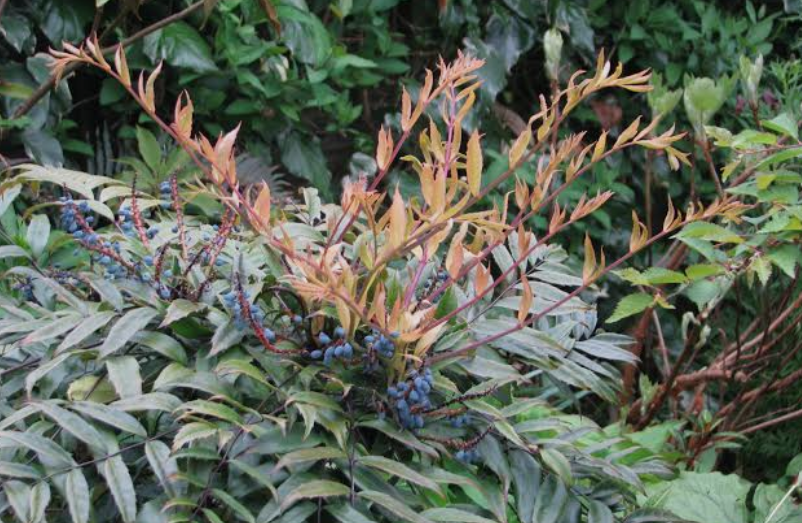
Fortune’s mahonia is an Asian mahonia with narrow, nearly spineless leaflets. Its leaves are long and slender, giving the plant a fine texture. Small yellow flowers bloom in upright spikes in fall. Dark blue berries follow in winter. The shrub grows 4 to 6 feet tall.
It is one of the oldest mahonias in cultivation in China. Its soft leaves make it easier to handle than spiny types. It grows well in shade and moist soil. It is less cold-hardy than many mahonias. It is native to China and is grown in mild-climate gardens in the southern United States.
14. Burmese Mahonia
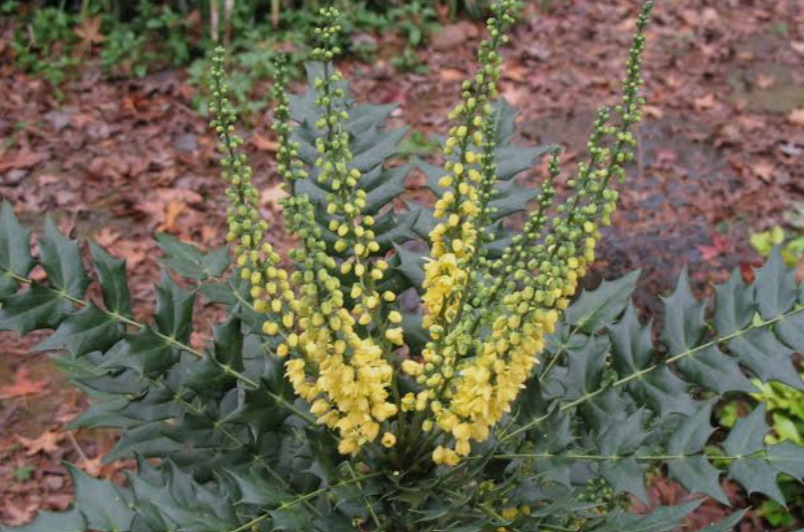
Burmese mahonia is a tall Asian mahonia with long, elegant leaves. Its leaves can have 20 or more narrow, spiny leaflets. Bright yellow flowers bloom in dense, upright spikes in winter. The plant grows on tall, sparsely branched stems. It can reach 10 to 15 feet tall.
It is a parent of several popular hybrid mahonias. Its dramatic foliage gives it a tropical look. It is less cold-hardy than most mahonias. It grows best in sheltered, shady spots in mild climates. It is native to Myanmar and southwestern China and is grown in mild coastal gardens in the United States.
15. Agarita Mahonia
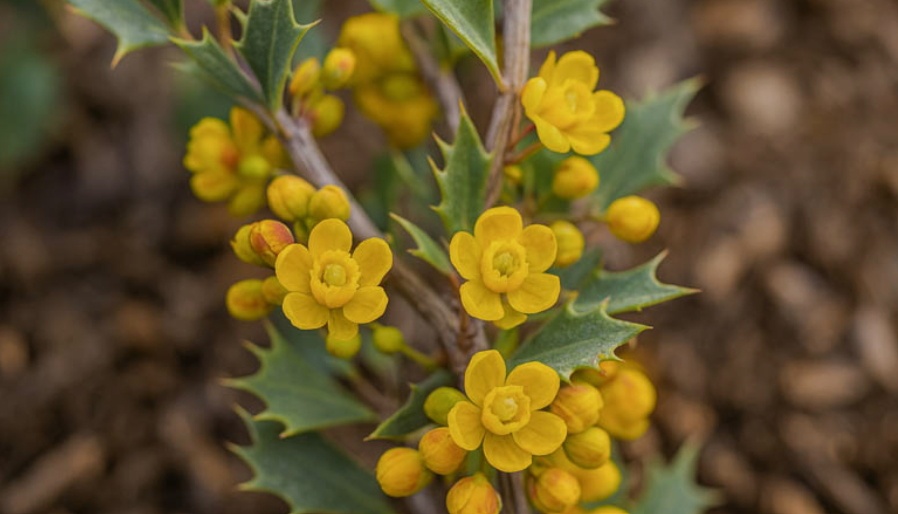
Agarita is a tough native mahonia of the dry Southwest. Its leaves have only three stiff, sharply spined leaflets. They are gray-green to blue-green. Fragrant yellow flowers bloom in late winter and early spring. Bright red berries follow in late spring.
It grows 3 to 6 feet tall and forms dense, thorny thickets. It tolerates heat, drought and rocky, alkaline soils. Its berries are made into jelly and wine and are eaten by birds and wildlife. Its thick growth provides shelter for quail and small animals. It is native to Texas, New Mexico, Arizona and northern Mexico.
Sources
University of Florida, “Mahonia”
University of Florida, “The Mahonia Debate”
Virginia Tech, “Oregon Grape Holly”
University of Arizona, “Oregon Grape and its Native Relatives”