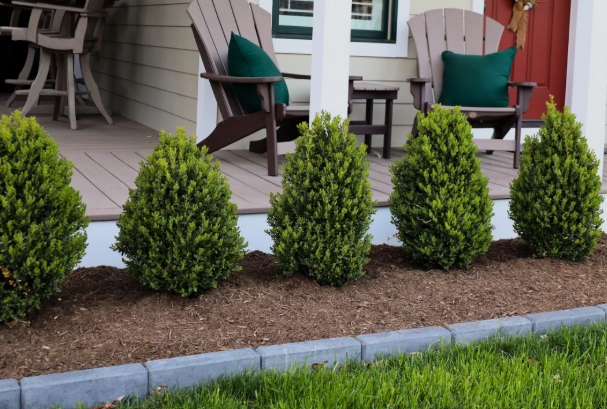
The best boxwood varieties for Zone 3 gardens are the toughest, most cold-hardy boxwoods ever bred. Even these shrubs are at the very edge of their range in Zone 3. That zone covers northern Minnesota, much of North Dakota, northern Wisconsin and Michigan, parts of Montana, Wyoming, and the high-elevation Rockies, and northern Maine. There, winter lows typically fall to –30°F to –40°F. Most boxwoods are rated only to Zones 5 or 6, and even the hardiest varieties are usually rated to Zone 4.
Honesty matters here: no common boxwood variety is reliably hardy throughout Zone 3 without help. Gardeners who succeed with boxwood in Zone 3 do so by choosing the hardiest Korean and hybrid types. They also plant in protected microclimates and rely on deep, consistent snow cover to insulate the shrubs through the coldest weeks. In a year with little snow and extreme cold, even the toughest boxwoods can suffer serious dieback.
Snow is the Zone 3 gardener’s best ally. University of Minnesota Extension notes that the roots of most trees and shrubs die when soil temperatures drop to between 0°F and 10°F. It also notes that snow cover and mulch act as insulators that keep soil warmer. Low, mounding boxwoods that stay buried under snow all winter have a far better chance of survival than tall shrubs exposed to wind.
The 7 boxwoods below have the best track record in the coldest northern gardens. For the greatest chance of success, plant them on the north or east side of a building, out of the winter wind. Mulch them well, and add burlap screens in exposed spots. In especially harsh areas, consider growing them in large containers that can be moved to a sheltered spot for winter.
1. Korean Boxwood
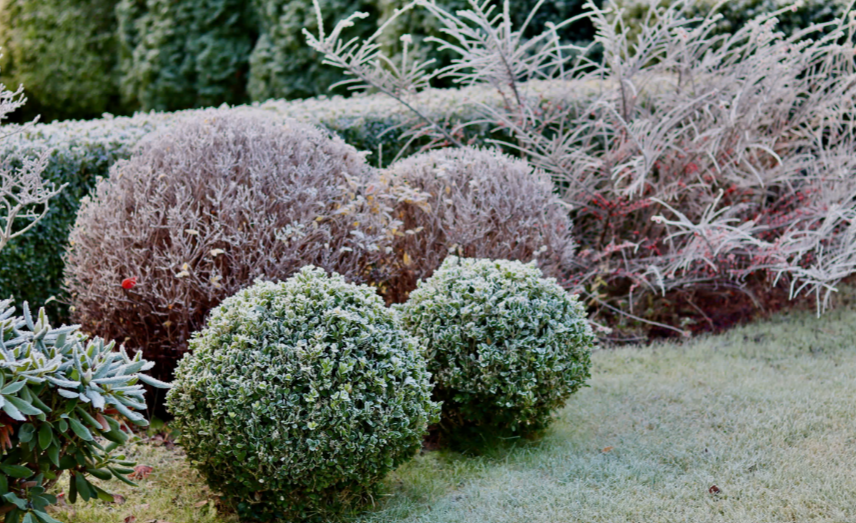
Korean boxwood is the hardiest boxwood species and the foundation of nearly every cold-hardy boxwood variety. It forms a low, broad, open mound, often twice as wide as it is tall, with small, bright green leaves. It typically grows 2 to 3 feet tall and 4 to 5 feet wide. Its low, spreading habit is an advantage in Zone 3, because the whole plant is more easily covered by snow.
Korean boxwood is generally rated to Zone 4 and has been reported surviving temperatures of –20°F to –25°F. Its leaves turn bronze to orange-brown in winter, then green up again in spring. It needs protection from drying winter winds. In Zone 3, it is best planted in a sheltered location where snow drifts and stays through winter.
2. Wintergreen
‘Wintergreen’ is a Korean boxwood selected at Scarff Nursery in Ohio for improved winter color in northern climates. It forms a dense, rounded shrub 2 to 4 feet tall and 3 to 5 feet wide. Its small, bright green leaves hold their color better through winter than the straight species. It is one of the most popular boxwoods in northern gardens.
‘Wintergreen’ is rated to Zone 4 and is one of the few boxwoods regularly recommended for the coldest parts of the Upper Midwest. University of Wisconsin–Madison Extension lists it among boxwoods documented as resistant to boxwood blight. In Zone 3, plant it in a protected location with good snow cover. It may develop yellow-green or bronze tints in very cold, sunny, windy sites.
3. Winter Gem
‘Winter Gem’ is another very hardy Korean boxwood. It is known for its vigor, dense growth, and ability to withstand cold winters. It forms a rounded shrub 3 to 4 feet tall and wide with glossy, deep green leaves. It grows faster than many boxwoods, which helps it recover more quickly from winter damage.
‘Winter Gem’ is generally rated to Zone 4 and is one of the most widely planted cold-hardy boxwoods. It has also been documented as resistant to boxwood blight. In Zone 3, its foliage often bronzes in winter, especially in exposed locations, but it typically greens up in spring. Planting it on the north or east side of a building greatly improves its chances.
4. Northern Charm
Northern Charm, sold under the cultivar name ‘Wilson’, was introduced through the Chicagoland Grows program for its exceptional winter hardiness. It forms a compact, oval to rounded shrub about 2 to 3 feet tall and wide. Its glossy, emerald-green leaves hold their color better in cold weather than many other boxwoods. Its compact size makes it easy to protect in harsh climates.
Northern Charm is rated to Zone 4 and is among the boxwoods most often recommended for the far northern United States. Its small, dense form fits well into foundation plantings and low hedges. In Zone 3, it performs best when planted where snow accumulates and protects it through the coldest periods. Its compact size also makes it a good choice for containers.
5. Green Velvet
‘Green Velvet’ is one of the famous Sheridan hybrids, developed in Ontario, Canada, from crosses between Korean and English boxwood. It combines the hardiness of Korean boxwood with the richer winter color of English boxwood. It forms a rounded shrub about 3 feet tall and 4 feet wide. Its deep green leaves resist bronzing better than most hardy boxwoods.
‘Green Velvet’ is generally rated to Zone 4. Its Canadian breeding gives it a strong track record in cold northern gardens. In Zone 3, it needs a sheltered site and dependable snow cover to survive the coldest winters. Burlap screens on the windward side help protect it from winter burn.
6. Green Gem
‘Green Gem’ is a slow-growing Sheridan hybrid that forms a tight, naturally round globe. It typically grows only 2 to 3 feet tall and wide. Its small, deep green leaves stay green through winter better than many hardy boxwoods. Its compact size makes it one of the easiest boxwoods to protect in Zone 3.
‘Green Gem’ is rated to Zone 4 and is considered one of the hardiest Sheridan hybrids. It has also been documented as resistant to boxwood blight. In Zone 3, its low profile allows it to be fully buried by snow in most winters. That provides excellent natural protection.
7. Chicagoland Green
Chicagoland Green, sold under the cultivar name ‘Glencoe’, was selected at the Chicago Botanic Garden for its cold hardiness and winter color. It forms a dense, rounded shrub 3 to 4 feet tall and up to 5 feet wide. Its glossy, medium green leaves resemble those of English boxwood. It holds its color well in most cold winters.
Chicagoland Green is generally rated to Zone 4b. It is a good choice for the warmest, most sheltered parts of Zone 3, such as urban gardens or spots protected by buildings. It is more susceptible to boxwood leafminer than many other boxwoods, so inspect it regularly. In Zone 3, it needs good snow cover and protection from wind to survive.
Sources
University of Minnesota Extension, “Protecting Trees and Shrubs in Winter”
North Dakota State University Extension, “Dakota Gardener: Winter Insulation”
Iowa State University Extension and Outreach, “Managing Winter Injury to Boxwood”