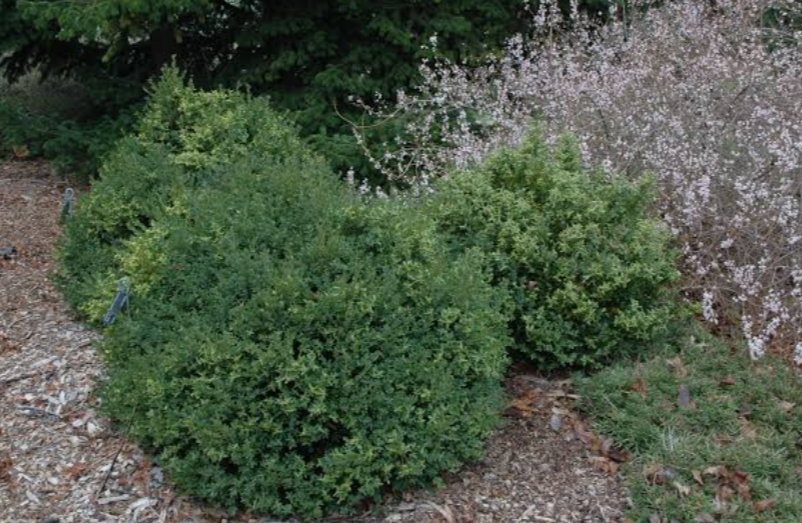
Northern Charm Boxwood: The Compact, Cold-Hardy Boxwood From Northern Illinois
Northern Charm boxwood is a compact, cold-hardy evergreen shrub selected in northern Illinois for gardens where winters are too harsh for most boxwoods. It forms a dense, oval to rounded mound of small, glossy green leaves, with a fine texture that recalls Korean boxwood. It is dependable through cold Midwestern winters, so it has become a popular choice for low hedges, foundation plantings, and formal borders across the northern United States.
Northern Charm is sold under the cultivar name ‘Wilson’, a nod to the Illinois nursery where it was discovered. It is one of a small group of boxwoods introduced through the Chicagoland Grows program, which also produced the well-known Chicagoland Green boxwood. This guide covers its origin, appearance, landscape uses, and care, along with how it compares with similar cold-hardy boxwoods.
Botanical Classification
Northern Charm is a broadleaf evergreen shrub in the boxwood family, a small group of slow-growing shrubs and small trees prized for their dense, fine-textured foliage. Like most modern cold-hardy boxwoods, it is a hybrid. The Morton Arboretum notes that boxwood cultivars have confusing parental categories and that all of them are hybrids. The exact parentage of Northern Charm has not been widely published.
Its fine foliage and compact growth show a strong resemblance to Korean boxwood, the hardiest boxwood species and the parent of many cold-tolerant varieties. That similarity explains much of its winter toughness. Northern Charm is often grouped with other cold-hardy boxwoods such as Chicagoland Green, ‘Green Velvet’, ‘Green Gem’, and ‘Wintergreen’. All of them are recommended for northern gardens where traditional English and American boxwoods struggle.
Brief History
Northern Charm was selected from a block of seedlings at Wilson Nurseries in Hampshire, Illinois, northwest of Chicago. Seedlings grown in this region face bitter cold, strong winter winds, and wide temperature swings. Plants that remain healthy and attractive under those conditions are well suited to northern landscapes. Northern Charm stood out for its hardiness, compact form, and refined foliage.
The variety was introduced through Chicagoland Grows, a plant introduction program founded in 1986 by the Chicago Botanic Garden, the Morton Arboretum, and the Ornamental Growers Association of Northern Illinois. The program evaluates and promotes plants that perform well in the demanding climate of the Chicago region. Northern Charm became one of its signature boxwoods, alongside Chicagoland Green. Today it is sold by nurseries throughout the Midwest, the Northeast, and parts of Canada.
Identifying Characteristics
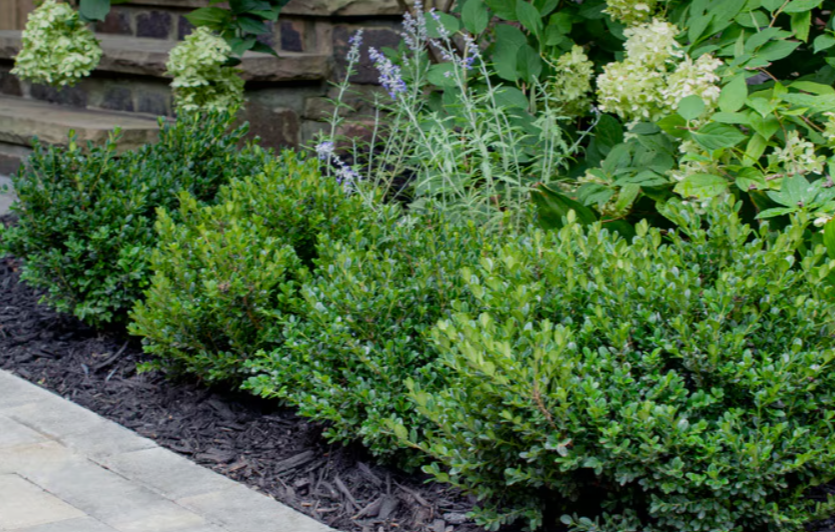
Northern Charm forms a dense, compact shrub with an oval to rounded shape. The Morton Arboretum describes it as 2 to 3 feet high and wide. Some nurseries report mature plants reaching 3 to 4 feet tall and 4 to 5 feet wide over many years, depending on growing conditions and pruning. It fills out all the way to the ground, so it rarely needs shorter plants in front to hide bare lower stems.
The leaves are small, oval, and glossy, arranged in opposite pairs and packed closely along the stems. Their small size gives the shrub a fine, elegant texture that suits formal hedges and borders. The foliage holds its green color well in winter, though plants in exposed, sunny, windy sites may show some bronzing. In spring, tiny pale green flowers appear among the leaves, attracting early bees with their light fragrance.
Northern Charm grows at a moderate rate, slightly faster than some slow-growing boxwoods such as ‘Green Gem’. Under good conditions, it can be expected to live for about 30 years or more. Its tidy, uniform growth habit makes it easy to keep neat with occasional shearing.
Also Read: Best Boxwood Varieties for Zone 3 Gardens
Hardiness and Climate
Northern Charm is rated hardy to Zone 4, with some sources listing it from Zone 4b through Zone 8. That makes it one of the hardiest boxwoods available and well suited to much of the northern United States, including Minnesota, Wisconsin, Michigan, Iowa, and northern Illinois. It also performs well in warmer regions with cold winters, though it is most valuable where cold hardiness is the top priority.
Like all boxwoods, Northern Charm can suffer winter burn in harsh, exposed locations. Bright sun and dry winter winds pull moisture from the leaves while the ground is frozen, causing browning. University of Minnesota Extension recommends placing marginally hardy plants in sheltered locations and notes that snow cover insulates plants from wind and sub-zero temperatures. In the coldest areas, a north- or east-facing site with dependable snow cover gives Northern Charm the best chance of staying green and healthy.
Landscape Uses
Northern Charm is an excellent choice for low formal hedges, edging, and borders in northern gardens. Its compact size and dense growth make it ideal for lining walkways, defining garden beds, and framing patios and entrances. It responds well to shearing and can be kept as a crisp low hedge or allowed to grow into soft, rounded mounds.
It also works well as a foundation shrub, providing year-round green structure along the base of homes. Its modest size fits small yards, urban gardens, and tight spaces where larger boxwoods would quickly outgrow their place. It is well suited to large containers, window boxes, and planters on porches and patios, though container plants need extra winter protection in cold climates.
Northern Charm pairs well with flowering perennials, ornamental grasses, and spring bulbs. It provides an evergreen backbone that keeps garden beds looking structured through winter. Like most boxwoods, it is generally avoided by deer, which makes it useful in suburban and rural landscapes where wildlife browsing is a concern.
Growing Considerations
Plant Northern Charm in spring or early fall in a site with moist, well-drained soil. It adapts to a range of soil types, including slightly acidic and slightly alkaline soils, but it needs good drainage to prevent root rot. It grows well in full sun to partial shade. Afternoon shade in hot summers and shelter from winter winds help keep the foliage at its best.
Northern Charm does not tolerate drought well, so consistent moisture is important. Water new plants deeply once or twice a week during their first growing season. Once established, give them about 1 inch of water per week during dry weather. Spread 2 to 3 inches of mulch over the root zone to conserve moisture and keep the shallow roots cool, keeping mulch a few inches away from the stems.
Fertilize lightly in early spring if growth seems weak, and avoid feeding after midsummer. Prune in late spring or early summer, after new growth has hardened, to shape hedges and maintain a tidy form. Avoid heavy pruning in late summer or fall, which can encourage tender growth that is easily damaged by winter cold.
Winter Protection
Fall watering is one of the most important ways to protect Northern Charm in cold climates. Give plants a deep soaking in late fall before the ground freezes so they enter winter well hydrated. In exposed locations, a burlap screen on the windward and sunny sides helps reduce winter burn. Leave space between the burlap and the plant, and avoid wrapping it tightly.
After heavy snowfalls, gently brush snow from the branches, sweeping upward to avoid breaking stems. Avoid piling salty snow from driveways and sidewalks on top of plants. In spring, wait until new growth begins, then prune out any dead or damaged branches back to healthy green wood.
Also Read: Best Boxwood Varieties For Hedges
Pests and Diseases
Northern Charm is generally a tough, low-maintenance shrub. Like all boxwoods, however, it can be affected by several common pests and diseases. Boxwood leafminer, boxwood mites, and boxwood psyllids may cause blistered, speckled, or cupped leaves. Regular inspection in spring and early summer helps catch problems early.
Boxwood blight is a serious fungal disease that can cause rapid leaf drop and dieback. Northern Charm is not among the varieties most widely documented as blight resistant. Gardeners in areas where blight is present should plant it with good spacing, avoid overhead watering, and inspect plants regularly. Northern Charm is also susceptible to the box tree moth, an invasive caterpillar now spreading through parts of the Midwest and Northeast, so watch closely for chewed leaves, webbing, and caterpillars.
Sources
The Morton Arboretum, “Boxwood”
International Society for Horticultural Science, “The Chicagoland Grows Plant Introduction Program”
University of Minnesota Extension, “Protecting Trees and Shrubs in Winter”
University of Wisconsin–Madison Extension, “Boxwood Blight”
Iowa State University Extension and Outreach, “Managing Winter Injury to Boxwood”