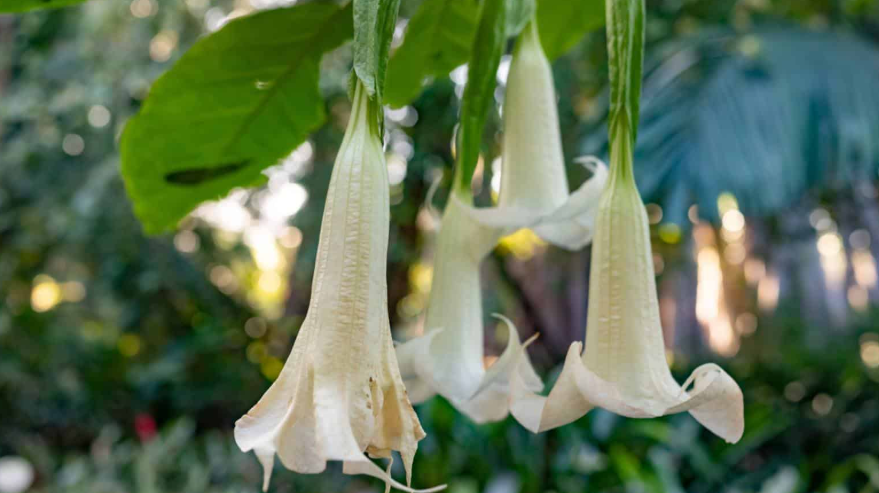
Nature is a master architect, and among its most elegant recurring designs is the bell-shaped flower. Graceful, nodding, and often richly colored, bell-shaped blooms have evolved independently across dozens of plant families, appearing in habitats as diverse as alpine meadows, tropical rainforests, woodland floors, and coastal cliffs. Their distinctive tubular-to-flared form is not merely decorative — it is a highly effective pollination strategy, guiding bees, hummingbirds, and other long-tongued pollinators directly to the nectar within.
Botanists refer to bell-shaped flowers as campanulate, from the Latin word campana, meaning bell. This form appears so consistently across the plant kingdom that an entire plant family — the Campanulaceae — takes its name from it, containing over 2,400 species. Yet bell-shaped flowers are found far beyond this single family, appearing in genera ranging from Lilium to Digitalis, Hyacinthoides to Fritillaria, spanning nearly every corner of the globe.
The appeal of bell flowers in garden design is considerable. Their nodding, pendant habit gives them a sense of gentle movement and delicacy that upright flowers cannot match. Many are shade-tolerant, making them invaluable for woodland gardens, shaded borders, and the dappled light beneath trees where few other flowering plants thrive. Studies suggest that nodding, bell-shaped flowers are among the most effective at protecting their pollen from rain damage, giving them a significant reproductive advantage in wet climates.
From the towering spires of foxgloves to the tiny, jewel-like bells of lily of the valley, this flower form encompasses some of the most beloved plants in cultivation. Whether you garden in a cool temperate climate, a warm Mediterranean zone, or a tropical region, there are bell-shaped flowers perfectly suited to your conditions and aesthetic.
Bluebell (Hyacinthoides non-scripta)
The English Bluebell is one of the most iconic bell-shaped wildflowers in the world, producing slender, arching stems hung with nodding, violet-blue bells of extraordinary delicacy and sweetness. It grows 8 to 12 inches tall and blooms in April and May, carpeting ancient woodland floors in a haze of blue that is considered one of Britain’s most spectacular natural phenomena. The United Kingdom is home to approximately 50% of the world’s total population of English Bluebells.
Also Read: Tallest Perennial Flowers For Pots And Containers
Foxglove (Digitalis purpurea)
Foxglove produces tall, majestic spires densely packed with pendant, tubular bells in shades of purple, pink, white, cream, and yellow, each with intricate spotted markings inside the throat. It grows 3 to 5 feet tall and is one of the most recognizable bell-flowered plants in cultivation. Beyond its garden value, foxglove has profound medical significance — the heart medication digitalis, derived from this plant, has saved millions of lives since its discovery in the 18th century.
Campanula (Campanula persicifolia)
Peach-leaved Bellflower is one of the most elegant members of the bellflower family, producing tall, wiry stems bearing open, saucer-to-bell-shaped flowers in shades of blue, violet, and white. It grows 2 to 3 feet tall and blooms prolifically from early to midsummer, self-seeding gently to naturalize in borders and cottage gardens. The Campanulaceae family, to which it belongs, contains over 2,400 species distributed across every continent except Antarctica.
Lily of the Valley (Convallaria majalis)
Lily of the Valley produces dainty, perfectly formed white bells hanging in a row from arching stems just 6 to 8 inches tall, accompanied by broad, dark green leaves. It is one of the most intensely fragrant of all bell-shaped flowers, and its scent is among the most replicated in the perfume industry worldwide. It is the national flower of Finland and has been a traditional wedding flower for centuries, famously carried in royal wedding bouquets including that of Princess Kate in 2011.
Fritillary (Fritillaria meleagris)
Snake’s Head Fritillary produces solitary, nodding bells in a remarkable checkerboard pattern of purple and white or pure white on slender stems 8 to 12 inches tall. Each flower is exquisitely marked, with a tessellated pattern so distinctive that it has given the plant its common name — fritillus is Latin for dice-box. It blooms in April and May in damp meadows and is considered one of Britain’s most beautiful native wildflowers.
Harebell (Campanula rotundifolia)
Harebell is a delicate, wiry-stemmed wildflower that produces small, nodding, lavender-blue bells of great charm and simplicity on plants just 6 to 15 inches tall. It is one of the most widely distributed bell-shaped wildflowers in the Northern Hemisphere, growing from sea level to high alpine elevations across Europe, Asia, and North America. In Scotland, it is known as the Scottish Bluebell and is deeply embedded in folklore and national identity.
Also Read: Perennials With Large Flowers
Hyacinth (Hyacinthus orientalis)
Hyacinth produces dense, upright spikes packed with small, individual bell-shaped florets in shades of blue, purple, pink, red, white, and yellow, each with reflexed petal tips forming a classic bell outline. They grow 8 to 12 inches tall and are among the most intensely fragrant of all spring bulbs — a single potted hyacinth can scent an entire room. Over 2,000 hyacinth cultivars have been developed since the plant’s introduction to Europe from Turkey in the 16th century.
Snowdrop (Galanthus nivalis)
Snowdrop produces small, perfectly formed pendant bells of pure white, with inner petals delicately marked with green, on slender stems just 3 to 6 inches tall. It is among the first flowers to bloom each year, often pushing through frozen ground in January and February. There are over 500 named snowdrop cultivars — a collecting passion known as galanthomania — with rare double varieties selling at auction for hundreds of pounds per bulb.
Fuchsia (Fuchsia magellanica)
Hardy Fuchsia produces elegantly pendant, two-toned bell flowers with flared outer sepals and a contrasting inner tube in combinations of red and purple, white and purple, and pink and white. They grow as shrubs 3 to 10 feet tall and bloom prolifically from midsummer through autumn. There are over 110 species of fuchsia native to Central and South America, and more than 8,000 named cultivars have been developed for garden use.
Penstemon (Penstemon digitalis)
Penstemon produces tubular, flared bells in shades of white, pink, red, purple, and bicolor on upright stems 2 to 4 feet tall, with the flared, open mouth of each flower giving them an unmistakably bell-like appearance. They are exceptionally attractive to hummingbirds and long-tongued bumblebees and bloom reliably from early summer through early autumn. There are approximately 250 species of penstemon, nearly all of them native to North America, making it one of the largest endemic North American flowering genera.
Angel’s Trumpet (Brugmansia arborea)
Angel’s Trumpet produces some of the largest and most dramatic bell-shaped flowers in the plant world, with enormous, pendant trumpets up to 12 inches long in shades of white, yellow, peach, pink, and orange hanging from shrubs or small trees that can reach 10 to 15 feet tall. The flowers open in the evening and release a powerful, intoxicating fragrance that carries on the night air. All parts of the plant are toxic, containing tropane alkaloids that have been used ceremonially by indigenous Andean cultures for centuries.
Bluebell of Scotland (Campanula rotundifolia)
Closely related to the common harebell but with regional cultural significance specific to Scotland, this delicate wildflower produces nodding, vibrant blue-violet bells on wiry stems 6 to 12 inches tall across rocky hillsides, moorlands, and coastal cliffs. It blooms from June through September and is remarkably adaptable, growing in soils ranging from nutrient-poor acid moorland to thin chalk downland. Its association with Scottish identity and landscape makes it one of the most symbolically significant of all bell-shaped wildflowers.
Also Read: Flowers to Plant In June
Spanish Bluebell (Hyacinthoides hispanica)
Spanish Bluebell produces robust, upright spikes of broadly bell-shaped flowers in blue, white, and pink on sturdy stems 12 to 18 inches tall. Unlike its slender English cousin, it holds its bells more upright and open, with a slightly wider, more open bell shape. It naturalizes vigorously and can colonize large areas under trees and in borders within just a few years, producing impressive drifts of spring color with minimal maintenance.
Snowbell (Styrax japonicus)
Japanese Snowbell is a graceful small tree that produces masses of pendant, pure white bell-shaped flowers with yellow stamens hanging from horizontal branches in early summer. It grows 20 to 30 feet tall and is considered one of the most elegant of all flowering trees for temperate gardens. When in full bloom, the underside of the canopy is completely covered in hanging white bells, creating a breathtaking effect when viewed from below.
Leucojum (Leucojum aestivum)
Summer Snowflake produces clusters of nodding, white bells tipped with distinctive green spots on stems 12 to 18 inches tall, blooming in spring despite its common name. Each flower hangs gracefully on a slender pedicel, giving the whole plant an airy, delicate quality. It naturalizes readily in damp meadows and beside water features, increasing steadily over the years to form substantial, long-lived clumps.
Erica (Erica carnea)
Winter Heath produces dense masses of tiny, urn-to-bell-shaped flowers in shades of white, pink, rose, and deep magenta on low-growing, evergreen shrubs just 6 to 12 inches tall. It blooms from January through April, providing bell-shaped color during the bleakest months of the year when almost nothing else is in flower. It is one of the most cold-hardy of all flowering heathers, tolerating temperatures well below freezing without damage.
Enkianthus (Enkianthus campanulatus)
Redvein Enkianthus is a slow-growing deciduous shrub that produces clusters of small, cream-to-pink, red-veined bell flowers hanging in elegant pendant clusters in late spring. It grows 6 to 15 feet tall and offers outstanding autumn foliage color as a secondary season of interest, with leaves turning brilliant shades of red, orange, and yellow. It is a member of the heather family and thrives in the same acid soil conditions favored by rhododendrons and blueberries.
Also Read: Flowers That Look Like Peonies
Pieris (Pieris japonica)
Japanese Andromeda produces cascading clusters of small, urn-shaped white or pink bells in late winter and early spring, hanging in long, drooping racemes from an evergreen shrub 6 to 12 feet tall. The flower clusters emerge alongside brilliant red or bronze young foliage, creating a striking two-season display. It is one of the most ornamentally valuable of all acid-loving shrubs and is widely planted in woodland and shade gardens worldwide.
Heather (Calluna vulgaris)
Common Heather produces dense spikes of tiny, bell-to-urn-shaped flowers in shades of white, pink, lavender, and deep purple on low, bushy plants 12 to 24 inches tall. It blooms from late summer through autumn, covering the moorlands of Northern Europe in extraordinary sweeps of color. Scotland alone has approximately 1.7 million acres of heather moorland, and heather honey produced from its nectar is considered among the finest and most distinctively flavored honeys in the world.
Twinflower (Linnaea borealis)
Twinflower is a delicate, creeping wildflower that produces pairs of tiny, nodding pink bells on thread-like stems just 2 to 4 inches tall, growing across the floor of boreal forests across the Northern Hemisphere. It was the personal favorite flower of Carl Linnaeus, the father of modern botanical taxonomy, who named it after himself. Despite its diminutive size, its symmetrical twin-bell arrangement is one of the most charming and distinctive of any bell-shaped wildflower.
Cobaea (Cobaea scandens)
Cup and Saucer Vine is a vigorous climbing perennial that produces large, goblet-to-bell-shaped flowers that transition from pale green to deep violet-purple as they mature, each sitting in a broad, leaf-like calyx that forms the “saucer.” It can grow 10 to 25 feet in a single season and blooms from midsummer through the first frosts. It is native to Mexico and Colombia and is one of the fastest-growing and most dramatic of all flowering climbing plants.
Dierama (Dierama pulcherrimum)
Angel’s Fishing Rod produces long, arching, wand-like stems hung with pendant, bell-to-funnel-shaped flowers in shades of deep pink, magenta, and white that sway gracefully in the slightest breeze. It grows 3 to 5 feet tall and is one of the most graceful and movement-filled of all bell-shaped flowering plants. It is native to the highlands of South Africa and Ethiopia, where it grows in moist, grassy meadows at altitude.
Also Read: Flowers That Look Like Peonies
Galanthus (Galanthus elwesii)
Giant Snowdrop produces larger, more substantial pendant bell flowers than the common snowdrop, with broader inner petals marked with distinctive green patches at both the base and tip. It grows 4 to 8 inches tall and blooms in late winter, often in January and February, providing one of the earliest displays of bell-shaped flowers in the garden calendar. It is native to Turkey and the Balkans, growing in open woodland and scrub at elevations up to 6,500 feet.
Adenophora (Adenophora liliifolia)
Ladybells is a graceful, underused perennial closely related to campanula, producing pendant, violet-blue bells with a distinctive style protruding below the flower on branched stems 18 to 30 inches tall. It blooms in midsummer and has a pleasant, light fragrance unusual among bell-shaped flowers. It is exceptionally long-lived and once established in a sunny, well-drained border, can persist and flower reliably for many decades.
Sollya (Sollya heterophylla)
Australian Bluebell produces small, nodding, sky-blue to deep blue bell flowers of remarkable purity of color on a twining, evergreen climber that grows 3 to 6 feet tall. It blooms almost continuously in mild climates from late spring through autumn and is one of the very few genuinely blue bell-shaped climbing plants available to gardeners. It is native to Western Australia and thrives in free-draining soils in sheltered, sunny positions.
Galtonia (Galtonia candicans)
Summer Hyacinth produces tall, elegant spikes of pendant, white bell flowers with a faint green tinge on stems 3 to 4 feet tall, blooming in late summer when most other bulbs have finished. Each spike carries up to 30 individual bells and has a light, sweet fragrance reminiscent of true hyacinths. It is native to the high grasslands of South Africa and is exceptionally useful for filling the late-summer gap in the bell-flower garden.
Nolana (Nolana paradoxa)
Chilean Bellflower produces a continuous succession of upward-facing, funnel-to-bell-shaped flowers in vivid blue, violet, or white with yellow and white throats on trailing plants 6 to 12 inches tall. It is native to the coastal deserts of Chile and Peru and is exceptionally tolerant of dry, sandy conditions. Few trailing annual plants can match its output of blue bell-shaped flowers, and it is outstanding in hanging baskets and window boxes.
Platycodon (Platycodon grandiflorus)
Balloon Flower produces uniquely inflated, balloon-like buds that pop open into broad, star-to-bell-shaped flowers in shades of blue, purple, pink, and white on plants 18 to 24 inches tall. The inflated bud stage — which gives the plant its common name — is one of the most charming and distinctive features of any bell-shaped flower. It is a long-lived perennial native to East Asia and has been cultivated in Chinese and Japanese gardens for centuries.
Scilla (Scilla siberica)
Siberian Squill produces small, nodding, brilliant blue bells of intense, almost electric color on stems just 4 to 6 inches tall in early spring. It naturalizes rapidly and freely, spreading to form dense carpets of vivid blue beneath deciduous trees and shrubs that are among the most spectacular early spring displays in any garden. A well-established colony of Siberian Squill can produce thousands of individual bell flowers per square meter.
Digitalis (Digitalis grandiflora)
Yellow Foxglove produces elegant spires of pale yellow, brown-veined bell flowers on plants 2 to 3 feet tall, offering the classic foxglove bell form in a softer, more subtle color palette than its purple relative. It is a true perennial rather than a biennial, returning reliably each year and gradually forming larger, more floriferous clumps. It is particularly effective in woodland garden settings, where its pale yellow bells glow in dappled shade.
Also Read: Flowers That Look Like Tulips
Agapanthus (Agapanthus africanus)
Lily of the Nile produces globe-like clusters of tubular, bell-to-funnel-shaped flowers in shades of deep blue, lavender, and white on tall stems 2 to 4 feet high. Each spherical flower head contains up to 100 individual tubular bells radiating outward in all directions, creating an extraordinary composite display. It is native to South Africa and is one of the most widely grown garden perennials in temperate and Mediterranean climates worldwide.
Camassia (Camassia leichtlinii)
Great Camas produces tall, elegant spikes of star-to-bell-shaped flowers in deep violet-blue, lavender, or white on stems 2 to 3 feet tall in late spring. It is native to the meadows and prairies of western North America, where the bulbs were historically a vital food source for many Native American peoples, particularly the Nez Perce. It naturalizes freely in damp meadows and borders, increasing steadily each year to produce increasingly impressive flowering spikes.
Tecoma (Tecoma stans)
Yellow Bells produces abundant clusters of bright, golden-yellow, trumpet-to-bell-shaped flowers on a large shrub or small tree that can grow 10 to 25 feet tall in warm climates. It blooms almost continuously throughout the warm months of the year and is one of the most floriferous of all bell-flowered shrubs in tropical and subtropical gardens. It is the official flower of the Bahamas and the state flower of Sonora, Mexico, reflecting its cultural importance across the Caribbean and Central America.
Ourisia (Ourisia coccinea)
Scarlet Ourisia is a low-growing perennial from the Andes of South America that produces vivid scarlet, tubular bell flowers on slender stems just 6 to 12 inches tall above mats of dark, glossy, evergreen foliage. It is pollinated almost exclusively by hummingbirds in its native habitat and thrives in cool, moist, humus-rich soils in rock gardens and alpine beds. Its intense scarlet color is among the most vivid of any small bell-flowered plant.
Mertensia (Mertensia virginica)
Virginia Bluebells produces clusters of pendant, sky-blue, tubular bells on arching stems 12 to 24 inches tall, blooming in early spring before the woodland canopy closes over. The flowers open from pink buds and deepen to clear blue as they mature, creating a two-toned display of great charm. It is a spring ephemeral, with all above-ground growth dying back by early summer, making it an ideal companion for ferns and hostas that fill the gap left behind.
Brugmansia (Brugmansia suaveolens)
White Angel’s Trumpet produces enormous, pure white pendant bells up to 14 inches long with a deeply pleated, elegant form and a powerful, sweet evening fragrance that carries many meters in still air. It grows as a large shrub or small tree to 10 to 15 feet and blooms in repeated flushes throughout the warm growing season. Native to southeastern Brazil, it is now classified as extinct in the wild, surviving only in cultivation — making garden-grown specimens botanically significant.
Polemonium (Polemonium caeruleum)
Jacob’s Ladder produces upright stems bearing clusters of open, bell-to-cup-shaped flowers in shades of lavender-blue, violet, and white above distinctive, ladder-like pinnate foliage. It grows 18 to 24 inches tall and blooms from late spring through early summer, preferring cool, moist conditions in partial shade. It is one of the oldest cultivated herbaceous perennials in European gardens, with records of its cultivation dating back to at least the 16th century.
Uvularia (Uvularia grandiflora)
Large-Flowered Bellwort is a graceful woodland perennial that produces pendant, twisted, soft yellow bells hanging from arching stems 12 to 18 inches tall in early spring. The flowers have a distinctive, slightly twisted quality that gives them an informal, naturalistic charm quite different from the more formal bell shapes of campanulas or hyacinths. It is native to the deciduous woodlands of eastern North America and is one of the most elegant of all spring-flowering woodland perennials.
Also Read: Ground Covers With Purple Flowers
Ipomopsis (Ipomopsis aggregata)
Scarlet Gilia produces tall, wiry stems bearing clusters of long, narrow, tubular bell flowers in vivid scarlet-red with yellow-spotted throats on plants 2 to 3 feet tall. It is native to the mountain meadows of western North America, where it is one of the primary hummingbird-pollinated wildflowers, and hummingbirds have been documented visiting individual plants over 200 times per day during peak bloom. Its narrow bell form is perfectly shaped for the long bill of its principal pollinator.
Gentiana (Gentiana acaulis)
Trumpet Gentian produces solitary, upright, intensely blue trumpet-to-bell-shaped flowers of extraordinary color purity and richness, rising just 3 to 5 inches from a low, mat-forming rosette of evergreen leaves. The deep, brilliant blue of its flowers is considered among the finest and most saturated of any plant in cultivation, and alpine gardeners prize it as one of the great jewels of the rock garden. It is native to the alpine meadows and rocky slopes of the European Alps and Pyrenees, growing at elevations up to 9,000 feet.
Symphytum (Symphytum officinale)
Common Comfrey produces drooping, one-sided clusters of tubular, bell-shaped flowers in shades of purple, blue, pink, and creamy white on robust, bristly plants 2 to 4 feet tall. It blooms from late spring through midsummer and is one of the most important early-season plants for bumblebees, which are among the few insects with tongues long enough to reach the nectar deep within the bells. Comfrey has an extraordinarily deep root system reaching up to 6 feet into the soil, making it one of the most effective nutrient-accumulating plants in the organic garden.