Silver Trumpet Tree: Sarasota’s Official Tree and a Golden Showpiece With Silver Leaves
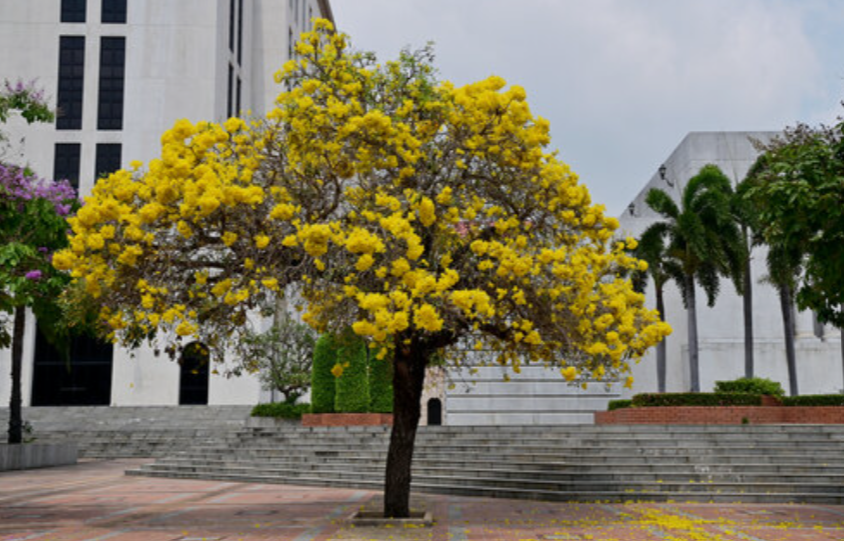
The silver trumpet tree has one of the most confusing names in Florida horticulture. The name says silver, but in late winter the tree covers itself in bright golden-yellow, trumpet-shaped flowers. Those flowers open on bare branches and turn the whole crown into a cloud of gold. The “silver” refers to the tree’s silvery-gray leaves and pale, corky bark, which set it apart from other yellow trumpet trees for the rest of the year.
It is a fixture of South Florida landscapes. In the 1970s and 1980s it was widely planted along streets and parkways from Palm Beach to Miami. The City of Sarasota adopted it as its official tree, though many residents know it simply as the “gold tree.” Its drought tolerance, compact size, and sculptural form have kept it popular in warm coastal gardens ever since.
Botanical Classification
The silver trumpet tree belongs to the bignonia family, alongside jacaranda, catalpa, trumpet creeper, and the many other trumpet trees. In the 2000s, botanists split the trumpet trees into 2 genera. The silver trumpet tree stayed in the original genus, along with the rosy trumpet tree and the Caribbean pink trumpet tree. Many of the popular golden and pink species were moved to the new genus.
The silver trumpet tree is also known as Caribbean trumpet tree, tree of gold, yellow tab, and Paraguayan trumpet tree. The name Caribbean trumpet tree is misleading, since the species is native to South America, not the Caribbean. An older botanical name for the tree meant “silver,” a reference to the silvery sheen of its young leaves and branches. That name is still used in many nurseries and garden books.
Brief History
The silver trumpet tree is native to the tropical savannas and dry woodlands of central South America, including parts of Brazil, Paraguay, Bolivia, and Argentina. In these open landscapes it grows alongside grasses and other drought-tolerant trees. It survives long dry seasons and periodic fires, and its thick, corky bark helps protect the trunk from heat.
It was introduced to Florida as an ornamental tree in the 20th century and quickly became a favorite of landscape designers. Its peak popularity came in the 1970s and 1980s, when it was planted heavily as a street and parkway tree in South Florida. Many of those trees are still standing today, and each winter they put on a dramatic display along roads, medians, and parks. Sarasota later named it the city’s official tree.
Identifying Characteristics
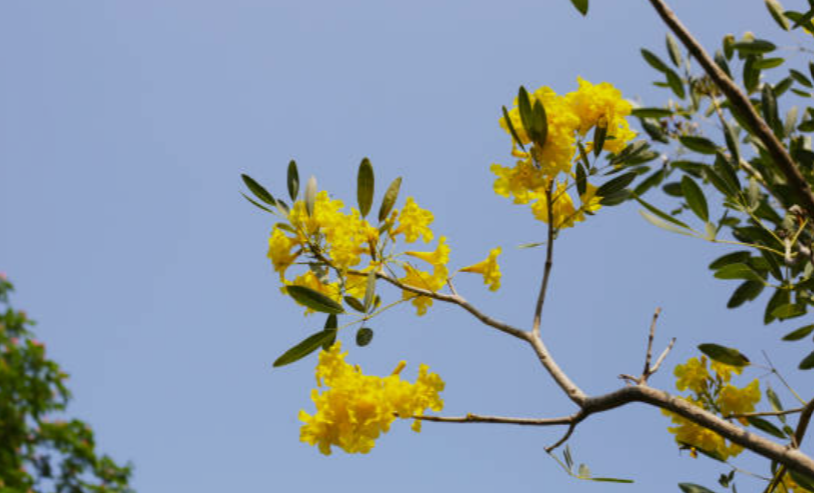
The silver trumpet tree is a small to medium tree. It usually reaches 15 to 25 feet tall and 10 to 15 feet wide in Florida landscapes. It often grows with a slightly crooked or leaning trunk and an open, irregular crown, which gives it a picturesque, sculptural form. The bark is pale gray to tan, thick, and corky, with deep furrows on older trunks.
The leaves are palmately compound, usually with 5 to 7 leathery leaflets spreading from the tip of a long stalk. They have a distinctive silvery-gray to gray-green color, especially when young, which sets the tree apart from other trumpet trees. The flowers are bright golden yellow, about 2½ inches wide, and grow in dense clusters at the branch tips. They are followed by slender, brown seed pods about 4 inches long or longer. The pods split to release papery, winged seeds.
Bloom Season
In South Florida, the silver trumpet tree blooms in late winter and early spring, usually from February to April. Before blooming, the tree drops most or all of its leaves, so the flowers appear on bare branches. The bloom lasts only a few weeks, but at its peak the tree is one of the most spectacular sights in the Florida landscape.
The display is even more striking when several trees are planted together, or when silver trumpet trees are planted along a street. Fallen flowers carpet the ground beneath them in gold. New silvery leaves emerge soon after the flowers fade, so the tree is leafless for only a short time.
Silver Trumpet Tree Versus Golden Trumpet Tree
Gardeners often confuse the silver trumpet tree with the golden trumpet tree, a South American relative with similar yellow flowers. The easiest way to tell them apart is the foliage. Silver trumpet tree leaves are smooth, leathery, and silvery gray-green. Golden trumpet tree leaves are dark green and covered with fine, golden-brown hairs, especially on the undersides and new growth.
The 2 also differ in hardiness and size. The golden trumpet tree is more cold-tolerant, growing in USDA zones 8B through 11, and it can reach 25 to 35 feet tall and wide. The silver trumpet tree is more tender, best suited to zones 10A through 11. It is generally smaller, with a more upright, irregular shape. The silver trumpet tree’s corky, furrowed bark is also more prominent than the golden trumpet tree’s.
Where It Grows in the United States
The silver trumpet tree is a tropical tree with limited cold tolerance. It grows best in frost-free and nearly frost-free areas, roughly USDA zones 10A through 11. In Florida, that covers the southern part of the peninsula and the Keys, including coastal areas from about Sarasota and Palm Beach south. It is also grown in Hawaii, where it is planted along streets and on university campuses, and in Puerto Rico.
In colder parts of Central Florida, young silver trumpet trees can be damaged by frost. Cold snaps can also damage flower buds even on established trees, leading to a weaker bloom the following spring. Gardeners in cooler areas usually have better results with the golden trumpet tree, which tolerates colder winters.
Landscape Uses
University of Florida horticulturists describe the silver trumpet tree as an ideal patio, specimen, or lawn tree. Its small to medium size suits residential yards, courtyards, parking lot islands, and medians. Its surface roots are generally not a problem, so it can be planted fairly close to sidewalks and driveways. Its winter flowers, sculptural form, and persistent seed pods give it interest through the winter.
The silver trumpet tree is especially effective as a street tree and in groups, where many trees in bloom together create a dramatic display. It pairs well with pink trumpet trees, which bloom in shades of pink and lavender at about the same time. Its silvery foliage also contrasts nicely with dark green palms, tropical shrubs, and bold-leaved plants.
Growing Considerations
The silver trumpet tree grows best in full sun, which produces the heaviest flowering and the most compact growth. It tolerates a wide range of well-drained soils, including sandy Florida soils, limestone-based soils, and slightly alkaline conditions. It does not tolerate poorly drained, waterlogged soil, which can cause root rot.
Water newly planted trees regularly through their first year or 2 to help them establish. After that, the silver trumpet tree is highly drought-tolerant and rarely needs supplemental watering, except during extended droughts. It also tolerates heat, wind, and urban conditions. A light application of a slow-release fertilizer in spring and summer supports healthy growth, but heavy fertilizing is unnecessary.
Pruning and Training
Young silver trumpet trees often grow with crooked trunks or several competing leaders. Pruning in the first few years helps create a stronger structure. Select 1 main trunk, or a few well-spaced main branches. Remove or shorten branches that compete with them, as well as crossing and crowded branches. For trees near walkways and streets, gradually remove lower branches as the tree grows to provide clearance.
Do any pruning soon after the tree finishes flowering, so you don’t remove next year’s flower buds. Mature trees need little pruning beyond removing dead, damaged, or weak branches. Many gardeners prefer to keep some of the tree’s natural, irregular character, which is part of its charm.
Pests and Problems
The silver trumpet tree is a tough tree with few serious pest problems. Scale insects, mites, and caterpillars occasionally feed on the leaves, but they rarely cause serious damage to established trees. Healthy trees usually recover from minor pest damage without treatment.
Most problems come from poor planting sites. Waterlogged soil leads to root rot. Too much shade reduces flowering and causes leggy growth. Cold snaps can damage branches and flower buds in marginal areas. Some trees grown from seed may take several years to begin flowering.
Invasive Status
The University of Florida tracks the silver trumpet tree as a non-native species. It has been recorded growing outside cultivation in Palm Beach and Broward counties in South Florida, but no negative impacts on natural areas have been reported. It is considered a safe choice for Florida landscapes, though gardeners near natural areas should keep an eye out for seedlings. As with any non-native plant, check the latest guidance from your county extension office before planting.
Sources
University of Florida IFAS Gardening Solutions, “Trumpet Trees”
University of Florida IFAS Extension, “Trumpet Tree”
University of Florida IFAS Extension Orange County, “Flowering Trees of Central Florida”
University of Florida IFAS Plant Directory, “Caribbean Trumpet Tree”
Florida Urban Forestry Council, “Tree of the Quarter: Trumpet Trees”