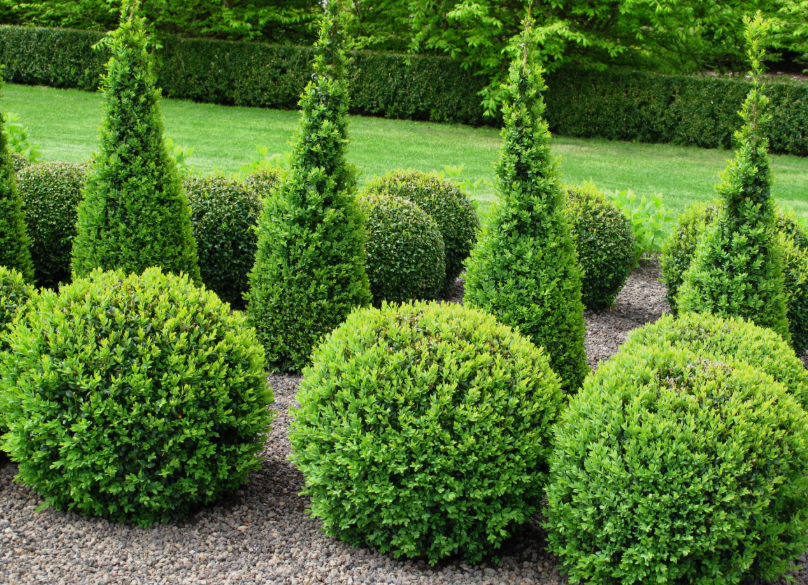
Littleleaf boxwood is a compact evergreen shrub prized for its tiny leaves and neat, rounded shape. It is one of the most versatile boxwoods, with forms ranging from miniature cushions only a few inches tall to rounded shrubs that make tidy hedges. Its small size and fine texture make it a favorite for edging, containers, rock gardens and bonsai.
It is also one of the most important boxwoods in gardens today. Many popular boxwood cultivars come from littleleaf boxwood, and some of them rank among the most disease-resistant boxwoods available. For gardeners who want a small, easy-to-shape evergreen, it offers many choices.
Botanical Classification
Littleleaf boxwood belongs to the box family, a small group of evergreen shrubs that also includes pachysandra and sweet box. It is a distinct species from common boxwood, which comes from Europe. Its name refers to its small leaves, which are usually smaller and thinner than those of common boxwood.
Japanese boxwood is a variety of littleleaf boxwood, and Korean boxwood was long grouped with it as well. Because of this, the name littleleaf boxwood is sometimes used loosely for several related plants. In gardens, it usually refers to the species and its many small-leaved cultivars.
Brief History
Littleleaf boxwood is known mainly from cultivation in Japan, where it has been grown in gardens for centuries. It was clipped into small, rounded shapes and used in traditional garden designs. Its wild origin is uncertain, since it has been propagated by cuttings for so long.
It was introduced to Western gardens in the 1800s. Over the following century, gardeners and nurseries in North America and Europe selected many dwarf and compact forms. Some of these, such as the very small Kingsville Dwarf, became famous among bonsai growers and collectors of miniature plants.
Identifying Characteristics
Littleleaf boxwood has small, oval to slightly oblong leaves, often less than an inch long. They are thin, light to medium green and somewhat glossy. The leaves grow in pairs on opposite sides of the stem and are often spaced slightly apart, giving the plant a fine, airy texture.
In winter, its leaves often turn yellow, bronze or orange-brown, especially in sun and wind. This color usually fades back to green in spring. Some cultivars have been selected to hold their color better through winter.
The typical species grows into a loose, rounded shrub about 3 to 4 feet tall and wide. Dwarf cultivars can stay under a foot tall for many years. It grows slowly to moderately, depending on the cultivar.
Like other boxwoods, it produces tiny, fragrant, pale yellow-green flowers in early spring. They attract bees but are easy to overlook. Its leaves have a milder scent than common boxwood.
Landscape Uses
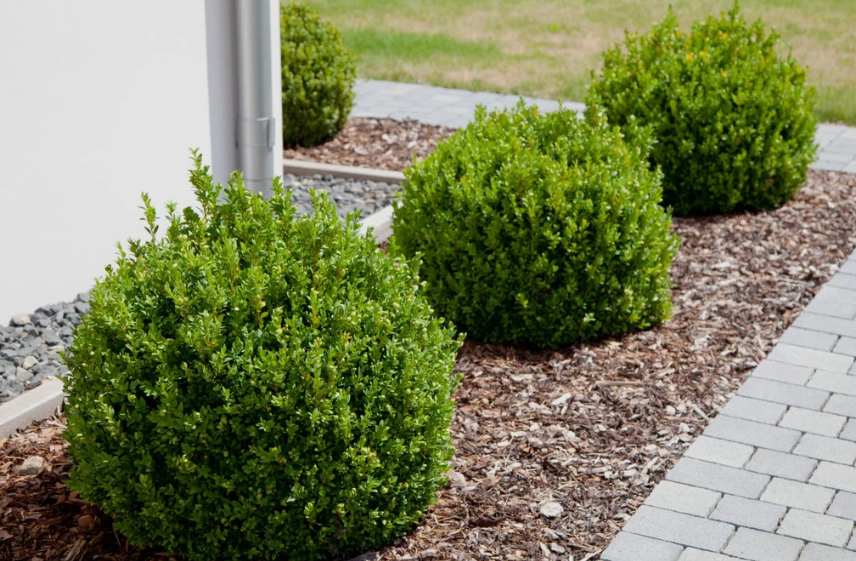
Littleleaf boxwood is well suited to low hedges and edging. Its small leaves and slow growth help it hold a crisp shape with little pruning. It is often used to line paths, outline flower beds and create small knot gardens.
Dwarf forms are ideal for rock gardens, troughs, miniature gardens and fairy gardens. They also make excellent container plants for patios and balconies. Larger forms work well in foundation plantings and as small specimen shrubs.
Its fine texture and small leaves make it a favorite for bonsai. Gardeners can easily train it into miniature trees, and its leaves stay in proportion to the small trunk. Like other boxwoods, it is deer-resistant, and all parts of the plant are toxic if eaten.
Growing Considerations
Littleleaf boxwood is generally hardy from about USDA zone 5 to zone 9, depending on the cultivar. Many forms handle heat better than common boxwood, while some newer selections handle colder winters. It is grown widely across the eastern, southern and western United States.
It grows in full sun to partial shade. In hot climates, afternoon shade helps keep its leaves green. In cold areas, protection from winter wind and sun reduces bronzing and winter burn.
It needs well-drained soil, since soggy roots quickly lead to rot. It prefers slightly acidic to neutral soil, around pH 6.5 to 7.0, enriched with compost. A thin layer of mulch, about 1 to 2 inches, helps protect its shallow roots, but mulch should not touch the stems.
Water young plants regularly and established plants deeply during dry spells. Watering at the base, rather than over the leaves, helps reduce disease. In cold regions, a deep watering in fall before the ground freezes helps prevent winter damage.
Pruning and Care
Littleleaf boxwood needs only light pruning because of its small size and slow growth. Trim it in late spring after new growth hardens. Avoid late summer pruning, which can encourage tender growth that is damaged by frost.
Thinning a few interior branches each year lets light and air reach the center of the plant. This helps keep it healthy and reduces the risk of disease. Dwarf forms may only need a light trim every year or two.
Fertilize lightly in spring if growth is weak or leaves look pale. Container plants need more regular feeding and watering than plants in the ground. In very cold areas, potted plants should be moved to a sheltered spot for winter.
Pests and Diseases
Littleleaf boxwood includes some of the most disease-resistant boxwoods available, but resistance varies by cultivar. Boxwood blight, a fungal disease first found in the United States in 2011, causes leaf spots, black streaks on stems and rapid leaf drop. Some cultivars, such as Golden Dream, are among the most blight-resistant boxwoods, while others, such as Grace Hendrick Phillips and Green Pillow, are moderately susceptible.
The boxwood leafminer is another common pest. Its larvae tunnel inside leaves, causing blisters and yellowing. Cultivars such as Golden Dream and Winter Gem have strong resistance to leafminer.
Other problems include spider mites, boxwood psyllids and root rot in poorly drained soils. The invasive box tree moth, whose caterpillars can strip boxwoods bare, has spread across Europe and into parts of North America. Gardeners should check plants for webbing and chewed leaves in late spring and summer.
Popular Cultivars
Golden Dream is a striking littleleaf boxwood with green leaves edged in bright gold. It grows into a compact mound about 2 to 3 feet tall and is among the most resistant boxwoods to both blight and leafminer. Wedding Ring has dark green leaves with a ring of lighter green-yellow around the edges and is also rated as blight-resistant.
Winter Gem is a popular hedge boxwood that holds its color well in winter and resists leafminer. It is moderately resistant to blight and grows 3 to 4 feet tall. Northern Emerald is another blight-resistant selection with good winter color.
For tiny spaces, Grace Hendrick Phillips and Green Pillow form very low, dense cushions only a foot or so tall. Kingsville Dwarf is a famous miniature boxwood prized for bonsai. John Baldwin grows upright and narrow, making it useful for small, formal accents, and it is moderately resistant to blight.
Littleleaf Boxwood vs. Common Boxwood
Littleleaf boxwood and common boxwood are often compared. Littleleaf boxwood has smaller, thinner leaves and a milder scent, while common boxwood has thicker, darker leaves and a stronger smell. Common boxwood can grow much larger over time.
Littleleaf boxwood generally handles heat better and includes more blight-resistant cultivars. Common boxwood, including English boxwood, is more traditional in historic gardens but is more vulnerable to boxwood blight. For small spaces, containers and warm climates, littleleaf boxwood is often the more practical choice.
Sources
Virginia Tech, “Boxwood Blight Resistant and Susceptible Cultivars”
Virginia Tech, “Boxwood (Buxus species)”
North Carolina State University, “Susceptibility of Commercial Boxwood Cultivars to Boxwood Blight”