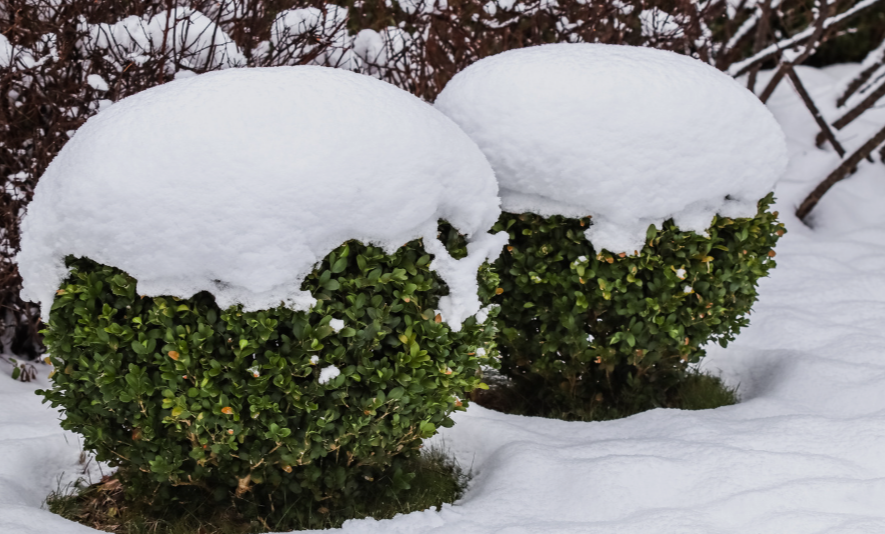
Learning how to protect boxwoods from winter damage can save gardeners the disappointment of discovering orange, brown, or bare shrubs when the snow melts. Boxwood is one of the most widely planted evergreens in American gardens, but its small, glossy leaves stay on the plant all winter. That leaves them exposed to drying wind, bright sun, heavy snow, ice, and road salt. Damage that appears in spring usually began months earlier, during the coldest stretch of winter.
The most common problem is winter burn, also called winter desiccation. It happens when wind and sun pull moisture out of the leaves while the ground is frozen and the roots cannot replace it. Affected leaves turn reddish-orange, bronze, tan, or straw-colored, often starting along the midrib while the edges stay green. Nebraska Extension reported widespread boxwood winter injury across the state in spring 2021 after a harsh winter.
Winter burn is usually worst on the side of the shrub facing the prevailing wind and afternoon sun. West Virginia University Extension notes that the southwest-facing side of a plant typically shows the most noticeable winter burn, especially when it has no protection from wind. Shrubs in exposed corners, along driveways, and near reflective walls are at highest risk.
Other kinds of winter damage include branches split or flattened by heavy snow and ice, foliage scorched by salty spray from roads and sidewalks, and roots killed in container plantings. New spring growth can also be burned by late frosts. Young, recently planted shrubs and those already weakened by drought are especially vulnerable.
The good news is that most winter damage can be prevented or greatly reduced with simple steps taken from early fall through early spring. Healthy, well-watered, well-sited boxwoods withstand winter far better than stressed ones. In many gardens, good fall care is more important than any winter covering.
The 16 steps below cover choosing hardy varieties, preparing shrubs in fall, protecting them through winter, and helping damaged boxwoods recover in spring.
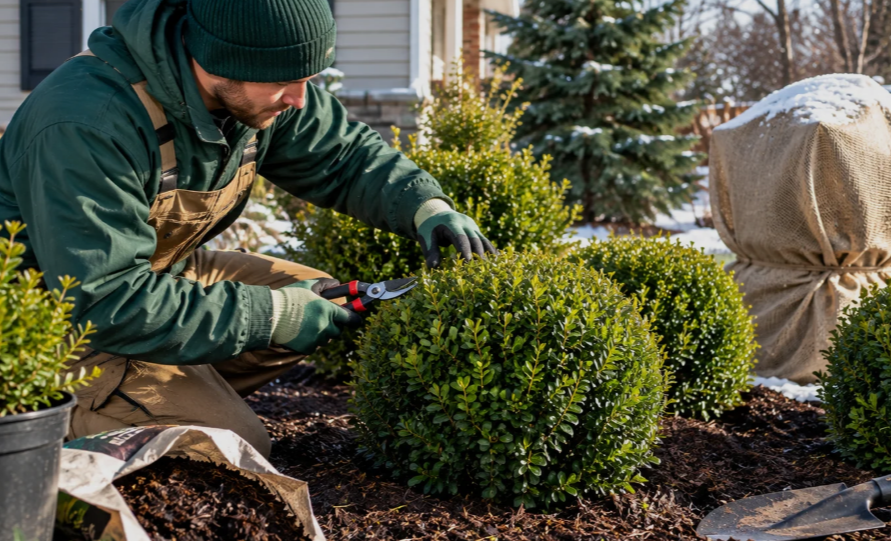
16 Steps to Protect Boxwoods From Winter Damage
1. Choose Cold-Hardy Varieties
The best protection starts with the right plant. Hybrid and Korean boxwoods such as ‘Green Velvet’, ‘Green Mountain’, ‘Green Gem’, ‘Winter Gem’, and Chicagoland Green are much hardier than English or American boxwood. Many of them hold their green color better in winter. In Zones 4 and 5, these cold-hardy types are far less likely to suffer severe winter burn.
2. Plant in a Sheltered Location
Plant boxwood where it is protected from strong winter winds and harsh afternoon sun. East-facing and north-facing sides of buildings, courtyards, and spots near fences or evergreen hedges are ideal. Avoid exposed corners and sites facing south or southwest, where winter sun and wind are strongest. Good siting can prevent most winter burn before it starts.
3. Keep Plants Healthy Through Summer
Strong, healthy boxwoods resist winter damage better than stressed plants. Water regularly during summer droughts, maintain mulch, and correct any drainage problems. Plants that enter fall weakened by drought, pests, or disease are much more likely to suffer winter burn. Good care in summer is the foundation of winter protection.
4. Water Deeply in Fall
Fall watering is one of the most important ways to prevent winter burn. Give boxwood a deep soaking every week or two in fall if rainfall is light, continuing until the ground freezes. Boxwoods that are drought-stressed in autumn are more susceptible to winter burn. Well-watered plants store more moisture in their leaves and stems for winter.
5. Apply Mulch Before Winter
Spread 2 to 3 inches of shredded bark or compost over the root zone in late fall. Mulch helps conserve soil moisture, moderates soil temperature, and protects boxwood’s shallow roots from repeated freezing and thawing. Keep mulch a few inches away from the stems to prevent rot and avoid giving voles a hiding place.
6. Stop Fertilizing by Midsummer
Fertilizing boxwood late in the season encourages soft new growth that cannot harden off before winter. That tender growth is easily damaged by cold. Apply fertilizer only in early spring, and avoid feeding after midsummer. Let plants slow down naturally in fall.
Also Read: How to Grow And Care For Boxwood Shrubs
7. Avoid Late-Season Pruning
Heavy pruning in late summer or fall stimulates new growth that may not survive winter. It also opens the shrub’s interior to wind and sun. Do major pruning in late spring or early summer instead. In fall, remove only dead, damaged, or diseased branches.
8. Install Burlap Screens in Exposed Sites
For boxwoods in windy or sunny locations, a burlap screen is one of the most reliable forms of protection. Drive wooden stakes into the ground before it freezes, then attach burlap to the stakes on the windward and sunny sides of the shrub. Leave a few inches of space between the burlap and the plant so air can circulate. Iowa State University Extension notes that a simple screen built from wooden posts and burlap can help prevent desiccation injury.
9. Avoid Wrapping Shrubs Tightly
Do not wrap burlap or other materials tightly around boxwoods. Tight wrapping traps moisture, encourages disease, and can break branches under the weight of snow. Never use plastic, which heats up in the sun and traps humidity. A loose, open-topped screen offers better protection with fewer risks.
10. Use Anti-Desiccant Sprays With Realistic Expectations
Anti-desiccant sprays coat leaves with a waxy or film-forming layer meant to slow moisture loss. Research and extension advice on them is mixed. Some sources recommend them, while others report inconsistent results on boxwood. If you use one, apply it in late fall on a dry day when temperatures are above 40°F. Treat it as a supplement to good watering and screening, not a replacement.
11. Protect Against Road Salt
Salt spray and salty slush from roads, driveways, and sidewalks damage boxwood leaves and roots. Avoid planting boxwood where plows and foot traffic throw salty snow. Use salt-free de-icers near plantings, and place burlap screens between shrubs and roads. In spring, water heavily to flush salt from the soil.
12. Tie Up Multi-Stemmed Shrubs
Heavy snow and ice can spread apart, bend, or split boxwood branches. In snowy regions, loosely wrap multi-stemmed boxwoods with soft twine in late fall to hold the branches together. This keeps snow from accumulating in the center of the shrub. Remove the twine in early spring.
13. Gently Remove Heavy Snow
After heavy snowfalls, gently brush snow off boxwood with a broom, sweeping upward to lift branches rather than pressing them down. NC State Extension recommends removing accumulated snow to protect boxwood branches. Do not try to remove ice, which can snap branches. Let ice melt naturally instead.
14. Protect Container Boxwoods
Boxwoods in containers are much more vulnerable to winter damage, because their roots are exposed to cold air on all sides. Move containers to a sheltered spot, such as against a house wall or in an unheated garage. You can also group them together and surround them with mulch, or insulate the pots with burlap or bubble wrap. Water container plants on mild days when the soil is not frozen.
Also Read: Boxwood Varieties For Hedges
15. Water During Winter Thaws
During extended dry periods in winter, water boxwoods on mild days when the ground is not frozen. This helps replace moisture lost through the leaves, especially for young plants and those in exposed sites. Water early in the day so the moisture soaks in before nighttime freezing.
16. Inspect and Help Plants Recover in Spring
In early spring, remove burlap screens once harsh winds subside and the ground thaws. Wait until new growth begins before pruning, so you can see which branches are alive. Then cut out dead and damaged branches back to healthy green wood. Water regularly and apply a light spring fertilizer to help plants recover. Most boxwoods with mild winter burn will regrow new leaves by early summer.
Sources
West Virginia University Extension, “Winter Damage”
Nebraska Extension, “Anti-Transpirants Help Prevent Winter Drying Damage”
NC State Extension Gardener Plant Toolbox, “Green Velvet Boxwood”