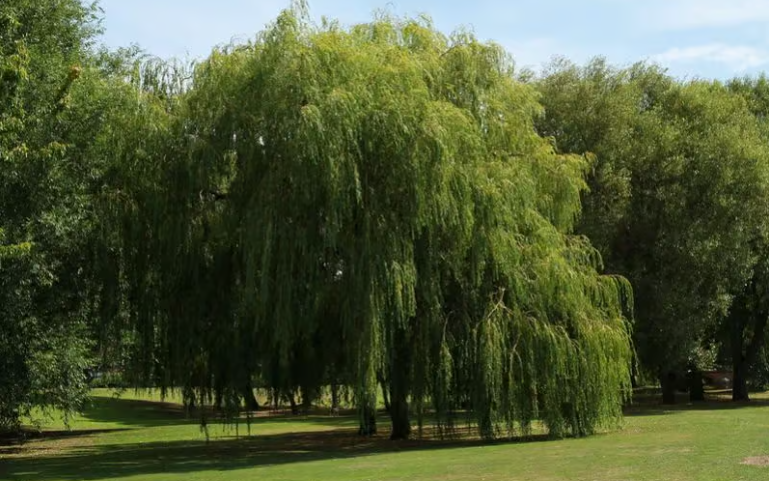
Finding a shade tree that grows quickly can make a dramatic difference in a landscape. A newly planted yard can feel exposed and sunny, but the right tree can begin developing a useful canopy within only a few growing seasons. For gardeners in USDA Zone 6, the good news is that there is a wide selection of fast-growing deciduous trees, including maples, poplars, birches, oaks, honeylocusts, sycamores, and several other large landscape trees.
However, choosing a shade tree based only on its growth rate can create problems later. Some of the fastest-growing trees eventually become enormous, develop aggressive roots, produce weak wood, or require more maintenance than homeowners expect. The University of Georgia Cooperative Extension emphasizes the importance of matching the mature size and characteristics of a tree to the planting site rather than simply choosing the fastest-growing option.
The growth rates below are approximate annual height increases once the trees are established under favorable conditions. Actual growth can be considerably different depending on soil, moisture, sunlight, climate, cultivar, competition, and care. For that reason, think of these numbers as useful comparisons rather than guarantees.
1. Hybrid Poplar
Growth rate: 4–8 feet per year
Hybrid poplars are among the fastest-growing shade trees available for Zone 6. Under excellent conditions, selected hybrids can put on several feet of growth in a single season, rapidly developing the height and canopy needed to provide shade. The University of Wisconsin Extension specifically notes that hybrid poplar can grow extremely fast and may begin providing useful shade only three to five years after planting when conditions are favorable.
Their incredible speed comes with some disadvantages. Hybrid poplars can have relatively weak wood, may be susceptible to wind damage, and can develop aggressive root systems. They are therefore better suited to large properties than small residential yards. The University of Minnesota’s InnovaTree hybrid poplar, for example, can grow up to 10 feet per year under good conditions but is specifically recommended away from buildings, roadways, and power lines.
2. Eastern Cottonwood
Growth rate: 3–6 feet per year
Eastern cottonwood is one of the fastest-growing native trees in North America. Young trees can gain several feet of height annually when they have abundant moisture and plenty of sunlight. Purdue Extension describes eastern cottonwood as the fastest-growing tree native to the United States, although its rapid growth comes with several practical drawbacks.
Cottonwood is best reserved for large properties where there is plenty of room for its enormous mature dimensions. Its branches can break during storms, its roots can be extensive, and female trees release masses of cotton-like seeds in spring. If your primary objective is maximum shade speed and you have a large acreage, however, few trees can compete with cottonwood.
3. Silver Maple
Growth rate: 3–5 feet per year
Silver maple has been popular for generations because it can turn a young landscape into a shady one surprisingly quickly. It develops a broad, spreading crown and can tolerate a wide range of soils, including relatively wet conditions. Iowa State University Extension notes that silver maple can grow 4–6 feet in height per year under suitable conditions.
The same characteristics that make silver maple fast can also make it problematic. Its wood is relatively weak, and its shallow roots can interfere with sidewalks, driveways, drains, and septic systems. North Carolina State Extension specifically warns about its shallow roots and susceptibility to storm and snow damage. Plant it well away from structures and paved surfaces.
4. Tulip Poplar
Growth rate: 2–4 feet per year
Tulip poplar, or yellow-poplar, is one of the great towering shade trees of eastern North America. It combines relatively rapid growth with a straight trunk, broad canopy, attractive foliage, and unusual tulip-shaped flowers. University of Arkansas Extension describes tulip poplar as a large, fast-growing tree capable of exceeding 100 feet in height.
This is a tree for large landscapes rather than compact suburban yards. Give it plenty of vertical and horizontal space, and it can eventually provide a tremendous amount of shade. In Zone 6, it is particularly valuable for gardeners who want a native tree that combines fast growth with impressive mature size.
5. River Birch
Growth rate: 1.5–3 feet per year
River birch is one of the better fast-growing shade trees for Zone 6 gardens because it combines reasonably quick growth with attractive bark and adaptability. Its peeling bark develops shades of cream, tan, cinnamon, and brown, giving the tree considerable winter interest after the leaves have fallen.
University of Minnesota Extension identifies river birch as a fast-growing native shade tree and notes that it typically reaches about 50–75 feet tall with a 35–50-foot spread. It is especially well suited to moist soil and can be a good choice for low-lying portions of the landscape.
6. American Sycamore
Growth rate: 2–4 feet per year
American sycamore is an enormous native tree with a broad canopy and distinctive mottled bark. Young trees can grow rapidly, especially when planted in deep, fertile soil with adequate moisture. Its large leaves provide dense summer shade once the canopy becomes established.
Sycamore is particularly impressive beside streams, ponds, and other moist areas. Its eventual size, however, makes it inappropriate for many small lots. Give it plenty of space and it can become a long-lived shade tree with considerable character.
7. River Poplar
Growth rate: 3–5 feet per year
River poplars and related poplar hybrids are valued primarily for their rapid juvenile growth. They are especially useful where a homeowner or landowner needs a quick screen or shade canopy and has sufficient space to accommodate a large tree.
Like other fast-growing poplars, they should not automatically be considered ideal residential trees. Rapid growth can be associated with weaker wood and a shorter useful lifespan. University of Wisconsin Extension makes a similar point about hybrid poplars, noting both their exceptional speed and their susceptibility to wind damage.
8. Weeping Willow
Growth rate: 2–4 feet per year
Weeping willow is one of the fastest-growing ornamental shade trees for sites with abundant moisture. Its long, arching branches create a broad canopy, while the graceful foliage gives the tree a distinctive appearance that works particularly well beside ponds and streams.
The downside is its root system. Willows should be planted well away from septic systems, underground pipes, foundations, and paved surfaces. They also need sufficient space to accommodate their mature spread. For the right moist, open location, however, a weeping willow can establish shade remarkably quickly.
9. Autumn Blaze Maple
Growth rate: 2–3 feet per year
Autumn Blaze maple is a popular hybrid selected for its combination of rapid growth, strong fall color, and attractive maple form. The foliage can turn brilliant orange-red in autumn, giving the tree an ornamental role as well as a practical one.
It can eventually become a large shade tree, so it should not be planted too close to buildings or overhead utilities. Its combination of relatively fast growth and reliable autumn color makes it one of the more appealing choices for a Zone 6 homeowner who wants quick shade without choosing a poplar or cottonwood.
10. Red Maple
Growth rate: 2–3 feet per year
Red maple is one of the most versatile shade trees for Zone 6. It grows reasonably quickly, develops a substantial canopy, and can provide excellent autumn color. Different cultivars offer variations in growth habit, mature size, fall color, and tolerance of different site conditions.
Unlike some extremely fast-growing trees, red maple offers a useful compromise between growth rate and landscape value. Choose the cultivar carefully because mature dimensions can vary significantly. Give the tree enough space to develop its natural crown rather than planning to keep a large tree permanently confined through severe pruning.
11. Pin Oak
Growth rate: 2–3 feet per year
Pin oak is a fast-growing oak with a distinctive pyramidal shape when young. Its branches eventually create a broad canopy capable of casting substantial shade. The leaves are deeply lobed and turn shades of red, bronze, or brown in autumn.
It performs best in moist, acidic soils and is particularly useful in locations where other large shade trees might struggle. Because pin oak can become a large tree, it belongs on spacious properties where its mature crown will not interfere with buildings or utility lines.
12. Nuttall Oak
Growth rate: 2–3 feet per year
Nuttall oak is an excellent option for gardeners who want the longevity and character of an oak but do not want to wait decades for a substantial canopy. It is a relatively fast-growing oak that develops into a large shade tree with a rounded crown.
It is especially useful in moist or bottomland-type sites, although established trees can tolerate a broader range of conditions. Like other oaks, it should be viewed as a long-term landscape investment rather than a tree that will remain small.
13. Thornless Honeylocust
Growth rate: 2–3 feet per year
Thornless honeylocust is one of the more practical fast-growing shade trees for residential landscapes. Its fine-textured compound foliage allows sunlight to filter through the canopy rather than creating extremely dense shade. This makes it particularly useful over lawns and patios where some filtered light is desirable.
The key is choosing a thornless, preferably seedless cultivar rather than planting a wild-type honeylocust. Colorado State University Extension lists thornless honeylocust among its landscape trees and notes that cultivars vary in mature size and form.
14. Hackberry
Growth rate: 1.5–3 feet per year
Hackberry is an underrated shade tree that combines reasonably fast growth with impressive toughness. It can tolerate a variety of urban conditions and develops an attractive rounded canopy as it matures. Its distinctive corky or knobby bark adds winter interest.
University of Wisconsin Extension includes hackberry among trees that grow relatively quickly, while its general toughness makes it useful for difficult sites where more demanding species may struggle. It is particularly worth considering when durability is more important than spectacular flowers or unusually bright fall color.
15. Sweetgum
Growth rate: 2–3 feet per year
Sweetgum is a fast-growing shade tree best known for its star-shaped leaves and strong autumn color. In a good location, it can develop a large canopy relatively quickly and provide excellent summer shade.
The major drawback is its fruit. Traditional sweetgum trees produce hard, spiny seed capsules that can make lawns and walkways uncomfortable to walk across. Purdue Extension includes sweetgum among fast-growing shade trees but specifically points out the nuisance created by its spiny seed capsules. If you like the species, look for a fruitless cultivar.
16. American Elm
Growth rate: 2–3 feet per year
American elm is famous for its graceful vase-shaped canopy and was once one of America’s most widely planted street and shade trees. Disease-resistant cultivars have helped renew interest in the species, giving homeowners the opportunity to grow an elm with improved resistance to Dutch elm disease.
A mature elm can create a tremendous overhead canopy, making it particularly valuable on larger properties. Select a proven disease-resistant cultivar and give it plenty of space for its mature branches to develop naturally.
17. Dawn Redwood
Growth rate: 2–3 feet per year
Dawn redwood is an unusual choice because it is a deciduous conifer rather than a typical broadleaf shade tree. It grows rapidly when young, producing soft green needles and a strongly upright form. The foliage turns bronze in autumn before dropping.
Although its narrow young shape can make it appear manageable, dawn redwood eventually becomes a very large tree. It is best planted as a specimen on spacious properties where its unusual form can be appreciated from a distance.
18. Bald Cypress
Growth rate: 1.5–2.5 feet per year
Bald cypress is another deciduous conifer that can grow reasonably quickly in favorable conditions. Its feathery foliage provides a soft texture during summer, while the leaves turn rusty orange or reddish-brown before falling in autumn.
It is especially useful in damp locations, but bald cypress is more adaptable than its swamp-dwelling reputation suggests. It can also grow successfully in ordinary landscape conditions provided the soil and climate are suitable. Its mature size means it should be planted with plenty of room.
19. Boxelder
Growth rate: 2–3 feet per year
Boxelder is one of the fastest-growing members of the maple family. It is particularly tolerant of difficult conditions and can establish quickly where more demanding shade trees might struggle. Its compound leaves distinguish it from the familiar red, sugar, and silver maples.
Colorado State University Extension specifically describes boxelder as a fast-growing shade tree for harsh sites. However, it can be messy and is generally better suited to naturalized areas or large properties than formal residential landscapes.
20. Northern Red Oak
Growth rate: 1.5–2.5 feet per year
Northern red oak is not as fast as cottonwood or silver maple, but it is worth including because it offers an excellent combination of reasonably quick growth, longevity, strong landscape presence, and attractive fall color. It eventually becomes a large tree with a broad crown capable of providing substantial shade.
The University of Georgia’s shade-tree guide lists northern red oak as a Zone 6–7 tree capable of reaching approximately 60–70 feet tall and 50–60 feet wide. It is a particularly good option for gardeners willing to trade a little growth speed for a longer-term landscape tree.
21. Japanese Zelkova
Growth rate: 1.5–2.5 feet per year
Japanese zelkova is a graceful shade tree with a vase-shaped crown, attractive bark, and good autumn color. Its moderate-to-fast growth makes it an appealing alternative when you want a substantial tree but would rather avoid some of the structural problems associated with extremely fast-growing poplars and willows.
The tree can reach roughly 45–55 feet tall with a broad canopy, so it still requires plenty of space. University of Georgia Extension lists zelkova as a Zone 6–8 shade tree and includes it among the larger landscape trees suitable for providing shade.
Fastest Growing Shade Trees for Zone 6 at a Glance
| Tree | Approx. growth rate | Mature size | Best feature |
|---|---|---|---|
| Hybrid Poplar | 4–8 ft/year | Very large | Extremely fast shade |
| Eastern Cottonwood | 3–6 ft/year | Very large | Exceptional growth |
| Silver Maple | 3–5 ft/year | Very large | Rapid canopy |
| Tulip Poplar | 2–4 ft/year | Very large | Height and flowers |
| River Poplar | 3–5 ft/year | Large–very large | Rapid screening |
| Weeping Willow | 2–4 ft/year | Large | Moist sites |
| American Sycamore | 2–4 ft/year | Very large | Huge canopy |
| River Birch | 1.5–3 ft/year | Large | Attractive bark |
| Autumn Blaze Maple | 2–3 ft/year | Large | Fall color |
| Red Maple | 2–3 ft/year | Large | Adaptability |
| Pin Oak | 2–3 ft/year | Large | Classic oak form |
| Nuttall Oak | 2–3 ft/year | Large | Fast-growing oak |
| Thornless Honeylocust | 2–3 ft/year | Large | Filtered shade |
| Hackberry | 1.5–3 ft/year | Large | Toughness |
| Sweetgum | 2–3 ft/year | Large | Autumn foliage |
| American Elm | 2–3 ft/year | Large | Vase-shaped canopy |
| Dawn Redwood | 2–3 ft/year | Very large | Unusual conifer |
| Bald Cypress | 1.5–2.5 ft/year | Very large | Wet-soil tolerance |
| Boxelder | 2–3 ft/year | Large | Difficult sites |
| Northern Red Oak | 1.5–2.5 ft/year | Large | Longevity |
| Japanese Zelkova | 1.5–2.5 ft/year | Large | Attractive form |
Which Shade Tree Grows Fastest in Zone 6?
If growth speed is the only consideration, hybrid poplar and eastern cottonwood are among the strongest candidates. Under favorable conditions, they can add several feet of height in a single growing season. Some specially selected hybrid poplars can grow even faster. The University of Minnesota’s InnovaTree, for example, reports growth of up to 10 feet per year under good conditions, although that is an exceptional cultivar and should not be treated as the normal rate for every hybrid poplar.
For a typical residential landscape, however, maximum growth is not necessarily the best goal. River birch, red maple, thornless honeylocust, hackberry, and disease-resistant American elm offer a more balanced combination of growth, appearance, and landscape usefulness.
What Is a Fast Growth Rate for a Shade Tree?
There is no universal growth rate that applies to every tree or every site. In general, a tree capable of adding around 2 feet or more per year once established is commonly considered fast-growing, while trees adding 3–5 feet annually are exceptionally vigorous.
It is important to remember that nursery descriptions often represent ideal conditions. A tree planted in compacted soil, exposed to drought, competing with turfgrass, or struggling to establish its root system may grow far more slowly than the published rate.
The University of Alabama Extension’s recent guidance makes an especially important point: very fast-growing species such as hybrid poplars and willows can develop weaker wood because rapid growth can reduce wood density, increasing the potential for storm damage.
Choosing the Right Fast-Growing Tree for Your Zone 6 Yard
Before planting, look at the mature height and canopy spread, not just the size of the tree at the nursery. A 6-foot sapling may eventually become a 70-foot tree with a 50-foot canopy.
Also consider what is below and above the planting site. Keep large trees away from overhead utility lines, foundations, septic systems, underground pipes, driveways, and sidewalks. The University of Georgia recommends a careful site analysis that considers sunlight, soil texture, fertility, moisture, underground obstacles, and the tree’s eventual size.
Soil moisture is another major factor. River birch, willow, cottonwood, and bald cypress are particularly useful where moisture is plentiful, while honeylocust and hackberry can be better choices for more challenging sites. Matching the tree to the site often produces faster real-world growth than choosing a species simply because it has an impressive growth-rate number.
Best Fast-Growing Shade Trees for Different Situations
For maximum growth: Hybrid poplar or eastern cottonwood.
For wet soil: River birch, weeping willow, bald cypress, or cottonwood.
For attractive fall color: Red maple, Autumn Blaze maple, sweetgum, or northern red oak.
For a large property: Tulip poplar, American sycamore, dawn redwood, or northern red oak.
For filtered shade: Thornless honeylocust.
For a difficult site: Hackberry or boxelder.
For a long-term landscape tree: Northern red oak, red maple, disease-resistant American elm, or Japanese zelkova.
Are Fast-Growing Shade Trees a Good Idea?
Fast-growing trees can be excellent choices when you need shade relatively quickly, but they require more careful planning than their smaller nursery size might suggest. The very trees that provide shade fastest can sometimes have weaker wood, aggressive roots, messy fruit, or relatively short lifespans.
That is why the best Zone 6 shade tree is not necessarily the one with the largest number in the growth-rate column. A slightly slower tree with strong structure, attractive foliage, good disease resistance, and an appropriate mature size may ultimately provide much more value.
For example, a homeowner might get shade faster from a hybrid poplar, but a well-sited red maple, northern red oak, or Japanese zelkova can become a much more satisfying long-term feature. Think of growth rate as one selection factor rather than the entire decision.
Key Takeaways
Zone 6 offers an excellent range of fast-growing shade trees, from exceptionally vigorous hybrid poplars and cottonwoods to more balanced choices such as river birch, red maple, honeylocust, hackberry, and disease-resistant elm.
If you need shade as quickly as possible and have plenty of room, hybrid poplar, eastern cottonwood, silver maple, tulip poplar, and willow are among the fastest options. If you are planting in an ordinary residential yard, it is usually wiser to balance growth rate with mature size, structural strength, root behavior, fall color, maintenance, and longevity.
Most importantly, plant for the tree you are going to have, not just the tree you are buying. A fast-growing shade tree can transform a Zone 6 landscape, but choosing the right species for the available space is what determines whether that transformation remains an advantage for decades.
Further References:
- University of Wisconsin–Madison Extension — Establishing Silvopasture by Planting Trees — Useful information on fast-growing trees such as hybrid poplar, silver maple, honeylocust, and hackberry.
- Iowa State University Extension — Silver Maple — Provides growth-rate information and characteristics of silver maple as a fast-growing shade tree.
- Purdue University Extension — Fast-Growing Trees for the Landscape — Covers several rapid-growing shade trees, including cottonwood, honeylocust, sweetgum, and sycamore.
- University of Minnesota Extension — River Birch — Provides information on river birch growth, mature size, soil requirements, and landscape uses.
- U.S. Forest Service — Poplar Hybrids — Offers research-based information on hybrid poplar growth rates, site requirements, and characteristics.