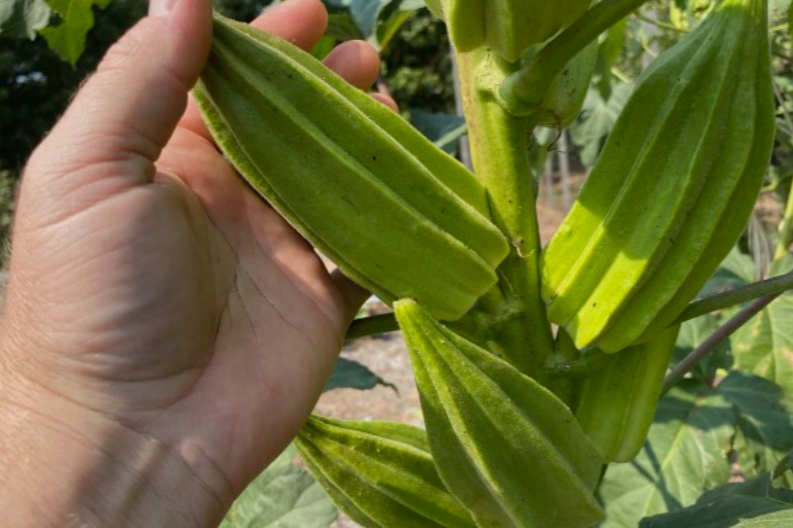
Star of David Okra: The Thick-Podded Heirloom From Israel
Star of David okra is an heirloom variety known for its unusually thick, deeply ribbed pods. When you slice one, each piece looks like a little star, which is how the variety got its name. It is believed to have come from Israel, where okra has been a staple of Middle Eastern cooking for centuries. In the United States it has developed a following among heirloom gardeners, market growers, and cooks who want okra with more substance than the standard varieties.
It is also one of the most dramatic okras you can grow. The plants often tower 7 to 10 feet tall, with sturdy, mostly unbranched stalks and purple-tinged leaves. The pods are shorter and much fatter than those of Clemson Spineless or Emerald, and they need to be picked young. Gardeners who learn its habits get heavy harvests of richly flavored pods that are especially good for frying.
Botanical Classification
Okra belongs to the mallow family, alongside hibiscus, hollyhocks, rose of Sharon, and cotton. It is grown as a warm-season annual vegetable in North America. Its large, creamy yellow flowers with deep red centers look much like hibiscus blooms and last only a single day.
Star of David is an open-pollinated heirloom, so seeds saved from the plants grow true to type. Some catalogs sell it as Israeli okra or Old Fashioned okra. Unlike the many spineless varieties bred in the 20th century, Star of David is not spineless. Its pods develop noticeable spines and ribs as they mature, which is one reason they are best harvested small.
Brief History
Okra likely originated in northeastern Africa, around present-day Ethiopia and Sudan. It spread across the Middle East, the Mediterranean, and South Asia long ago. Across the Arab world and in Israel it is known as bamia, a key ingredient in stews cooked with tomatoes, lamb, and spices. Star of David is believed to be an old regional variety from that tradition. It was eventually brought to North America and shared among seed savers.
Its exact history is hard to document. Seed companies consistently describe it as an Israeli heirloom, but there is little published record of when it was selected or first introduced to American gardens. What is clear is that it stood out from the ridged and round okras common in the American South, and it spread through heirloom seed catalogs. Today it is widely available from seed companies across the United States and is especially popular in hot Southern and Southwestern gardens.
Identifying Characteristics
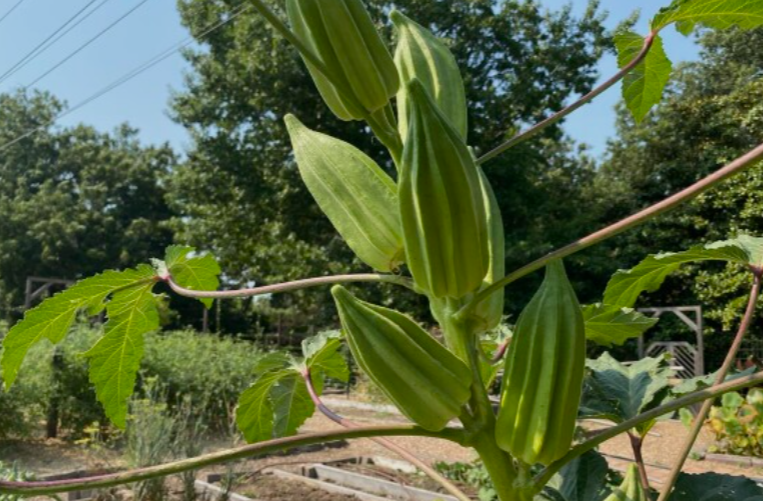
Star of David okra is easy to recognize. The plants are tall and stout, commonly reaching 7 to 8 feet and sometimes 10 feet or more in long, hot summers. The stalks are thick and often grow with few side branches. The large, lobed leaves frequently show purple or reddish coloration on the stems and leaf veins, giving the plants an ornamental look in the garden.
The pods are the main attraction. They are short, very thick, and deeply ribbed, with prominent ridges running from the cap to the tip. Sliced crosswise, each piece shows a bold star outline that is more pronounced than in ordinary ridged okras. The pods are best at about 3 to 4 inches long. Left on the plant, they can grow to 5 to 9 inches, but they quickly become tough, fibrous, and spiny.
How It Compares With Other Okras
Star of David differs sharply from the 2 most common American heirlooms. Clemson Spineless has slender, ridged pods that are relatively smooth to the touch. Emerald has round, smooth pods that stay tender at larger sizes. Star of David’s pods are far thicker and chunkier than either. They have more flesh, deeper ridges, and a heartier texture.
That extra thickness gives Star of David a meatier bite and a rich okra flavor that many cooks prefer for frying and grilling. The tradeoff is a shorter harvest window. Clemson Spineless and Emerald stay usable for a while as they lengthen. Star of David toughens quickly, so it needs frequent picking. Its tall plants also take more space and may need staking.
Growing Considerations
Star of David is built for heat. It thrives in hot, humid summers and also tolerates hot, dry conditions, which makes it a good choice for the Deep South, Texas, and the Southwest. It grows best when days are above about 85 degrees Fahrenheit and nights stay warm. Northern gardeners can grow it, but they will need a long, warm summer and a sheltered, sunny spot to get a good crop.
Plant it in full sun, in well-drained soil enriched with compost. Okra prefers a soil pH between about 6.0 and 7.5. Because the plants grow so tall, place them at the north side of the vegetable garden so they won’t shade shorter crops. A spot protected from strong wind helps keep the tall stalks from leaning or snapping.
Planting
Wait until all danger of frost has passed and the soil has warmed to at least 65 to 70 degrees Fahrenheit before sowing. Okra seeds rot in cold, wet soil. Star of David seeds have hard coats, so soak them in warm water overnight before planting to speed germination. Sow seeds about 1 inch deep.
Give Star of David more space than most okras. Space rows about 4 feet apart, and thin seedlings to about 18 inches apart once they have a few true leaves. Gardeners with short seasons can start seeds indoors in peat pots about 4 weeks before the last frost. Transplant carefully, since okra roots resent being disturbed.
Care
Once established, Star of David tolerates heat and short dry spells, but steady moisture keeps the pods tender and the yields high. Water deeply about once a week, more often during extreme heat or in sandy soil. A 2- to 3-inch layer of organic mulch holds moisture, suppresses weeds, and keeps the soil warm.
Side-dress plants with a nitrogen fertilizer when flowering begins, and again about a month later. Avoid heavy fertilizer early in the season, which produces tall, leafy plants with fewer pods. In windy gardens, drive a sturdy stake beside each plant and tie the stalk loosely as it grows. Tall okra can also be cut back by about a third in midsummer to keep it within reach and encourage side shoots.
Harvesting
Star of David begins producing about 60 to 75 days after planting, depending on the weather. Pods develop very quickly, often reaching harvest size just a few days after the flower fades. The most important rule with this variety is to pick young. Harvest pods at about 3 inches long, or 4 inches at most, when they are still tender and snap cleanly.
During peak season, check the plants every day or 2. Pods that grow too large become tough and spiny, and they also slow the plant’s production. Cut the pods off with a sharp knife or pruners. Wear gloves and long sleeves, since the pods, leaves, and stems carry fine hairs and spines that can irritate the skin. On very tall plants, a small step stool helps reach the top pods.
Pests and Diseases
Star of David is a vigorous plant with few serious problems. Root-knot nematodes are the most common pest in sandy Southern soils, causing swollen, knotted roots and stunted growth. Rotating okra to a new bed each year and adding plenty of organic matter to the soil helps keep them in check. Aphids, stink bugs, and corn earworms may feed on leaves and pods. Hand-picking, strong sprays of water, and insecticidal soap control most infestations.
In hot, wet weather, okra can develop leaf spots and wilt diseases. Good drainage, wide spacing, and watering at the base rather than overhead help reduce disease. Remove and destroy plant debris at the end of the season so diseases don’t carry over to the next year’s crop.
In the Kitchen
Star of David’s thick pods and star-shaped slices make it one of the best okras for frying. Sliced into rounds, breaded, and fried, the chunky pieces stay crisp outside and tender inside. The pods are also excellent grilled or roasted whole, which helps cut down on okra’s slippery texture. Their heartier flesh holds up well in long-simmered stews.
In Israel and across the Middle East, okra is often cooked whole in tomato-based stews with garlic, lemon, and warm spices. Star of David suits that style perfectly. The pods can also be pickled, frozen after blanching, or dried for winter use. Those willing to keep up with its fast-growing pods will find it one of the most rewarding heirloom okras to grow.
Sources
Clemson Cooperative Extension, “Okra”
Texas A&M AgriLife Extension, “Okra”
University of Georgia Cooperative Extension, “Growing Okra in the Home Garden”
University of Arkansas Cooperative Extension Service, “Home Gardening Series: Okra”