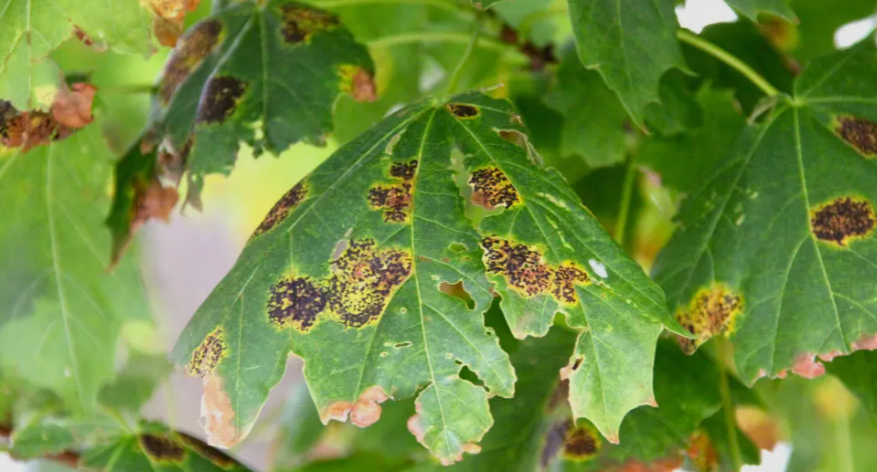
Most maple tree diseases look much worse than they really are. In midsummer you might see black blotches on the leaves of a silver maple, brown streaks along the veins of a Norway maple, or a white dusting across a sugar maple’s canopy. Problems like these can make a healthy tree look like it is dying, yet most of them are only cosmetic, and the tree leafs out normally the next spring.
A smaller group of maple diseases is far more serious. These attack the wood, roots, and water-conducting tissues, and they can weaken, disfigure, or kill a tree over a few seasons. They tend to show up as wilting branches, sunken bark, oozing sap, or mushrooms at the base of the trunk rather than as spots on leaves. Telling the 2 groups apart is the most useful skill a maple owner can have.
The Connecticut Agricultural Experiment Station notes that anthracnose, fungal leaf spots (including tar spot), powdery mildew, and Verticillium wilt are diseases usually encountered every year, whereas leaf scorch is an occasional problem. Weather plays a big role. Cool, wet springs favor leaf diseases, while drought, heat, soil compaction, and wounds open the door to cankers and root rots. ct
This guide covers the 15 most common maple tree diseases in North America. They are roughly ordered from the minor leaf problems homeowners see most often to the trunk and root diseases that call for an arborist. Each description elaborate what to look for and what you can realistically do about it.
1. Tar Spot
Tar spot is the easiest maple disease to recognize, because the leaves look as if someone flicked drops of black tar across them. Symptoms first appear as inconspicuous, pale green to yellow areas on the leaves, which develop into distinctive, slightly raised, shiny, tar-like black spots as the fungus grows. Norway maple is the most common host in the Northeast, where the spots are often very large and the disease is frequently called “giant tar spot.” Silver and red maples usually show smaller spots. Infections are most noticeable from late summer into fall.
Although it is unsightly, tar spot is rarely a threat to the tree. Cornell’s Plant Disease Diagnostic Clinic says tar spot alone is rarely serious enough to threaten the health of trees, though heavy infections on Norway maple can be troublesome because of early leaf drop. The fungi overwinter on infected leaves that fall to the ground, so raking and removing fallen leaves each autumn is the most effective control. Fungicides are rarely worth the cost on large shade trees. A severe outbreak one year does not guarantee a serious outbreak the next.
2. Anthracnose
Anthracnose is a group of fungal leaf diseases that thrive in cool, rainy spring weather. Symptoms vary by maple species, but they usually appear as irregular brown or tan blotches that follow the leaf veins. On Norway maple, narrow, purple to brown streaks occur along the leaf veins. Badly infected leaves may curl, crinkle, and drop early in the summer. The same family of diseases also attacks sycamore, oak, and ash.
Like tar spot, anthracnose seldom causes lasting harm to an established tree. Heavy infections can result in early leaf drop, and many maples are infected by both tar spot and anthracnose in the same season. Healthy trees usually push out a second set of leaves by midsummer. Rake and destroy fallen leaves, prune to improve air movement through the canopy, and water during dry spells to reduce stress. Fungicides are generally reserved for young or high-value trees with a history of severe infection.
3. Purple-Eye Leaf Spot
Purple-eye leaf spot, also known as Phyllosticta leaf spot, is common on red, silver, sugar, and Norway maples. Penn State Extension describes leaf spots up to 1/4 inch in diameter with a pronounced purple border that are round or irregular in shape, with tiny black fungal fruiting structures dotting the upper surface of the spots. The centers often turn tan and may fall out, giving leaves a shot-hole look. Symptoms usually appear in late spring after a period of wet weather.
This disease is almost entirely cosmetic and rarely causes serious defoliation. According to NC State Extension, the main management strategy is regular disposal of leaf litter under the tree. Avoid overhead irrigation that keeps foliage wet, and give young trees enough spacing for good airflow. Mature trees almost never need chemical treatment.
4. Powdery Mildew
Powdery mildew coats maple leaves with a thin white or grayish film that looks like a dusting of flour or talcum powder. It usually appears in mid to late summer, especially on Norway and sugar maples growing in shade or crowded sites. Unlike most leaf diseases, powdery mildew favors warm days, cool nights, and high humidity rather than rainfall. Infected leaves may yellow or develop a purplish tint before dropping early in the fall.
On mature maples, powdery mildew is a minor problem that does not threaten the tree’s health. Thin crowded branches and remove competing vegetation to let more sunlight and air into the canopy. Rake up fallen leaves in autumn. Avoid heavy nitrogen fertilization, which produces soft, lush growth that is especially susceptible. Fungicides are rarely needed except on young trees or in nursery production.
5. Verticillium Wilt
Verticillium wilt is one of the most serious maple diseases in North America. A soil-dwelling fungus enters through the roots and clogs the tree’s water-conducting tissue. Early symptoms include heavy seed production, smaller-than-normal leaves, and browning of the leaf margins, and frequently the foliage on only one side of a tree wilts. If you peel back the bark on an affected branch, you will often see olive-green to brown streaks in the sapwood. Norway, red, silver, and sugar maples are all susceptible.
There is no cure, but some trees recover if symptoms are mild. Penn State recommends pruning out affected limbs and watering to maintain tree vigor, noting that some trees recover, and advises against heavy fertilization. Because the fungus persists in soil for years, it is necessary to avoid planting susceptible species in the area. Good replacement choices include resistant trees such as oaks, honeylocust, conifers, and birches. Confirm the diagnosis with a plant diagnostic lab, since drought stress and root damage can look similar.
6. Bacterial Leaf Scorch
Bacterial leaf scorch is caused by a bacterium that lives in the tree’s water-conducting tissue. Sap-feeding insects such as leafhoppers and spittlebugs spread it from tree to tree. Purdue Extension notes that it affects red maple and sugar maple. Symptoms include browning along the leaf edges, often separated from the green tissue by a yellow or reddish band. They typically appear in mid to late summer and get worse each year, starting on a single branch before spreading through the canopy.
It is easy to confuse bacterial leaf scorch with ordinary leaf scorch caused by heat and drought. The key difference is that the bacterial form returns every year, gets steadily worse, and progresses from older leaves toward the branch tips. A lab test is the only reliable way to confirm it. There is no cure. Deep watering, mulching, and removing dead branches can slow the decline and keep a tree attractive for several years.
7. Nectria Canker
Nectria canker is a fungal disease of the bark that creates the distinctive “target” cankers found on red and sugar maples, especially in woodlots. The fungus grows slowly when the tree is dormant or under stress, and kills the bark, cambium, and outer sapwood. Each year the tree grows a ridge of callus tissue around the wound, and the fungus pushes past it again. Over time this creates concentric rings that look like a bullseye. Red to reddish orange, raised, cushion-like bumps can occasionally be seen on the edge of the canker.
Nectria canker rarely kills large trees, but it weakens the trunk and lowers the value of the timber. Prune out cankered branches in dry weather, cutting well below the canker. Trunk cankers cannot be cut out, so focus on reducing stress through watering, mulching, and protecting the tree from lawn mowers and string trimmers. In forest stands, cankered trees are often removed during thinning.
8. Coral Spot Canker
Coral spot canker gets its name from the tiny, bright coral-pink to orange pustules that erupt from the bark of dead twigs and branches. The University of Minnesota Extension notes dead branches and twigs are often first observed in early spring, and the disease is common on trees stressed by drought, recent transplanting, or other factors. The fungus typically invades wood that has already been weakened. It is especially common on Japanese maples, young street trees, and recently planted specimens.
The best defense is keeping trees healthy and unstressed. Prune out infected branches several inches below the visible pustules during dry weather, and dispose of the wood away from the tree. Water newly planted maples regularly for their first 2 to 3 years. Avoid wounding the bark. A light coral spot infection on a few twigs is usually a sign of stress, not a disease that will kill the tree.
9. Eutypella Canker
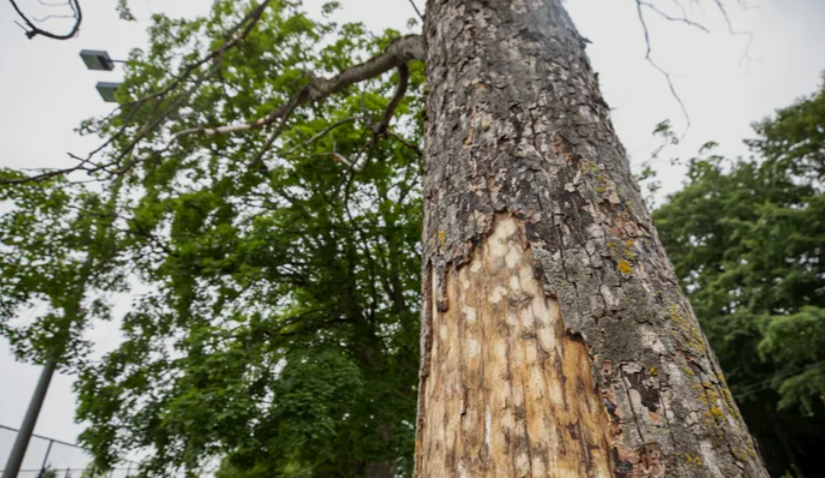
Eutypella canker is a long-lasting trunk canker found on Norway, red, silver, and sugar maples in both forests and landscapes. Trunk cankers are typically within 9 feet of the ground, are usually centered on branch stubs or wounds, and have raised or swollen edges with a flattened or sunken center. When bark is removed from the edge of the canker, chalky-white to tan mats of fungal growth can be seen. The cankers expand slowly for decades and can become very large.
This disease is more dangerous than it looks. Small trees less than 4 inches in diameter are commonly killed when the canker girdles the main trunk, while on older trees the fungus decays the sapwood up to a foot into the tree, and many infected trees break during strong storms. Trunk cankers cannot be pruned out but should be monitored, and a certified arborist should assess the stability of infected trees. Prevention starts with proper pruning cuts that never leave a branch stub.
10. Cytospora Canker
Cytospora canker is a common stress-related disease of maples, especially red and silver maples planted in hot, dry, or compacted urban sites. It shows up as sunken, discolored areas of bark on branches and trunks, sometimes with amber sap oozing from the edges. Tiny, pimple-like fungal structures often appear on the dead bark. Branches beyond the canker gradually wilt, turn brown, and die, often starting in the upper canopy.
The fungus mostly attacks trees that are already struggling, so treatment begins with fixing the underlying stress. Water deeply during droughts, mulch the root zone, and avoid wounding the trunk with mowers and trimmers. Prune out infected branches in dry weather, cutting several inches below the edge of the canker into healthy wood. Fungicides are not effective against Cytospora canker.
11. Sapstreak Disease
Sapstreak is a fatal disease that mainly affects sugar maple and is best known to maple syrup producers. It usually enters the tree through wounds at the base of the trunk or in the roots, and most often affects large, wounded trees left after logging. Infected trees develop thin, stunted crowns with small, pale leaves. When the trunk is cut, the wood shows a distinctive pattern of stain streaks radiating outward from the center. Sapstreak is a native disease that was not identified until 1935.
The disease often goes unnoticed until it is too late. Symptoms typically go unnoticed until the affected tree dies, normally 3 to 4 years after infection. The best prevention is avoiding wounds to roots and lower trunks, especially during summer logging or heavy equipment work. Infected trees should be removed as soon as possible to minimize stain damage.
12. Armillaria Root Rot
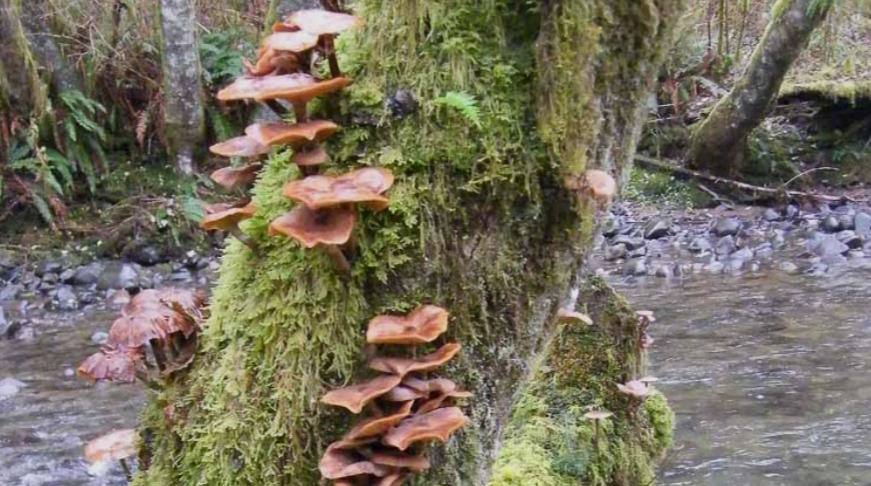
Armillaria root rot, sometimes called shoestring root rot, is caused by a fungus that attacks the roots and lower trunk of weakened maples. Look for white, fan-shaped sheets of fungal growth under the bark at the base of the tree, and black, shoestring-like strands in the soil or under loose bark. In fall, clusters of honey-colored mushrooms may sprout at the base of the trunk. Above ground, the tree shows thinning foliage, early fall color, and branch dieback.
There is no cure for Armillaria root rot once the roots are badly decayed. The disease mainly attacks trees stressed by drought, root damage, defoliation, or construction, so keeping maples healthy is the best defense. A tree with extensive root decay is at risk of falling and should be assessed by a certified arborist. When replacing an infected tree, remove as much of the stump and large roots as possible before replanting.
13. Phytophthora Root Rot and Bleeding Canker
Phytophthora is a water mold that attacks maple roots and the lower trunk in poorly drained or waterlogged soil. One telltale sign is bleeding canker, where dark, reddish-brown or black sap oozes from cracks in the lower trunk. Beneath the bark, the inner tissue is discolored. Above ground, the tree shows small, yellowing leaves, a thin canopy, and gradual decline over several years. Red maples and Japanese maples are especially vulnerable when planted too deeply or in wet clay soils.
Good drainage is the key to prevention. Plant maples with the root flare visible at the soil surface, avoid piling mulch against the trunk, and do not plant in low spots where water collects. Correct any irrigation that keeps the soil saturated. Fungicides labeled for Phytophthora can help protect valuable trees in the early stages, but they work best when combined with improved drainage.
14. Bacterial Wetwood
Bacterial wetwood, also known as slime flux, is a common condition in older maples, elms, and other shade trees. Bacteria living in the inner wood ferment and build up gas pressure, which forces a foul-smelling, watery liquid out through cracks and wounds in the bark. The liquid leaves dark, wet streaks running down the trunk. It often attracts flies, wasps, and other insects. In winter, the streaks may dry to a pale, crusty residue.
Despite its alarming appearance, wetwood rarely causes serious harm to a healthy tree. Do not drill holes into the trunk to drain the liquid, since that creates new wounds and can spread the problem. Keep the tree healthy with regular watering during droughts and proper mulching. Rinse the bark if the ooze kills grass at the base of the tree.
15. Ganoderma Butt Rot
Ganoderma butt rot is a wood-decay disease that attacks the base of the trunk and the major roots of mature maples. The most obvious sign is a large, shelf-like conk growing near the soil line. It may be glossy reddish-brown on top or a dull brown with a white edge, depending on the species of fungus. The fungus slowly digests the heartwood and sapwood, and the tree’s canopy may look healthy for years even as its structural support rots away.
Because the decay is hidden inside the trunk, a tree with Ganoderma conks is a serious safety concern. Any maple with conks at its base should be inspected by a certified arborist, who can use tools to measure how much sound wood remains. Trees near homes, driveways, sidewalks, or play areas may need to be removed. Prevent the disease by avoiding wounds to roots and the lower trunk, especially during construction and trenching.
Sources
Connecticut Agricultural Experiment Station, “Common Diseases of Maple”
Penn State Extension, “Maple Diseases”
Cornell University Plant Disease Diagnostic Clinic, “Tar Spot of Maple”
University of Minnesota Extension, “Eutypella Canker”
Purdue Extension, “Diseases and Insect Pests of Hardwood Trees”