Chinese Snowball Viburnum: The Giant “Jade Flower” Shrub That Lights Up Southern Springs
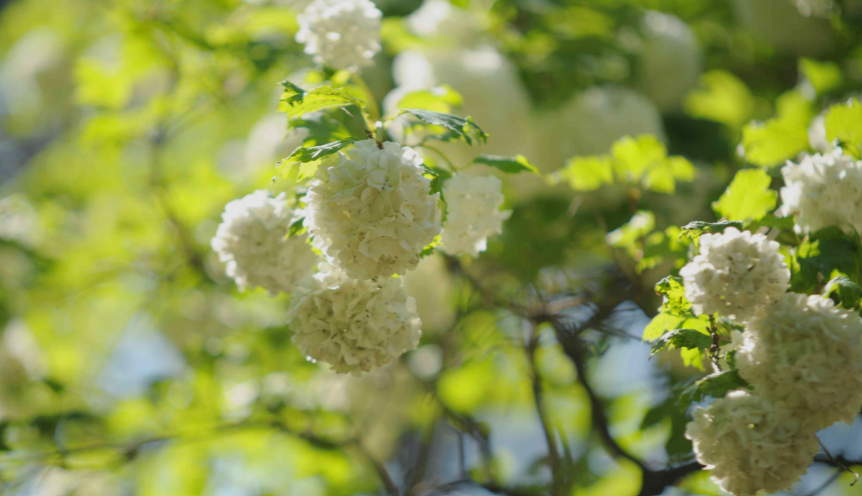
Chinese snowball viburnum produces the largest flowers of any snowball-type viburnum. Each spring it covers itself in round flower clusters up to 8 inches across, as big as softballs. The blooms open a soft lime green and gradually turn a brilliant, glowing white. A mature shrub in full bloom can carry hundreds of these clusters at once, which garden writers often describe as a “spring snowstorm.” In the American South, where real snow is rare, it has become one of the most admired flowering shrubs in older neighborhoods, churchyards, and heirloom gardens.
The plant has a remarkable background. In its native China it has been celebrated for centuries, and its wild form is the official flower of an ancient city. It reached the West through one of history’s most famous plant hunters. It has won state plant awards for its performance in hot, humid climates where many other flowering shrubs struggle. This guide covers its history, how to tell it apart from look-alike shrubs, how to propagate a plant that produces no seed, and how to grow it for the biggest display.
Botanical Classification
Chinese snowball viburnum is a large deciduous to semi-evergreen shrub in the viburnum genus. The genus includes roughly 150 to 175 species of shrubs and small trees found mostly in the Northern Hemisphere. It has been reassigned among plant families over the years. Older references list the honeysuckle family, others the moschatel family, and current systems give viburnums their own family. NC State Extension explains that the species name is a Latin compound meaning “large head,” a reference to its enormous rounded flower clusters.
The species exists in 2 forms. The wild form, native to the forest margins and open woodlands of mainland China, has flat, lacecap-style clusters. It has a center of small fertile flowers and a ring of larger sterile flowers, and it produces red fruit that turns black. The garden form, the one sold in nurseries as Chinese snowball, has clusters made entirely of large sterile flowers packed into a ball. That garden form produces no fruit or seed, and it is the plant nearly all gardeners mean when they say “Chinese snowball.”
Brief History
The sterile snowball form was a treasured garden plant in China long before Western botanists saw it. It reached the West through Robert Fortune, the Scottish plant hunter who explored China in the 1840s for the Horticultural Society of London. Fortune found the shrub growing in gardens on Chusan Island and around Shanghai, where he reported seeing plants as tall as 20 feet. Live plants reached the Society’s garden in England in June 1844, and the species was formally named in 1847.
The plant quickly became a sensation in Victorian gardens, though in England it needed a sheltered spot or the warmth of a wall to bloom well. It found a much better home in the southern United States, where long, warm growing seasons suited it far better than the cool British climate. By the early 20th century it was a common sight in southern dooryard gardens. Many of those original plants were passed from neighbor to neighbor as rooted cuttings.
The Jade Flower of Yangzhou
In China, the fertile wild form of this species is known as qiong hua, which means “white jade flower.” It is one of the most culturally significant flowering plants in the country and appears in classical poetry, painting, and garden design. It is especially associated with Yangzhou, a historic city in Jiangsu province, where it is the official city flower. Each spring, residents and visitors gather at temples, gardens, and tree-lined avenues to admire the blooms.
Legends surround the plant. One famous story tells of a magnificent specimen at a Taoist temple in Yangzhou that emperors of the Song Dynasty tried to move to their royal gardens. The tree reportedly failed to thrive away from the city and was returned to Yangzhou, where it recovered. One temple in the city is home to a specimen more than 300 years old, the oldest of its kind there. These traditions give the Chinese snowball a depth of meaning few garden shrubs can match.
Identifying Characteristics
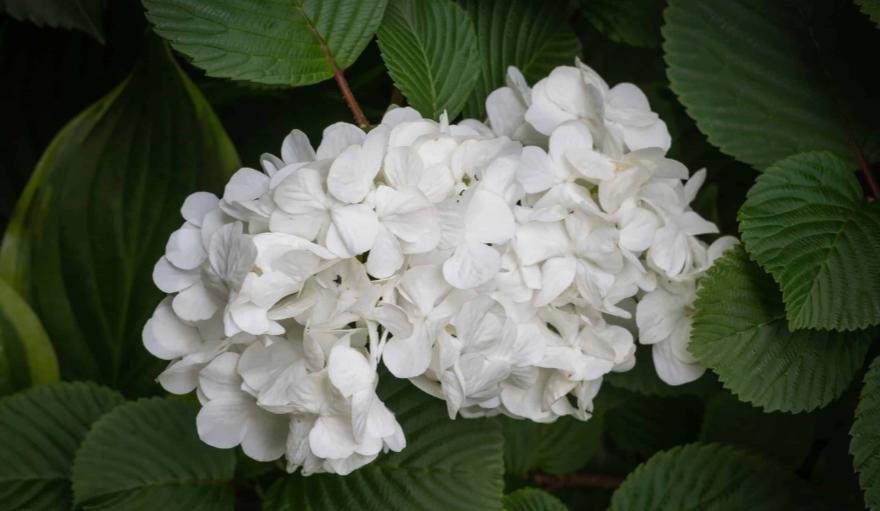
The flowers are the plant’s defining feature. In April and May they form round, ball-shaped clusters, typically 6 to 8 inches across. Each cluster is made up of dozens of individual flowers about 1 to 1½ inches wide. The clusters emerge a fresh chartreuse or apple green, then slowly brighten to pure white over a week or two. Eventually they fade to light brown and may stay on the plant for several more weeks. Unlike many viburnums, the flowers have no fragrance.
Some plants produce a second, lighter flush of flowers in late summer or fall, especially in warmer climates. The leaves are opposite, oval, and finely toothed, usually 2 to 4 inches long and dark green, with soft hairs on the underside. Fall color is generally modest, but some plants turn purplish-red. In the warmest regions the leaves often stay on the shrub for much of the winter. LSU AgCenter notes that the leaves are semi-evergreen in Louisiana.
Mature plants usually reach 10 to 15 feet tall and wide in gardens. In ideal conditions they can grow 20 feet or more, with a rounded, vase-shaped form and multiple trunks. The young stems are covered in fine hairs. Older trunks develop smooth, gray-brown bark, and on very old plants they can become thick and almost tree-like.
Also Read: Types of Viburnum Shrubs
Chinese Snowball vs. Other Look-Alike Shrubs
Chinese snowball viburnum is often confused with hydrangeas. LSU AgCenter notes that its flower clusters resemble those of panicle hydrangeas but are more rounded. Bloom time is the easiest way to tell them apart. Chinese snowball flowers in mid-spring, usually alongside azaleas, while hydrangeas bloom from early summer onward. The lime-green-to-white color change is another clue, and the viburnum’s flowers are borne on a permanent woody framework rather than on stems that die back each winter.
Within the viburnum group, the Chinese snowball is easily separated from the Japanese and European snowballs by its much larger flower clusters, typically 2 to 3 times their size. It is also often confused with the fragrant snowball viburnum. That is a hybrid between the Chinese snowball and Koreanspice viburnum. The hybrid has smaller, sweetly scented white clusters and lacks the green early color stage. Anyone expecting fragrance from a Chinese snowball will be disappointed, since only the hybrid carries the scent.
Landscape Uses
Chinese snowball viburnum is a natural specimen plant, best placed where its spectacular spring display can be seen from a distance. The Mississippi State University Extension Service calls it the showiest of all viburnums. It notes that Mississippi gardeners often give it a prime spot in the middle of the front yard all by itself. It also works well at the back of a large perennial border, at the edge of a woodland garden, or as the anchor of a large shrub planting.
The flowers make outstanding cut flowers. Cut the clusters when they are still slightly green for the longest vase life, and use them in spring arrangements and wedding flowers, where their size makes them a dramatic focal point. They can also be dried for long-lasting displays. Because the plant grows so large, give it plenty of room: at least 12 to 15 feet from foundations, walkways, and other shrubs.
Propagation
Because the garden form of Chinese snowball is sterile and produces no seed, every plant must be propagated vegetatively. The most reliable method is softwood or semi-hardwood cuttings taken in late spring or summer. The University of Georgia notes that the plant roots easily from summer cuttings, which is one reason it has been shared so widely among southern gardeners. Take cuttings 4 to 6 inches long from healthy new growth. Dip them in rooting hormone and keep them in a humid, shaded spot until roots form.
Layering is another simple method that works well with this shrub. Bend a low branch to the ground, wound the bark slightly on the underside, and pin the wounded section into the soil. Keep it moist, and roots usually form within a season, after which the new plant can be cut from the parent and moved. Because the plant cannot be grown from seed, many of the Chinese snowballs in older southern gardens are genetically the same plant, passed down by cuttings for generations.
Growing Considerations
Chinese snowball viburnum is hardy from Zone 6 through Zone 9, which makes it one of the best snowball shrubs for the southern United States. The University of Georgia named it the 2006 Georgia Gold Medal winner for shrubs. It grows best in full sun to partial shade. In the hottest southern regions, afternoon shade helps prevent scorched leaves and keeps the flowers fresh longer, while northern gardeners near the edge of its range should give it full sun and a sheltered location.
The shrub prefers moist, fertile, well-drained soil rich in organic matter, and slightly acidic soil is ideal. It is not drought tolerant. Water it deeply during dry spells, especially in its first few years and while flower buds are forming in summer and fall. Spread 2 to 3 inches of mulch over the root zone to conserve moisture and keep the soil cool. Avoid late-summer fertilizing in colder parts of its range, since it can push soft growth that winter cold damages.
Prune immediately after flowering, since next year’s flower buds form during the summer and fall. Removing a few of the oldest branches at the base thins the shrub, opens up its form, and encourages vigorous new growth. Very old, overgrown plants can be renewed by cutting them almost to the ground. The University of Georgia warns, however, that after such severe pruning they may not flower again for up to 2 years.
Pests and Problems
Chinese snowball viburnum is generally one of the most trouble-free viburnums, with no serious, widespread pest or disease problems. Scale insects, including spinose scale, occasionally build up on stems and the undersides of leaves, especially on stressed plants. Spider mites can appear in hot, dry conditions, causing speckled, faded leaves. Asiatic garden beetles may chew foliage in some regions.
Most problems trace back to drought stress, poor drainage, or too much sun in the hottest climates. Consistent watering during dry periods, good soil drainage, and afternoon shade in the Deep South prevent the majority of issues. In the colder parts of its range, an unusually harsh winter can kill flower buds or damage young stems, so a sheltered site near a building or a group of evergreens improves reliability. Grown in the right setting, a Chinese snowball can thrive for decades and become a cherished landmark of the garden.
Sources
NC State Extension Gardener Plant Toolbox, “Chinese Snowball Viburnum”
LSU AgCenter, “Revisiting Viburnums”
University of Georgia Cooperative Extension, “Georgia Gold Medal Winner Offers Warm ‘Snowballs’”