Boxwood Blight: How to Recognize, Prevent, and Manage This Devastating Boxwood Disease
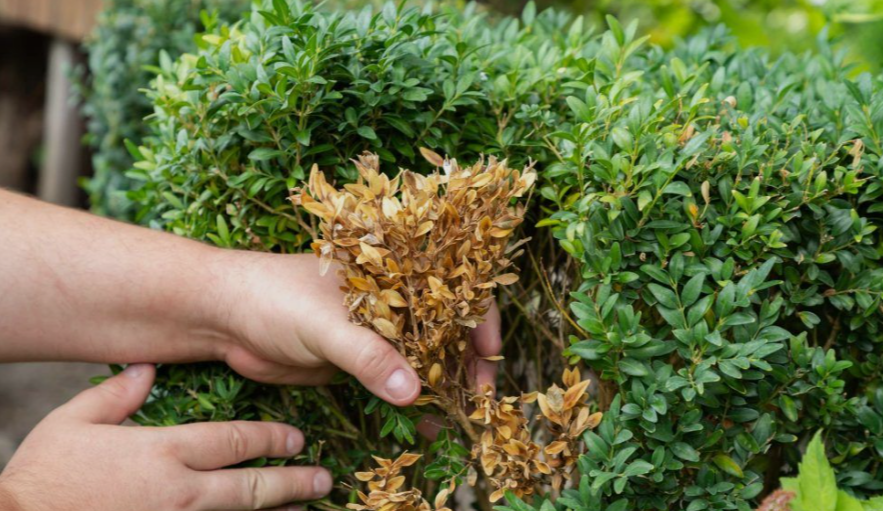
Boxwood blight is the most serious disease of boxwood in North America. It is a fast-moving fungal infection that can strip a lush, healthy hedge of its leaves in just a few weeks. Infected shrubs develop dark spots on their leaves and black streaks on their stems, then drop their leaves from the bottom up, leaving bare, twiggy branches. In warm, humid weather the disease spreads quickly from plant to plant. Whole plantings in gardens, nurseries, and historic landscapes have been lost to it.
Since its arrival in the United States in 2011, boxwood blight has been confirmed in more than 20 states and several Canadian provinces. It has transformed how boxwoods are grown, sold, and cared for. This guide explains where the disease came from and how to recognize it. It also covers how the disease spreads, which plants it affects, and the most effective ways to prevent and manage it.
What Is Boxwood Blight?
Boxwood blight is caused by a fungus that infects the leaves and stems of boxwood. It is sometimes called box blight or boxwood leaf drop. A closely related fungus causes similar symptoms in parts of Europe, but in North America nearly all cases come from a single species. The fungus does not infect the roots, so infected plants can sometimes resprout. Repeated defoliation, however, usually weakens and eventually kills them, especially susceptible varieties.
What makes boxwood blight so dangerous is its ability to survive and spread. The fungus produces sticky spores that move easily in splashing water and on people, tools, animals, and equipment. It also forms tough resting structures that allow it to survive in fallen leaves and soil for years. University of Kentucky Cooperative Extension notes that these resting structures can remain dormant for about 1 year buried in soil and for up to 6 years in plant debris.
Brief History
Boxwood blight first appeared in the United Kingdom in the mid-1990s. It soon spread across much of Europe and was found in New Zealand by 1998. The origin of the fungus remains unknown. Because many traditional European gardens rely heavily on boxwood hedges and parterres, the disease caused widespread damage to historic landscapes there.
In October 2011, plant pathologists confirmed boxwood blight in North America for the first time, in North Carolina and Connecticut. The first U.S. infestation was traced to a North Carolina nursery. Plants from that nursery carried the disease to production fields in Virginia. Since then the disease has been reported in more than 20 states and in Canada, spreading mainly through the movement of infected nursery stock. It is now considered one of the most important threats to boxwood throughout eastern North America.
Also Read: Boxwood Diseases
Symptoms of Boxwood Blight
Boxwood blight produces a distinctive combination of symptoms. The earliest sign is small, circular, dark brown to black spots on the leaves, often with darker borders or a lighter center. These spots can spread and merge until the entire leaf turns tan or straw-colored. Because leaves usually drop soon after spots appear, this early stage is often missed.
The most noticeable symptom is rapid leaf drop, typically beginning on the lower, inner branches and moving upward. Within days to weeks, infected plants can lose most of their leaves. Another key sign is narrow, black or dark brown streaks or lesions on green stems. These stem lesions are one of the most reliable ways to tell boxwood blight apart from other boxwood problems. In very humid conditions, white, fuzzy spore masses may also appear on the undersides of infected leaves.
How Boxwood Blight Spreads
Boxwood blight spreads mainly through water and human activity. Its sticky spores are not easily carried by dry wind. They are splashed from plant to plant by rain and overhead irrigation, which spreads the disease within a single shrub or hedge. Over longer distances, spores and infected leaves are carried on pruning tools, gloves, clothing, shoes, landscaping equipment, vehicles, and even pets and wildlife.
The most important way the disease travels long distances is through infected plants. Boxwoods purchased from nurseries, cuttings, and holiday greenery such as boxwood wreaths can all carry the fungus. Landscape crews moving from one property to another without cleaning their equipment can also spread it. The disease thrives in warm, humid conditions, especially when leaves stay wet for long periods. Outbreaks are most common in late spring, summer, and early fall.
Also Read: Boxwood Leafminer
Plants Affected by Boxwood Blight
Boxwood blight affects all species and cultivars of boxwood, though susceptibility varies widely. English boxwood and many American boxwood selections are among the most susceptible. Some Korean, Japanese, and hybrid boxwoods are much more resistant. University of Wisconsin–Madison Extension lists several varieties documented as resistant, including NewGen Independence, NewGen Freedom, ‘Green Gem’, ‘Wintergreen’, and ‘Winter Gem’.
The disease also infects close relatives of boxwood. Pachysandra, a popular evergreen groundcover often planted beneath boxwood, is susceptible, as is sweetbox. These plants can serve as hidden reservoirs of the disease and spread it to nearby boxwoods. Gardeners should avoid planting them near boxwood in areas where blight is a concern.
Diseases and Problems That Look Similar
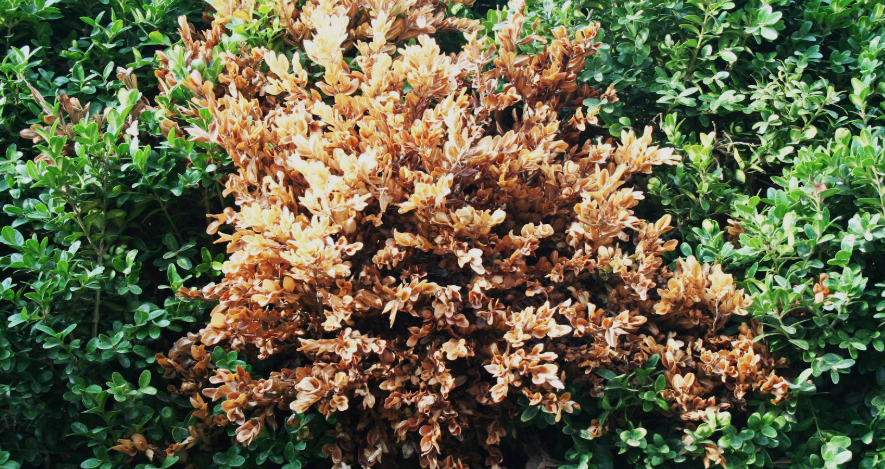
Several other boxwood problems can be mistaken for boxwood blight. Volutella blight, another fungal disease, causes leaves to turn yellow, tan, or straw-colored and often produces salmon-pink spore masses on the leaves and stems. Unlike boxwood blight, it typically causes leaves to stay attached to dead branches rather than dropping quickly. Macrophoma leaf spot produces small black dots on older, yellowing leaves but rarely causes serious damage.
Winter burn, root rot, drought stress, and boxwood leafminer can also cause yellowing, browning, or leaf loss. The combination of leaf spots, rapid defoliation, and black stem streaks is the clearest sign of boxwood blight. Because accurate diagnosis is important, suspected cases should be confirmed by a local extension office or plant diagnostic laboratory before plants are removed or treated.
Preventing Boxwood Blight
Prevention is by far the most effective way to deal with boxwood blight. Start by buying boxwoods only from reputable nurseries, ideally those that participate in boxwood blight cleanliness or compliance programs. Inspect new plants carefully for leaf spots, leaf drop, and black stem streaks before buying them. Some gardeners keep new boxwoods isolated from existing plantings for several weeks to watch for symptoms before planting them.
In the garden, choose blight-resistant varieties whenever possible, especially for hedges and low borders where plants grow close together. Space plants to allow good air circulation, and avoid overhead watering. Water at the base of the plants in the morning so leaves dry quickly. Avoid pruning or working among boxwoods when the foliage is wet, since that spreads spores. Clean and disinfect pruning tools between plants and between properties, and wear clean clothing and shoes when moving between gardens.
Also Read: Best Boxwood Varieties for Zone 6 Gardens
Managing Boxwood Blight
There is no cure for boxwood blight once a plant is infected. If the disease is confirmed, remove infected plants promptly, along with their roots and all fallen leaves. Rake or vacuum up leaf litter beneath infected plants, since the fungus can survive in debris for years. Bag all plant material on site and dispose of it in household trash or a landfill. Never compost infected plants or debris.
After removal, replanting boxwood in the same location is risky because the fungus can persist in the soil and leaf debris. Consider replacing infected boxwoods with alternative evergreen shrubs that are not affected by the disease. Alternatively, choose highly resistant boxwood varieties and monitor them closely. In valuable plantings, preventive fungicide applications can help protect healthy plants during periods of high risk. Fungicides do not cure infected plants, however, and they must be applied regularly and according to label directions. Consult your local extension office for current recommendations.
The Future of Boxwood in a Blight-Affected World
Boxwood blight has changed boxwood gardening across North America. Breeding programs in the United States and Europe have developed new varieties with much greater resistance. These include the NewGen series from Virginia and the Better Boxwood series from Belgium. Nurseries have adopted strict sanitation practices, and many states now track and regulate the disease.
For gardeners, the key to success is a combination of resistant varieties, careful plant selection, good cultural practices, and vigilance. With those steps, boxwoods can still be grown successfully in most regions. Their classic evergreen structure will continue to define gardens for generations to come.
Sources
University of Kentucky Cooperative Extension, “Boxwood Blight”
Purdue Extension, “Boxwood Blight”
Virginia Cooperative Extension, “Boxwood Blight: A New Disease of Boxwood Found in the Eastern U.S.”
University of Georgia Extension, “Disease Update: Boxwood Blight in Georgia”