Eastern white pine is the tallest native conifer in eastern North America, a soft-needled giant that once covered huge parts of the Northeast and Great Lakes region. Its long, straight trunks and layered, horizontal branches make it easy to pick out on the skyline. Old trees in sheltered valleys can rise well over 150 feet.
Few trees have mattered more to American history. In colonial times, the British Crown claimed the tallest white pines for Royal Navy ship masts and cut a mark into their trunks to warn settlers away. Anger over those reserved trees fed one of the earliest revolts against royal rule, years before the Boston Tea Party.
Eastern white pine also has deep roots in Indigenous tradition. The Haudenosaunee, or Iroquois Confederacy, chose it as their Tree of Peace, a symbol of unity among their nations. Today it is the state tree of both Maine and Michigan and the provincial tree of Ontario.
Behind those honors is a tree with a hard past. Logging during the 18th, 19th, and early 20th centuries left only about 1 percent of the original old-growth forests. A disease brought from Europe then threatened the trees that remained, but the species has come back across much of its range.
1. It Is the Only Five-Needle Pine in the East
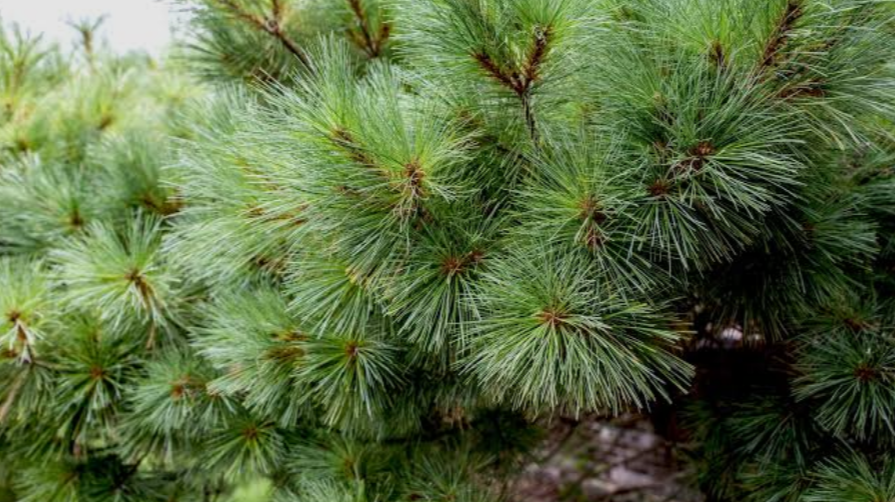
Eastern white pine needles grow in bundles of 5. It is the only native pine east of the Rocky Mountains with this trait. Many people remember it by matching the 5 letters in “white” to the 5 needles.
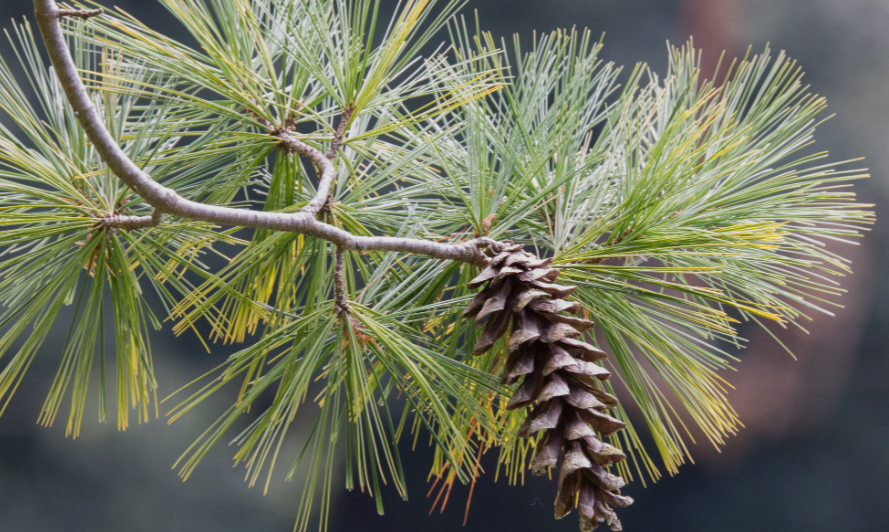
The needles are 3 to 5 inches long, soft, and blue-green. Each one has fine white lines of pores along its surface. They stay on the tree for about 2 years before dropping.
2. It Ranks Among the Tallest Trees in the East
Eastern white pine is often called the tallest tree in eastern North America. It shares that title with the tuliptree, which grows in the same southern forests. The tallest pines today grow in the southern Appalachians.
The most famous is the Boogerman Pine in Great Smoky Mountains National Park. It reached about 210 feet before Hurricane Opal snapped its top in 1995. Afterward, at 188.9 feet, it was still the tallest accurately measured tree in the East until a tuliptree passed it in 2011.
3. Colonial Pines May Have Been Even Taller
Early settlers described white pines far taller than any living today. One account tells of a fallen Connecticut pine measuring 247 feet. Another describes a tree cut in Lancaster, New Hampshire, at 264 feet.
There was no reliable way to measure trees in those days, so the records can’t be checked. Many experts think the pines may have reached about 230 feet on rare occasions. Even so, those giants clearly towered over the forest.
4. Its Range Covers Much of Eastern North America
Eastern white pine grows from Newfoundland west to Manitoba and Minnesota. It runs south along the Appalachian Mountains to northern Georgia. Its range also reaches into Iowa and the Mississippi Basin.
The tree does best in cool, humid climates with well-drained or sandy soil. It can also grow in boggy ground and on rocky highlands. A separate population grows in the mountains of Mexico and Guatemala.
5. You Can Estimate Its Age by Counting Branches
Eastern white pine adds one ring of branches, called a whorl, each year. Each whorl usually has 5 or 6 branches spreading like the spokes of a wagon wheel. Counting the whorls up the trunk gives a rough age for a young tree.
The tree also grows quickly in its prime. Between ages 15 and 45, it can add about 3.3 feet of height a year. Growth slows before and after that period.
6. Its Cones Take 2 Years to Mature
Eastern white pine cones are long and slender, measuring 4 to 8 inches. They are often coated with sticky resin. The scales lack the sharp prickles found on many other pines.
Each cone takes 2 growing seasons to ripen. When the cones open, winged seeds drift away on the wind. Squirrels, chipmunks, and many birds feed on the seeds.
7. It Can Live for Centuries
Eastern white pines often live 200 to 250 years. Some trees pass 400 years, and a few are reported to have lived more than 500. Old trees develop flat-topped, wind-shaped crowns.
The Longfellow Pine in Pennsylvania’s Cook Forest State Park is about 300 years old. It stands roughly 183 feet tall, making it the tallest white pine in the Northeast. The park has more than 100 white pines over 148 feet tall.
8. The British Crown Claimed the Best Trees
Britain had few trees tall enough to make masts for its warships. The Crown reserved the largest white pines in New England for the Royal Navy. By 1722, it was illegal in New Hampshire to cut white pines larger than 12 inches across without permission.
Royal surveyors marked reserved trees with 3 hatchet slashes called the King’s Broad Arrow. A single tall pine could be shaped into a one-piece “single-stick” mast, the strongest kind. About 4,500 Broad Arrow pines were shipped from New England.
9. It Sparked the Pine Tree Riot of 1772
Colonists resented losing the largest trees on their own land. On April 14, 1772, men in Weare, New Hampshire, attacked a sheriff who had come to arrest sawmill owners for cutting the King’s pines. The event became known as the Pine Tree Riot.
Some historians see it as an early step toward the American Revolution. The riot came more than a year before the Boston Tea Party. A flag showing a white pine later became a symbol of colonial resistance.
10. It Is the Haudenosaunee Tree of Peace
The Haudenosaunee, or Iroquois Confederacy, named eastern white pine the Tree of Peace. It stands for the union of the nations that joined together under the Great Law of Peace. The tree remains a symbol of the Six Nations today.
In the tradition, weapons of war were buried beneath the tree’s roots. An eagle sits at the top to watch for danger. The tree’s spreading roots reach out to welcome others who seek peace.
11. It Is an Official Symbol in Several Places
Eastern white pine is the state tree of both Maine and Michigan. Maine goes even further, naming the white pine cone and tassel as its state flower. Maine is also nicknamed the Pine Tree State.
In Canada, it is the provincial tree of Ontario. The tree appears on the state flags of both Maine and Vermont. Few trees carry this many official honors.
12. Logging Wiped Out Most Old-Growth Stands
Eastern white pine was one of the most valuable timber trees in North America. Loggers cut huge stands across Maine, Michigan, Wisconsin, and Minnesota in the 1800s. White pine lumber built towns and cities as settlers moved west.
The harvest was so heavy that only about 1 percent of the old-growth forest remains. Surviving groves are found in places like Hartwick Pines State Park in Michigan. Second-growth forests have since regrown across much of the tree’s range.
13. A Fungus From Europe Nearly Devastated It
White pine blister rust arrived in North America in the early 1900s on imported seedlings. The fungus causes cankers on branches and trunks that can kill young trees. It spread quickly through white pine forests.
The fungus can’t move directly from pine to pine. It must pass through currant or gooseberry plants first. Because of this, some states banned growing those berries to protect their forests.
14. Its Wood Is Soft and Easy to Work
Eastern white pine wood is light, soft, and straight-grained. It is easy to cut, carve, and shape. It is not very strong, though, so it is rarely used for heavy beams.
Colonists used it for houses, floors, and furniture. Today it is popular for trim, paneling, cabinets, and carving. It also takes paint and stain well.
15. It Shelters Eagles and Bear Cubs
Bald eagles often build their huge nests in tall white pines. The strong, open branches can hold nests that weigh hundreds of pounds. The height gives the birds a clear view of nearby water.
Black bear mothers often leave their cubs at the base of large white pines. The cubs climb the rough bark to escape danger. Deer, porcupines, and many birds also use the tree for food or shelter.
16. Its Needles Make a Vitamin-Rich Tea
White pine needles have long been steeped into a traditional tea. The needles are high in vitamin C. The tea has a mild, lemony, pine flavor.
The tree is also a favorite at holiday time. Its soft needles and full shape make it a popular Christmas tree. Its branches are widely used in wreaths and garlands.
Sources
- University of Maine Cooperative Extension, “Eastern White Pine Fact Sheet”
- Virginia Tech Dendrology, “Eastern White Pine” (Landowner Fact Sheet)
- Clark University Hadwen Arboretum, “Eastern White Pine”
- University of Vermont, “The Exceptional White Pines of Mohawk Trail State Forest”
- Virginia Tech Forest Update, “The Eastern White Pine and the King’s Broad Arrow”
- U.S. Forest Service, “Eastern White Pine”