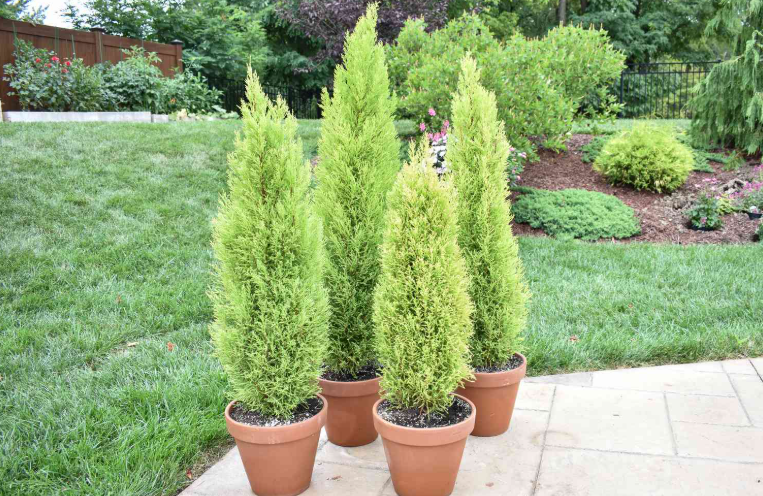
Cypress trees for small gardens have become increasingly popular as more homeowners look for the structure, texture, and year-round color of conifers without the eventual footprint of a full-sized specimen that can reach 60 feet or more at maturity. Plant breeders have spent decades selecting naturally occurring dwarf mutations, known as witch’s brooms, from full-sized cypress and false cypress trees, propagating these slower, more compact growth patterns into the named cultivars now widely available at garden centers.
Many of these compact cypress varieties add just 2 to 6 inches of height per year, compared to 12 inches or more for their full-sized parent species, meaning a tree that might otherwise dominate an entire yard within a decade can instead remain garden-appropriate for 20 years or longer. Cypress and false cypress varieties also offer an unusually wide range of foliage color and texture for a small-space evergreen, spanning golden thread-like foliage, soft blue-gray needles, and tightly layered fans of green, giving small garden designers considerably more visual variety than most other compact evergreen options provide.
This list explores 10 cypress trees especially well suited to small gardens, chosen specifically for their naturally restrained mature size rather than a need for constant pruning to keep them in check.
Hinoki Cypress ‘Nana Gracilis’
The Hinoki cypress cultivar ‘Nana Gracilis’ is one of the most widely planted dwarf conifers for small gardens, typically growing to just 6 to 10 feet in height over several decades, a small fraction of the 50 feet or more the straight species can eventually reach. This tree grows remarkably slowly, often adding only 2 to 4 inches of height per year, making it a reliable, low-maintenance choice for gardeners who want a conifer that will still fit its original spot many years after planting.
‘Nana Gracilis’ features distinctive dark green foliage arranged in dense, shell-like fans that curl slightly at the tips, creating a sculptural, almost bonsai-like appearance even without any special pruning or training. This tree tolerates part shade better than many other cypress varieties, making it a versatile option for small gardens that do not receive full sun throughout the day.
Sawara Cypress ‘Gold Mop’
The Sawara cypress cultivar ‘Gold Mop’ is a compact, mounding conifer prized for its bright golden-yellow, thread-like foliage, typically reaching a mature height of just 3 to 5 feet with a similar spread. This tree’s cascading, string-like branchlets create a distinctive textural contrast against the broader, flatter foliage typical of most other small garden conifers, making it a popular focal point plant in mixed borders and rock gardens.
‘Gold Mop’ holds its vivid golden color best with at least a few hours of direct sun each day, though the foliage can develop a slightly bronze tint during the coldest winter months in cooler climates. This tree’s naturally low, spreading habit means it requires little to no pruning to remain proportional within a small garden bed, unlike many conifers that need regular shaping to prevent them from overwhelming a compact planting space.
Lawson Cypress ‘Ellwoodii’
The Lawson cypress cultivar ‘Ellwoodii’, commonly called Ellwood’s cypress, is a narrow, columnar conifer well suited to small gardens where vertical structure is needed without a wide footprint, typically reaching 8 to 10 feet in height while spreading only 3 to 4 feet wide. This tree features soft, feathery, blue-green juvenile foliage that remains present throughout the tree’s life, giving it a notably fine, almost fern-like texture compared to the coarser foliage found on many other cypress varieties.
Ellwood’s cypress grows slowly enough to remain garden-appropriate for many years, typically adding only 4 to 6 inches of height annually, and its narrow form makes it a popular choice for framing entryways or creating a soft vertical accent within a small planting bed. This tree performs best with consistent moisture and can be prone to browning or dieback during extended drought, so regular watering during dry periods helps keep the foliage looking its best.
Lawson Cypress ‘Minima Aurea’
The Lawson cypress cultivar ‘Minima Aurea’ is a true dwarf conifer forming a dense, rounded globe shape, typically reaching only 2 to 3 feet in height and width even after many years of growth, making it one of the smaller cypress options available for compact garden spaces. This tree produces bright golden-yellow foliage year-round, offering reliable color in a small garden bed without requiring the seasonal maintenance that many flowering plants demand.
‘Minima Aurea’ grows exceptionally slowly, often adding less than 2 inches per year, which makes it particularly well suited to container growing or tightly planted small garden borders where a fast-growing plant would quickly become a maintenance problem. This tree’s naturally tidy, rounded form requires essentially no pruning to maintain its shape, appealing to gardeners looking for structure without ongoing upkeep.
Italian Cypress ‘Tiny Tower’
The Italian cypress cultivar ‘Tiny Tower’ offers the classic narrow, columnar silhouette associated with Mediterranean garden design in a considerably more compact package, typically reaching 10 to 15 feet in height while remaining only about 2 feet wide at maturity. This tree provides the same formal, upright accent traditionally created with full-sized Italian cypress, which can reach 40 to 60 feet, but in a scale appropriate for small urban gardens, courtyards, and narrow side yards.
‘Tiny Tower’ retains the dense, dark green foliage and strongly vertical growth habit of its larger relatives, making it an effective way to frame a doorway or create a formal rhythm along a small garden path without overwhelming the space. This tree performs best in full sun with well-drained soil, since Italian cypress varieties generally struggle in consistently wet or poorly drained garden conditions.
Dwarf Bald Cypress ‘Peve Minaret’
The dwarf bald cypress cultivar ‘Peve Minaret’ brings the soft, feathery texture and attractive coppery fall color of the classic wetland bald cypress into a scale suitable for small gardens, typically reaching a mature height of just 10 to 15 feet compared to the 100 feet or more a wild bald cypress can eventually achieve. This tree is deciduous, dropping its needles each fall after a notable color change, which gives small gardens a seasonal visual shift that most evergreen cypress varieties cannot provide.
‘Peve Minaret’ tolerates a wide range of soil moisture levels, from consistently damp to moderately dry conditions, making it one of the more adaptable small conifers for gardens with inconsistent watering or occasional standing water. This tree’s narrow, conical form and manageable size have made it an increasingly popular choice for small water gardens, pond edges, and tight urban planting strips.
Hinoki Cypress ‘Kosteri’
The Hinoki cypress cultivar ‘Kosteri’ is a low, spreading dwarf conifer, typically reaching only 2 to 4 feet in height while spreading somewhat wider, making it well suited to small garden foundation plantings and rock gardens where a low, mounding form is needed. This tree features rich green foliage arranged in the same distinctive shell-like fan pattern found on other Hinoki cypress cultivars, giving it a refined, layered texture that holds visual interest throughout the year.
‘Kosteri’ grows notably slowly, often taking a decade or more to reach its mature size, which makes it a dependable choice for small garden spaces where a plant’s eventual size needs to be predictable from the time of planting. This tree tolerates light shade reasonably well, offering more placement flexibility than cypress varieties that demand full sun to maintain dense, healthy foliage.
Sawara Cypress ‘Boulevard’
The Sawara cypress cultivar ‘Boulevard’ is a soft, silvery blue-gray conifer with a naturally pyramidal form, typically reaching 6 to 10 feet in height in most garden settings, considerably smaller than the straight species, which can exceed 50 feet. This tree’s foliage has an unusually soft, almost feathery texture to the touch compared to the sharper needles found on many other small garden conifers, making it a popular choice for gardens designed to be experienced up close along a path or seating area.
‘Boulevard’ can experience some foliage browning in intense summer heat or following exposure to drying winter winds, so a site with some afternoon shade in hotter climates tends to keep the foliage looking its best. This tree’s soft blue coloration provides an effective contrast when paired with the darker greens and golds found in many other small garden conifer varieties.
Leyland Cypress ‘Gold Rider’
The Leyland cypress cultivar ‘Gold Rider’ offers a more restrained alternative to the standard Leyland cypress, which is notorious for rapid growth and eventual heights of 60 feet or more, typically reaching a more manageable 15 to 20 feet when maintained with light annual pruning. This tree produces bright golden-yellow foliage that holds its color particularly well in full sun, offering a warmer alternative to the deep green typically associated with Leyland cypress screening hedges.
‘Gold Rider’ still grows considerably faster than most true dwarf conifers, so small gardens benefit from planning for regular light trimming to keep the tree within its intended footprint over time. This tree’s dense, columnar growth habit makes it a useful option for small gardens needing quick privacy screening in a narrow side yard, provided the faster growth rate compared to other trees on this list is factored into long-term garden planning.
Nootka Cypress ‘Van den Akker’
The Nootka cypress cultivar ‘Van den Akker’ is a strikingly narrow, weeping conifer, typically reaching 10 to 15 feet in height while remaining under 2 feet wide, making it one of the most space-efficient vertical accent trees available for small gardens. This tree’s branches hang in a distinctive drooping, cord-like pattern along an extremely narrow central trunk, creating a dramatic sculptural silhouette that reads almost as a living exclamation point within a garden bed.
‘Van den Akker’ tolerates a range of soil conditions and light exposure, though it generally performs best with consistent moisture and at least a half day of direct sun. This tree’s unusual narrow, weeping form has made it a favorite among small garden designers looking for a distinctive vertical focal point that takes up minimal ground space, an increasingly valuable trait in modern gardens where space comes at a premium.