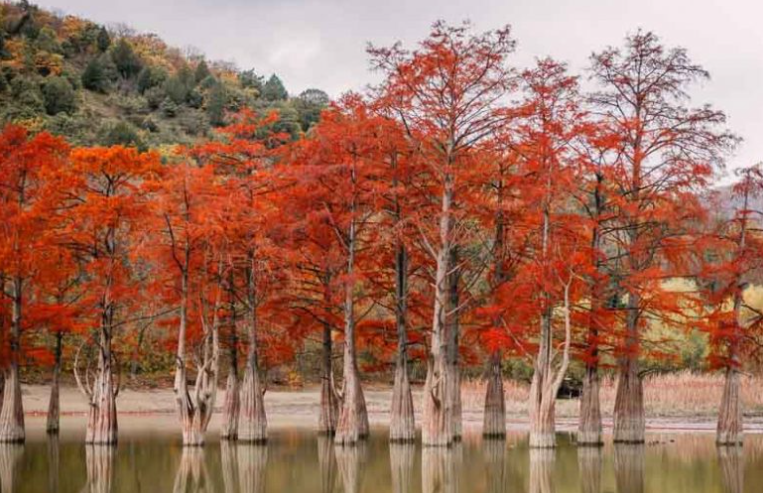
Cypress trees in Florida hold a level of ecological and historical significance that few other trees in the state can match, having formed some of the oldest and most iconic wetland forests found anywhere in the southeastern United States. Until 2012, Florida was home to The Senator, a bald cypress tree in Longwood estimated to be around 3,500 years old, making it one of the oldest trees in the entire eastern United States before an arsonist accidentally burned it down while trying to see better in the dark, a loss that remains one of the most significant tree deaths in modern American history.
Florida’s cypress swamps also take on distinctly different shapes depending on local water flow and soil depth, producing visually striking growth patterns such as cypress domes and cypress strands that are as much a defining feature of the Florida landscape as the trees themselves. Beyond the state’s native wetland species, Florida landscapers and homeowners have also adopted a range of ornamental trees commonly sold under the cypress name, some thriving in the state’s heat and humidity and others struggling considerably against conditions very different from their native ranges.
This list explores 15 types of cypress trees found in Florida, spanning true native wetland species, the unique natural growth forms found only in Florida’s swamps, and the ornamental varieties planted throughout the state’s landscapes.
Bald Cypress
The bald cypress is Florida’s most iconic native cypress species, found throughout the state’s swamps, riverbanks, and wetland basins, typically reaching a mature height of 60 to 100 feet and capable of living for well over 1,000 years under favorable conditions. This tree is unusual among conifers for being deciduous, dropping its soft, feathery needles each fall after they turn an attractive coppery-orange color, a trait that gives the species its common name since it appears bald throughout the winter months.
Bald cypress produces distinctive knobby root growths called knees that protrude above the water surface in swampy habitat, a feature especially prominent throughout Florida’s blackwater river systems and famously visible along waterways like the Suwannee and Ocklawaha rivers. Florida was once home to The Senator, a bald cypress in Longwood estimated to be roughly 3,500 years old and considered one of the oldest trees in the eastern United States before it was destroyed by fire in 2012, a loss that remains a significant reminder of just how long-lived this species can become in Florida’s swamp habitats.
Pond Cypress
The pond cypress is closely related to the bald cypress and is sometimes classified as a variety of the same species, though it is generally distinguished by its needles, which lie flat and pressed against the twig rather than spreading outward in the feathery arrangement typical of bald cypress.
This tree typically reaches a mature height of 50 to 80 feet, somewhat smaller on average than bald cypress, and tends to favor shallower, more stagnant wetland habitats such as isolated ponds and cypress domes rather than the flowing rivers and floodplains preferred by its close relative. Pond cypress is especially well adapted to Florida’s nutrient-poor, acidic wetland soils, allowing it to dominate isolated wetland depressions scattered throughout the state’s flatwoods and prairie regions. This tree’s slower growth rate compared to bald cypress often results in a narrower, more tapered trunk form, and it plays a defining ecological role throughout Florida’s numerous cypress dome wetlands.
Montezuma Cypress
The Montezuma cypress, native to Mexico and parts of Central America, has been introduced as an ornamental tree in select warmer parts of Florida, typically reaching a mature height of 80 to 130 feet under favorable growing conditions. This tree is closely related to Florida’s native bald cypress but remains evergreen in the state’s mild climate rather than dropping its needles each winter, a notable visual distinction for anyone familiar with the deciduous habit of Florida’s native cypress species.
Montezuma cypress is famous in its native range for producing the Tule Tree in Oaxaca, Mexico, which has the widest trunk diameter of any tree on Earth, a characteristic that reflects this species’ capacity for truly massive long-term growth. This tree remains relatively uncommon in Florida landscapes compared to native bald cypress, though it has drawn interest from arborists and collectors for its evergreen habit and close relation to the state’s more familiar native species.
Cypress Dome
The cypress dome refers to a distinctive growth pattern found throughout Florida’s flatwoods and prairie regions, in which pond cypress trees form a roughly circular wetland stand with a dome-shaped silhouette, tallest at the center and gradually shorter toward the edges. This growth pattern develops because the center of these isolated wetland depressions typically holds deeper water and richer, more decomposed peat soil, allowing trees growing there to reach greater heights, while trees at the shallower, less fertile edges remain visibly stunted by comparison.
Cypress domes are scattered by the thousands throughout central and southern Florida, easily spotted from the air as small, rounded green islands rising above the surrounding pine flatwoods or prairie. This distinctive growth form functions as an important isolated wetland habitat, providing critical breeding grounds for amphibians and other wildlife that depend on the seasonal flooding cycle these self-contained wetland systems provide.
Cypress Strand
The cypress strand describes a linear, elongated cypress wetland forest that develops along a natural drainage channel or slough, contrasting with the rounded shape of a cypress dome by stretching for miles in a relatively narrow band that follows the underlying flow of water. Florida’s Fakahatchee Strand, protected within Fakahatchee Strand Preserve State Park in the southwestern part of the state, represents the largest strand swamp forest of this type found anywhere in the world, historically containing some of the tallest and oldest bald cypress trees documented in Florida before extensive logging removed most of the strand’s largest specimens during the mid-20th century.
Corkscrew Swamp Sanctuary, located near Naples, protects another significant strand ecosystem containing one of the last remaining stands of virgin bald cypress in the United States, with some trees estimated to be more than 500 years old. This growth pattern supports an exceptionally rich diversity of wildlife and rare plant species, including several native orchids that grow almost exclusively within the deep shade and high humidity found beneath a mature cypress strand canopy.
Dwarf Cypress
The dwarf cypress, sometimes called hat-rack cypress due to its stunted, sparse branching pattern, represents one of the most visually unusual cypress growth forms found in Florida, occurring most famously throughout the dwarf cypress savanna within Big Cypress National Preserve in the southern part of the state. These trees are genetically identical to full-sized pond cypress specimens growing nearby, but extremely thin, nutrient-poor limestone soil and a short annual hydroperiod stunt their growth so severely that mature trees, sometimes several hundred years old, may reach a height of only 15 to 30 feet despite their considerable age.
This dramatic size difference caused by soil and hydrology rather than genetics makes the dwarf cypress savanna a particularly striking illustration of how much local growing conditions can shape a tree’s ultimate form, even within the same species found growing to full size just a short distance away. Visitors driving along the Tamiami Trail through Big Cypress National Preserve can observe this unusual dwarf cypress landscape directly from the roadside, making it one of the more accessible and photographed examples of extreme environmental dwarfing found in any American ecosystem.
Shawnee Brave Bald Cypress
The Shawnee Brave bald cypress is a popular cultivar selected specifically for its narrow, columnar growth habit, typically reaching a mature height of 50 to 60 feet while spreading only 15 to 20 feet wide, making it considerably more compact than the broader, more spreading form typical of wild bald cypress. This cultivar has become a popular choice for Florida landscapers seeking the classic feathery texture and coppery fall color of bald cypress without the wide canopy spread the species naturally develops given enough space and time.
Shawnee Brave bald cypress tolerates both consistently wet and surprisingly dry planting sites once established, reflecting the impressive adaptability the parent species is known for throughout its native range. This tree’s narrow profile has made it an increasingly popular choice for lining streets, driveways, and property borders throughout Florida developments where space does not allow for a traditionally spreading bald cypress specimen.
Peve Minaret Dwarf Bald Cypress
The Peve Minaret dwarf bald cypress is a compact ornamental cultivar developed for smaller residential landscapes, typically reaching a mature height of just 10 to 15 feet, a small fraction of the size a standard wild bald cypress can eventually achieve. This cultivar retains the same soft, feathery needle texture and attractive coppery fall color found in full-sized bald cypress, making it a popular option for Florida gardeners who want the ornamental appeal of the species without the eventual size of a mature swamp specimen.
Peve Minaret dwarf bald cypress tolerates a range of soil moisture conditions, from consistently damp to moderately dry, reflecting the same broad adaptability found throughout the bald cypress family. This tree’s narrow, conical form and manageable mature size have made it a popular specimen planting for smaller yards and container growing throughout Florida’s urban and suburban landscapes.
Falling Waters Bald Cypress
The Falling Waters bald cypress is a distinctive weeping cultivar named for its cascading, downward-drooping branch structure, a striking departure from the upright, pyramidal form typical of most other bald cypress varieties grown in Florida. This cultivar typically reaches a mature height of 15 to 25 feet and produces the same soft, feathery foliage and attractive fall color associated with standard bald cypress, presented in an unusual weeping form that has made it a popular specimen tree for Florida water gardens and pond edges.
Falling Waters bald cypress tolerates wet, poorly drained soil exceptionally well, making it a natural fit for the low-lying, waterlogged planting sites common throughout much of Florida. This tree’s dramatic weeping silhouette provides a striking focal point that few other cold-hardy conifers suited to Florida’s climate can match.
Debonair Pond Cypress
The Debonair pond cypress is a more compact cultivar of Florida’s native pond cypress, typically reaching a mature height of 30 to 40 feet with a narrower, more upright growth habit compared to wild pond cypress specimens found throughout the state’s natural wetlands. This cultivar retains the tightly appressed, scale-like needle arrangement characteristic of pond cypress, distinguishing it visually from the more feathery foliage typical of bald cypress and its related cultivars.
Debonair pond cypress tolerates Florida’s nutrient-poor, seasonally wet soils particularly well, reflecting the natural adaptability of pond cypress to the isolated wetland habitats where the species most commonly grows in the wild. This tree’s more restrained size and upright form have made it an increasingly popular choice for Florida landscapes seeking a native alternative to some of the state’s more commonly planted ornamental conifers.
Leyland Cypress
The Leyland cypress is a fast-growing hybrid conifer widely sold throughout garden centers in Florida’s northern counties for use as a privacy screen or windbreak, typically capable of reaching 40 to 60 feet in height under favorable conditions. This tree grows remarkably quickly, often exceeding 3 feet of height per year when young, which has made it a popular choice for homeowners seeking rapid screening despite the tree not being naturally suited to Florida’s climate.
Leyland cypress performs considerably better in Florida’s cooler, drier northern panhandle region than farther south, since the tree is highly susceptible to root rot and several fungal canker diseases that thrive in the humid, poorly drained soil conditions common throughout much of the state. This tree’s popularity in Florida landscaping is often tempered by these disease concerns, and many Florida extension services now recommend more climate-appropriate native alternatives for homeowners seeking a similar screening effect.
Italian Cypress
The Italian cypress is a narrow, columnar ornamental tree originally native to the Mediterranean region, widely planted throughout Florida as a formal accent tree for entryways and property borders, typically reaching a mature height of 40 to 60 feet while remaining only a few feet wide. This tree’s strikingly narrow, upright silhouette has made it a popular choice for Florida landscapes seeking a formal, Mediterranean aesthetic, particularly throughout the state’s more upscale residential and commercial developments.
Italian cypress struggles considerably with Florida’s high humidity and heavy summer rainfall, conditions that promote Seiridium canker and other fungal diseases the species evolved without significant exposure to in its native, considerably drier Mediterranean climate. This tree’s ornamental appeal in Florida is often weighed against a shorter overall lifespan and higher disease susceptibility compared to landscapes in the more arid climates where Italian cypress naturally thrives.
Arizona Cypress
The Arizona cypress, native to the dry mountain regions of the American Southwest, has been introduced to parts of Florida as a drought-tolerant ornamental conifer, typically reaching a mature height of 40 to 50 feet with attractive blue-gray to green foliage depending on the specific cultivar selected. This tree performs best in Florida’s drier, better-drained upland sites, since it does not tolerate the state’s characteristically wet, poorly drained soils nearly as well as Florida’s native bald and pond cypress species.
Arizona cypress cultivars such as Blue Ice have become moderately popular in Florida landscaping for their distinctive silvery-blue coloration, offering a visual contrast to the more common deep green foliage found throughout most other Florida landscape conifers. This tree’s Southwestern origins mean it requires considerably more careful site selection in Florida than the state’s native cypress species, generally performing best when planted on raised or well-drained sites away from the low, wet areas common throughout much of the state.
Hinoki Cypress
The Hinoki cypress, a false cypress native to Japan, is grown as an ornamental accent plant in shaded and partially shaded Florida gardens, typically reaching a mature height of 20 to 40 feet, though numerous dwarf cultivars remain considerably smaller and are more commonly seen in Florida landscaping. This tree features dense, layered, fan-like sprays of foliage that create an elegant, sculptural appearance prized in Japanese-style garden design throughout the state.
Hinoki cypress generally prefers Florida’s cooler northern and central regions, since the tree can struggle with prolonged exposure to the most intense heat and humidity found throughout the state’s southernmost counties. This tree’s slow growth rate and refined texture have made compact cultivars a popular choice for Florida container gardens and smaller ornamental plantings where a more delicate conifer texture is desired.
Lawson Cypress
The Lawson cypress, also called Port Orford cedar, is a false cypress native to the Pacific Northwest that is occasionally planted as an ornamental specimen in Florida’s cooler northern counties, typically reaching a mature height of 40 to 60 feet under favorable conditions. This tree features soft, drooping, fan-shaped foliage and a graceful, pyramidal growth habit that has made select cultivars popular among conifer enthusiasts and collectors throughout the state’s more temperate northern climate zones.
Lawson cypress generally struggles significantly in Florida’s central and southern regions, where high heat and humidity fall well outside the cooler, more moderate conditions the species evolved to tolerate in its native Pacific coastal range. This tree remains a relatively uncommon and specialty planting in Florida compared to more climate-appropriate native cypress species, generally reserved for dedicated conifer collections or the state’s coolest microclimates near the Georgia border.