Few flowers command attention quite like the peony. With its layers upon layers of silky, ruffled petals arranged in a lush, rounded bloom, the peony has been celebrated in art, literature, and horticulture for thousands of years. It has been cultivated in China for over 2,000 years, where it was known as the “king of flowers” and reserved for imperial gardens. Today, it remains one of the most beloved garden flowers in the world.
The peony’s defining characteristics — full, globe-shaped blooms with densely packed petals, rich fragrance, and a sense of extravagant abundance — have made it the gold standard of romantic garden flowers. Yet many other plants produce blooms that share this same lush, layered quality, either through double-flowered breeding, natural petal arrangement, or sheer fullness of form.
The global cut flower market values peonies highly, with world peony trade estimated at over $2 billion annually. Their peak season is brief, which has driven enormous interest in peony-like alternatives that can deliver the same visual impact across different seasons and climates. From doubled roses to ruffled camellias and frilly ranunculus, the options are rich and varied.
These peony-like flowers span tropical and temperate climates, annual and perennial growth habits, and an enormous range of sizes — from small, button-like blooms to dinner-plate flowers measuring 10 inches or more across. What they share is that irresistible quality of fullness, layering, and petal abundance that defines the peony aesthetic.
Garden Rose (Rosa x hybrida)
Full-petaled garden roses are the closest living equivalents to peonies in the flower world, with varieties like David Austin’s English Roses producing deeply cupped, densely petaled blooms in shades of blush, cream, apricot, deep red, and lilac that are virtually indistinguishable from peonies at a glance. There are over 30,000 registered rose cultivars worldwide, a significant number of which produce the full, quartered, rosette blooms that most closely mimic the peony form. Varieties such as ‘Miranda’, ‘Juliet’, and ‘Keira’ are especially peony-like in their bloom structure.
Also Read: Flowers That Look Like Roses
Ranunculus (Ranunculus asiaticus)
Persian Buttercup is arguably the most convincing peony lookalike among spring flowers, producing tightly layered, multi-petaled blooms in vivid shades of red, orange, yellow, pink, white, and bicolor that are nearly impossible to distinguish from small peonies. Each stem produces 4 to 7 flowers, and the blooms can hold for up to 21 days in a vase, making them a favorite in the wedding flower industry worldwide. They grow 12 to 18 inches tall from small claw-like tubers and prefer cool growing temperatures.
Camellia (Camellia japonica)
Double and peony-form camellia varieties produce extraordinarily full, rounded blooms with dozens of overlapping petals in shades of red, pink, white, and striped combinations that are among the most convincingly peony-like of any shrub flower. Camellias bloom in late winter and early spring — precisely when peonies are still dormant — making them an invaluable seasonal substitute. Japan alone recognizes over 2,000 named camellia cultivars, many specifically bred for their full, peony-form blooms.
Lisianthus (Eustoma grandiflorum)
Double-flowered lisianthus varieties produce ruffled, layered blooms with soft, paper-thin petals in shades of purple, lavender, white, pink, and bicolor that closely resemble delicate, smaller peonies. They are among the most prized flowers in the cut flower trade, with a remarkable vase life of up to 21 days. Originally native to the warm grasslands of the American Southwest, they have become a staple of high-end floral arrangements and wedding bouquets worldwide.
Dahlia (Dahlia pinnata)
Ball dahlias, dinner-plate dahlias, and waterlily dahlias produce enormous, densely petaled blooms that rival peonies in sheer floral impact, with some varieties reaching 10 to 12 inches across. They bloom from midsummer through the first frosts, filling the seasonal gap after peonies have finished flowering. There are over 20,000 registered dahlia cultivars, spanning an almost unimaginable range of colors, forms, and sizes, including many that produce the full, rounded, multi-layered blooms most reminiscent of peonies.
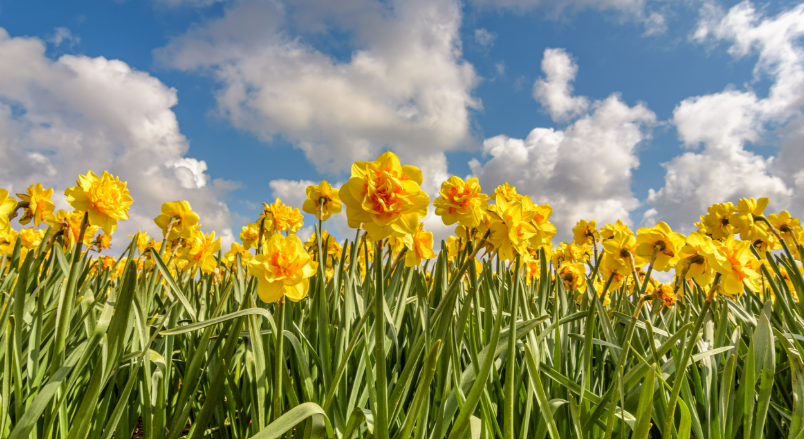
Double Tulip (Tulipa — Double Late Group)
Double Late tulips produce full, peony-like blooms with so many densely packed petals that they are commonly marketed as “peony tulips” by bulb suppliers. They grow 16 to 24 inches tall and bloom in mid to late spring in shades of white, cream, yellow, pink, red, purple, and multicolor. Their blooms are so convincingly peony-like that many non-gardeners genuinely cannot distinguish them from true peonies in a floral arrangement.
Also Read: Flowers That Look Like Tulips
Gardenia (Gardenia jasminoides)
Double-flowered gardenias produce creamy white, densely layered blooms with a waxy, sculptural quality and an intensely sweet fragrance that rivals the peony’s legendary scent. They grow as evergreen shrubs 2 to 6 feet tall and bloom primarily in summer. The fragrance of gardenia is one of the most recognizable in the world and is among the most commonly used floral notes in luxury perfumery, alongside jasmine and rose.
Magnolia (Magnolia grandiflora)
Southern Magnolia produces enormous, creamy white flowers up to 12 inches across with thick, waxy petals arranged in a full, rounded form that strongly evokes the peony in both size and lushness. The tree can grow 60 to 80 feet tall in ideal conditions and blooms across a long season from late spring through summer. It is the state flower of both Mississippi and Louisiana and one of the most iconic flowering trees of the American South.
Scabiosa (Scabiosa atropurpurea)
Double-flowered pincushion flower varieties produce ruffled, multi-petaled blooms in shades of deep burgundy, lavender, pink, and white that carry a distinctly peony-like softness and layering. They grow 18 to 36 inches tall and bloom prolifically from summer through autumn, providing long-season color and cut flower material. They are excellent pollinator plants despite their full, complex flower structure.
Begonia (Begonia x tuberhybrida)
Double tuberous begonias produce some of the most spectacular peony-like blooms in the container gardening world, with large, ruffled flowers in shades of red, orange, yellow, pink, white, and bicolor reaching up to 6 inches across. They thrive in shaded and semi-shaded positions where true peonies struggle, making them an invaluable alternative for gardeners with limited sun. The annual tuberous begonia market is valued at hundreds of millions of dollars globally.
Poppy (Papaver orientale — Double Forms)
Double Oriental Poppies produce enormous, ruffled blooms packed with crinkled, silky petals in shades of red, orange, salmon, pink, and white that evoke the lush, extravagant quality of peonies with a wild, untamed energy. They grow 2 to 3 feet tall and bloom in late spring and early summer, producing flowers that can measure 6 to 8 inches across. The tissue-paper delicacy of the petals gives them a translucent, glowing quality in sunlight that few other flowers can match.
Hellebore (Helleborus x hybridus — Double Forms)
Double-flowered hellebores produce intricate, multi-layered blooms in shades of cream, white, pink, deep plum, near-black, and spotted patterns that are strikingly peony-like in their fullness and complexity. They bloom remarkably early — from January through April in many climates — and are exceptionally long-lived plants. Double hellebore varieties are among the most sought-after and expensive of all perennial plants, with premium named varieties sometimes selling for $30 or more per plant.
Carnation (Dianthus caryophyllus)
Full-sized double carnations produce densely ruffled, layered blooms with fringed petal edges in shades of red, pink, white, yellow, and striped bicolor that share the peony’s characteristic fullness and abundance of petals. They are among the most commercially important cut flowers in the world, ranking in the top three globally with billions of stems sold annually. The intense, spicy clove fragrance of carnations is another quality they share with the best-scented peonies.
Also Read: Tallest Perennial Flowers For Pots And Containers
Chrysanthemum (Chrysanthemum morifolium)
Incurved and decorative chrysanthemum varieties produce large, globe-shaped blooms densely packed with petals in virtually every color except blue, closely mirroring the full, rounded form of a peony. They are extraordinarily diverse, with over 40 recognized flower forms, and are among the most important commercial cut flowers in the world. In China and Japan, chrysanthemums carry deep cultural significance comparable to the peony’s status, and both flowers appear extensively in traditional art and poetry.
Zinnia (Zinnia elegans — Double Forms)
Double and giant-flowered zinnia varieties produce full, layered blooms in the most vibrant color range of any peony-like flower — scarlet, orange, yellow, lime green, hot pink, coral, and bicolor — on plants 2 to 3 feet tall. They are among the easiest peony-like flowers to grow from seed, blooming just 8 weeks after sowing and continuing until the first frosts. Few garden annuals deliver more color impact per dollar of seed than a well-grown double zinnia.
Marigold (Tagetes erecta — African Types)
African Marigolds produce large, perfectly rounded, fully double blooms in warm shades of yellow, orange, gold, and cream that strongly resemble peonies in their dense, ball-shaped form and abundant petals. They grow 18 to 36 inches tall and are among the most heat-tolerant of all peony-like flowers, thriving in hot summer conditions that would cause true peonies to sulk. They are also among the most widely grown annual flowers on Earth, cultivated on virtually every continent.
Stock (Matthiola incana)
Double-flowered stocks produce densely packed spikes of ruffled, four-petaled blooms in shades of white, cream, pink, red, lavender, and purple with an intense, sweet fragrance widely compared to cloves and vanilla. While individual florets are smaller than a peony, a fully open double stock flower spike presents the same lush abundance of ruffled, layered petals. They are cool-season plants that thrive in the same spring temperatures that suit peony blooming.
Protea (Protea cynaroides)
King Protea produces enormous, globe-shaped flower heads surrounded by layers of stiff, pointed bracts in shades of pink, red, and cream that create an overall impression of extraordinary fullness and abundance closely comparable to an oversized peony. Individual flower heads can measure up to 12 inches across — larger than most peonies — and last exceptionally well both on the plant and as cut flowers. It is the national flower of South Africa.
Also Read: Flowers That Look Like Daisies
Lotus (Nelumbo nucifera)
Sacred Lotus produces magnificent, multi-petaled blooms in shades of white and deep pink with a golden center, reaching up to 12 inches across and floating above the water on stiff stems. The layered arrangement of broad, silky petals is unmistakably peony-like, and the two flowers have been compared to each other in Asian art and poetry for centuries. The lotus holds deep sacred significance in Hinduism, Buddhism, and ancient Egyptian culture.
Camellia Sasanqua (Camellia sasanqua)
Double-flowered Sasanqua camellias produce full, ruffled blooms in shades of white, pink, and red with a delicate fragrance, in late autumn and winter when almost no other peony-like flowers are available. They are more sun-tolerant and drought-resistant than their Japanese camellia relatives and can be trained as hedges, espaliers, or standard trees. Their winter flowering season makes them uniquely valuable in the calendar of peony-like blooms.
Lavatera (Lavatera trimestris)
Annual Mallow produces large, silky, funnel-shaped blooms in shades of white, pink, and deep rose that carry a delicate, tissue-paper quality reminiscent of single peonies in their prime. They grow 3 to 4 feet tall and bloom prolifically from midsummer through autumn, self-seeding gently to return the following year. Few annual flowers grow as quickly or produce as much bloom relative to the space they occupy.
Hibiscus (Hibiscus rosa-sinensis — Double Forms)
Double-flowered tropical hibiscus varieties produce enormous, multi-layered blooms up to 10 inches across in vivid shades of red, orange, pink, yellow, white, and bicolor that rival the peony in sheer floral impact. They grow as shrubs 4 to 8 feet tall in warm climates and bloom almost continuously throughout the year in tropical regions. Hawaii’s state flower is a native hibiscus, and the genus is culturally significant across tropical Asia, Africa, and the Pacific.
Strawflower (Helichrysum bracteatum — Double Forms)
Double strawflowers produce rounded, multi-layered blooms with papery, overlapping petals in shades of red, orange, yellow, pink, and white that retain their shape and color even after drying — a quality no peony can match. They grow 12 to 30 inches tall and are among the most long-lasting of all peony-like flowers in both the garden and as dried arrangements. Their papery petals catch light in a unique way that gives them an almost metallic shimmer.
Eustoma (Eustoma russellianum)
Prairie Gentian, closely related to lisianthus, produces fully double blooms with softly ruffled petals in shades of purple, blue, white, and pink that closely resemble miniature peonies. It grows 12 to 18 inches tall and is an outstanding cool-season cut flower and garden plant. Its blooms are particularly long-lasting, and a single plant can produce multiple flowering stems across its season.
Anemone (Anemone coronaria — Double Forms)
Double-flowered poppy anemones produce densely layered blooms with multiple rows of silky petals in shades of red, purple, blue, pink, and white surrounding a dark central boss, creating a look very close to a deeply colored, compact peony. They grow 12 to 18 inches tall from small tubers and bloom in spring, preferring cool conditions and excellent drainage. Their jewel-bright colors are among the most saturated of any peony-like flower.
Scented Pelargonium (Pelargonium grandiflorum — Regal Types)
Regal Pelargoniums produce large, ruffled blooms in shades of white, pink, burgundy, and bicolor with distinctive dark markings or veining, carrying the same ruffled, layered quality as single to semi-double peonies. They grow 18 to 24 inches tall and are outstanding container plants for sunny patios and conservatories. Their flowers are significantly larger than standard pelargoniums, with individual blooms measuring up to 3 inches across.
Peony Tulip (Tulipa — Double Early Group)
Double Early tulips bloom in early spring on shorter stems of 10 to 14 inches, producing very full, multi-petaled flowers in shades of red, orange, yellow, pink, and white that are compact, rounded, and convincingly peony-like. They are more wind-resistant than taller double varieties and are among the best options for container displays that mimic the look of peonies in early spring. They are widely used by professional florists as a cost-effective peony substitute in spring bouquets.
Also Read: Types of Begonia Plants
Wisteria (Wisteria sinensis — Double Forms)
Double-flowered wisteria varieties produce cascading clusters of fully doubled, fragrant blooms in shades of mauve, lilac, pink, and white, with each individual floret displaying a peony-like fullness of ruffled petals. The overall hanging clusters create a different effect from a peony’s upright blooms, but up close, individual flowers are strikingly similar in their layered, ruffled form. Wisteria is one of the longest-lived of all flowering climbers, with documented plants over 150 years old still in vigorous bloom.
Hollyhock (Alcea rosea — Double Forms)
Double-flowered hollyhocks produce spectacular, fully ruffled blooms packed with overlapping petals in shades of red, pink, yellow, white, lavender, and near-black that are unmistakably peony-like in their extravagant fullness. They grow 5 to 8 feet tall, making them among the tallest producers of peony-like blooms available. The variety ‘Chater’s Double’ is particularly celebrated for its extraordinarily full, perfectly formed flowers that resemble peonies mounted on tall spires.
Nigella (Nigella damascena — Double Forms)
Love-in-a-Mist produces delicate, multi-petaled blooms in shades of blue, white, pink, and purple, surrounded by a finely cut, thread-like ruff of foliage that adds to their intricate, layered appearance. Double forms produce blooms with a distinctly peony-like fullness, and the surrounding foliage gives each flower a uniquely romantic quality. They self-seed freely and reliably, making them one of the most effortless peony-like flowers to maintain in a garden.
Echinacea (Echinacea purpurea — Double Forms)
Double-flowered coneflower varieties such as ‘Butterfly Kisses’ and ‘Pink Double Delight’ produce fully doubled blooms with densely packed, ruffled petals in shades of pink, white, orange, and red that closely resemble small, cheerful peonies. They grow 2 to 3 feet tall and bloom from midsummer through early autumn, significantly extending the peony-like flower season. They are also excellent pollinator plants, with research showing doubled echinacea still receiving significant bee visits despite their modified flower form.
Sweet William (Dianthus barbatus — Double Forms)
Double-flowered Sweet William produces dense, domed clusters of ruffled, fringed blooms in shades of red, pink, white, and bicolor with a sweet, spicy fragrance reminiscent of carnations and peonies. Individual double florets within each cluster display a full, layered quality that closely mimics a tiny peony bloom. They have been cultivated in European gardens for over 500 years and remain among the most enduringly popular of all cottage-garden flowers.
Impatiens (Impatiens walleriana — Double Forms)
Double-flowered impatiens produce small but remarkably full, rose-to-peony-like blooms in shades of red, orange, pink, white, and bicolor on compact, bushy plants 12 to 18 inches tall. They are among the very best shade-tolerant producers of peony-like flowers, thriving in conditions where most full sun plants fail. They are consistently among the top-selling annual bedding plants in the United States and Europe, valued precisely for this combination of shade tolerance and lush floral display.
Cosmos (Cosmos bipinnatus — Double Forms)
Double cosmos varieties such as ‘Double Click’ produce full, ruffled blooms with multiple rows of petals in shades of white, pink, crimson, and bicolor that closely resemble airy, delicate peonies above feathery, fern-like foliage. They grow 3 to 4 feet tall and are among the easiest peony-like flowers to grow from seed, blooming in as little as 7 to 8 weeks from sowing. The combination of peony-like blooms and delicate foliage gives them a uniquely light, romantic quality in the garden.
Freesia (Freesia x hybrida — Double Forms)
Double-flowered freesias produce clusters of full, ruffled blooms in shades of white, yellow, orange, pink, red, and purple with an intoxicating fragrance widely regarded as one of the finest of any cut flower. While individual flowers are smaller than peonies, double varieties produce the same layered, multi-petaled form on a miniature scale. Freesia is consistently ranked among the top ten most popular cut flowers in the world by sales volume.
Petunia (Petunia x hybrida — Double Forms)
Double petunias produce full, ruffled blooms with multiple layers of ruffled petals in virtually every color of the rainbow that are strikingly peony-like in their extravagant fullness. They grow 10 to 18 inches tall and are outstanding container and hanging basket plants, blooming continuously from spring until frost. Some series such as ‘Double Wave’ can produce hundreds of peony-like blooms per plant across a single season.
Boronia (Boronia megastigma)
Brown Boronia is an Australian native shrub that produces small, cup-shaped, waxy flowers in shades of deep reddish-brown and yellow with a devastatingly intense fragrance described as one of the finest in the plant world. Double forms produce fuller, more peony-like blooms, and the plant grows 3 to 5 feet tall. Its extraordinary scent has made it a prized ingredient in the perfume industry, with boronia absolute ranked among the most expensive natural perfumery materials in the world.
Clarkia (Clarkia amoena — Double Forms)
Farewell-to-Spring produces ruffled, cup-shaped blooms in shades of pink, red, salmon, white, and bicolor with a delicate, crepe-paper texture that closely resembles a compact, airy peony. It grows 18 to 24 inches tall and thrives in cool conditions, blooming in late spring and early summer. It is native to the Pacific Coast of North America, where it carpets coastal meadows and hillsides with sheets of color each spring.
Kerria (Kerria japonica — Double Form)
Japanese Rose produces fully double, pompom-like blooms in vivid golden-yellow on arching stems 4 to 6 feet tall, with a rounded, multi-petaled form that is unmistakably peony-like in its lush fullness. It blooms in mid to late spring and often produces sporadic flushes of flower through summer. It is one of the most shade-tolerant of all shrubs producing peony-like blooms, thriving in positions that would be too dark for roses, peonies, or camellias.
Rugosa Rose (Rosa rugosa — Double Forms)
Double-flowered Rugosa roses produce full, richly fragrant blooms in shades of deep pink, red, purple, and white with a loose, informal, peony-like fullness of petals. They are among the toughest and most disease-resistant of all roses, tolerating poor soils, salt spray, and temperatures as low as -40°F (-40°C). After flowering, they produce large, tomato-red hips that provide ornamental interest through autumn and winter and are exceptionally rich in Vitamin C.
Also Read: Best Perennial Flowers for USDA Zone 12
Dicentra (Lamprocapnos spectabilis — ‘Gold Heart’ and White Forms)
While classic Bleeding Heart produces distinctive pendant, heart-shaped flowers, the white form ‘Alba’ and some cultivars produce blooms with a fuller, more open, peony-like arrangement of petals when viewed closely, with the same silky, tissue-paper delicacy of the finest peonies. It grows 2 to 3 feet tall and blooms in spring in lightly shaded positions, making it an excellent companion to true peonies in a woodland-edge planting.