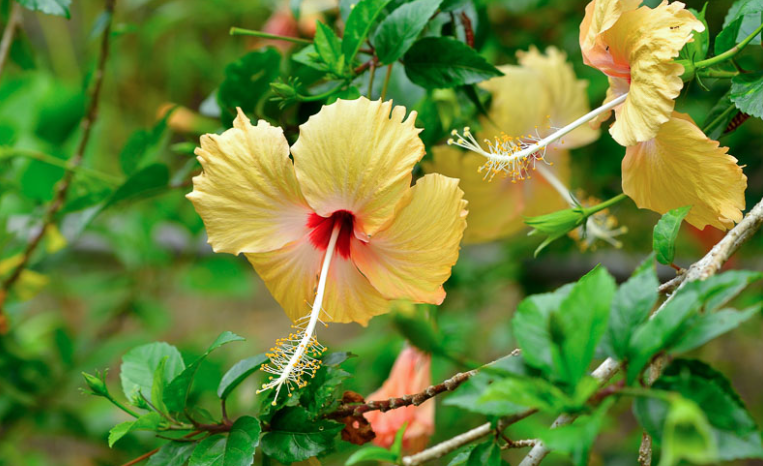
Hibiscus is a large and diverse genus containing over 300 species of flowering plants belonging to the mallow family, Malvaceae, found across tropical, subtropical, and warm temperate regions worldwide. The genus includes annuals, perennials, shrubs, and small trees, ranging in height from 2 to 15 feet depending on the species and growing conditions. With an estimated global cultivation spanning over 50 countries, hibiscus is among the most widely grown ornamental plants in the world, valued equally for its stunning flowers and its cultural significance.
As a plant, hibiscus features large, broadly ovate to lobed leaves that are typically deep green and slightly glossy, providing a lush backdrop for the dramatic blooms. The flowers are the plant’s defining feature, consisting of five broad petals surrounding a prominent central staminal column that gives hibiscus its distinctly tropical look. Blooms can measure anywhere from 4 to 12 inches (10 to 30 centimeters) across depending on the species, appearing in virtually every color except true blue.
Hibiscus thrives in USDA zones 5 through 11, though the appropriate species varies by zone. Tropical hibiscus (Hibiscus rosa-sinensis) grows best in zones 9 through 11, where frost is rare or absent. Hardy hibiscus (Hibiscus moscheutos), by contrast, survives winters as far north as zone 4 or 5, dying back to the ground and resprouting vigorously each spring.
Beyond its ornamental value, hibiscus holds enormous cultural and economic importance worldwide. Hibiscus sabdariffa, commonly known as roselle, is cultivated across Africa, Asia, and the Caribbean for its calyces, which are used to make herbal teas, juices, jams, and traditional medicines. The global hibiscus extract market was valued at over 1 billion dollars in recent years and continues to grow steadily.
Hibiscus is the national flower of several countries, including Malaysia, where Hibiscus rosa-sinensis is known as bunga raya and holds deep patriotic symbolism. In Hawaii, the yellow hibiscus (Hibiscus brackenridgei) serves as the official state flower, celebrated for its beauty and rarity. This widespread cultural recognition reflects the deep connection between hibiscus and human civilization across many regions.
The flowers attract a wide range of pollinators, including hummingbirds, butterflies, and bees, making hibiscus a valuable addition to wildlife-friendly gardens. Many species also produce edible flowers used in culinary applications, from salads to decorative garnishes. Their large, showy blooms and continuous flowering habit make them a centerpiece in tropical and subtropical gardens worldwide.
The history of hibiscus stretches back thousands of years, with evidence of its cultivation and use found in ancient civilizations across Asia, Africa, and the Middle East. In ancient Egypt, hibiscus tea brewed from the dried calyces of Hibiscus sabdariffa was consumed to lower body temperature and support heart health, with records of its use dating back to the time of the pharaohs. In traditional Chinese medicine, various hibiscus species have been used for centuries to treat ailments ranging from hair loss to high blood pressure. By the 18th century, European botanists and traders had introduced hibiscus to new regions around the world, accelerating its spread into tropical gardens and establishing it as a globally recognized ornamental plant.
Also Read: Different Types of Hibiscus Flowers
How to Grow and Care for Hibiscus
- Choose the Right Species for Your Zone: Selecting the correct hibiscus species for your climate is the most important first step. Tropical hibiscus suits zones 9 through 11, while hardy hibiscus performs well in zones 4 through 9. Matching the plant to the climate prevents disappointment and reduces maintenance requirements.
- Plant in Full Sun: Hibiscus flowers most abundantly in full sun, requiring a minimum of six hours of direct sunlight daily. Insufficient light leads to reduced flowering and weak, leggy growth over time. South or west-facing positions generally provide the most consistent sun exposure throughout the day.
- Prepare Rich, Well-Draining Soil: Hibiscus thrives in fertile, organically rich soil that drains well while retaining adequate moisture. Incorporating compost or aged manure into the planting area improves both soil structure and nutrient availability. Avoid poorly drained or compacted soils that can lead to root rot.
- Plant After Last Frost: For tropical hibiscus, planting should wait until all danger of frost has passed and soil temperatures have warmed. Hardy hibiscus can be planted in early spring once the ground is workable. Planting at the right time gives roots the longest possible establishment period before summer heat arrives.
- Water Deeply and Consistently: Hibiscus has relatively high water requirements compared to many other flowering shrubs, particularly during hot summer months. Deep, consistent watering encourages strong root development and supports continuous blooming. Allow the top inch of soil to dry slightly between waterings to prevent waterlogging.
- Fertilize Regularly During the Growing Season: Hibiscus is a heavy feeder that benefits from regular fertilization throughout spring and summer. A fertilizer high in potassium and low in phosphorus encourages maximum flower production. Feeding every two to four weeks with a diluted liquid fertilizer keeps plants blooming vigorously.
- Prune to Encourage Bushy Growth: Light pruning in early spring encourages branching and produces a fuller, more compact plant with more flowering stems. Removing about one third of the plant’s height stimulates vigorous new growth. Deadheading spent blooms throughout the season also encourages continuous flower production.
- Mulch Around the Base: Applying a 3 inch layer of organic mulch around the base helps retain soil moisture, regulate root temperature, and suppress weeds. Mulch is especially important during hot summers when moisture evaporation is rapid. Keep mulch several inches away from the main stem to prevent rot.
- Bring Tropical Varieties Indoors for Winter: In zones below 9, tropical hibiscus should be brought indoors before the first frost arrives. Place plants near a sunny south-facing window or under grow lights to maintain adequate light. Reduce watering during winter but do not allow the soil to dry out completely.
- Protect Hardy Hibiscus in Winter: Hardy hibiscus dies back to the ground in autumn but resprouts reliably from the roots each spring. Applying a thick layer of mulch over the root zone before winter helps protect roots from extreme cold. Resist the urge to cut back dead stems until spring, as they help insulate the crown.
- Watch for Aphids and Whiteflies: These common pests cluster on new growth and flower buds, sucking sap and weakening plants. Regular inspection and early treatment with insecticidal soap or neem oil prevents infestations from becoming severe. Strong water sprays can also dislodge small colonies effectively.
- Monitor for Spider Mites: Spider mites are particularly problematic during hot, dry weather, causing stippled, bronzed foliage. Increasing humidity around plants and keeping them well watered reduces spider mite pressure. Miticide sprays or neem oil applications help control established infestations.
- Treat Fungal Issues Promptly: Hibiscus can be susceptible to fungal diseases such as leaf spot and powdery mildew in humid conditions. Improving air circulation through proper spacing and pruning reduces disease pressure. Affected leaves should be removed promptly and fungicide applied if necessary.
- Propagate Through Stem Cuttings: Hibiscus roots readily from softwood stem cuttings taken in late spring or early summer. Cuttings of 4 to 6 inches dipped in rooting hormone and placed in moist potting mix typically root within four to six weeks. This method produces true-to-type plants identical to the parent.
- Grow in Containers for Flexibility: Tropical hibiscus adapts well to container growing, allowing plants to be moved indoors during winter. Use a large pot with excellent drainage and a rich, well-draining potting mix. Container plants require more frequent watering and feeding than those grown in the ground.
- Encourage Reblooming: Hibiscus blooms on new growth, so regular pruning and consistent fertilization are key to maintaining a continuous display. Removing spent flowers before they set seed redirects energy toward new bud production. With proper care, hibiscus can bloom almost continuously from late spring through the first frost of autumn.
Also Read: Popular Cold-Hardy Hibiscus Varieties