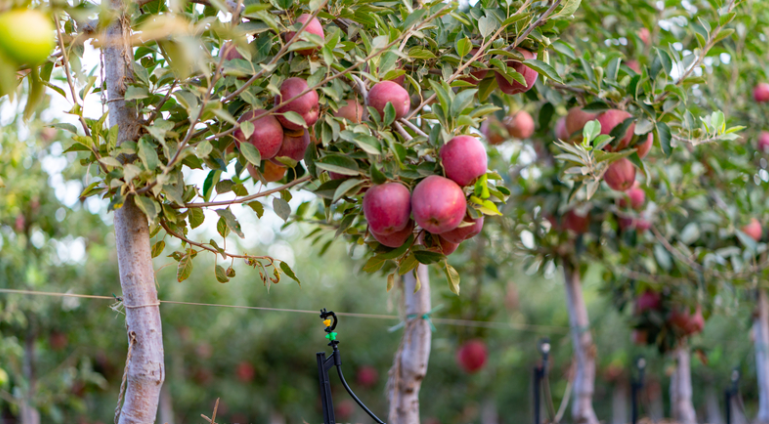
Apples are among the most widely recognized fruits in the world, known for their round shape, smooth skin, and crisp, juicy flesh. They grow on deciduous trees and come in a huge range of colors, from deep red and bright green to yellow and blush pink, often with streaks or mottling across the skin. This variety in color and size is part of what makes apples so easy to spot, but it also means there are many other fruits that can be mistaken for them at a glance.
Apple trees are grown in temperate regions around the world and typically blossom in spring before producing fruit that ripens through late summer and fall. A single tree can produce hundreds of apples in a season, and the fruit is picked by hand once it reaches the right firmness and color for its variety. Depending on the cultivar, apples can range from tart and firm to soft and sweet, which is why different types are suited to eating fresh, baking, or making cider.
Nutritionally, apples are a good source of fiber and vitamin C, and their thin skin means they are often eaten whole without peeling. Their firm, dense flesh holds up well to cooking, which is why they are a staple in pies, sauces, and baked desserts, while their natural sweetness also makes them popular as a simple snack. The balance of sugar and acidity varies by variety, giving apples a wide flavor range even though they share a similar overall shape.
Because so many fruits share a rounded shape and smooth or waxy skin, apples are sometimes confused with fruits from entirely different plant families. Some of these lookalikes are true relatives within the same botanical family, while others simply resemble apples due to their size, shape, or color. Below is a list of 15 fruits that are often mistaken for apples, along with a short description of what sets each one apart.
Fruits That Look Like Apples
Pears
Pears are close botanical relatives of apples and share the same smooth skin and similar range of colors, from green and yellow to red. Rounder pear varieties, in particular, can be mistaken for apples at a glance, especially when viewed from certain angles. The main difference lies in texture, since pears have a softer, grainier flesh and a more fragrant, floral sweetness compared to the crisp bite of an apple.
Quinces
Quinces look strikingly similar to large, lumpy apples, with a similar golden-yellow skin and rounded shape. They grow on trees in the same family as apples and pears, which explains the resemblance in both appearance and growth habit. Unlike apples, quinces are hard and astringent when raw and must be cooked before eating, most often turned into jams, jellies, or baked desserts.
Crab Apples
Crab apples are essentially miniature versions of standard apples, sharing the same shape, skin texture, and range of red, yellow, and green colors. The main distinguishing feature is size, since crab apples are typically no larger than a golf ball. Their flavor is much more tart and astringent than regular apples, so they are usually used for jellies and preserves rather than eaten fresh.
Pomegranates
Pomegranates have a rounded shape and firm, smooth skin that can resemble an apple from the outside, particularly in shades of red and pink. The resemblance ends once the fruit is cut open, revealing hundreds of juicy seed pods called arils instead of the solid flesh found in an apple. Their flavor is tart and slightly sweet, and they are typically eaten seed by seed rather than sliced and bitten into.
Persimmons
Persimmons share an apple-like roundness and glossy orange to red-orange skin that can cause confusion at the grocery store. Depending on the variety, persimmons range from firm and crisp, similar to an apple, to soft and jelly-like when fully ripe. Their flavor is honey-sweet with a mild spiced note, quite different from the tartness found in many apple varieties.
Guavas
Guavas have a rounded to oval shape and a firm skin that can appear yellow-green, similar to certain apple varieties. Their flesh, however, is much softer and filled with small seeds, offering a tropical, musky sweetness rather than the crisp bite of an apple. Guavas are commonly eaten fresh or used in juices, unlike apples which are used across a much broader range of dishes.
Nashi Pears (Asian Pears)
Nashi pears, also known as Asian pears, are often mistaken for apples because of their round shape and smooth, apple-like skin in shades of tan, yellow, or green. They belong to the pear family but have crisp, juicy flesh that is closer in texture to an apple than to a traditional pear. Their flavor is mild and refreshingly sweet, with a high water content that makes them especially crunchy.
Tomatoes
Certain rounder tomato varieties can resemble small red apples, particularly when viewed from a distance or in photographs. Both fruits share a similar glossy, smooth skin and comparable size in some cultivars. The similarities end quickly upon tasting, since tomatoes are savory and acidic, and their soft, seed-filled interior is nothing like the dense, crisp flesh of an apple.
Nectarines
Nectarines have smooth, apple-like skin without the fuzz found on peaches, and their rounded shape combined with red and yellow coloring can lead to confusion with certain apple varieties. Their flesh, however, is much softer and juicier, built around a single central pit rather than a core with seeds. Nectarines are typically eaten fresh in summer, while apples are available and enjoyed nearly year-round.
Plumcots
Plumcots, a hybrid of plums and apricots, have smooth, rounded skin in shades of red and purple that can resemble smaller apple varieties from a distance. Their flesh is soft and juicy rather than crisp, with a single pit at the center instead of a seed-filled core. Their flavor combines the tartness of a plum with the sweetness of an apricot, quite different from a typical apple’s taste.
Pomelos
Pomelos are large citrus fruits with thick, smooth rinds that can appear apple-like in color when the skin leans toward pale green or yellow, though their much larger size is usually a giveaway. Beneath the thick rind lies a segmented, juicy flesh similar to a grapefruit, a stark contrast to the dense, solid interior of an apple. Their flavor is mildly sweet and less bitter than a grapefruit, often eaten in wedges rather than bitten into whole.
Feijoas
Feijoas, also called pineapple guavas, have an oval to rounded shape with smooth green skin that can resemble a green apple at first glance. Their flesh is soft and aromatic, with a flavor often described as a blend of pineapple, guava, and mint, very different from the crisp, mild taste of an apple. They are typically eaten by scooping out the flesh rather than biting directly into the fruit.
Custard Apples
Custard apples have a rounded, sometimes heart-like shape and a bumpy green skin that can loosely resemble an apple, especially before the segmented texture becomes obvious. Beneath the skin, the flesh is soft, creamy, and custard-like, a texture completely different from the firm crispness of an apple. Their flavor is rich and tropical, often compared to a blend of banana and pineapple.
Star Apples
Star apples get their name from the star-shaped pattern revealed when the fruit is sliced in half, but their outer appearance, rounded and smooth-skinned in shades of purple or green, closely resembles a typical apple. The flesh inside is soft, gelatinous, and sweet, unlike the crisp bite of a real apple. They are typically eaten with a spoon rather than bitten into directly.
Kumquats
Kumquats are much smaller than apples but share a similar round to oval shape and smooth, glossy orange skin that can echo the color of certain apple varieties. Unlike apples, kumquats are eaten whole, skin and all, with a sweet peel and a notably tart, juicy interior. Their tiny size and citrus family origin set them apart quickly once compared side by side with an apple.