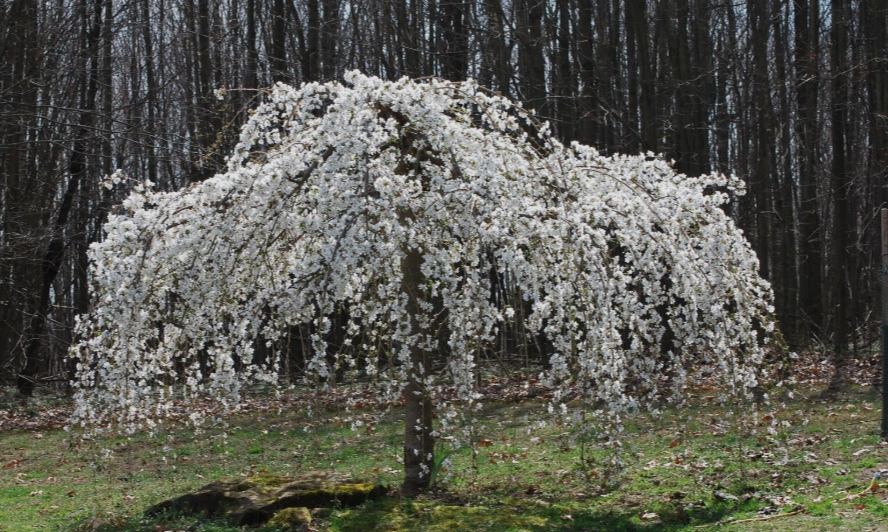
A cherry tree with flowers is one of the most reliable ways to bring a dramatic, short-lived burst of color into a landscape, and the sheer variety available goes far beyond the handful of famous cultivars most people can name. Japan alone has cultivated and named several hundred distinct flowering cherry varieties over the centuries, a tradition that spread to Western gardens in the late 1800s and early 1900s and has continued expanding ever since through European and American breeding programs. Bloom color across these varieties ranges from pure white through every shade of pink to deep rose, and flower form varies just as widely, from simple five-petaled blossoms to elaborate doubled blooms carrying 20 petals or more per flower.
Timing is one of the most overlooked aspects of choosing a flowering cherry, since different cultivars can bloom anywhere from six to eight weeks apart in the same climate, and a few unusual varieties flower twice a year instead of once. Some of the earliest-blooming cherries open before a single leaf has emerged on the tree, creating the classic bare-branch flower display cherry trees are famous for, while other varieties bloom alongside their emerging bronze or green foliage for a slightly different visual effect. Mature size also swings dramatically across the genus, from dense 8-foot shrubby forms suited to small gardens up to spreading 40-foot specimens that need considerable open space to reach their full potential.
The 14 varieties below highlight some of the lesser-known but well-documented flowering cherry cultivars available today, spanning columnar street trees, native North American species, and historic Japanese cultivars still grown for their flowers alone.
Accolade
Accolade was first released by an English nursery in 1952 as a hybrid between Higan cherry and Sargent cherry, and it remains one of the most award-winning early-flowering ornamental cherries available. Dark pink buds open into semi-double, shell-pink flowers carrying around 12 petals each, held in drooping clusters along a spreading, small deciduous tree. Its early bloom timing, ahead of many other cherry varieties, has made it a popular choice for gardeners who want cherry blossoms as soon as possible each spring.
Hally Jolivette
Hally Jolivette is a hybrid between Yoshino and Higan cherry that forms a dense, fast-growing small tree, typically reaching just 12 to 15 feet at maturity. Its two-week bloom display starts with pink buds that unfold into pale pink or pure white double flowers, each about an inch across, making it one of the longer-blooming flowering cherries available. The tree also tends to live longer than many other ornamental cherry cultivars, adding durability to its extended flower display.
Umineko
Umineko, whose name translates to sea gull in Japanese, is a cross between Oshima cherry and Fuji cherry originally bred in the 1920s. The tree grows in a distinctly columnar form, reaching up to 30 feet tall but only about 12 feet wide, making it a practical choice for narrow planting spaces. Its pure white single flowers appear in profusion each spring, and an almost identical cultivar called Snow Goose was independently developed in the Netherlands using the same parent species.
Snow Goose
Snow Goose shares its exact parentage with Umineko, both bred from Oshima and Fuji cherry, but was developed separately and carries a distinctive upright, flat-topped growth form. Its white, cup-shaped blossoms are notably fragrant and are borne singly or in pairs rather than the denser clusters typical of many other cherry cultivars. The tree’s early flowering habit and compact profile have made it a popular addition to botanical garden collections in recent years.
Autumnalis Rosea
Autumnalis Rosea, also known as the Rosebud cherry, belongs to a small group of flowering cherries that bloom in flushes across fall, winter, and spring rather than in a single spring display. Its deep pink buds open into semi-double flowers that provide color during months when almost no other flowering tree is in bloom. This unusual, extended flowering pattern has made it a favorite for gardeners looking to stretch ornamental interest well beyond the traditional spring cherry blossom season.
Hatazakura
Hatazakura, meaning flag cherry in Japanese, produces a profusion of five-petaled pale pink blossoms that fade to white as they fully open. The medium-sized tree traces its origins to a celebrated specimen still growing at the Hakusan Shrine in Tokyo, giving it a documented cultural history stretching back generations. Its relatively simple, single-flower form stands in contrast to the more elaborate doubled cultivars bred during the same historical period.
Taiwan Cherry
Taiwan cherry produces vivid, deep magenta-pink flowers that open extremely early in the season, often weeks ahead of most other ornamental cherries in the same climate. The slender tree can reach up to 25 feet and holds its intensely colored blossoms in a bell-like, semi-pendulous form rather than the flatter, more open flowers typical of Japanese cultivars. Small fruit follows the bloom and is popular with birds, adding a secondary source of visual activity once the main flower display has finished.
Weeping Yoshino
Weeping Yoshino carries the same white to pale pink, almond-scented blossoms as standard Yoshino cherry, but on branches that cascade downward instead of spreading horizontally. The graceful, fountain-like form has made it a popular specimen tree for locations where a dramatic silhouette matters as much as flower color. Its bloom timing generally matches the straight Yoshino species, opening in early spring before the tree’s leaves emerge.
Columnar Sargent Cherry
Columnar Sargent cherry is a narrow, upright selection of the standard Sargent cherry species, reaching 20 to 30 feet tall while spreading only 15 to 20 feet wide. Its early pink flowers appear in small clusters before the foliage emerges, followed later in the season by glossy dark fruit and a vivid orange-red fall color display. Beyond its spring bloom, the tree is also valued for its shiny, reddish bark, which adds visual interest through the winter months once the leaves have dropped.
Spire
Spire is a columnar hybrid between Amanogawa cherry and Fuji cherry, first discovered as a naturally occurring sport at an English nursery in the 1950s and later honored with the Royal Horticultural Society’s Award of Garden Merit. Its narrow, upright form typically reaches 15 to 25 feet tall but spreads only 5 to 8 feet, making it one of the most space-efficient flowering cherries available for tight urban settings. Pale pink to white single flowers appear in early spring before the foliage, which later turns a rich golden yellow in fall.
Pandora
Pandora produces a dense, bright floral display of pale pink flowers with subtle darker blotches near the petal tips, typically blooming two to three weeks before similar vase-shaped cherry cultivars in the same climate. The tree grows in an upright, fastigiate form that has made it a long-standing favorite for street and park plantings, particularly in the United Kingdom. Like several other early bloomers on this list, its flowers open well ahead of most spring competitors, giving it an especially prominent early-season display.
Higan Cherry
Higan cherry, grown in its standard single-flowered form rather than the more commonly seen weeping cultivar, produces pale pink to white blossoms in the earliest weeks of spring, sometimes even during warm spells in late winter. The species has been cultivated in Japan for centuries and served as one of the key parent species behind numerous later hybrid cherries, including Accolade and Pandora. Its exceptional cold hardiness compared to many other ornamental cherries has helped it thrive across a wide range of North American and European climates.
Pin Cherry
Pin cherry is a fast-growing native North American species found across much of Canada and the northern United States, producing small clusters of white, five-petaled flowers each spring along its slender branches. Often one of the first native trees to colonize open or disturbed land after fires or logging, it plays an important ecological role beyond its ornamental flower display. The blossoms are followed by small, sour red fruit that ripens in summer and provides a significant food source for birds and other wildlife.
February Pink
February Pink is an early-flowering cultivar of Fuji cherry prized for producing pale pink blossoms remarkably early in the season, often as its name suggests, well before most other cherry trees have broken dormancy. The compact shrub or small tree typically stays under 15 feet, making it a practical choice for smaller gardens where an early color display is the priority. Its diminutive size and exceptionally early bloom time have made it a popular choice for extending the ornamental cherry season at its earliest possible edge.