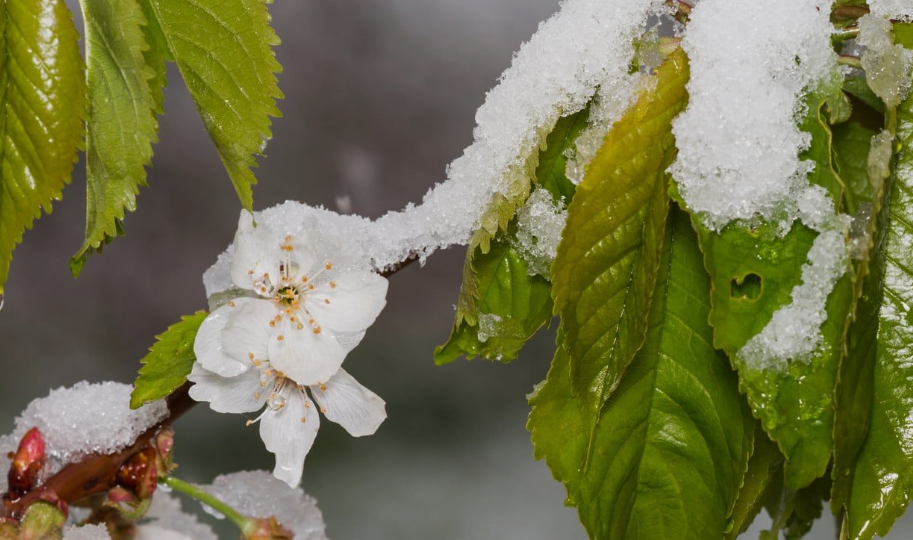
Cherry trees with low chill hours have opened up cherry growing to gardeners in places that were written off as impossible just a generation ago. Standard sweet cherries need between 700 and 1,200 hours of winter temperatures below 45 degrees Fahrenheit to break dormancy and bloom properly, a threshold that rules out most of California’s Central Valley, the Desert Southwest, and the entire Gulf Coast. Over the past few decades, breeding programs at the University of California and private nurseries like Zaiger Genetics have released a wave of cultivars that need a fraction of that chill, some as low as 200 hours, making backyard cherry orchards realistic in climates that could never support them before.
The chill hour concept itself is more nuanced than a single number suggests, since it specifically measures accumulated hours between 32 and 45 degrees Fahrenheit during a tree’s winter dormancy, not simply how cold a region gets. A tree that doesn’t receive its required chill will often leaf out unevenly, bloom sporadically over several weeks instead of all at once, and set little to no fruit even in an otherwise healthy growing season. Low-chill breeding has focused heavily on sweet cherries derived from University of California research orchards and Southern California hybridizing programs, since sour cherries have historically shown less flexibility in adapting to reduced winter chill.
The 13 varieties below all require significantly less winter chill than standard cherry cultivars, ranging from moderately reduced requirements around 400 to 500 hours down to true low-chill types that need as little as 200.
Minnie Royal
Minnie Royal needs only about 200 to 300 chill hours, among the lowest requirements of any sweet cherry in commercial cultivation, and some growers in mild climates report fruitful trees even with less. Developed by California’s Zaiger Genetics program, it produces a medium to large red cherry with firm texture and rich flavor, ripening 11 to 14 days ahead of Bing. It is not reliably self-fertile and depends on Royal Lee as its primary pollination partner, with both varieties needing to bloom in sync for a full crop.
Royal Lee
Royal Lee shares Minnie Royal’s remarkably low chill requirement of roughly 200 to 300 hours and was specifically bred as its companion pollinator, ripening about a week later and holding well on the tree into mid-June. The fruit is medium-sized, red to dark red, with a firm, crunchy texture and excellent flavor rated on par with far higher-chill commercial varieties. Because Minnie Royal and Royal Lee sometimes drift out of sync in their bloom timing during unusually warm winters, growers in the lowest-chill regions occasionally see reduced fruit set even with both trees present.
Royal Crimson
Royal Crimson requires an estimated 200 to 300 chill hours and stands apart from its low-chill relatives by being self-fruitful, meaning a single tree can produce a crop without a second variety planted nearby. It typically reaches 12 to 15 feet and is valued as much for its ornamental spring display of crimson blossoms as for its fruit. Its self-fertility has made it one of the more practical choices for home gardeners in warm climates who have space for only one cherry tree.
Lapins
Lapins carries a chill requirement of roughly 400 to 500 hours, placing it at the higher end of the low-chill category alongside Royal Rainier, and was one of the first widely available cherry varieties bred specifically to extend sweet cherry growing into warmer regions. It is self-fertile and produces large, dark red to purplish-black fruit with firm, sweet flesh. Its dependable self-pollination and moderate chill threshold have made it a common recommendation for gardeners on the borderline between traditional and low-chill growing zones.
Royal Rainier
Royal Rainier needs approximately 400 to 500 chill hours, matching Lapins as one of the earliest low-chill introductions developed for warmer growing regions. It produces fruit similar in character to standard Rainier cherries, with the same yellow-and-red blush and high sugar content, but on a tree bred to set a crop with substantially less winter cold. Growers in transitional climates, too warm for standard sweet cherries but not quite low enough for varieties like Minnie Royal, often find Royal Rainier a workable middle option.
Craig’s Crimson
Craig’s Crimson requires around 500 to 600 chill hours and has earned a reputation as a taste-test winner among low-chill cultivars, prized for its dark red to nearly black skin and a distinctive spicy flavor profile. The tree is a natural semi-dwarf, reaching only about two-thirds the size of a standard cherry tree, which makes it a practical choice for smaller home orchards. It is self-fruitful and ripens in the midseason window, later than the true ultra-low-chill varieties but still well below the 700-plus hours standard cultivars demand.
Tulare
Tulare was developed by the University of California specifically for hot-weather performance and carries an estimated chill requirement of 500 hours or less, making it one of the more heat-tolerant options among low-chill cherries. It produces a large, firm cherry that ripens early in the season and requires a pollinator such as Bing, Rainier, Van, or Lapins to set fruit. Its combination of reduced chill needs and strong heat tolerance has made it a popular choice specifically for California’s warmer growing valleys.
Coral Champagne
Coral Champagne needs only about 300 to 400 chill hours, roughly half of what standard commercial cherries require, and was developed at the University of California, Davis, Wolfskill Experimental Orchards. The tree produces large, glossy, low-acid cherries with a sweet flavor comparable to Bing, ripening in the early-midseason window about five days after Chelan. It requires a pollinator and is interfruitful with both Bing and Brooks, making either variety a workable planting partner.
Brooks
Brooks was also developed by the University of California and has become one of the most sought-after low-chill cherries at California farmers markets, prized by growers who specifically seek it out over other early-season varieties. It ripens ahead of Bing and requires a pollinator such as Early Burlat, Tulare, or Rainier, though its fruit is notably susceptible to cracking if rain falls during the ripening window. Commercial growers commonly cite its chill requirement at around 400 to 500 hours despite some nurseries listing it as not formally rated.
Early Burlat
Early Burlat is a French heirloom variety that requires roughly 400 to 500 chill hours and ranks among the earliest-ripening sweet cherries grown anywhere, often reaching harvest well before Bing and most other commercial varieties. Its early bloom and reduced chill threshold have made it a long-standing favorite for growers in marginal cherry-growing climates, even before dedicated low-chill breeding programs existed. It is commonly planted alongside Brooks and Coral Champagne, both of which share similar chill requirements and overlapping bloom windows.
Cristalina
Cristalina ripens about five days ahead of Bing and was developed from the Star and Van cultivars, resulting in a heart-shaped, plump cherry with dark red-to-black skin and firm, sweet flesh. The tree is notably productive with wide, spreading branches and requires cross-pollination, remaining interfruitful with Bing, Rainier, and Skeena. While its exact chill requirement runs somewhat higher than the true ultra-low-chill varieties, its early ripening habit places it firmly among the varieties suited to milder winter climates.
Cristobalina
Cristobalina is a Spanish heirloom cherry long valued in Mediterranean growing regions for its extremely low chill requirement and remarkably early bloom, often flowering before nearly every other sweet cherry variety in a mixed orchard. Home growers trialing low-chill cherries in Southern California have included it specifically alongside Minnie Royal, Royal Lee, and Royal Crimson as one of the standard ultra-low-chill comparison varieties. Its long history in warm European growing regions predates the modern California breeding programs by generations.
Royal Tioga
Royal Tioga is counted among the recognized low-chill cherry cultivars alongside Brooks and other reduced-chill introductions, bred to extend reliable sweet cherry production into regions that fall well short of the 700-hour threshold most commercial varieties demand. Like other members of this low-chill group, it depends on early, synchronized bloom timing with a compatible pollinator to set a full crop. Its development reflects the same broader push among California breeders to make sweet cherries viable across a much wider range of winter climates than was possible a few decades ago.