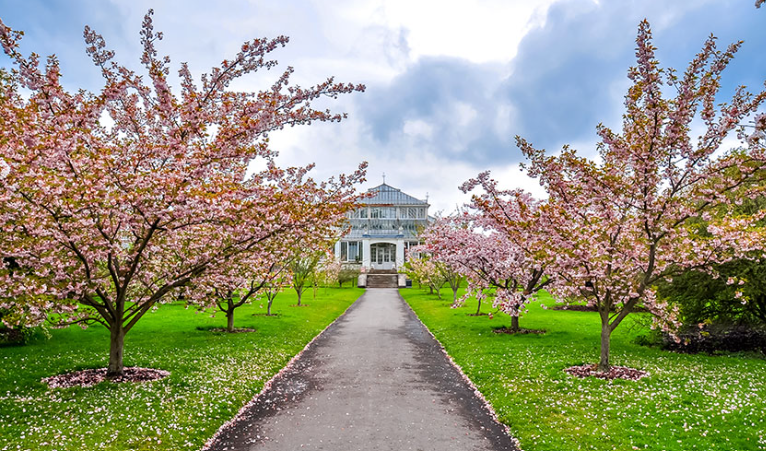
Cherry trees that grow in Florida look nothing like the cherry orchards of the Pacific Northwest, and that surprises a lot of gardeners moving to the state for the first time. Traditional sweet and tart cherries need between 700 and 1,200 hours of winter temperatures below 45 degrees Fahrenheit to set fruit, and most of Florida never comes close to that chill accumulation even in the coldest years. Yet the state is home to a genuinely wide range of trees that carry the cherry name, from native woodland species to tropical fruit trees and a handful of specially bred low-chill hybrids now being trialed in the Panhandle.
Roughly two-thirds of Florida sits in USDA hardiness zones 9 through 11, climates far too warm for the classic Bing or Montmorency types grown in states like Michigan or Washington. Instead, Florida gardeners rely on three main categories: true native cherry species that evolved for subtropical conditions, tropical fruiting trees from Central and South America and the Caribbean that simply share the cherry name and a similar-looking fruit, and cold-climate ornamental or fruiting cherries that only survive in the state’s coolest northern counties, if at all. Some of these trees produce over 4,500 milligrams of vitamin C per 100 grams of fruit, while others are grown purely for a three-week burst of pink blossoms in late winter.
The 21 varieties below cover the full range of cherry trees found across Florida’s landscapes, from Key West to the Panhandle. Each entry notes how well suited the tree actually is to Florida’s heat, humidity, and limited winter chill, since several varieties sold in nurseries statewide are far better adapted than others.
Black Cherry
Black cherry is one of only two native cherry species found throughout most of the Florida peninsula, occurring naturally as far south as DeSoto County. Mature trees can reach 60 to 90 feet, with glossy dark green leaves that shift to yellow, orange, or red before dropping. The small dark fruit ripens through summer and is a major food source for songbirds, though the leaves and twigs are toxic to livestock and pets if consumed in quantity.
Carolina Laurel Cherry
Carolina laurel cherry, often simply called cherry-laurel, is an evergreen native species that grows throughout Florida and much of the Southeast. It typically reaches 20 to 40 feet, roughly half the height of black cherry, with smooth gray bark and narrow, glossy leaves that stay green year-round. Its small black fruit ripens in fall and winter, and the tree blooms with fragrant white flower spikes as early as February in South Florida.
West Indian Cherry
West Indian cherry is a state-threatened native species found almost exclusively in the pine rocklands of Miami-Dade County, with a natural range extending into Mexico, Central America, and the Caribbean. The tree can grow to 35 feet or more, resembling a small ficus with a narrow, upright form. Fragrant white flowers appear in winter racemes, followed by small rust-colored fruit that wildlife readily consumes.
Barbados Cherry
Barbados cherry, also known as acerola, is one of the most widely planted fruiting trees in Florida landscapes thanks to its extraordinary vitamin C content, which can reach 50 to 100 times that of an orange by weight. The shrubby tree grows 8 to 15 feet tall, blooms with pink flowers from spring through summer, and can produce three to five separate fruit crops in a single year. It tolerates brief drops to around 28 degrees Fahrenheit but suffers damage below that threshold, limiting reliable outdoor growth to central and south Florida.
Surinam Cherry
Surinam cherry produces a ribbed, lantern-shaped fruit that ripens from green to a deep red or nearly black color depending on the variety. The shrub or small tree grows 10 to 20 feet tall and is commonly used as a dense, clipped hedge throughout south and central Florida. It has become naturalized and even invasive in parts of the state, spreading readily from seed dropped by birds that feed on the fruit.
Cherry Of The Rio Grande
Cherry of the Rio Grande is a slow-growing tropical fruit tree valued for its dark maroon, tart-sweet fruit and attractive peeling bark. Trees typically stay under 15 feet, making them a popular choice for smaller yards throughout central and south Florida. Fruiting can occur multiple times per year in warm regions, and the tree tolerates light frost better than many of its tropical relatives.
Grumichama
Grumichama is a Brazilian native that produces cherry-like fruit ripening from red to nearly black, with a flavor often compared to sweet cherries crossed with a hint of tartness. The tree grows 15 to 25 feet tall with dense, glossy foliage that makes it a popular ornamental as well as a fruit producer. It generally needs protection from temperatures below the high 20s, restricting reliable cultivation to the warmer two-thirds of the state.
Pitomba
Pitomba is a lesser-known Brazilian fruit tree that produces small, golden-orange fruit with a tart, aromatic flavor used in juices and preserves. The tree stays compact, typically 10 to 20 feet tall, and adapts well to the sandy soils common throughout central and south Florida. It flowers in spring with fragrant white blossoms before setting fruit in summer.
Jamaican Cherry
Jamaican cherry, also called Panama berry, is an extremely fast-growing tropical tree that can reach 20 feet within a few years and bear fruit nearly continuously in Florida’s warm months. Its small red or yellow fruit has a flavor often described as a cross between cotton candy and caramel. The tree tolerates poor soil and drought once established but needs protection when temperatures drop below 40 degrees Fahrenheit.
Australian Brush Cherry
Australian brush cherry is grown throughout south Florida almost entirely as a hedge and screening plant, prized for its dense, glossy foliage and reddish new growth. Left unclipped, it can form a small multi-trunked tree up to 12 feet tall, producing white summer flowers followed by pink to purple cherry-sized fruit. The fruit is edible with a crisp texture but a mild, largely neutral flavor, making it more of an ornamental bonus than a true crop tree.
Taiwan Cherry
Taiwan cherry is considered the best-adapted flowering cherry for north Florida gardens, according to University of Florida horticulture specialists. The slender tree reaches up to 25 feet and produces carmine-pink flowers in late winter that can remain showy for up to three weeks if a hard freeze does not damage them. Small red fruit follows the blooms and is popular with birds, though it is more ornamental than a reliable eating cherry.
Okame Cherry
Okame cherry is a hybrid between Taiwan cherry and Fuji cherry that blooms roughly a week after its Taiwan parent with bright pink flowers. It grows to about 25 feet tall and slightly wider than Taiwan cherry, forming a rounded canopy well suited to north Florida’s milder winters. Along with Taiwan cherry, it ranks among the only flowering cherries UF/IFAS specialists specifically recommend for the region.
Yoshino Cherry
Yoshino cherry is the famous white-flowering variety associated with Washington D.C.’s tidal basin, but University of Florida extension specialists caution that it is not well adapted to the state’s heat and humidity. It is still occasionally sold and planted in sheltered north Florida landscapes, where it may bloom inconsistently from year to year. Trees that do establish successfully can reach 20 to 30 feet with a broad, spreading canopy.
Kwanzan Cherry
Kwanzan cherry, a cultivar of Japanese flowering cherry known for its ruffled, deep pink double blooms, is widely planted in northern states but is specifically listed by UF/IFAS as poorly suited to Florida conditions. Gardeners in the coolest parts of the Panhandle sometimes attempt it in protected microclimates with mixed results. As a group, flowering cherries like Kwanzan tend to be short-lived even where they thrive, typically surviving just 15 to 20 years.
Weeping Higan Cherry
Weeping Higan cherry is a graceful, cascading cultivar that can reach 20 to 30 feet tall with an equal or greater spread, and it is sometimes offered by Florida nurseries despite university guidance that standard Higan cherry types are not reliably adapted to the state’s climate. Where it does establish in the cooler northern counties, it produces delicate pale pink flowers in late winter. Its performance tends to vary significantly from one winter to the next depending on chill accumulation.
Sargent Cherry
Sargent cherry is a cold-climate flowering cherry that reaches 25 to 40 feet at maturity and is occasionally planted in home gardens across the northernmost parts of Florida. Like several other temperate flowering cherries, it sits at the very edge of its tolerable range in the state and performs best in the coolest available microclimates. Its pink spring flowers and glossy bark make it a landscape specimen rather than a dependable fruit source in Florida conditions.
Minnie Royal
Minnie Royal is one of the first true low-chill sweet cherries developed for warm climates, requiring only around 200 to 300 chill hours to set fruit. It is being trialed successfully in parts of north-central Florida, including the Gainesville area, where trees have shown consistent spring blooms in recent seasons. Minnie Royal is not self-fertile and needs a compatible pollinator such as Royal Lee planted nearby.
Royal Lee
Royal Lee shares Minnie Royal’s low chill requirement of roughly 200 to 300 hours and is typically planted alongside it as a pollination pair, since neither variety reliably sets fruit alone. Both cultivars were developed by California breeders specifically to extend sweet cherry production into warmer regions. In Florida trial plantings, both varieties have shown blooms as early as the first week of March.
Royal Crimson
Royal Crimson is a self-fertile low-chill sweet cherry requiring approximately 200 to 300 hours, meaning a single tree can produce fruit without a second variety nearby. It ripens in early to mid-May and produces large, sweet, deep red fruit on a moderately vigorous tree. Royal Crimson can also serve as a pollinator for Royal Lee, making it a flexible choice for small home orchards in north Florida.
Lapins
Lapins carries a higher chill requirement of roughly 400 to 500 hours, putting it at the upper limit of what north Florida’s winters can reliably provide, generally limiting realistic success to Panhandle counties with consistent cold snaps. It is self-fertile and known for large, dark red, firm fruit with a flavor profile close to Bing. Growers attempting Lapins in Florida report it can take three to four years before producing a meaningful first harvest, with yields varying considerably based on how cold each winter turns out to be.
Nanking Bush Cherry
Nanking bush cherry is a dwarf, multi-stemmed shrub that rarely exceeds 8 to 10 feet, making it one of the more compact cherry-type plants attempted in Florida gardens. It produces small, tart red fruit in late spring on wood from the previous year’s growth. While better suited to colder climates overall, isolated specimens have been reported fruiting in sheltered north Florida landscapes, though performance is inconsistent compared to its native range.